
This blog was updated on 15th June 2026 to provide the latest information and researches on how to identify High Quality Algal oil.
Last year, I bought an algal oil supplement that looked absolutely perfect.
Premium packaging. Trusted brand name. Price seemed reasonable.
I took it for two weeks – nothing felt different. My energy didn’t improve. My focus stayed the same.
Confused, I flipped the bottle and checked the label properly for the first time.
That’s when reality hit – the DHA content per serving was only half of what I expected.
I had picked what looked like quality, but it was actually weak oil. I had wasted money on something that couldn’t deliver.
That one mistake taught me something I wish I had known from the start – most algal oil supplements look convincing on the outside but are genuinely weak inside.
And most buyers never check the details that actually separate real quality from marketing.
The truth is you don’t need to be an expert to identify high quality algal oil. You just need to know what 5 signs actually matter.
This guide shows you exactly what those signs are – so you never pick the wrong product like I did.
If you don’t want to overanalyze everything, here are a few high-quality algal oil supplements that meet the key standards discussed in this guide.
Check Best Algal Oil Options Here
How to Identify High Quality Algal Oil: Step-by-Step Guide
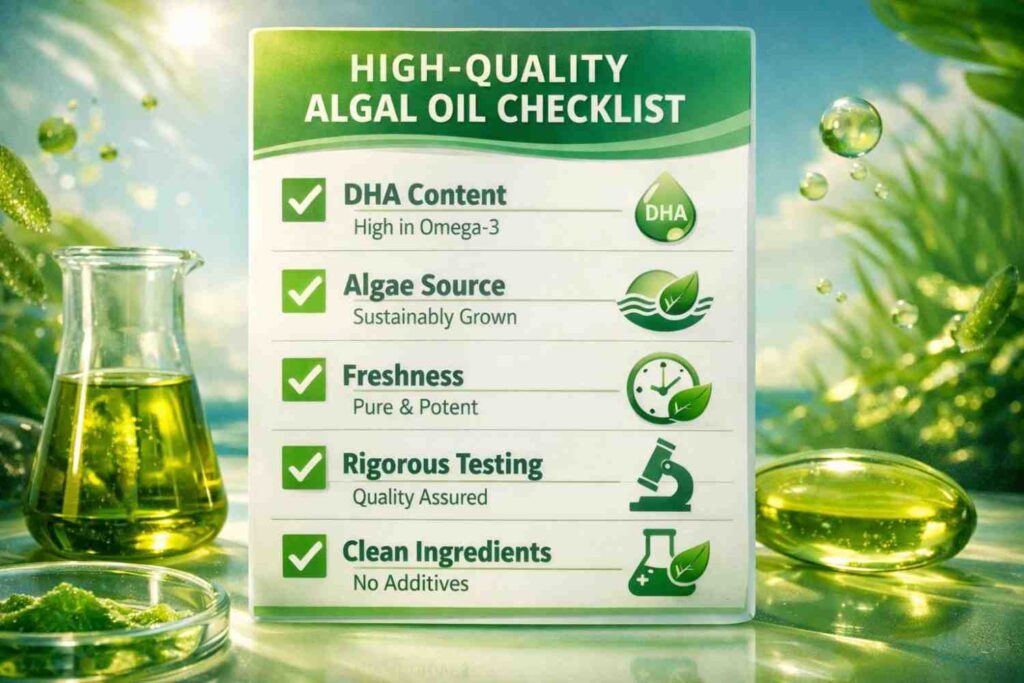
High-quality algal oil can be identified by checking DHA content per serving, algae source transparency, freshness, third-party testing, and a clean ingredient list.
If you’re trying to identify high quality algal oil, don’t overcomplicate it. Start with the basics.
A reliable product should feel straightforward. You shouldn’t have to “figure it out” by guessing.
The label should make sense, the details should be easy to find, and nothing important should be hidden in small print.
Even the oil itself gives clues. A clean product won’t have a strange or unpleasant smell, and it shouldn’t leave you second-guessing what you just consumed.
When a product is actually well-made, a few things stand out:
- The DHA content is clearly mentioned, not buried
- The source of the oil is properly explained
- Freshness is taken seriously, not ignored
- Testing or quality checks are openly shared
- The ingredient list is short and easy to understand
Once these basics are in place, trusting the product becomes much easier.
If you prefer not to analyze labels yourself, you can directly explore some of the best algal oil supplements in India that meet these criteria.
Where many people go wrong is focusing on the wrong things.
- A low price can mean you’re getting very little DHA
- A high price doesn’t guarantee better quality
- A big capsule count can still hide a weak formula
In the end, what makes a difference is not the packaging or the claims—it’s what’s actually inside each capsule.
A clear way to stay safe:
- If the label feels unclear, step back
- If DHA isn’t clearly stated, don’t assume
- If the oil smells off, don’t ignore it
- If the brand avoids talking about testing, that’s a signal
You don’t need to overanalyze everything- just focus on the few signals that actually matter, and you’ll avoid most low-quality products without overthinking it.
Why Algal Oil Quality Matters for Vegans
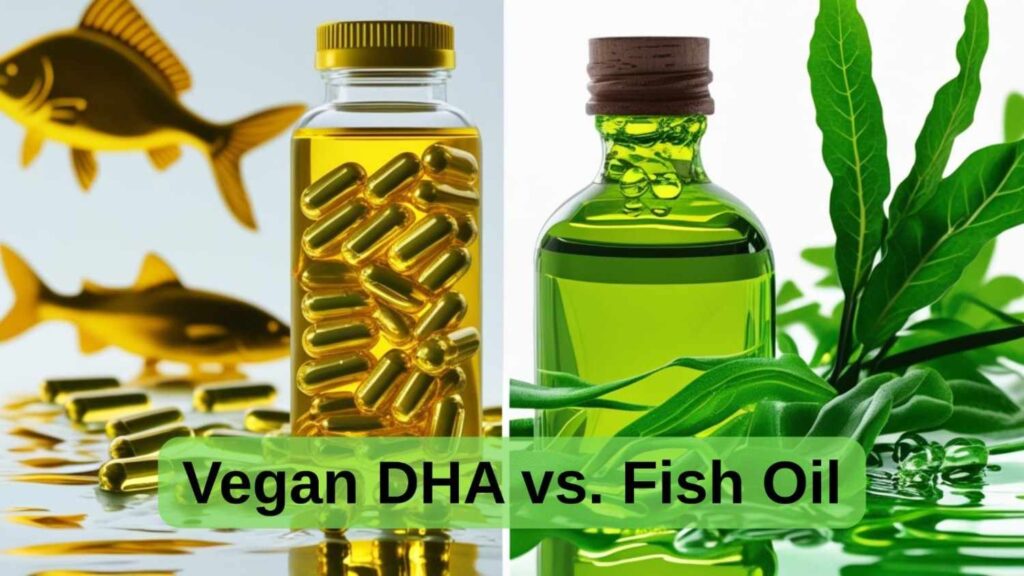
For vegans, algal oil is not just another supplement- it’s one of the most direct and reliable sources of DHA.
If you’re still unsure whether you actually need DHA, you can start with this guide on why vegans need DHA and common myths explained.
It’s one of the most direct sources of DHA.
DHA plays a key role in brain health, vision, and daily function. Many people don’t get enough from food alone, especially if their diet is low in fats or lacks variety.
That’s where quality starts to matter.
A low-quality product may show DHA on the label but still deliver very little in reality. Freshness may be impacted by poor processing or storage.
Some products also include unnecessary additives, which reduce the overall value.
Not every vegan DHA supplement works the same way.
Absorption can change based on how the oil is made, where it comes from, and even the capsule quality. These little bit details make a real difference over time.
If your goal is better daily support, don’t rush the decision.
A good algal oil should be easy to check to understand, easy to take, and clear about how much DHA you’re getting in each serving.
When comparing options, take a closer look at the details.
Label clarity, serving size, and real user feedback often tell you more than marketing claims.
According to research published by the National Institutes of Health, DHA plays an important role in brain function and overall health.
5 Signs of High-Quality Algal Oil You Should Check
1. Check DHA Content per Serving
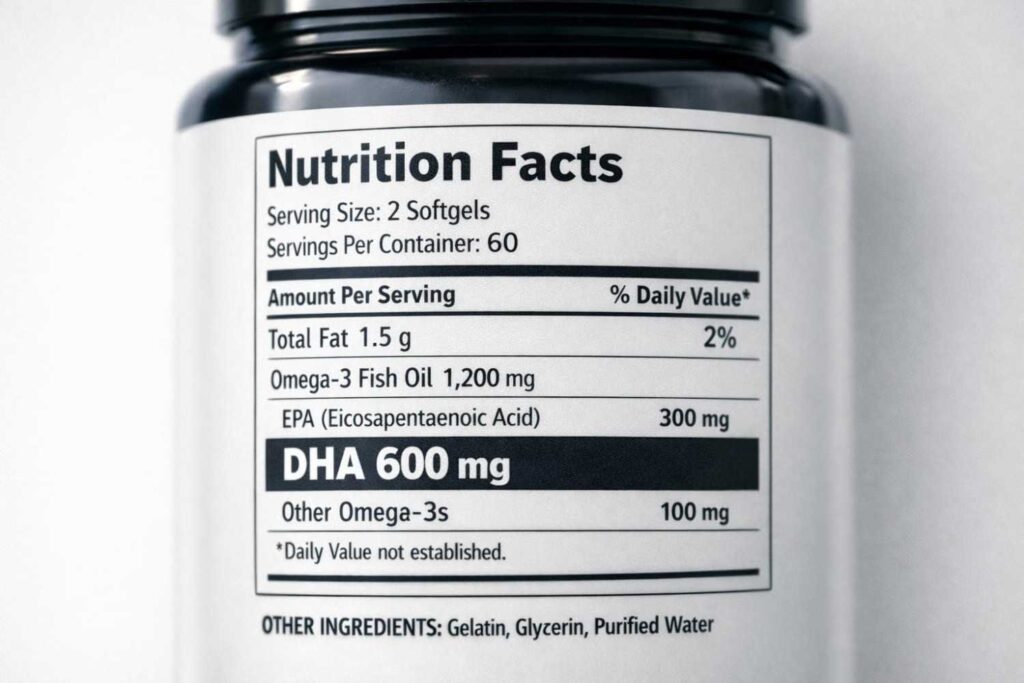
Start with the actual DHA per serving. Not capsule count. Not total oil. Just the real active amount your body is getting.
Look for at least 200–300 mg DHA per daily serving for general support (unless your goal is different).
A good product makes this easy to find. You shouldn’t have to dig through the label to understand it.
Some companies emphasize total oil or “omega-3,” but they don’t say anything about DHA. That’s where confusion starts. What matters is the usable DHA, not just a big number on the front.
- clear DHA per serving = easier comparison
- vague wording = usually not a good sign
A bottle may look like good value, but if the DHA is low, it won’t do much. Always check the serving panel, not just the packaging.
2. Look for a Clear Algae Source
A solid product tells you where the oil comes from. No vague wording, no hiding behind general terms.
If it simply says “algal oil” with no detail, that’s a weak signal. Brands that care about quality usually mention the microalgae source or give some background.
Look for algae like Schizochytrium (commonly used in high-quality DHA supplements)
This isn’t about technical knowledge. It’s about clarity.
When a company is open about sourcing, it usually reflects better control over the product. When it’s unclear, you’re left guessing—and that’s never a good position as a buyer.
3. Pay Attention to Smell and Freshness
Even in capsule form, oil quality shows up.
A fresh product shouldn’t have a strong, unpleasant smell. If it feels off when you open the bottle, don’t ignore that.
Poor handling or storage can affect the oil over time. And once freshness is gone, the value drops with it.
This also matters for comfort. A cleaner oil is usually easier to take daily, especially if your digestion is sensitive.
You’re not looking for fragrance—you’re just making sure nothing feels wrong.
4. Check if the Product is Tested
Testing builds trust. It shows the brand is willing to back its claims.
You don’t need to go deep into lab reports, but there should be some mention of quality checks or third-party testing. That alone tells you the product has been looked at beyond the company itself.
- testing mentioned = better transparency
- no mention at all = pause and rethink
This is one of those small filters that separates serious products from average ones.
Third-party tested for heavy metals, oxidation (TOTOX), and purity.
Brands that openly share this are usually more confident about their product quality.
Independent organizations like ConsumerLab also highlight the importance of third-party testing to ensure supplement quality and label accuracy.
5. Keep the Ingredient List Simple
The ingredient panel often tells the real story.
A good algal oil supplement usually keeps things minimal. The oil, the capsule, and only what’s necessary to support it.
If the list starts getting long or hard to understand, it raises questions. Extra fillers don’t add value—they just make the product harder to judge.
Simple formulas are easier to trust and easier to compare.
Once you get into the habit of checking ingredients, you’ll start spotting the difference quickly. And that alone can save you from a lot of average products.
Now that you know what actually matters, the next step is choosing a product that meets these standards.
Comparison of High-Quality Algal Oil Supplements
| Product | DHA | Best For |
| Carbamide Forte Vegan DHA (Check Price) | 400 mg | Overall Quality |
| Tata 1mg Vegetarian Omega (View Details) | 400 mg | Budget Option |
| Deva Vegan Omega-3 DHA (See Options) | 300 mg | High DHA Needs |
If you’re unsure, go with the overall option- it usually balances quality and value well.
Common Mistakes When Buying Algal Oil Supplements
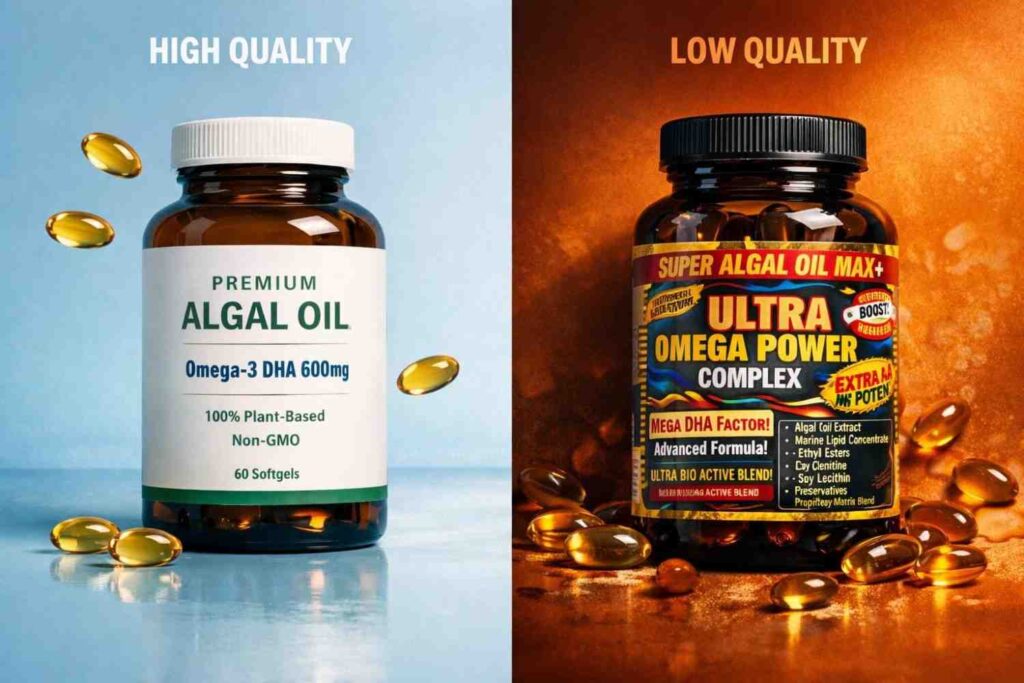
A lot of people judge the product by how it looks.
Clean design, premium feel, nice branding—it creates trust quickly. But packaging doesn’t tell you much about what’s inside.
Price is another trap. Going for the cheapest option might seem smart at first, but if the DHA is too low, you’re not really saving anything. On the flip side, a higher price doesn’t always mean better quality either.
This is where most people get influenced by packaging instead of actual quality.
This is where most people get influenced by packaging instead of actual quality.
One mistake that shows up often is ignoring the label completely. People read the front, see a few claims, and move on. The important details are usually on the back—serving size, DHA content, and ingredient list.
- Front label sells the product
- Back label explains the product
There’s also confusion between total oil and actual DHA. These are not the same. A capsule can contain a decent amount of oil but still deliver very little DHA per serving.
Small details get overlooked too. Things like the product’s freshness, odor, and testing status. These don’t stand out at first, but they affect how the supplement performs and how it feels to take regularly.
Once you understand how to identify high quality algal oil, these mistakes become easier to avoid. You stop relying on guesswork and start making decisions based on what actually matters.
Quick Checklist to Identify High-Quality Algal Oil
Before you buy, ask these five quick questions:
- Does the label clearly show DHA per serving?
- Is the algae source transparent?
- Does the oil look fresh and smell normal?
- Does the brand mention third-party testing?
- Is the ingredient list clean and simple?
A good-looking label doesn’t always mean a good-quality supplement.
A product that fails even two of these quality checks is usually not worth buying.
If your omega-3 capsules are causing acidity, burping, or nausea, this guide explains why vegan omega-3 can upset the stomach and how to avoid it.
Who Should Be More Careful About Algal Oil Quality
Some people need to be extra careful. Pregnant women, people with low-fat diets, and anyone dealing with fatigue or brain fog should pay closer attention to quality. For these buyers, the right product matters even more because the daily need is more specific.
If you are taking vegan DHA to support long-term nutrition, do not treat all products as equal. A small difference in quality can change how useful the supplement feels over time.
FAQs About Algal Oil Quality
Q. How to identify high quality algal oil?
Look for clear DHA content, source transparency, freshness, testing, and a clean ingredient list.
Q. Is all algal oil the same?
No. Brands can differ in strength, freshness, testing, and ingredient quality.
Q. What DHA level is good?
It depends on your goal, but the key point is that the serving should clearly show how much DHA you are getting.
Q. Can low-quality DHA be harmful?
It may not be harmful in every case, but it can be less useful, less fresh, or harder to trust.
If you are still comparing products, Amazon is a useful place to check label photos and customer feedback before buying. That extra step can help you avoid a weak bottle.
If you’re ready to choose, here’s a detailed comparison of top vegan DHA supplements to help you decide faster.
Quick Picks Based on Different Needs:
– Best Overall: High DHA, clean ingredients, and strong brand transparency
– Best Budget Option: Decent DHA with good value per serving
– Best High-DHA Option: Higher potency for those with specific needs
You can compare all of these in detail here.
Conclusion
I wasted three months taking low-quality algal oil before I learned to check labels properly.
Three months of money spent. Three months of benefits I never got.
That’s when I understood – choosing the right algal oil is not complicated. You just need to know what actually matters.
Forget the fancy packaging. Forget the brand names.
Just check four things: How much DHA per serving? Where does the oil come from? Does it smell fresh? Has it been tested?
That’s it.
Those four details separate real quality from marketing.
When I started checking these points, everything changed. I stopped buying supplements that looked good and started buying ones that actually worked.
I stopped guessing. I started knowing.
If you’re serious about your omega-3 – and especially if you’re vegan and relying on algal oil – don’t rush this decision.
Take 30 seconds to identify high quality algal oil properly. Check the label. Verify the source. Ask about testing.
That small habit will save you money, time, and frustration.
And most importantly – it will actually give you the results you’re paying for.
About the Author
Kamal Mishra is a health & nutrition writer and vegan wellness advocate. He is the founder of VeganVitaa – India’s trusted vegan DHA resource for plant-based families.
For more in-depth information, explore our related guides below to better understand vegan DHA, algal oil, and choosing the right supplement. Blog
Disclaimer: This article is for educational purposes only. Always consult your paediatrician before starting new supplements.
Disclaimer: This post contains affiliate links. If you buy through these links, I may earn a small commission at no extra cost to you. It helps me keep sharing useful content with you.

Pingback: Do Vegans Need DHA? Signs, Risks & Best Sources
Pingback: Best Algal Oil India 2025–2026: Which Vegan DHA Works?
Pingback: Vegan DHA Supplement Price in India — Worth It? 2026
Pingback: How Algal Oil Is Made — From Algae to Capsule