
This blog was updated on 3rd July 2026 to provide the latest information and researches on Signs, Risks & Best Sources of Vegan DHA.
You follow a healthy vegetarian diet, eat clean, and still feel something is not quite right – low focus, tiredness, that constant brain fog.
I know this feeling. I went through it myself before I understood what was actually missing.
Most Indian vegetarians blame stress or poor sleep. But there’s a nutritional gap that rarely gets discussed openly – DHA deficiency.
DHA is an omega-3 fat your brain and eyes depend on. Vegetarian diets are almost always low in it because plants only give you ALA, and your body converts very little ALA into actual DHA.
The real problem is you can’t feel a DHA deficiency directly. It builds silently. And the only way to know for sure is a blood test.
So which blood test shows DHA deficiency in vegetarians? That’s exactly what this guide covers: which tests work, where to get them in India, and what to do if your levels are low.

Quick Symptoms Recap: Could This Be DHA Deficiency?
Before we get to testing, here are a few signs that often appear when DHA is low:
- Brain fog or poor concentration – struggling to stay focused even on simple tasks
- Dry eyes or irritated vision – especially after long screen hours
- Mood swings or low motivation – DHA plays a direct role in mood regulation
- Fatigue that sleep doesn’t fix – a common but ignored sign
Now, here is the important part: symptoms alone are not reliable Fatigue and brain fog can come from a dozen other causes iron deficiency, thyroid issues, poor sleep, vitamin B12 low levels. You cannot guess your way to a correct diagnosis.
If you want a deeper understanding, you can also read our detailed guide on DHA deficiency symptoms in vegetarians.
Most people usually blame these signs on stress or lack of sleep, and rarely think it could be something related to nutrition.
The only way to know if DHA is truly low is to test it. Let us look at how.
Which Blood Test Shows DHA Deficiency in Vegetarians?
This is the question most people cannot answer because even doctors sometimes skip it. Standard blood panels do not check DHA. You have to ask for specific tests.
This is where things get confusing for many people, because this test isn’t part of regular health checkups.
Here are the two tests that actually matter:
1. Omega-3 Index Test (Most Important)
The omega-3 index test is the single most useful test for checking DHA (and EPA, another omega-3) levels in your body.
What it measures:
It checks the percentage of DHA and EPA in your red blood cells. Red blood cells reflect what your cells have actually absorbed – not just what you recently ate. This makes it a more accurate picture of your long-term omega-3 status.
Why it is useful:
Most nutrients are checked in blood plasma, which can change from meal to meal. The omega-3 index looks at red blood cell membranes, which change slowly over 3–4 months. This gives a stable, meaningful reading.
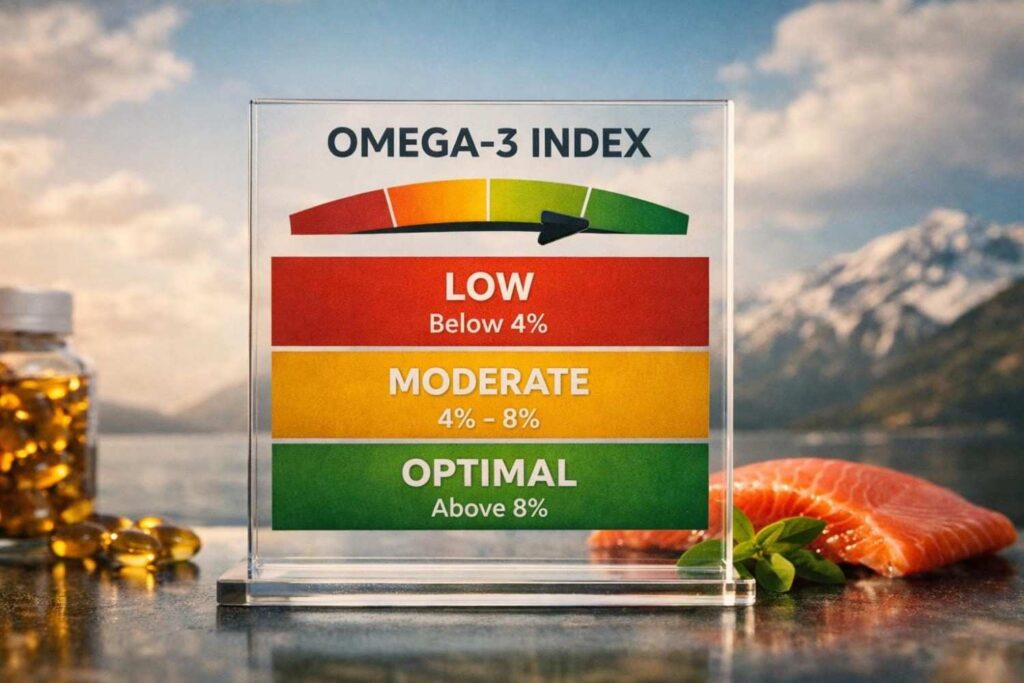
What the numbers mean:
| Omega-3 Index Level | What It Means |
| Above 8% | Optimal — well protected |
| 4%–8% | Intermediate — room to improve |
| Below 4% | Low — action needed |
Most vegetarians and vegans in India fall in the 2%–4% range. If you have never supplemented omega-3s, your index is likely low.
Many clinical nutrition experts consider an omega-3 index below 4% as a risk zone for long-term health.
How to ask for it:
Tell your doctor or diagnostic lab: “I need an omega-3 index test” or “please check my DHA and EPA levels via red blood cell analysis.”
2. Fatty Acid Profile Test (More Detailed)
The fatty acid profile test is a broader panel. It measures multiple fats in your blood — including DHA, EPA, ALA, and others like arachidonic acid.
What it includes:
It gives you a full breakdown of different fatty acids circulating in your body. You can see exactly how much DHA is present, how much ALA you have, and whether your omega-6 to omega-3 ratio is healthy.
When it is helpful:
This test is useful if:
- You want a detailed picture, not just the omega-3 index
- A doctor suspects broader nutritional or metabolic issues
- You are tracking changes over time after starting a supplement
It is slightly more expensive and not available everywhere, but major diagnostic chains in India do offer it.
Why Standard Blood Tests Do NOT Show DHA
Here’s something most people don’t know – and doctors rarely mention it.
Your regular health checkup covers CBC, blood sugar, liver enzymes, B12, D3, cholesterol. That’s it. DHA is not on that list. Never has been.
So even if you get a full body checkup every year, your DHA levels stay completely unknown. I did the same for years – regular checkups, everything “normal,” and still felt off.
Even a lipid profile – which checks your cholesterol and triglycerides – doesn’t measure individual omega-3 fatty acids. It’s just not designed for that.
This is why DHA deficiency silently continues in so many Indian vegetarians. The test that would catch it simply isn’t part of any standard panel.
If you want to know your actual DHA levels, you have to specifically ask your doctor for an Omega-3 Index test or a fatty acid profile. It will never show up automatically.
The National Institutes of Health confirms that DHA plays a critical role in brain function and visual health throughout life.
Are These DHA Tests Available in India?
Yes, but with some limitations depending on where you live.
In metro cities:
If you are in Mumbai, Delhi, Bengaluru, Hyderabad, Chennai, Pune, or Kolkata, these tests are available. Large national diagnostic laboratory chains such as those well-known across India for blood work – do offer the omega-3 index and fatty acid profile tests. You can walk in, ask for the test, or get a home collection done.
In smaller cities and towns:
Availability is more limited. Smaller labs may not stock the reagents or equipment needed. In that case, you can:
- Request a sample to be sent to a larger city lab (most chains do this)
- Use a home collection service that sends samples to a central processing lab
- Check if any NABL-accredited lab in your city offers this as a send-out test
Approximate cost range in India:
- Omega-3 Index Test: ₹1,500 – ₹3,500 (varies by lab and city)
- Fatty Acid Profile Test: ₹2,500 – ₹6,000
Prices can vary. It is worth calling ahead or checking the lab’s website. Some tests may need a doctor’s prescription; others can be self-requested.
Tip: If cost is a concern, start with the omega-3 index. It gives you the most important information- your DHA and EPA levels without the full panel cost.
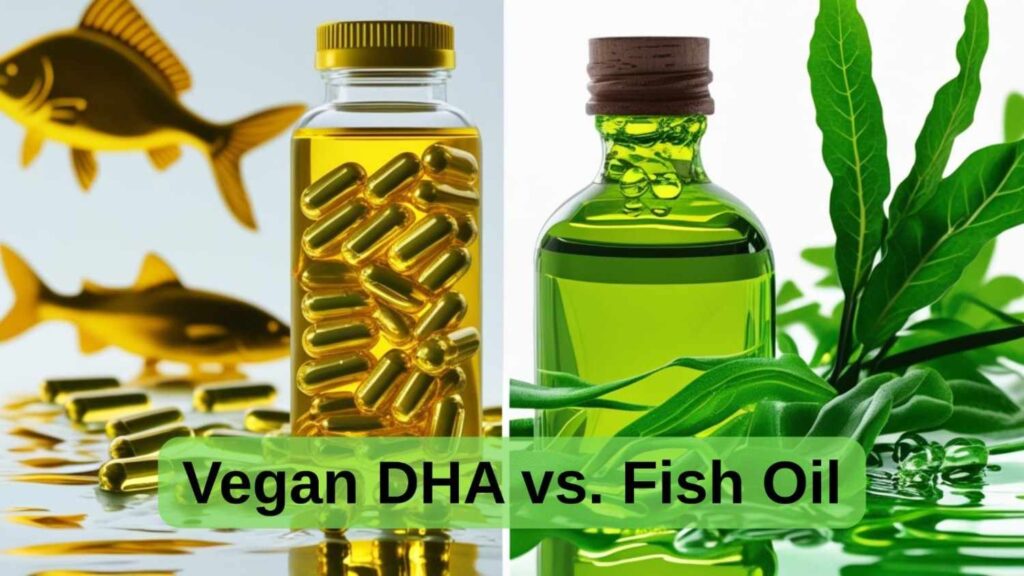
Many people only start looking into DHA after comparing it with fish-based omega-3 sources: Vegan DHA vs Fish Oil
When Should Vegetarians Get Tested?
Not everyone needs to rush to a lab today. But there are clear situations where testing makes real sense.
If you have symptoms:
Brain fog, dry eyes, mood changes, or fatigue that has no clear cause especially if your diet is plant-based are good reasons to test. Do not keep guessing.
During pregnancy or for young children:
DHA is critical for fatal brain development and infant growth. Pregnant vegetarians and vegan mothers are at high risk of DHA deficiency. Testing early in pregnancy is a smart move. For children showing attention or developmental concerns, a DHA deficiency test for vegetarians is worth discussing with your paediatrician.
If you have been vegetarian or vegan for many years:
The longer you go without a reliable DHA source, the lower your stores can drop. Long-term vegetarians – even healthy ones are prime candidates for the omega-3 index test India labs now offer.
This is especially common among long-term vegetarians who have never tracked their omega-3 levels.
Getting tested is not about fear. It is about knowing your actual numbers so you can act clearly and confidently.
What Most Vegetarians Don’t Realize About DHA
Many vegetarians assume that adding flaxseeds, walnuts, or chia seeds is enough to cover their omega-3 needs.
The part that often gets missed is the type of omega-3 these foods provide.
They contain ALA, while the body actually needs DHA for brain and eye function. Since the conversion from ALA to DHA is very limited, levels may stay low even with a well-planned diet.
So, on the surface, everything may look healthy but the actual DHA status can still be insufficient.
This is why proper testing becomes important, rather than relying on assumptions.
What to Do If You Have DHA Deficiency
If your test comes back low, do not panic. It is fixable.
Why vegetarian food is not enough for DHA:
Your body can make small amounts of DHA from ALA (found in flaxseeds, chia seeds, walnuts). But studies show this conversion rate is often below 10% — sometimes as low as 0–4%. Eating more flaxseed does raise ALA, but it does not reliably raise DHA.
Studies published on PubMed show that the conversion of ALA (plant-based omega-3) into DHA in the human body is very limited, which is why relying only on plant sources may not be enough.
This is not a flaw in vegetarianism. It is simply how human metabolism works. DHA is most abundant in fatty fish because fish eat microalgae and algae is actually the original source of DHA in the marine food chain.
Algae-based DHA — the vegetarian solution:
Since fish get their DHA from algae, you can go straight to the source. Algae-based DHA supplements are vegetarian, vegan-friendly, and clinically proven to raise DHA levels. They are made by culturing specific species of microalgae and extracting the omega-3 oil.
Several options are now available in India – online and in some health stores. Look for products that specify DHA content (in mg per serving) and are third-party tested.
Consistency matters more than dose:
Taking algae DHA for two weeks will not move the needle much. Because the omega-3 index reflects red blood cell changes over 3–4 months, you need to take it consistently over time. Pair it with a meal that contains some fat – it absorbs much better that way.
Retest after 3–4 months to track progress.
If you’re considering improving your DHA intake, you may also want to explore how to choose the right vegan DHA supplement for your needs: Best Vegan DHA Supplement in India
If your DHA levels are low, choosing a good quality algae-based supplement can make a real difference. You can explore some trusted options available online based on your needs.
Disclaimer: This post contains affiliate links. If you buy through these links, I may earn a small commission at no extra cost to you. It helps me keep sharing useful content with you.
Common Mistakes Vegetarians Make Around DHA
Relying only on flaxseeds for omega-3:
Flaxseeds are rich in ALA, not DHA. They are a good addition to your diet, but they cannot reliably correct a DHA deficiency on their own.
Ignoring symptoms for too long:
Brain fog and fatigue are easy to brush off as “just stress.” If these symptoms are ongoing and your diet lacks DHA sources, get tested instead of waiting.
Taking supplements inconsistently:
DHA does not build up fast. Skipping doses frequently, or stopping after a few weeks, will not produce results. Set a routine with a meal and stick to it.
FAQs
Q. Can vegetarians really have DHA deficiency?
Yes — and it’s more common than most people realize. I’ve spoken to many Indian vegetarians who eat clean, home-cooked food daily and still have low DHA. The reason is simple — plant foods give you ALA, not DHA, and the conversion is too poor to rely on.
Q. Is there a DHA test available in India?
Yes. The Omega-3 Index test and fatty acid profile are available at major labs like Thyrocare, SRL, and Metropolis. Metro cities have easier access — smaller towns may need a send-out service. Cost is typically ₹1,500 to ₹6,000 depending on which test you choose.
Q. How accurate is the Omega-3 Index test?
It’s the most reliable option available. Unlike a regular blood test that only shows what you ate recently, this one measures DHA inside your red blood cells — which reflects your actual body stores over the past 3-4 months. That’s why nutritionists and researchers prefer it.
Q. Can I improve DHA levels without supplements?
Honestly — it’s very difficult. I tried the food-only approach for a long time. Plant foods just don’t provide DHA directly, and the ALA conversion isn’t reliable enough. For most vegetarians, a clean algae-based supplement is the most practical fix.
Q. Which blood test shows DHA deficiency in vegetarians?
The Omega-3 Index test. It directly measures DHA and EPA in your red blood cells — something a standard health checkup will never show. Ask your doctor specifically for this test by name.
Conclusion: Testing Is the First Step
If you’ve been feeling off – low focus, tired eyes, brain fog and can’t explain why, don’t guess. Test.
Which blood test shows DHA deficiency in vegetarians? The Omega-3 Index test is your clearest answer. It gives you a real number, not a guess.
Most of us assume a clean vegetarian diet covers everything. I assumed the same for years. But DHA is one gap that plant foods genuinely can’t close on their own – the ALA conversion just doesn’t work well enough.
Once you know your levels, the fix is straightforward. Low numbers mean your body needs a direct DHA source – algae-based supplements are the cleanest option for vegetarians.
Test first. Then act on what the numbers tell you.
About the Author
Kamal Mishra is a health & nutrition writer and vegan wellness advocate. He is the founder of VeganVitaa – India’s trusted vegan DHA resource for plant-based families.
For more in-depth information, explore our related guides below to better understand vegan DHA, algal oil, and choosing the right supplement. Blog
If you’re confused about which algal oil supplement is actually worth buying, check our detailed guide on the best vegan DHA supplements in India for 2026 with ingredient comparisons, purity standards, and top picks for different needs.
Looking for affordable omega-3 options? Here are the best budget-friendly vegan DHA sources in India, plus smart algal oil buying hacks to save money without compromising quality.
Wondering whether flaxseed is enough for omega-3 needs? Here’s a simple comparison of algal oil DHA vs flaxseed omega-3 and which one actually works better for DHA levels.
Confused by DHA, EPA, and ALA on supplement labels? This simple vegan omega-3 guide explains how to read omega-3 labels and choose the right product with confidence.
Disclaimer: This post contains affiliate links. If you buy through these links, I may earn a small commission at no extra cost to you. It helps me keep sharing useful content with you.
Disclaimer: Always consult a qualified doctor or nutritionist before starting any supplement, especially during pregnancy or for children.

Pingback: Vegan Omega 3 Stomach Upset in India: Causes & Fix (2026)