This blog was updated on 15th July 2026 to provide the latest information and researches on Vegan DHA- The missing link to Brain Health.
DHA for vegans is one of those topics that most people discover too late – usually after months of feeling mentally sluggish, tired, or just not quite right despite eating a genuinely healthy diet.
If you follow a vegan or vegetarian lifestyle in India, chances are nobody has ever explained this to you properly. Your diet is full of fruits, vegetables, lentils, and whole grains. You are doing everything right by every standard you have grown up with.
But DHA does not come from any of these foods – not directly.
DHA is the specific omega-3 fat your brain is literally built from. Around 60% of your brain is fat, and a significant portion of that is DHA. It supports how clearly you think, how well you remember things, how your eyes function, and how emotionally balanced you feel day to day.
The reason is simple. Plant foods contain ALA – a different type of omega-3. Your body converts ALA into DHA, but that conversion is surprisingly poor. Sometimes as low as 1 to 5%. So even if you eat flaxseeds and walnuts every single day, your brain may still not be getting what it actually runs on.
Most vegans live with this gap for years. No dramatic warning signs. Just a slow, quiet depletion that shows up as brain fog, low energy, dry eyes, or a mood that feels slightly flat without any obvious reason.
The good news is that fixing it does not require changing how you eat or what you believe. One clean, plant-based source of direct DHA – and the gap closes.
If nobody has explained this to you before – that changes now.
For a deeper India-specific look at this gap – DHA for Brain Health in India
What is DHA and why is it important?
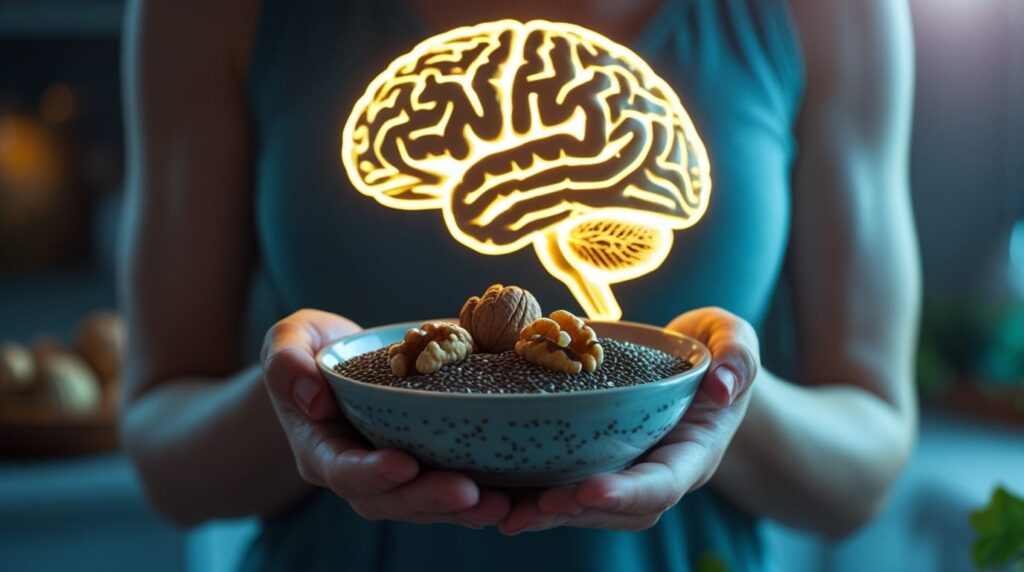
DHA for Vegans is one of the most important omega-3 fats. Since fat makes up almost 60% of your brain, DHA is crucial for a part of it.
DHA for Vegans helps with:
- The brain’s development, especially in young children and babies
- Focus and retention
- Clearing the brain’s fog
- Harmony between mental clarity and mood
- The state of the eyes
DHA supports the fetus’s growing brain and eyes while it is still inside the mother.
If you are new to vegan omega-3 and want to understand the difference between ALA, EPA, and DHA, this guide covers it simply – Vegan Omega 3 Guide for Vegetarians
Why DHA for Vegans is Essential – Risks of Deficiency
Most of the DHA in a normal diet comes from:
- Fish oil
- Fattening fishlike salmon, sardines, and tuna
Vegetarians and vegans consume almost no DHA naturally because they abstain from eating fish. Walnuts, chia seeds, and flax seeds also contain ALA, another type of omega-3. However, the only 1% to 5% of ALA is converted to DHA by the human body. That is insufficient!
Indications That your DHA Level May Be Low
Typical signs and symptoms include:
- Absence of concentration or focus
- Issues with memory or forgetfulness
- Depression or mood swings
- Dry eyes or vision problems
- A feeling of mental exhaustion or confusion
These symptoms are more prevalent in:
- People who are vegetarians
- Women on plant-based diets who are pregnant
- Children brought up on a vegan diet
- Senior citizens
How Much DHA Do Vegans Actually Need Daily?
This is one of the most practical questions – and most vegan guides skip over it completely.
The general recommendation for most healthy adults is around 200 to 300 mg of DHA per day. That is the range most nutrition researchers consider adequate for basic brain and eye support in everyday life.
But life is not one-size-fits-all. And for vegans in India, context matters.
Research from the National Institutes of Health confirms that DHA plays a critical role in brain development and cognitive function throughout life. Read the full overview here.
If you are a working professional with long screen hours and high mental load – 250 to 300 mg daily is a sensible starting point. Your brain is under more demand than average, and consistent DHA helps it recover and function better over time.
For students – especially those preparing for exams or in intense study phases – 200 mg daily is the minimum. DHA directly supports memory formation and the ability to retain information under pressure. It will not fix everything overnight – but it gives your brain what it has probably been missing for a while.
Pregnant and breastfeeding women need more – around 300 to 400 mg daily. DHA demand increases significantly during pregnancy because the baby draws from the mother’s reserves for brain and eye development. For vegan mothers especially, algal oil is the only reliable way to meet this need without any animal products.
For elderly vegans, 250 to 300 mg daily supports memory and nerve health as the body’s natural ability to convert ALA into DHA declines further with age.
For a detailed breakdown of DHA dosage based on age and lifestyle, this guide goes deeper – Vegan DHA Dosage Per Day: How Much Do You Really Need?
One important thing – these are starting points, not prescriptions. If you have a specific health condition or are unsure about your dosage, a nutritionist can give you a more personalised number based on your situation.
Algae-Based Vegan DHA: The Plant-Based Alternative
The good news is that DHA for Vegans can be obtained without eating fish. Rather than fish, algae are the original source of DHA!
Fish consume ocean algae to obtain DHA. Many companies now produce DHA for Vegans supplements from pure oil from algae. It is safe, clean, and entirely plant-based, making it ideal for vegetarians, vegans, and even expectant mothers/women.
What Vegan DHA Actually Does for Your Body
DHA supports your brain more directly than almost any other nutrient. It keeps brain cell membranes flexible – which affects how clearly you think, how well you retain information, and how focused you feel during a demanding day.
Mood and mental health are connected too. Low DHA has been linked to higher rates of low mood and emotional flatness. This doesn’t mean DHA is a treatment but it is a building block your brain genuinely needs to stay balanced.
For pregnant women, DHA is non-negotiable. The baby draws DHA directly from the mother for brain and eye development especially in the third trimester. Vegan mothers relying only on ALA foods are often unknowingly running low during the most critical window.
For children, consistent DHA supports focus and learning capacity. It’s not a magic pill but a brain that has what it needs simply works better.
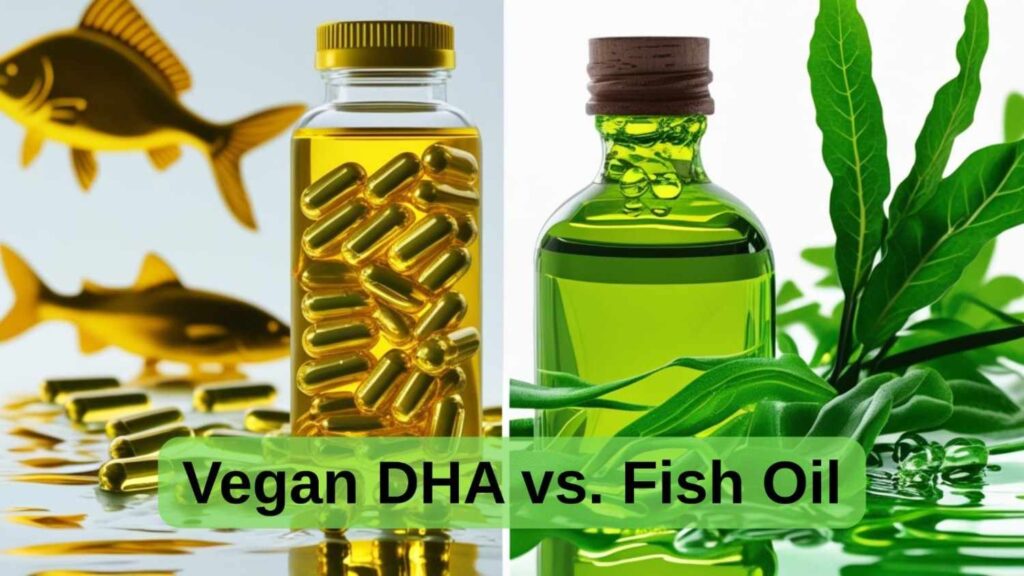
And from a purity standpoint, algal DHA is cleaner than fish oil. No mercury. No ocean contaminants. No ethical compromise.
DHA for Vegans in India- Why the Gap Is Bigger Here
Vegans in other parts of the world have it a little easier. DHA-fortified foods are common. Plant-based nutrition is a mainstream conversation. Doctors and dietitians are more likely to bring it up proactively.
In India, almost none of that exists yet.
Most Indian vegans and vegetarians have already made a conscious choice – no fish, no eggs, sometimes no dairy. That part is clear. But DHA? It simply never comes up. Not at home. Not at the doctor. Not even in most nutrition consultations.
The traditional Indian vegetarian diet is genuinely good food. Dal, roti, sabzi, rice – it has sustained hundreds of millions of people for generations. But it was never built around DHA. The foods that make up this diet provide protein, iron, carbohydrates, and vitamins. Direct DHA was never part of the picture.
And there is one more thing most people do not know.
Common Indian cooking oils – sunflower, soybean, refined vegetable oil – are extremely high in omega-6 fats. When omega-6 intake is too high, it competes directly with omega-3 inside the body and reduces how much your cells actually absorb.
So an Indian vegan is often dealing with two problems at once – almost no direct DHA coming in, and an omega-6 load that makes the little they do get even less effective.
It is a quiet double deficit. And most people living with it have no idea.
Harvard Health notes that omega-3 intake and omega-6 balance both influence how effectively the body uses essential fatty acids. More on this here.
A Pattern I Keep Seeing Among Indian Vegans
Over the past year, I have spoken with a lot of Indian vegans and vegetarians through VeganVitaa – mothers, students, working professionals, elderly people.
The pattern is almost always the same.
Clean diet. Careful about what they eat. Genuinely health-conscious. And yet – brain fog, low energy, trouble focusing, eyes that tire quickly. Nobody connecting any of it to nutrition.
When I ask about DHA specifically, the answer is almost always the same too.
Nobody told them.
Not their doctor. Not the nutritionist they consulted. Not the wellness content they follow online.
DHA for vegans is simply not part of the conversation in India yet – even though the deficiency is extremely common. That gap is exactly why this guide exists.
How to Choose a Good DHA Supplement for Vegetarians
With so many options available now – especially on Amazon India – it’s easy to get confused. Here’s what I actually look for.
First, check the source. The label should clearly say algae oil or microalgae – not fish oil, not a blend. If it’s not clear on the label, skip it.
Second, check the DHA amount. Many supplements list total omega-3 but hide the actual DHA content in small print. You want at least 200-300mg of DHA per serving-not just omega-3.
Third, look for third-party testing. This confirms the product is free from heavy metals and contaminants. Reputable brands mention this clearly.
Fourth, check the capsule. For daily long-term use, a softgel with oxidation protection works better than a hard capsule – the oil stays fresh longer.
And finally – transparent labelling. If a brand can’t tell you exactly what’s in the capsule and where it came from, that’s reason enough to look elsewhere.
Simple Ways to Add DHA to a Vegan Lifestyle
This does not have to be complicated.
Most people I hear from spend weeks comparing brands online – and end up buying nothing because the options feel overwhelming. The reality is that adding DHA to a vegan lifestyle comes down to a few simple, consistent choices.
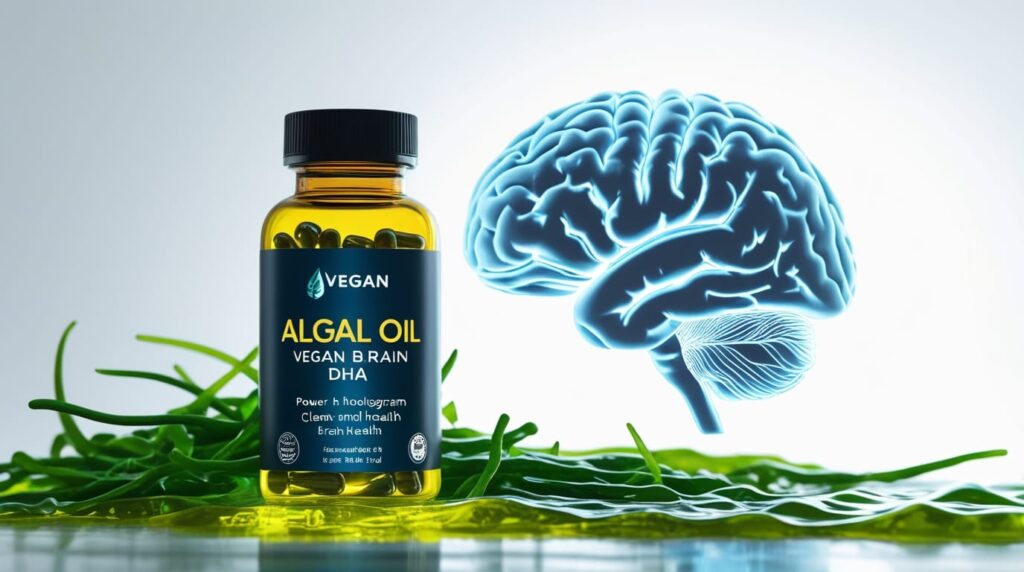
The most reliable option is an algal oil capsule. Look for one that clearly shows DHA content on the label – at least 200 to 300 mg per serving. Take it with your main meal of the day. Lunch or dinner works better than an empty stomach. That one daily habit covers your DHA needs without changing anything else about how you eat.
If you are ready to choose a supplement, this comparison of top algal oil options in India can help – Best Algal Oil India 2025: Top Vegan DHA Supplements Reviewed
If you or someone in your family has difficulty swallowing capsules – children, elderly parents – liquid algal oil is a good alternative. It can be mixed directly into food or a smoothie without any noticeable taste.
On the food side, keep eating your flaxseeds, walnuts, and chia seeds. They provide ALA which supports general omega-3 intake even if it cannot replace direct DHA. Ground flaxseed mixed into roti dough or morning curd is one of the easiest daily additions for an Indian household.
Switching your cooking oil from sunflower or soybean to mustard oil also helps – it has a better omega-3 to omega-6 balance and reduces the competition that blocks DHA absorption.
Small changes. Done consistently. That is genuinely all it takes.
FAQs
Q. Can I get enough DHA from flaxseeds and walnuts daily?
No – these give you ALA, not DHA. Your body converts very little of it. For direct DHA, algal oil is the only reliable plant-based option.
Q. Can pregnant women and children safely take vegan DHA?
Yes and honestly, these are the two groups who need it most. For pregnant women, DHA directly supports the baby’s brain and eye development. For children, it supports focus and learning. Algal DHA is actually the safest form because it has zero mercury risk – something fish oil can’t guarantee.
Q. Should I take DHA at night or in the morning?
Timing doesn’t matter as much as consistency. What does matter is taking it with a meal that has some fat – lunch or dinner works well. Fat helps your body absorb DHA properly. Pick a time that fits your routine and stick with it daily.
Q. How long before I notice a difference with vegan DHA?
Most people notice subtle improvements in focus and energy within 4 to 6 weeks. Bigger changes – mood, memory, eye comfort – usually show up after 8 to 12 weeks of consistent daily use.
Q. Is algal DHA safe for the whole family?
Yes – it is safe for adults, children, pregnant women, and elderly people. It is actually the form most recommended for pregnancy and early childhood because it has zero mercury risk.
Q. Do I need both DHA and EPA as a vegan?
DHA is the priority for brain and eye health. EPA supports heart health and inflammation. If your supplement has both – good. But if it only has DHA, that covers the most critical need for most vegans.
Learn more about our vegan health mission on the About Us page.
For more in-depth information, explore our related guides below to better understand vegan DHA, algal oil, and choosing the right supplement. Blog
Learn more about the potential risks of a low-fat vegan lifestyle in our detailed guide: “Low Fat Vegan Diet Problems in India: Are You Eating Enough Healthy Fats?”
Concerned about omega-3 intake? Read our detailed guide on DHA Deficiency in India: Causes, Symptoms & Fix (2026) to learn the symptoms, causes, and practical solutions.
Confused about vegan omega-3 sources? Read our detailed comparison of Algal Oil DHA vs Flaxseed Omega 3 – Which Works Better? to find out which option best supports your health goals.
Disclaimer: This article is for educational purposes only. Always consult your paediatrician before starting new supplements.
Pingback: Vegan DHA vs. Fish Oil : Which One Is Safer and Healthier?
Pingback: Vegan DHA during Pregnancy- The Essential Nutrition
Pingback: Best Vegan Omega-3 Sources for a healthy Plant-Based diet
Pingback: DHA for Teenagers: Boost Brain Development & Study Focus
Pingback: Vegan Omega 3 Guide: DHA, EPA, ALA & Sources
Pingback: DHA for Brain Health in India — Why Vegetarians Miss It