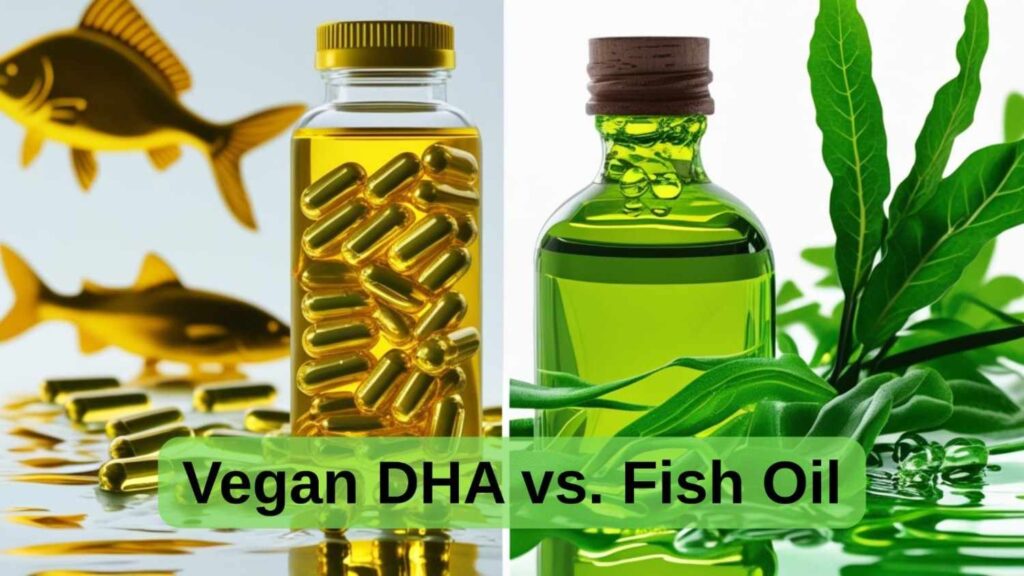
I get this question a lot. Someone can’t stand swallowing capsules, sees a gummy version, switches, and feels good about it until they actually read the label and realize the DHA number dropped by half.
Nobody tells you that part upfront.
Vegan DHA gummies vs capsules India isn’t really about which one’s “better” in some abstract sense. It’s about what you’re actually getting per serving, because the two formats aren’t built the same way at all.
The front of the box says the same things either way. Brain health, heart health, no fish. It’s the back of the label, the actual mg number, where the real difference sits.
Gummies vs Capsules — What Are You Actually Comparing?
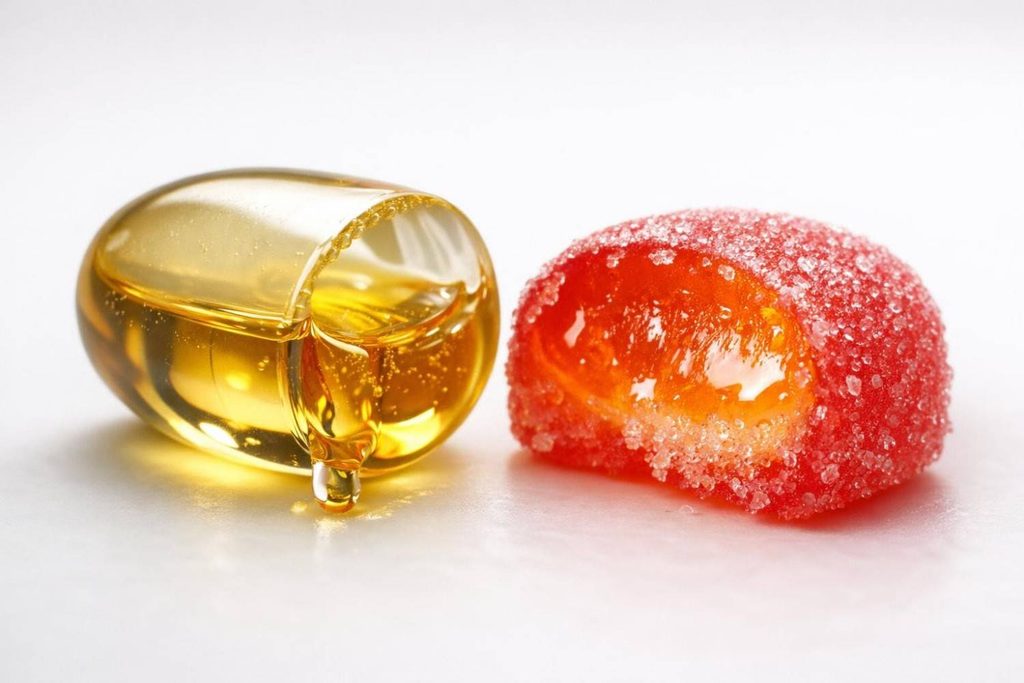
A capsule is basically oil in a shell. Usually algal oil, sealed up, and it breaks down once it hits your stomach. Nothing fancy about it.
A gummy is a different animal entirely. It’s a chewy base, pectin or something similar holding it together, plus sugar and flavoring, with DHA oil mixed in somewhere along the way.
That difference in structure changes everything downstream. A capsule doesn’t need to taste like anything, so it can cram in more DHA per unit. A gummy has to taste good enough that you’ll actually want to eat it, which eats into how much oil they can pack in.
How Much DHA Do Gummies and Capsules Really Provide?
This is the part nobody puts on the front of the box.
Capsules sold in India usually land somewhere between 200mg and 500mg of DHA per serving. Gummies drop way down from that, often just 50mg to 100mg per piece. Makes sense once you think about it, there’s only so much fish-tasting oil you can hide in something that’s supposed to taste like candy before it stops working.
So, if a capsule gives you 400mg in one go, you’re looking at three or four gummies to get anywhere close. That math never shows up anywhere on the packaging, you have to work it out yourself.
The NIH’s fact sheet on omega-3 fatty acids confirms that EPA and DHA amounts, not the delivery format, are what determine an effective daily dose. NIH Omega-3 Fatty Acids Fact Sheet
Vegan DHA Gummies India — Why People Actually Like Them
For some people, gummies genuinely solve a problem. If capsules make you gag or you just can’t get past the swallowing part, this fixes that outright.
They work well for kids too, obviously, since taste wins over dosage numbers at that age every time. And honestly, if someone’s new to supplements and not sure they’ll stick with it, taking something that doesn’t feel like a chore matters more than squeezing out an extra 50mg. A supplement you actually take beats a stronger one you keep forgetting about.
Vegan DHA Gummies — Where They Fall Short
But it’s not all upside. Sugar’s the obvious one; most gummies need some to actually taste like something you’d want to eat. You’re also getting less DHA per piece, so you end up needing more of them just to hit a real dose. Some brands throw in extra flavoring or filler that does nothing except make the ingredient list longer.
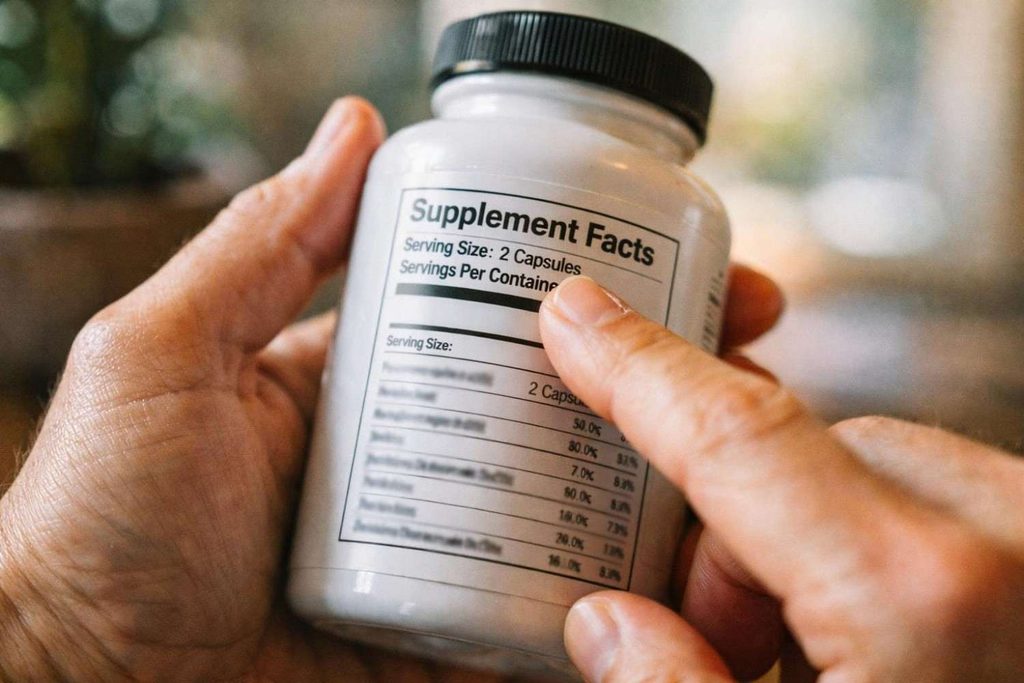
And the label wording gets sneaky sometimes. I’ve seen bottles where the DHA amount printed is per two gummies, not one, easy to miss if you’re just glancing at the front.
Why Vegan DHA Capsules Still Lead in India
Capsules stay popular for a reason. You get a concentrated dose, no sugar hiding in there, no extra stuff getting in the way of the actual DHA.
Comparing brands is easier too, since what’s on the label usually is the full serving, not split across two units. If swallowing a capsule doesn’t bother you, you’re probably getting more DHA for your money this way.
Does Format Affect Absorption?
People assume chewing something means it absorbs faster than swallowing a capsule whole. Doesn’t really work that way. What actually matters is the DHA source and how well the product’s formulated, not whether it went down as a chew or a swallow. I got into this more in an earlier piece on how algal DHA actually gets absorbed, worth checking out if you want the full picture: Vegan DHA Absorption in India
What to Actually Check on the Label Before Buying
A handful of numbers matter way more than whatever’s printed on the front of the box.
- The actual DHA amount per serving, not the total product weight
- Whether the serving size is per one unit or two
- How much sugar’s in there, especially for gummies
- Confirmed algal source, not a vague “plant based” line
- Any mention of third-party testing on the label or the brand’s site
Takes maybe a minute to check all this. Skipping it is exactly how people end up with way less DHA than they thought.
Are Gummies More Expensive Per Dose in India?
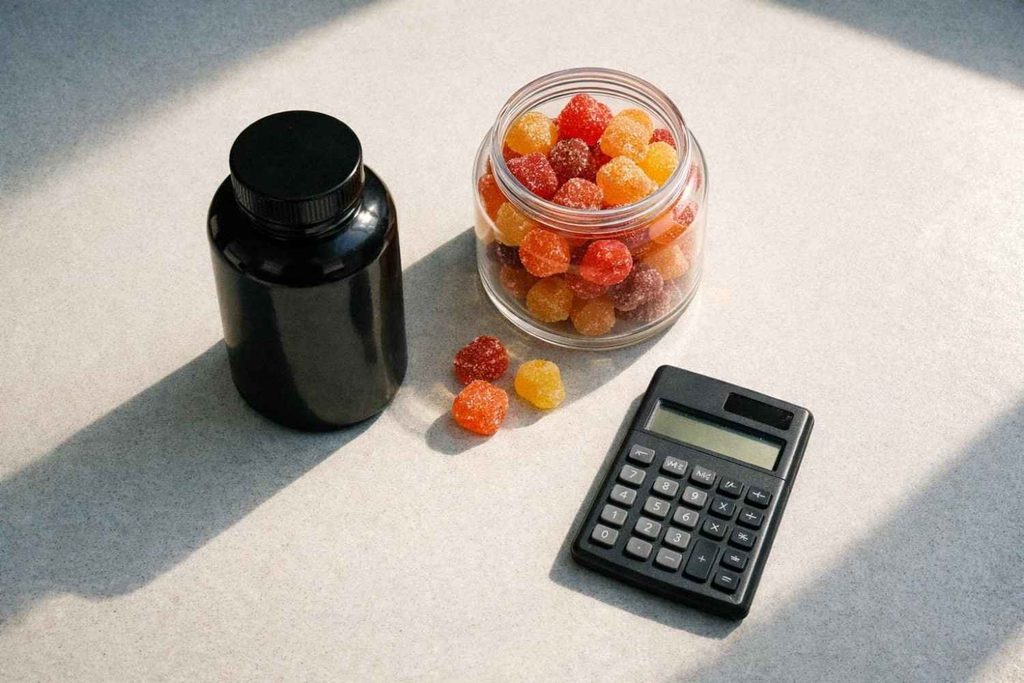
Turns out, usually yes. A capsule bottle giving you 60 servings at 400mg DHA each often costs less per month than a gummy bottle where you need three gummies daily just to match that dose.
Brands don’t make this obvious. A gummy jar might look cheaper sitting next to a capsule bottle on Amazon, until you actually calculate cost per 100mg DHA instead of cost per bottle. Once you do that math, capsules usually come out ahead for anyone watching their monthly supplement spend.
That said, if gummies are the only thing that gets you to take your DHA consistently, the extra cost might still be worth it. A missed dose costs you more than a slightly pricier one.
Which Format Fits You Better
If you’re fine swallowing a capsule and want the best DHA for your rupee, go with capsules, simple as that. If you’re a parent dealing with a kid who won’t take their omega-3 any other way, or you’ve genuinely tried capsules and can’t get past it, gummies are worth the trade-off.
If you’re just starting out and not sure you’ll stick with a routine, honestly, pick whichever one you’ll actually take every single day. A lower dose taken consistently beats a stronger one you keep forgetting about. For a full comparison of the top verified capsule options in India, this is worth a look: Best Vegan DHA Supplements in India — Top 3 Picks for 2026
Vegan DHA Gummies vs Capsules India — Final Verdict
There’s no single winner here. It comes down to the actual DHA number you’re getting, whether you’ll take it consistently, and how much you care about added sugar.
Capsules win on concentration and cost. Gummies win if you genuinely can’t handle capsules. Either way, read the label, don’t just trust the format.
FAQs
Q. Do vegan DHA gummies have less DHA than capsules?
Usually. There’s only so much oil you can fit into something chewy before it stops tasting like a gummy.
Q. Are vegan DHA gummies bad because of the sugar?
Not automatically bad, but it varies a lot by brand. Worth checking before assuming they’re all the same.
Q. Can gummies fully replace capsules for daily DHA?
Sure, if you eat enough of them to match the dose. Just don’t assume one gummy equals one capsule, check the numbers.
Q. Does chewing help DHA absorb faster than swallowing?
Not really. What matters is the source and formulation, not how it goes down.
Q. Which format’s better for kids?
Gummies, usually, just keep an eye on the sugar and make sure the DHA dose actually fits their age.
Conclusion
Vegan DHA gummies vs capsules India really comes down to what you’ll actually keep taking. Capsules give you more DHA for less money. Gummies solve a real problem if pills just aren’t happening for you.
Whatever you go with, check the actual DHA per serving before buying, not just what’s on the front. For a full comparison of the top verified vegan DHA supplements in India, check this next: Best Vegan DHA Supplements in India — Top 3 Picks for 2026
About the Author
Kamal Mishra is a health & nutrition writer and vegan wellness advocate. He is the founder of VeganVitaa – India’s trusted vegan DHA resource for plant-based families.
For more in-depth information, explore our related guides below to better understand vegan DHA, algal oil, and choosing the right supplement. Blog
Disclaimer: This article is for educational purposes only. Always consult your paediatrician before starting new supplements.