I almost skipped writing this post entirely. Side effects and drug interactions felt like a topic better left to doctors, not a supplement blog.
Then I realized that’s exactly the problem. Most content around vegan omega 3 side effects either glosses over the risks completely or swings the other way and makes it sound alarming. Neither is honest, and neither actually helps someone standing in front of a bottle trying to decide.
I’ve been vegetarian for over a decade, and I take a vegan omega-3 supplement myself. This is what I’d actually want to know before starting one, or before recommending it to someone already on medication.
For a broader look at algal oil products in general, I’ve already covered that in my Best Algal Oil India 2025-26 guide. This one goes into what most product pages leave out.
Vegan Omega 3 Side Effects — Is It Safe to Take?
Short answer, yes, for most people, with a handful of real exceptions worth knowing before you start.
Side effects from vegan omega-3 are usually mild, when they show up at all. Most people take it daily and never notice anything beyond the occasional upset stomach. But “vegan” on the front of the bottle doesn’t mean risk-free. The DHA and EPA still come from a fat, and once it’s inside your body, it behaves the same whether it started in algae or in a fish.
Who this applies to differently:
- Healthy adults with no medications, low risk, mild side effects at most
- People on blood-thinning or blood pressure medication, worth a doctor’s input first
- Pregnant or breastfeeding women, generally fine but dose matters more
- Anyone already taking another omega-3 or fish oil product, risk of unintentional overdose
The rest of this article goes through each of these in more detail, but the short version is this: for most people, it’s a safe daily supplement. For a smaller group, it’s worth a conversation with a doctor before starting.

Common Side Effects You May Notice
For most people, side effects stay mild and tend to ease once the body adjusts.
| Side Effect | How Common | Why It Happens |
| Stomach discomfort | Common, mild | Fat-based capsule taken on an empty stomach |
| Nausea | Occasional | Higher doses, or taken without food |
| Loose stools | Occasional | Excess oil, sensitive digestion |
| Bloating or reflux | Occasional | Poor storage or lower-quality oil |
Stomach discomfort is the one people report most. It’s usually not the DHA itself causing trouble, it’s the oil sitting in an empty stomach.
Nausea tends to show up more at higher doses, especially in the first few days before your body adjusts.
Loose stools happen occasionally, more so if you jump straight into a high dose instead of easing in.
Bloating or reflux is less common, and when it does happen, it’s often tied to the oil itself, older stock, poor storage, or lower-quality extraction, which can affect how well the oil sits with you
If any of this sounds familiar, I’ve gone deeper into the stomach-upset side specifically in Vegan Omega 3 Stomach Upset in India.
5 Situations Where You Should Be More Careful
Most people don’t fall into any of these categories, but if you do, it’s worth pausing before you start.
- Taking more than the recommended serving, or combining multiple omega-3 products without tracking total intake
- On blood-thinning medication — including aspirin, warfarin, or clopidogrel
- Scheduled for surgery soon — omega-3 can mildly affect clotting, so follow your surgeon’s specific advice on when to stop
- Pregnant or breastfeeding — generally safe, but dosage and product choice matter more here
- Already managing a chronic condition or taking multiple medications — more variables, more reason to check first
None of these mean you can’t take vegan omega-3. They just mean it’s worth a quick conversation with a doctor instead of assuming a supplement label covers every possible interaction.
Vegan Omega-3 and Medicine Interactions
This is the part most product pages skip entirely, so let’s go through it properly.
Blood thinners and anticoagulants
This is the one with the most research behind it. Omega-3 naturally makes platelets a bit less sticky, which means blood clots slightly less easily. Pair that with warfarin, and INR levels can shift, so this combination is worth discussing with your doctor, especially at higher omega-3 dose. Newer anticoagulants like Eliquis or Xarelto carry a similar concern, the effects can add up at higher omega-3 doses.
Antiplatelet medicines
Similar mechanism, similar caution. If you’re on aspirin or clopidogrel specifically for a heart condition, this is worth flagging to your doctor before adding a daily omega-3 supplement.
Blood pressure medicines
Omega-3 tends to lower blood pressure a little on its own. Stack that with medication doing the same job, and it’s usually not dangerous, just worth bringing up at your next appointment, especially if your dose has changed recently.
Statins
This one surprised me. A pharmacokinetic study found that combining atorvastatin with high-dose omega-3 actually changed how much DHA and EPA showed up in the bloodstream, less than expected on their own. It’s not a safety red flag exactly, more a reason not to assume the two simply stack without any interaction at all.
Diabetes medicines
The interaction concern here is less established. Some research even points to omega-3 supporting insulin sensitivity rather than working against diabetes medication. Still, any combination of a chronic condition and multiple medications is a reasonable one to mention to your doctor, just as a routine check.
None of this means these combinations are automatically dangerous. It means they’re worth a conversation, not a guess. The NIH review on fish oil and anticoagulant interactions lays out the mechanism in more detail if you want to go deeper into the blood-thinner side specifically.
Can Too Much DHA or EPA Cause Problems?
Yes, though it takes a fair amount to get there for most healthy adults.
The FDA generally considers up to 5 grams of combined EPA and DHA per day safe for most people. That’s a high ceiling; most supplements sit nowhere close to it on their own. The real risk isn’t usually one product taken as directed, it’s stacking.
Where people run into trouble without realizing it:
- Taking a vegan omega-3 capsule and a separate multivitamin that also contains omega-3
- Doubling up on capsules because “more must be better”
- Not checking whether a product’s serving size is one capsule or two, and taking double without knowing
This is also where the total oil weight versus actual DHA confusion matters again. A bottle listing “1000mg Omega-3” isn’t 1000mg of DHA, and assuming otherwise makes it easy to underestimate how much you’re actually taking, especially if you’re combining products.
At normal, single-product doses, side effects from “too much” are rare. The real problem usually isn’t the dose on the label; it’s not knowing what you’re combining it with.
Algal Oil vs Fish Oil — Any Difference in Side Effects?
Short version, mostly similar, with a few real differences worth knowing.
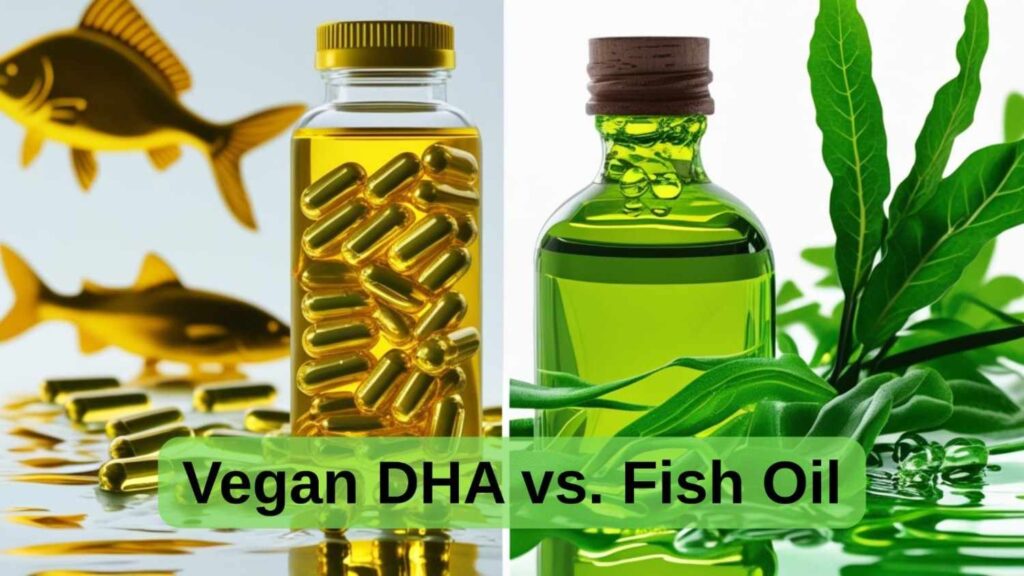
Digestive side effects show up with both. Nausea, loose stools, and stomach discomfort aren’t unique to either source, they come down to dose and how sensitive your stomach is, not whether the DHA came from algae or fish.
Fishy burps are the one clear difference. Fish oil is notorious for this, that lingering aftertaste that comes back up after taking it. Algal oil generally avoids this entirely, since there’s no fish oil smell or taste to begin with.
Purity and source is where algal oil has a real edge. Fish accumulate whatever’s in the water they live in, including heavy metals and ocean contaminants, over their lifetime. Algal oil is grown in a controlled tank, so that particular risk mostly disappears.
Worth being clear about one thing though. Vegan doesn’t mean risk-free. Algal oil can still cause the same digestive side effects fish oil does, and it still needs the same caution around blood thinners, dosage, and interactions covered earlier in this article. The source changes where the DHA comes from, not how your body processes it once it’s in your system.
If you’re curious whether algal oil actually absorbs as well as fish oil in the first place, I’ve covered that separately in Vegan DHA Absorption in India.
Who Needs to See a Doctor Before Beginning
A quick checklist before you start any new omega-3 supplement.
- Taking blood thinners, antiplatelet medication, or blood pressure medicine
- Pregnant or breastfeeding
- Scheduled for surgery in the near future
- History of bleeding disorders or easy bruising
- Managing a chronic condition or already on multiple medications
If none of these apply to you, you’re likely in the low-risk group most people fall into. If even one does, it’s not a reason to avoid omega-3 entirely, it’s just a reason to bring it up at your next appointment instead of guessing.
If you’re pregnant specifically, I’ve gone into that in more detail separately in Vegan DHA Side Effects During Pregnancy.
How to Reduce Side Effects
A few small habits take care of most of this before it even becomes a problem.
- Take it with food, something with a bit of fat in it. That’s what actually helps absorption, and it’s the single biggest reason people get stomach discomfort in the first place
- New to it? Start lower, then work up once your body adjusts, instead of jumping straight to a full serving
- Watch for stacking. Multivitamins sneak omega-3 into their formula more often than people expect
- Read past the DHA number to the full ingredient list, especially if you have any sensitivities
- Keep it away from heat and light. Poor storage can affect oil quality over time, so keeping it cool and away from light is worth the habit
None of these guarantees zero side effects, but it covers most of what actually trips people up.
What to Check Before Buying a Vegan Omega-3 Supplement
This is the same verification process I use across VeganVitaa, checking whether a brand’s testing claim is backed by something independent, not just taking the label’s word for it. Before including these two, I checked whether their claims held up beyond their own product page.
Once you know the safety side, choosing a product comes down to a few practical checks.
Things to check the label for:
- Actual DHA and EPA mg per serving, not just total oil weight
- Confirmation it’s genuinely algae-derived, not flaxseed passed off as omega-3
- Full ingredient list, not just the headline DHA number
- Any added oils, stabilizers, or allergens worth knowing about
- Certificate of Analysis or a clearly stated testing claim
- Expiry date and storage instructions, since oxidized oil causes more digestive upset
Transparency matters more here than in a general buying guide, since it directly ties into the side-effect and interaction concerns covered earlier. These two stood out specifically on that front.
Unived Ovegha
Every batch comes with a published Certificate of Analysis, and third-party verification through Trustified confirmed the tested batch passed, with lab work done by Eurofins. An independent lab review site also gave it a 10 out of 10 non-toxicity score after separate testing.
Naturaltein Ultimate
Independently verified through a third-party testing service, which confirmed mercury, lead, arsenic, and cadmium were all within safe limits, not just a brand claim sitting unchecked on the label.
None of these are automatically side-effect-free, nothing is. But when testing and label transparency are what you’re checking for, these three are backed by more than just their own marketing copy.
When to Stop and Get Medical Help
Most side effects are minor and manageable. A few aren’t, and those are worth taking seriously.
Stop and talk to a doctor if you notice:
- Unusual bruising or bleeding that doesn’t have an obvious cause
- Blood in stool, or stool that looks unusually dark
- Severe or persistent stomach pain, not just mild discomfort
- Signs of an allergic reaction, like rash, swelling, or difficulty breathing
- Any symptom that feels disproportionate to what you’d expect from a supplement
This isn’t meant to cause alarm. These reactions are uncommon. But when something feels genuinely off, especially anything related to bleeding or an allergic response, that’s not a wait-and-see situation. It’s worth a same-day call, not something to monitor for a few more days first.
FAQs
Q. Can vegan omega-3 cause stomach upset?
Yes, it’s the one people run into most. Usually mild, and taking it with food fixes most of it.
Q. Can I take vegan omega-3 with blood thinners?
Check with your doctor first. Omega-3 can mildly affect clotting, so that combination is worth confirming rather than assuming it’s fine.
Q. Is algal oil safe during pregnancy?
Generally considered safe, but the right product and dosage during pregnancy should be discussed with your healthcare provider directly.
Q. Can I take DHA and EPA with other supplements?
Usually fine, just watch for overlap. Multivitamins sometimes include omega-3 too, and stacking without realizing it is an easy mistake.
Q. What happens if I take too much omega-3?
At normal doses, not much. At very high doses, mostly digestive discomfort. The real risk is combining products without tracking total intake.
Q. Should I stop omega-3 before surgery?
Often recommended, since it can mildly affect clotting. Confirm the timing with your surgeon rather than guessing.
Conclusion
Vegan omega 3 side effects are usually mild, and for most people, this is a genuinely safe daily supplement. The real risk isn’t the supplement itself, it’s not knowing what you’re combining it with, or skipping the conversation with a doctor when medication or a health condition is part of the picture.
Stomach discomfort is common and manageable. Serious reactions are rare. The handful of situations that call for real caution, blood thinners, upcoming surgery, very high triglycerides, are worth flagging upfront, not discovering after the fact.
If you’re starting fresh, check the actual DHA and EPA numbers, not just the total oil weight, and pick a product with real testing behind it rather than just a claim on the label.
Go back through the checklist above, and if anything on it applies to you, that’s your sign to have a quick word with your doctor before you start.
About the Author
Kamal Mishra is a health & nutrition writer and vegan wellness advocate. He is the founder of VeganVitaa – India’s trusted vegan DHA resource for plant-based families.
For more in-depth information, explore our related guides below to better understand vegan DHA, algal oil, and choosing the right supplement. Blog
Disclaimer: This article is for educational purposes only. Always consult your paediatrician before starting new supplements.
Disclaimer: This post contains affiliate links. If you buy through these links, I may earn a small commission at no extra cost to you. It helps me keep sharing useful content with you.