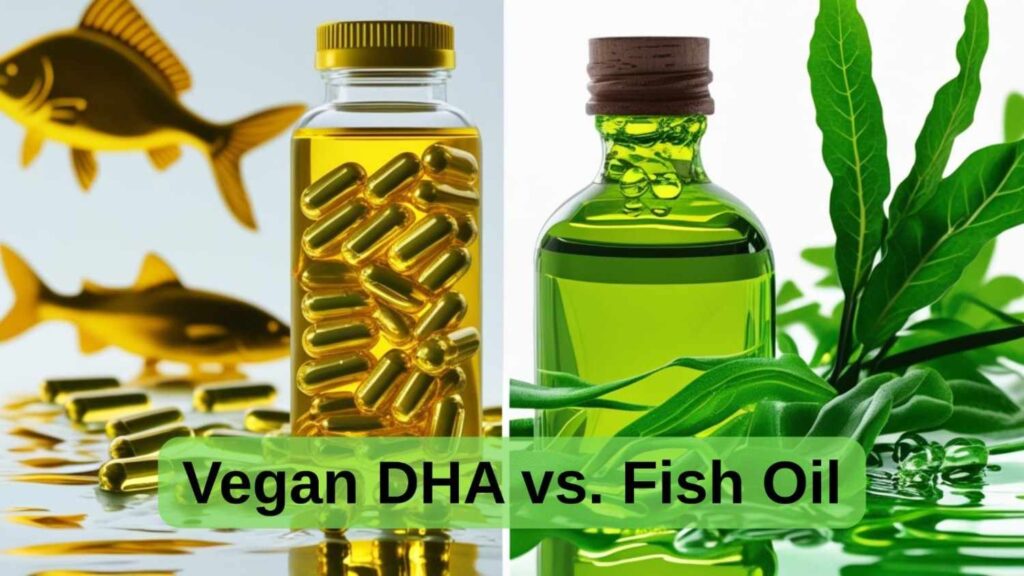
If you are searching for the best vegan omega-3 capsules in India, you’ve probably faced one big confusion already – fish oil vs algal oil.
Most of us were brought up to think that fish oil was the only source of Omega-3. Doctors recommended it, advertisements promoted it, and we never questioned it. But more people are now wondering where and why this Omega-3 comes from.
Without the need for complicated science, this blog will give you an honest, direct explanation of the real distinctions between fish oil and algae oil.
👉 If you’re already comparing products, this guide will also help you choose better:
https://veganvitaa.com/best-vegan-omega-3-capsules-in-india-2025/
Where Does Omega-3 Really Come From?
Here’s a truth that surprises many people:
Fish do not produce Omega-3.
They get it from algae.
Fish eat algae → Omega-3 builds up in fish → humans extract oil from fish.
Algal oil simply goes straight to the source, avoiding the intermediate stage.
That’s the core difference in the fish oil vs algal oil debate.

To understand this better, knowing what algal oil really is helps clear most confusion around vegan Omega-3 sources:
https://veganvitaa.com/what-is-algal-oil-pure-vegan-omega-3-explained/
Fish Oil: The Traditional Option (With Hidden Problems)
Fish oil has been used for decades, but it comes with some real concerns:
- Possible contamination from heavy metals and ocean pollutants
- Fishy smell and burps
- Ethical and environmental impact
- Not suitable for vegans or vegetarians
Some high-quality fish oil brands try to purify their products, but the source itself still comes from overfished oceans.
Algal Oil: The Cleaner, Modern Alternative
Algal oil is extracted from algae grown in controlled environments, not oceans.
This makes algal oil:
- Cleaner and more consistent
- Free from marine pollution
- Vegan and cruelty-free
- Rich in DHA (the most important Omega-3 for brain health)
That’s why many nutrition experts now recommend algal oil when comparing fish oil vs algal oil.
For a complete understanding of plant-based omega-3, you can read our detailed Vegan Omega-3 Guide.
Fish Oil vs Algal Oil: Quick Comparison Table
| Feature | Fish Oil | Algal Oil |
| Omega-3 Source | Fish (secondary source) | Algae (original source) |
| Vegan Friendly | ❌ No | ✅ Yes |
| Risk of Ocean Toxins | ⚠️ Possible | ✅ No |
| Fishy Smell/Burps | Common | None |
| Sustainability | Low | High |
| DHA Content | Moderate–High | High & stable |

👉 If you’re already comparing products, this guide will also help you choose better:
https://veganvitaa.com/best-vegan-dha-supplements-in-india/
Which One Is Better for Daily Use?
When comparing fish oil vs algal oil, algal oil stands out if purity, ethics, and digestion are your top priorities.
Many people switch because:
- They feel less bloated
- No aftertaste
- Peace of mind about sustainability
If you’re exploring options, you can check well-reviewed algal oil supplements on Amazon to understand pricing and formats: https://amzn.to/498xoOV
Who Should Prefer Algal Oil?
Algal oil is especially useful for:
- Vegans & vegetarians
- People sensitive to fish oil
- Pregnant women (doctor-recommended DHA)
- Students & professionals focused on brain health
Along with choosing the right source, taking the correct DHA dosage is equally important for long-term results:
https://veganvitaa.com/vegan-dha-dosage-per-day-how-much-dha-do-you-need/
Another trusted option worth exploring is vegan DHA capsules made from algae available online: https://amzn.to/4q5M0o5
Is Fish Oil Still Bad? Not Exactly.
To be fair, high-quality fish oil is still a good source of Omega-3. However, in terms of pollution, ethics, and sustainability, algal oil is more consistent with modern health values than fish oil.
You can also explore plant-based omega-3 alternatives if you’re transitioning away from fish oil: https://amzn.to/44ZSEUF
What Experts & Studies Say
Scientific sources confirm that algae are the primary producers of DHA and EPA.
You can read more here:
- NIH on Omega-3 sources: https://ods.od.nih.gov/
- Harvard Health on DHA benefits: https://www.health.harvard.edu/
FAQs: Fish Oil vs Algal Oil
1. Is algal oil as effective as fish oil?
Yes. Algal oil provides DHA directly and is equally effective.
2. Does algal oil contain EPA?
Some algal oils contain EPA, but DHA is the main strength.
3. Is algal oil safe for long-term use?
Yes, when taken in recommended dosage.
4. Why is algal oil more expensive?
Because it’s produced in controlled, clean environments.
5. Can children take algal oil?
Yes, but dosage should be age-appropriate.
Final Thoughts
The question is no longer just fish oil vs algal oil.
The real question is: Do you want Omega-3 from polluted oceans, or from a clean, ethical source?
For most people today, algal oil is not just an alternative – it’s an upgrade.
If you’re ready to make an informed choice, don’t miss this complete buying guide:
👉 Best Vegan Omega 3 Capsules in India https://veganvitaa.com/best-vegan-omega-3-capsules-in-india-2025/
Get more information about Vegan DHA from our other blogs. Blog
Disclaimer: This article is for educational purposes only. Always consult your paediatrician before starting new supplements.
Disclaimer: This post contains affiliate links. If you buy through these links, I may earn a small commission at no extra cost to you. It helps me keep sharing useful content with you.