Introduction
Most people don’t think about Omega-3 until they start facing problems.
Low energy. poor focus. Mood swings. Constant tiredness.
These issues feel normal in today’s lifestyle, but often they are connected to one simple thing – a nutritional gap.
A good chunk of people in India opt for a vegetarian diet, which is a pretty common thing in the country’s rich culinary scene. While this way of eating is definitely lauded for its many health perks, there’s one key nutrient that often gets missed: Omega-3.
The real challenge here isn’t just finding foods that contain Omega-3, but figuring out how to get the right kind of this vital fatty acid when you’re strictly eating plant-based.
That’s why understanding the best vegetarian omega 3 foods in India becomes important, especially if you want to stay consistent with your energy, focus, and long-term health.
It’s often pointed out in current discussions about nutrition that simply boosting the intake of plant-based Omega-3s might not be enough to truly satisfy the body’s need for DHA.
In this guide, you’ll not only learn about foods, but also understand what actually works and what doesn’t.

The Importance of Omega-3 for Your Health
Omega-3 plays a deeper role than most people realize.
It directly affects how your brain functions every day. Your ability to concentrate, think clearly, and stay mentally active depends on it.
It also supports heart health by helping maintain healthy cholesterol levels and reducing internal inflammation.
This nutrient is not just another nutrient.
It quietly affects how you feel every day.
Think about your daily routine.
If your mind feels slow, focus टूटता है, या energy low रहती है —
your body may be lacking something crucial.
Omega-3 plays a key role in:
- Brain function – helps you think clearly and stay focused
- Heart health – supports healthy cholesterol levels
- Inflammation control – reduces internal stress in the body
- Mood balance – helps you feel more stable and less drained
Many people don’t notice it at first.
But when healthy fats intake improves, small changes start to show.
Better focus.
More stable energy.
Clear thinking.
It’s not a quick fix.
But over time, the impact becomes real and noticeable.
ALA vs DHA vs EPA – The Real Difference
Most people get confused at this stage.
Omega-3 is not just one type.
There are three main forms:
- ALA – found in plant-based foods like seeds and nuts
- DHA – supports brain health
- EPA – helps with heart health and inflammation
Here’s the important part.
When you eat vegetarian foods, you mainly get ALA.
Your body then tries to convert ALA into DHA and EPA.
But the problem is:
- Conversion is very low
- Your body struggles to do it efficiently
In simple words, plant-based nutrient is helpful, but it does not directly give your body what it actually needs.
This is why many people eat healthy food regularly but still don’t feel any improvement in focus or energy.
If you want a deeper understanding of how ALA, DHA, and EPA actually work, you can read this complete Vegan Omega 3 Guide for Vegetarians: DHA EPA ALA Sources & Best Supplements for more clarity.

My Experience with Vegetarian Omega-3 Intake
At first, I only really considered plant-based options for my Omega-3 intake, like flaxseeds and walnuts. Even though I was really committed to it, I didn’t notice any real difference in my energy or how well I could think.
This is when I understood that the problem wasn’t that I wasn’t trying hard enough, but that I just didn’t know enough. Once I finally understood the difference between ALA and DHA, things became much clearer.
“I personally followed a seed-based routine for months, but I didn’t notice real changes until I understood the importance of DHA.”
🥗 Vegetarian Omega-3 Food Comparison Table
| Food Item | Type of Omega-3 | Approx Content (per 100g) | Best Way to Consume | Notes |
| Flaxseeds | ALA | ~22g | Ground in roti/smoothie | Best plant source |
| Chia Seeds | ALA | ~17g | Soaked in water | Easy daily use |
| Walnuts | ALA | ~9g | Raw snack | Brain support |
| Hemp Seeds | ALA | ~8g | Sprinkle on meals | Balanced fats |
| Soybeans | ALA | ~1.3g | Cooked sabzi | Budget friendly |
| Tofu | ALA | ~0.4g | Stir fry | Light option |
| Mustard Oil | ALA | ~6–8% fat content | Cooking oil | Traditional use |
| Spinach | ALA | Low | Cooked | Supportive food |
| Rajma | ALA | Low | Curry | Not primary source |
| Algal Oil | DHA | Direct DHA | Supplement form | No conversion needed |
This table gives a quick overview, but as you can see, most vegetarian sources provide ALA and not direct DHA, which your body actually needs.
Top 15 Vegetarian Omega-3 Rich Foods in India
Now let’s go deeper into the most practical and accessible vegetarian omega 3 foods in India that you can include in your daily life.
1. Flaxseeds (Alsi)
One of the greatest vegetarian sources of Omega-3 is flaxseed.
- Very rich in ALA
- Small but highly nutritious
- Easy to add in daily meals
They can be used in straightforward ways:
- Mix in roti dough
- Sprinkle on sabzi
- Add to smoothies
Important:
Always consume flaxseeds in ground form. Whole seeds are not absorbed properly.
They are great for daily use, but remember – they mainly provide ALA, not direct DHA.
2. Chia Seeds
Chia seeds are very popular now, and they are easy to use.
- Rich in Omega-3 and fibre
- Helps with hydration
- No cooking needed
When you soak them in water, they become soft and gel-like, so they are easy to consume.
Simple way to use:
- Soak overnight
- Add to your morning drink or breakfast
They are convenient and easy to follow daily, which makes them a good long-term habit.
3. Walnuts (Akhrot)
Walnuts are one of the simplest additions you can make.
They are easily available and can be consumed without any preparation.
Just a few walnuts daily can contribute to your healthy fats intake while also supporting brain health.
Many people prefer eating them in the morning or as an evening snack.
4. Hemp Seeds
Hemp seeds are not very common in Indian diets yet, but they are worth trying.
- Provide a balanced nutrient profile
- Light and easy to mix with food
- Simple to include in daily routine
They can be used in simple ways:
- Sprinkle over salads
- Mix with curd
- Add to smoothies
They require very little effort, which makes them easy to follow consistently.
5. Soybeans
Soybeans are widely available and affordable.
They provide a mix of protein and Omega-3, making them a useful addition to vegetarian meals.
You can cook them as curry, add them to rice dishes, or use them in salads.
Consistency is key here, as occasional intake won’t make much difference.
6. Tofu
Tofu is a versatile food that fits well into many Indian recipes.
It is light, easy to cook, and absorbs flavors well.
You can prepare it as a sabzi, grill it, or add it to stir-fries.
While it is not the highest source of Omega-3, it still contributes to overall intake.
7. Mustard Oil
Mustard oil has been used in Indian cooking for generations.
It contains small amounts of Omega-3 and can be a better option compared to some refined oils.
Using it in daily cooking is a simple way to improve your diet without extra effort.
8. Canola Oil
Canola oil is not very common in every household, but it has a better Omega-3 profile compared to many other cooking oils.
If you are open to experimenting, it can be included occasionally.
9. Spinach (Palak)
Spinach is not a major Omega-3 source, but it still adds value when included regularly.
It supports overall nutrition and works well when combined with other foods.
In Indian diets, palak is easy to include in daily meals.
10. Fenugreek Seeds (Methi)
Methi seeds are often used for digestion and metabolism.
They also contain small amounts of Omega-3.
Soaking them overnight and consuming in the morning is a common practice.
11. Rajma
Rajma is not known for Omega-3, but it still contributes in small amounts.
It becomes more useful when combined with other Omega-3 foods.
12. Edamame
Edamame is basically young soybeans.
They are more common in urban diets and are often used in salads or light meals.
They are simple to prepare and can be a good addition for variety.
13. Brussels Sprouts
These are not traditional in Indian diets but are slowly becoming more popular.
They provide small amounts of Omega-3 along with fibre and vitamins.
14. Seaweed
Seaweed is interesting because it comes from the marine ecosystem.
It is not commonly consumed, but it connects to the original source of Omega-3 in nature.
15. Algal Oil
This is where things change.
Unlike all other foods listed above, algal oil provides direct DHA.
It does not depend on conversion.
It is completely plant-based and comes from algae, which is the original source of Omega-3 in the food chain.
If you want to explore practical options, you can check this detailed guide on the 5 Best Vegan Omega 3 Capsules in India (2026 Buying Guide) to understand which algal oil supplements are actually worth choosing.
This is why many health-conscious vegetarians today prefer algal oil.
It provides direct DHA without depending on slow conversion.
If you’re considering adding a reliable source, you can check this simple breakdown of the best algal oil supplements available in India and what to look for before choosing one.
If you want a practical way to meet your daily DHA needs, adding a good algal oil supplement can help. You can check these popular options on Amazon to see its quality, ingredients, and real user reviews.
👉 Check latest price on Amazon
👉 Check latest price on Amazon
Disclosure: This post contains affiliate links. As an Amazon Associate, I earn from qualifying purchases.
The Hidden Problem with Vegetarian Omega-3 Sources
At this point, you might feel confident about adding these foods.
And that’s a good start.
However, there is one crucial concept to comprehend.
- Most of these foods only provide ALA
- Your body still needs to convert it into DHA
- And this conversion is not very efficient
This is why many people eat healthy, add seeds daily, and still don’t notice much change.
It’s not about lack of effort.
It’s about understanding how your body actually uses this nutrient.
You can also explore scientific insights from global nutrition research platforms like the World Health Organization to understand how Omega-3 requirements are defined.
Even after adding flaxseeds, chia seeds, or walnuts daily, many people still don’t feel any real difference.
The reason is simple – your body struggles to convert plant-based Omega-3 into the active DHA it actually needs.
For example, many people add flaxseeds daily for months but still complain about low focus or fatigue. This often leads to confusion about whether the diet is working or not.
Many people don’t realize how common this issue is. If you want to understand the bigger picture, you can read this detailed guide on DHA Deficiency in India: Why Most Indians Are Not Getting Enough DHA and why it affects so many vegetarians today.
When Should You Consider Omega-3 Supplements?
Food should always be your base.
But there are situations where adding a supplement makes sense.
If you are fully vegetarian and do not consume a wide variety of foods, your Omega-3 intake may remain low.
If you feel low energy, struggle with focus, or find it hard to stay consistent, it may be worth looking deeper.
Instead of guessing, it’s better to understand your symptoms clearly. You can read our guide on identifying DHA deficiency symptoms naturally and what to do next.
Why Algal Oil Is the Best Vegan Omega-3 Source
Algal oil offers a simple solution to a complex problem.
It provides DHA directly, without relying on conversion.
It is plant-based, clean, and aligned with a vegan lifestyle.
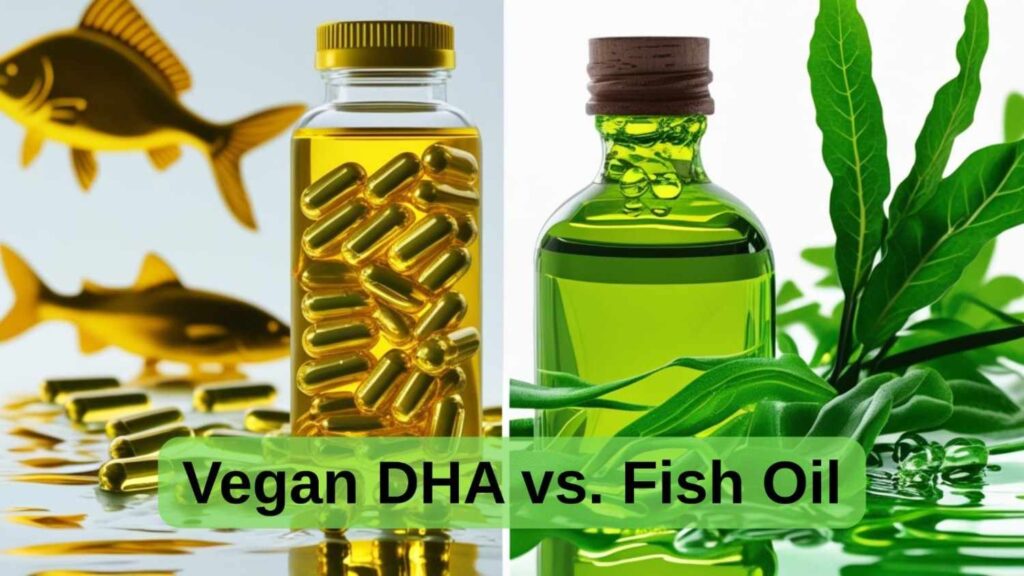
Fish oil comes from fish, but fish themselves get Omega-3 from algae.
So, when you choose algal oil, you go directly to the original source.
This approach is now supported by multiple global health discussions, including research summaries available through institutions like the National Institutes of Health.
Daily Omega-3 Requirement
For most adults, a daily intake of around 250 to 500 mg of DHA and EPA is considered beneficial.
Reaching this through food alone can be difficult in a vegetarian diet.
This is why awareness matters more than random food choices.
Sample Indian Diet Plan for Omega-3
Here’s a simple way to include Omega-3 in your daily routine.
- Morning: Start with soaked chia seeds
- Breakfast: Add flaxseed powder to your meal
- Lunch: Include palak or rajma
- Evening: Have a few walnuts as a snack
- Dinner: Add tofu to your meal
This kind of routine helps you include vegetarian omega 3 foods in India in a practical way.
But keep in mind, this mainly supports ALA intake, not direct DHA.
I’ve noticed a common thread in what people try to achieve. But it seems like real success often hinges on sticking with it and finding that sweet spot, that perfect balance.

Common Mistakes People Make
Many people try to improve their diet, but small mistakes hold them back.
- Eating seeds only occasionally
- Not being consistent daily
- Ignoring how nutrients are absorbed
- Expecting quick results
These habits slow down progress.
If you stay consistent and make small changes, results will build over time.
What I Personally Recommend
Begin with simple food sources such as flax seed, chia seed and walnut. Keep them consistent for multiple weeks.
But if your goals are to have improved concentration, energy levels, and long-term health, don’t just rely on dietary sources alone to achieve your goals.
Understanding the impact of DHA will help you make a better decision.
Frequently Asked Questions (FAQs)
1. Which is the best vegetarian omega 3 foods in India?
Some of the best options include flaxseeds, chia seeds, walnuts, hemp seeds, and soy-based foods like tofu. These are easily available and can be added to your daily diet.
2. Can vegetarians get enough Omega-3 from food alone?
Vegetarian foods mainly provide ALA, which the body needs to convert into DHA. Since this conversion is limited, food alone may not always meet your full Omega-3 needs.
3. What is the difference between ALA and DHA?
ALA is found in plant-based foods, while DHA is the active form your body uses for brain and overall health. The body converts ALA into DHA, but the process is not very efficient.
4. Is algal oil better than flaxseeds for Omega-3?
Flaxseeds provide ALA, while algal oil provides direct DHA. Since DHA does not require conversion, it is often considered a more effective option for vegetarians.
5. How much Omega-3 should I take daily?
Most adults need around 250–500 mg of DHA and EPA daily. This amount is difficult to achieve through vegetarian foods alone.
6. Are walnuts a good source of Omega-3?
Yes, walnuts contain ALA and are a convenient way to support your daily intake. However, they still rely on conversion to provide active DHA.
7. What are the signs of Omega-3 deficiency?
Common signs include low energy, poor focus, dry skin, and mood changes. These symptoms can vary depending on overall diet and lifestyle.
8. What is the best vegetarian omega 3 foods in India for daily use?
The best vegetarian omega 3 foods in India for daily use include flaxseeds, chia seeds, walnuts, and soy-based foods like tofu. These are easy to include in regular meals and help support your overall Omega-3 intake when consumed consistently.
Conclusion
Omega-3 is not something to ignore if you care about your long-term health.
You can start by including the right vegetarian omega 3 foods in India in your daily routine.
That is the foundation.
But it is also important to understand the limitations of plant-based sources.
Once you understand both sides, you can make better decisions.
Start simple. Stay consistent. And concentrate on what does work.
Starting with the right vegetarian Omega-3 foods is a great first step.
But if you want to fully support your daily needs, combining these foods with a clean, plant-based DHA source can make a real difference over time.
Keep it simple, stay consistent, and focus on what actually works for your body.
If you’re serious about improving your focus, energy, and long-term health, explore our recommended vegan DHA supplements in India here → Top 3 Best Vegan DHA Supplements in India (2026 Guide)
About Author –
Kamal is the founder of VeganVitaa, a platform dedicated to simplifying plant-based nutrition for Indian vegetarians.
He shares practical insights on Omega-3, vegan health, and daily habits to help you make better, more informed choices.
For more in-depth information, explore our related guides below to better understand vegan DHA, algal oil, and choosing the right supplement. Blog
Disclaimer: This article is for educational purposes only. Always consult your paediatrician before starting new supplements.
Disclosure: This post contains affiliate links. As an Amazon Associate, I earn from qualifying purchases.