
You spent nine months being careful about everything.
As a vegetarian myself, and as someone who has spent two years researching plant-based nutrition for Indian families, this is one of the conversations I wish had reached more mothers sooner.
What you ate. What you avoided. Whether the supplements were right. Whether the baby was getting everything needed.
And then the baby arrived. And breastfeeding began. And nobody told you that the DHA story does not end at delivery. It continues, quietly, through every feed.
For vegetarian Indian mothers, this is where the gap gets serious.
Studies have found that vegetarian and vegan breastfeeding mothers in India are producing breast milk with roughly half the DHA of non-vegetarian mothers. Half. While feeding carefully and doing everything right.” Half. The baby is feeding well, the mother is eating carefully, and still the most important fat for the infant’s developing brain is coming through at half the required level.
DHA for breastfeeding in India is a conversation that almost never happens in postnatal care. This guide is that conversation.
For everything about DHA during pregnancy itself — Best Vegan DHA Capsules for Pregnancy in India
Why Breast Milk DHA Matters More Than Most Indian Mothers Know
In India, the majority of postpartum discussions center on the milk supply. Is there enough? Is the baby gaining weight? Is latch correct?
Almost nobody asks about what is in the milk.
DHA is the single most important fat for infant brain and eye development in the first six months of life. During this window, the baby’s brain is growing faster than it ever will again. Neural connections forming. Visual pathways developing. Everything that follows is being built upon this basis.
The baby has no other source. Whatever DHA comes through breast milk is everything the baby gets.
When a breastfeeding mother is low on DHA, the milk is low on DHA. The baby gets what the mother has. And for most vegetarian Indian mothers, what she has is significantly less than what her baby needs.

What the Research Says About Indian Mothers Specifically
A 2026 study published in Frontiers in Nutrition, conducted across urban and rural populations in Punjab, India, found that DHA supplementation in lactating mothers significantly improved breast milk DHA concentration and infant neurodevelopment outcomes.
This study was not conducted in the West and applied to Indian conditions. This was Indian mothers, Indian diets, Indian breastfeeding reality.
The gap is real, it is confirmed by research done in India specifically, and for vegetarian mothers it is wider than most people are told.
For how DHA supports brain development beyond infancy — DHA for Brain Health in India
DHA for Breastfeeding in India — The Vegetarian Gap
Here is the specific problem for vegetarian Indian breastfeeding mothers.
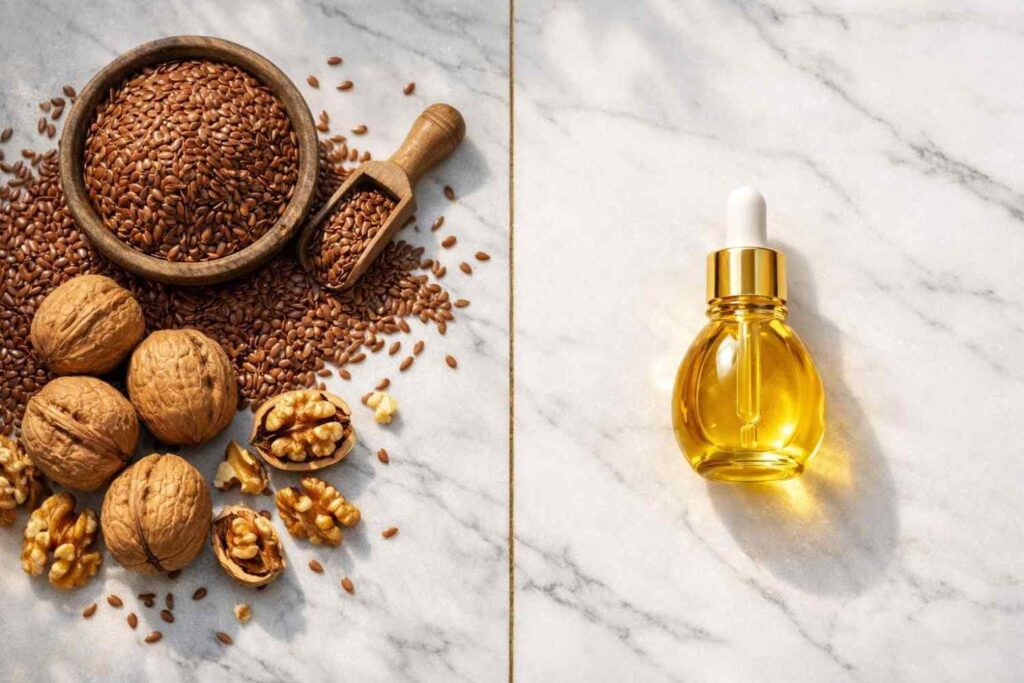
Most are eating flaxseeds. Some are eating walnuts. A few are taking a general prenatal supplement that may or may not contain meaningful DHA.
Almost none are taking direct algal DHA. And almost none have been told why it matters specifically during breastfeeding.
The numbers tell the story clearly:
| Vegetarian Breastfeeding Mothers | Non-Vegetarian Mothers | |
| Daily DHA intake | 110mg | 380mg |
| Breast milk DHA | 0.15% | 0.33% |
| Target breast milk DHA | 0.30% minimum | 0.30% minimum |
| Gap from target | Significantly below | At or above target |
Vegetarian Indian mothers are feeding their babies breast milk with less than half the recommended DHA. Not because they are careless. Because nobody told them this was happening.
This is not a failure of effort. It is a failure of information.
Flaxseeds give ALA. The body converts less than 5% of ALA into usable DHA. During breastfeeding, whatever DHA conversion was happening gets redirected toward the baby first, leaving the mother even more depleted than before.
Add to this Indian cooking oils high in omega 6, which further block whatever little omega 3 conversion was happening, and the picture becomes clear.
For vegetarian Indian mothers, algal oil is the only option that actually closes this gap. Flaxseeds will not do it. Walnuts will not do it. Only direct DHA from algae.
Is Algal Oil Safe During Breastfeeding?
This is the first question most Indian mothers ask. And it deserves a direct answer.
Yes. Algal oil is safe during breastfeeding.
The same DHA found in algal oil is what gets added to infant formula worldwide. Babies are already receiving it when breastfeeding is not possible. For breastfeeding mothers, it is simply the most direct way to get that DHA into breast milk naturally.
For vegetarian Indian mothers specifically, algal oil has one additional advantage over fish oil that matters during breastfeeding. Zero mercury. Zero microplastics. Zero ocean contamination. For a mother passing everything she consumes directly to her baby through breast milk, the cleanliness of the source is not a small thing.
Some things worth knowing:
- Standard doses of 200 to 300mg DHA daily are considered safe for breastfeeding mothers
- Algal oil has no known interactions with common postpartum medications at standard doses
- If you are on any medication after delivery, a quick conversation with your doctor before starting is always the right move
- The baby benefits directly, breast milk DHA levels improve within weeks of consistent supplementation
For a complete overview of omega 3 safety during and after pregnancy — Best Vegan Omega 3 for Women in India
For official guidance on DHA safety during lactation — NIH Omega 3 Breastfeeding Overview
How Much DHA Do Breastfeeding Mothers Need?
Simple answer — more than most Indian mothers are currently getting.
The global recommendation for breastfeeding women is at least 200mg of DHA daily. Some research suggests 300mg is more practical for vegetarian mothers who are starting from near zero.
Here is what that looks like in practice:
Starting out — first 2 weeks:
One capsule daily with your main meal. Not on an empty stomach. Not before chai. With food — lunch or dinner, whichever is your heaviest meal.
After 2 weeks:
If tolerating well, you can increase to the level your supplement recommends. Most algal oil supplements for women provide 250 to 400mg DHA per serving.
How long to continue:
For as long as you are breastfeeding. The baby is still depending on what comes through your milk. That does not change just because delivery is done.
One honest reminder:
If you are on any postpartum medication, check with your doctor before starting. Standard algal DHA doses are generally safe but your doctor should know everything you are taking.
For a detailed daily DHA dosage guide — Vegan DHA Dosage Per Day
Best Vegan DHA Options for Breastfeeding Mothers in India
For breastfeeding specifically, DHA content matters most. Choose a supplement that clearly shows DHA in mg on the label — not just total omega 3.
At VeganVitaa, these are the three I point breastfeeding mothers toward most consistently — chosen because DHA content is clearly stated, not because of packaging or price.
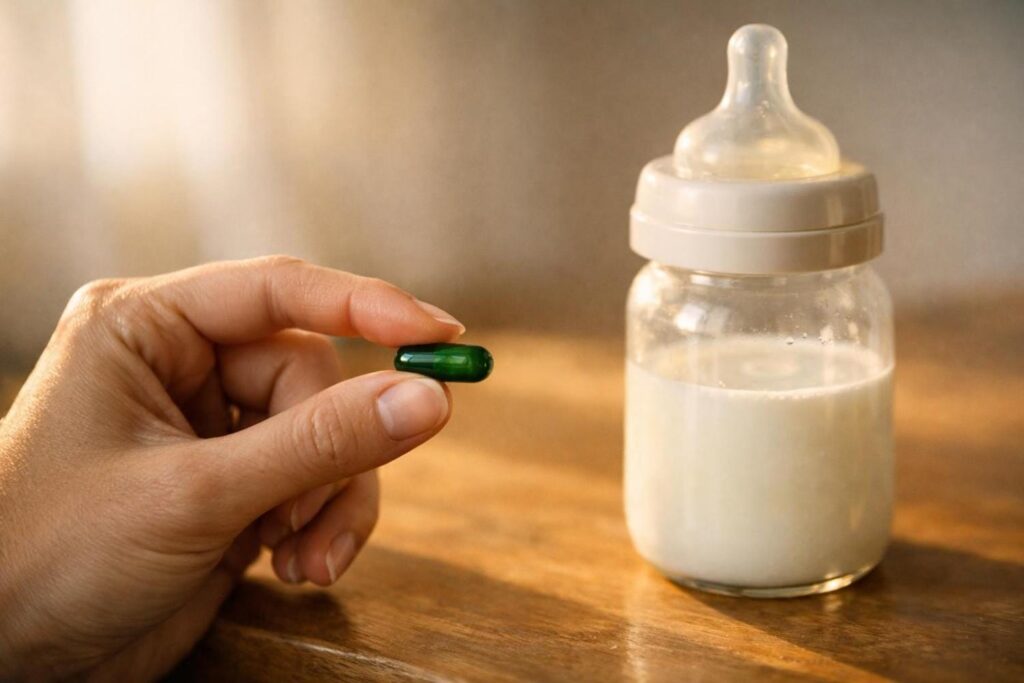
Zeroharm Vegan Omega DHA
400mg DHA per serving — highest concentration available in India. FSSAI certified, marine algae sourced, vegetarian capsule. Strong choice for breastfeeding mothers who want maximum DHA transfer through breast milk.
Check Zeroharm DHA price on Amazon
Himalayan Organics Vegan Omega 3
250mg DHA per serving, clean algal oil, vegetarian capsule shell. Trusted Indian wellness brand with transparent ingredients. Good starting point for vegetarians beginning triglyceride management.
See Himalayan Organics Vegan Omega 3 on Amazon
Deva Vegan Omega 3
Internationally trusted, third party tested, transparent numbers. Zero mercury — important when everything passes directly to the baby through breast milk.
Check Deva Vegan Omega 3 on Amazon
One thing worth checking before buying — make sure the supplement clearly states it is safe during breastfeeding or has no contraindications listed. Most algal oil supplements do not list any, but checking is always the right move.
For a complete comparison of all top vegan DHA options available in India — Best Vegan DHA Supplements in India — Top 3 Picks
Disclaimer: This post contains affiliate links. If you buy through these links, I may earn a small commission at no extra cost to you. It helps me keep sharing useful content with you.
FAQs
Q. Can I take vegan DHA while breastfeeding?
Yes — algal DHA is safe during breastfeeding. It is the same DHA added to infant formula worldwide. Standard doses of 200 to 300mg daily are considered safe for most breastfeeding mothers. If you are on postpartum medication, check with your doctor first.
Q. How quickly does DHA reach breast milk after supplementation?
Research shows breast milk DHA levels begin improving within 2 to 4 weeks of consistent daily supplementation. It keeps improving the longer you stay consistent. One capsule daily with lunch or dinner — that is genuinely all it takes to start making a difference in what your baby receives.
Q. My baby is 4 months old. Is it too late to start DHA?
Not at all. As long as you are breastfeeding, your baby is benefiting from whatever DHA comes through your milk. Starting now still matters. The brain development window extends well beyond the newborn stage.
Q. Is algal oil better than fish oil for breastfeeding mothers?
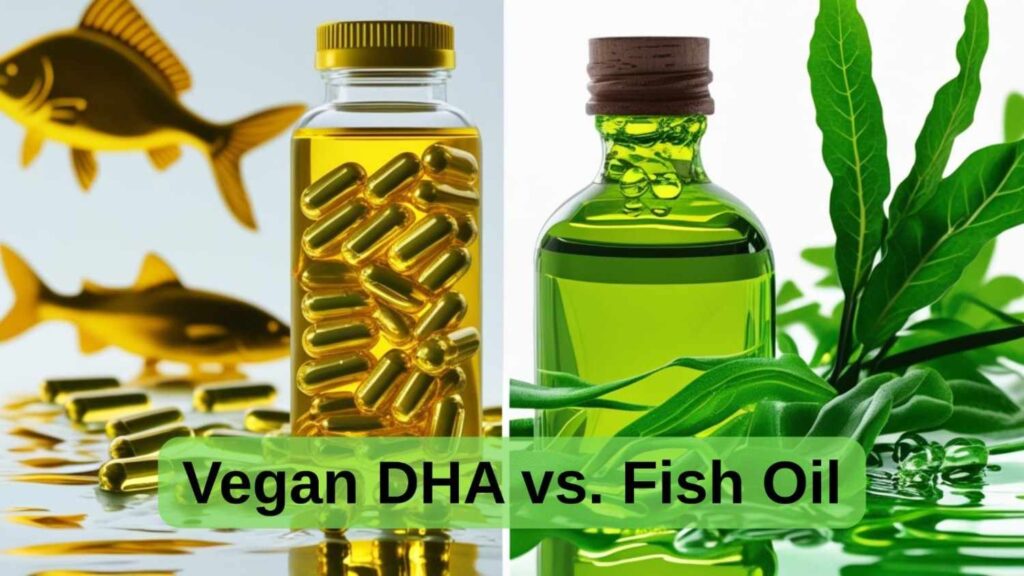
For vegetarian Indian mothers, algal oil is the only real option. But beyond that, algal oil has zero mercury and zero microplastics — both of which pass directly to the baby through breast milk. For anyone who wants the cleanest possible source during breastfeeding, algal oil is the better choice regardless of diet.
Conclusion
Every Indian mother breastfeeding her baby is already doing more than she knows.
But for vegetarian Indian mothers, there is one thing happening quietly in the background that most postnatal care never addresses. The breast milk is low on DHA. The baby is feeding well. And the most important fat for that baby’s developing brain is coming through at half the level it should be.
DHA for breastfeeding in India is not a complicated problem. It has a simple, safe, plant-based solution that has been available for years. Most vegetarian Indian mothers just were not told about it.
One algal oil capsule daily. With your main meal. Starting now, whether your baby is one week old or four months old.
These months do not come back. What your baby’s brain gets right now, through your milk, in these early weeks and months, is the foundation for everything that follows.
At VeganVitaa, I hear from mothers who started algal DHA mid breastfeeding and wish they had known sooner. Not because they did anything wrong. Because nobody told them this conversation even existed.
Now you know.
Start Here
Check your current supplement. Does it clearly show DHA on the label?
If not — that is the first thing to change.
Zeroharm for highest DHA. Himalayan Organicsfor trusted Indian quality. Deva for internationally certified zero mercury.
One capsule daily. With food. For as long as you are breastfeeding.
For everything about DHA during pregnancy — Best Vegan DHA Capsules for Pregnancy in India
About the Author
Kamal Mishra is a health & nutrition writer and vegan wellness advocate. He is the founder of VeganVitaa – India’s trusted vegan DHA resource for plant-based families.
For more in-depth information, explore our related guides below to better understand vegan DHA, algal oil, and choosing the right supplement. Blog
Disclaimer: This article is for educational purposes only. Always consult your paediatrician before starting new supplements.
Disclaimer: This post contains affiliate links. If you buy through these links, I may earn a small commission at no extra cost to you. It helps me keep sharing useful content with you.

Pingback: Which Vegan DHA Supplement in India — Simple Decision Guide