
This blog was updated on 3rd October 2026 to provide the latest information and researches on Omega 3 for PCOS in India.
PCOS does not announce itself. It just shows up – periods that go missing for months, weight that climbs no matter what you do, skin breaking out like you are seventeen again, hair thinning at the part line. Most Indian women bounce between two or three doctors before anyone actually says the word PCOS out loud.
And even after the diagnosis, the conversation rarely goes beyond metformin, birth control pills, and a general instruction to “eat healthy and exercise.”
Omega 3 for PCOS in India is almost never part of that conversation – despite research suggesting that omega-3 supplementation may help improve some metabolic, inflammatory, and hormonal markers in women with PCOS.
At VeganVitaa, I have heard this story from so many Indian women – different cities, same pattern.
This guide is for every Indian woman with PCOS who eats vegetarian, cannot take fish oil, and wants to understand whether vegan DHA is actually worth trying – and how.
What Is PCOS? Why Is PCOS So Common in India?
PCOS — Polycystic Ovary Syndrome – is something almost every Indian woman has heard of, but very few actually understand.
Basically, your hormones stop talking to each other properly. The ovaries end up making a bit too much androgen, insulin does not work the way it should, and ovulation gets thrown off track.
And it is not rare either – somewhere around 1 in 5 Indian women are dealing with it right now, often without even realising that is what is happening to their body. When you think about it, that is an astounding figure.
What makes PCOS frustrating is how differently it shows up in different women. For some, it is irregular or missed periods. For others, it is sudden weight gain that does not respond to diet or exercise. Acne along the jawline. Excess facial hair. Hair thinning on the scalp that nobody warns you about.
A lot of women carry these symptoms for years before a doctor finally connects the dots and says the word PCOS out loud.
In India specifically, things get harder because of how we eat and live. Diets high in refined carbs and sugar. Constant stress. Long hours sitting at a desk.
And on top of all this – most Indian women with PCOS are vegetarian, which means they are already missing one of the most important nutrients their body needs to fight back: direct DHA from omega 3.

The National Institutes of Health provides detailed guidance on daily omega-3 intake recommendations for general health. Check the official guidelines here.
How Omega 3 Helps with PCOS – What Research Says
Omega 3 fatty acids — specifically DHA and EPA are among the most well-researched nutrients for PCOS management. And the evidence is quite promising.
The core issue in PCOS is inflammation. Chronic low-grade inflammation disrupts insulin signalling, raises androgen levels, and interferes with ovulation. Omega 3 directly addresses this by reducing inflammatory markers in the body.
Multiple clinical studies have found that omega 3 supplementation in women with PCOS helps reduce insulin resistance – one of the root causes of the condition. It also supports better lipid profiles, reducing triglycerides and improving HDL cholesterol, both of which are commonly disrupted in PCOS.
Beyond the metabolic picture, omega 3 supports mood and mental health – something many women with PCOS struggle with quietly. The anxiety, mood swings, and emotional fatigue that come with hormonal imbalance are not just psychological. They have a nutritional component too.
Research suggests consistent omega 3 supplementation over 12 weeks shows meaningful improvements in insulin metabolism, testosterone levels, and inflammatory markers in PCOS patients. These are not overnight results but they are real and consistent ones.
Research published in PubMed shows that omega 3 supplementation in PCOS patients led to significant improvements in insulin resistance and inflammatory markers over a 12-week period. Read the study here.
Omega 3 for PCOS in India – Why Vegan DHA Is a Plant-Based Alternative to Fish Oil
Most omega 3 research on PCOS has used fish oil. Which immediately creates a problem for the majority of Indian women with PCOS – because most of them are vegetarian.
Fish oil is not an option. And flaxseeds, while helpful, provide only ALA — a type of omega 3 that the body converts into DHA at a rate of less than 5%. That conversion is simply not reliable enough to make a therapeutic difference in a condition like PCOS.
This is where algal oil changes the picture completely.
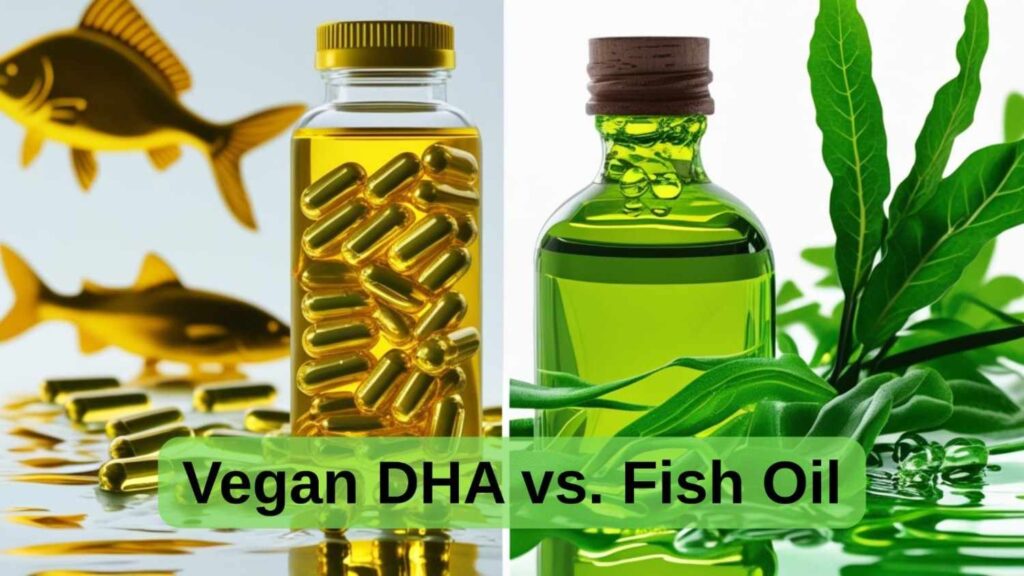
Algal oil provides direct DHA and EPA — the same forms found in fish oil sourced from microalgae, which is where fish get their omega 3 from in the first place. Same therapeutic benefit. No fish. No compromise on vegetarian values.
For Indian women with PCOS, algal oil is genuinely the most practical and effective vegan omega 3 option available. It bypasses the conversion problem, delivers direct DHA and EPA, and is completely plant-based.
If you are unsure whether your current supplement is actually delivering DHA or just ALA, this guide on why vegan omega 3 not working for many Indians explains the common mistakes clearly.
How Much Omega 3 Do You Need for PCOS?
This is where most women get stuck – either taking too little to see any effect, or taking too much without understanding what they need.
For general health, 200 to 300 mg of DHA daily is the standard recommendation. But for PCOS specifically, research points to higher combined DHA and EPA intake – typically in the range of 1000 to 2000 mg of total omega 3 daily – to meaningfully impact inflammation and insulin resistance.
For a detailed breakdown of how much DHA your body actually needs based on your age, lifestyle, and health goals, this guide on vegan DHA dosage per day covers it simply.
The most important thing is consistency. A moderate dose taken every single day for at least 8 to 12 weeks is far more effective than a high dose taken randomly.
And as always if you are managing PCOS with medication or have other health conditions, discuss dosage with your doctor before starting any supplement.
Best Vegan Omega 3 Supplements for PCOS in India
Not all vegan omega 3 supplements provide the same amount or type of omega-3. If you are choosing one for PCOS, check the label for the actual DHA and EPA content rather than looking only at the total amount of algal oil.
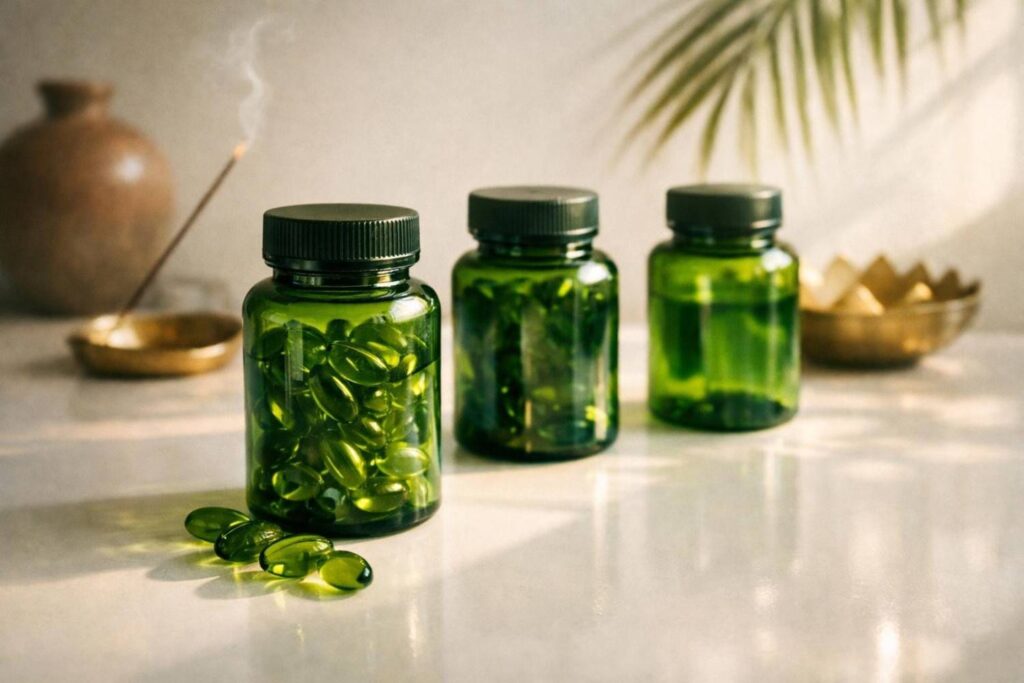
Here are three vegan omega 3 options available in India that provide direct omega-3s from algae:
Unived Ovegha Vegan Omega-3 DHA
Unived Ovegha provides 500 mg of DHA per serving from algal oil. It is a vegan capsule designed for people looking for a direct plant-based source of DHA without fish oil. The brand also provides batch testing information on its product page.
Tata 1mg Vegetarian Omega 3
Tata 1mg Vegetarian Omega 3 provides 1,000 mg of algal oil with 400 mg of DHA per serving. It is a vegan, fish-free source of DHA and is currently available in India in a 60-capsule pack.
Deep Impact Vegan Omega 3 Algae Oil
Deep Impact Vegan Omega 3 Algae Oil is a liquid algae-based omega-3 supplement that provides both DHA and EPA. It is made from microalgae and uses a triglyceride form. The product page also provides analytical testing information.
For a more detailed comparison of all top options, read this full guide on the best vegan omega 3 capsules in India.
Disclaimer: This post contains affiliate links. If you buy through these links, I may earn a small commission at no extra cost to you. It helps me keep sharing useful content with you.
Omega 3 Rich Foods for PCOS – Indian Diet Tips
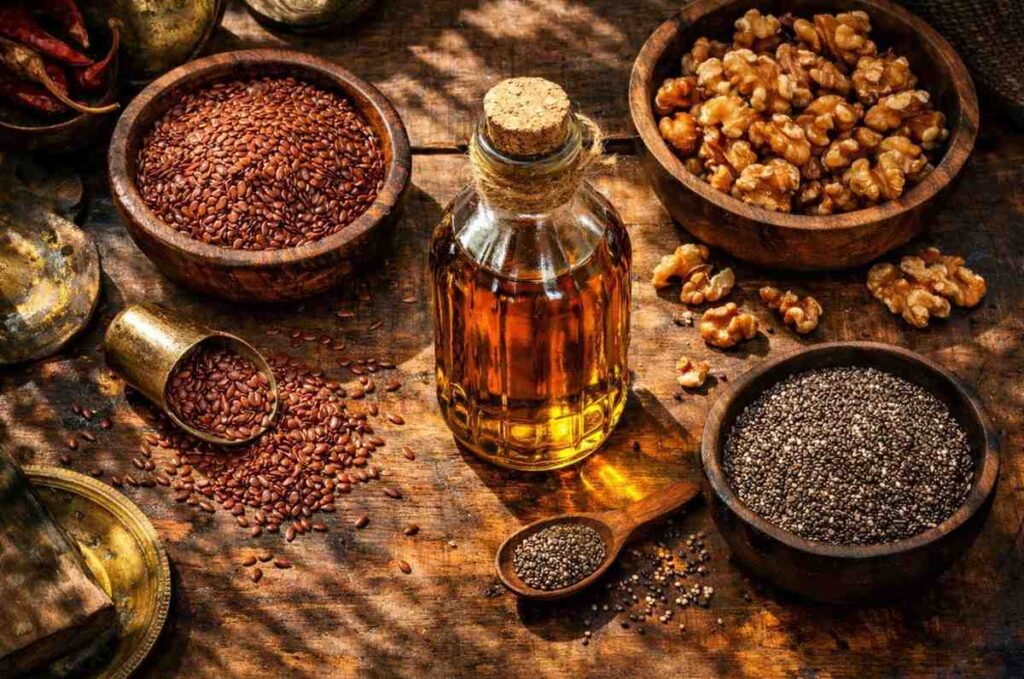
Supplements work best when your overall diet supports them. These are the easiest omega 3 rich foods to add to an Indian vegetarian diet for PCOS:
Flaxseeds are the most accessible starting point. Roast them lightly, grind into powder, and add a spoonful to your roti dough, dal, or morning curd. Ground flaxseeds absorb far better than whole ones.
Walnuts are simple – a small handful in the afternoon instead of biscuits or namkeen. No preparation needed, easy to stick with daily.
Chia seeds soaked overnight in water or milk can be added to breakfast or a smoothie. They are tasteless and flexible.
Mustard oil for cooking – it has a better omega 3 to omega 6 balance than sunflower or soybean oil, which are dominant in Indian kitchens and can actually block omega 3 absorption when used in excess.
These foods provide ALA – not direct DHA. They contribute to your overall omega-3 intake but cannot substitute an algal oil supplement for the therapeutic DHA levels required for PCOS control.
How Long Before You See Results with Omega 3 for PCOS?
This is the question most women ask after the first week – and the honest answer is: longer than you want.
Omega 3 does not work like a painkiller. It works at the cellular level – reducing inflammation, improving how insulin signals work, slowly helping the body restore hormonal balance. That takes time.
Most women who stay consistent notice subtle changes within 4 to 6 weeks – better energy, slightly more stable mood, reduced bloating. Meaningful improvements in cycle regularity, skin, and insulin markers typically show up after 10 to 12 weeks of daily use.
The biggest mistake is stopping too early. Four weeks of inconsistent use will show nothing. Twelve weeks of consistent daily supplementation is where real results start to appear.
For a complete look at the top algal oil options that work well for long-term use in India, this guide on best algal oil supplements in India is worth reading before you choose.
FAQs
Q. Can omega 3 cure PCOS?
No — omega 3 cannot cure PCOS. But it can meaningfully support the body in managing its core symptoms – inflammation, insulin resistance, and hormonal imbalance – especially when combined with a balanced diet and regular movement.
Q. Is vegan omega 3 as effective as fish oil for PCOS?
Yes – algal oil delivers the same direct DHA and EPA as fish oil, without the contamination risks or ethical concerns. For vegetarian Indian women, it is actually the better choice.
Q. How long should I take omega 3 for PCOS?
At least 12 weeks consistently to see meaningful results. Many women continue long-term because the anti-inflammatory benefits support overall hormonal health beyond just PCOS management.
Q. Can I take omega 3 with PCOS medication?
Generally, yes – but always confirm with your doctor, especially if you are on blood thinners or other medications that omega 3 might interact with.
Q. Which is better for PCOS – DHA or EPA?
Both matter. DHA supports brain and hormonal health. EPA is more directly anti-inflammatory. For PCOS, a supplement with both DHA and EPA from algal oil is the most effective choice.
Conclusion
Managing PCOS is rarely simple – and no single supplement is going to fix everything on its own.
But omega 3 for PCOS in India is one of the most genuinely useful additions an Indian vegetarian woman can make to her daily routine. The research is real. The mechanism makes sense. And for women who cannot take fish oil, algal DHA removes every barrier that previously stood in the way.
Start with a clean algal oil supplement – one that shows both DHA and EPA on the label. Take it with your main meal daily. Give it 12 weeks without stopping early.
It will not replace medical treatment. But it gives your body one less thing to fight against – and that matters more than most people realise.
About the Author
Kamal Mishra is a health & nutrition writer and vegan wellness advocate. He is the founder of VeganVitaa – India’s trusted vegan DHA resource for plant-based families.
Further Reading on VeganVitaa:
For more in-depth information, explore our related guides below to better understand vegan DHA, algal oil, and choosing the right supplement. Blog
- Vegan DHA Capsules for Pregnancy in India
- Best Vegan Omega 3 for Women in India
- Omega 3 for Thyroid Health in India
Disclaimer: EPA, DHA and pricing figures are based on label information available at time of research. Always verify current Amazon India listing details before purchasing — formulations and prices change.
Disclaimer: This article is for educational purposes only. Always consult your doctor or a qualified healthcare professional before starting a new supplement, especially if you take medications or have an existing health condition.
Disclaimer: This post contains affiliate links. If you buy through these links, I may earn a small commission at no extra cost to you. It helps me keep sharing useful content with you.

Pingback: Best Vegan Omega 3 for Women in India — Top 5 Picks
Pingback: Which Vegan DHA Supplement in India — Simple Decision Guide