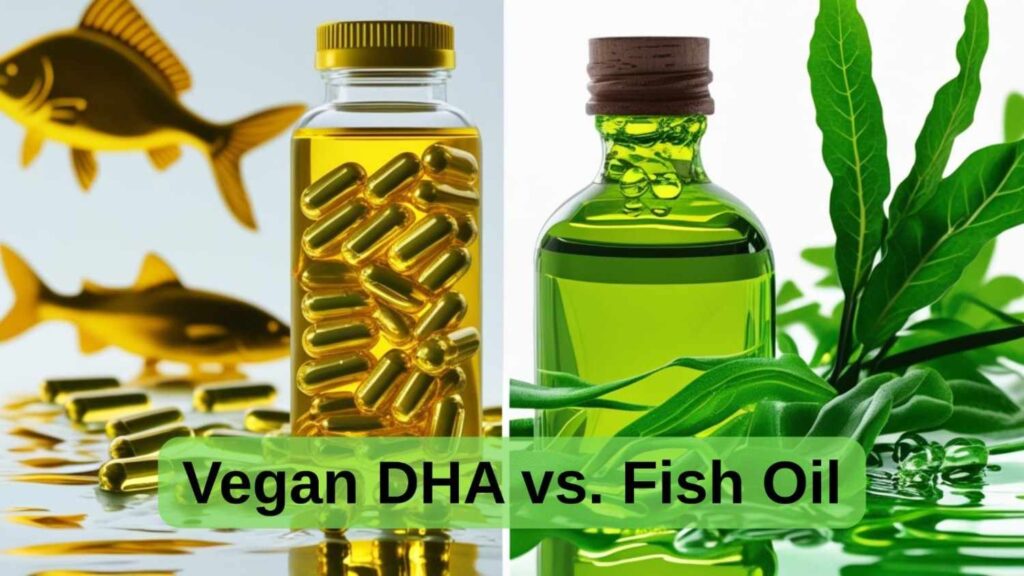
Every Indian parent spending ₹50,000 on JEE or NEET coaching has thought carefully about study material, test series, and the right teacher.
Almost none of them have thought about what their child’s brain is actually running on.
The best vegan DHA for students is one of the most overlooked purchases a vegetarian Indian family can make — and the irony is that it costs less than one month of coaching fees while directly affecting the brain doing all the studying.
Most vegetarian Indian students are running their brain on near zero direct DHA. The canteen serves dal rice. The hostel kitchen runs on sunflower oil. Flaxseeds are not part of anyone’s daily routine. And nobody — not the school, not the doctor, not the coaching institute — has connected poor focus and slow retention to a nutritional gap.
At VeganVitaa, I hear from parents more than anyone else about this. Their child is studying hard, sleeping enough, attending every class. And still — things are not sticking the way they should.
This guide is for those parents and for college students aged 18 and above who are already putting in the hours and just want their brain to actually keep up. For school students under 18, always consult a doctor before starting any supplement.
For a broader look at how DHA specifically affects brain health in Indian vegetarians — DHA for Brain Health in India
Why Indian Students Are Running Low on Their Brain’s Most Important Fuel
Most Indian vegetarian students eat three meals a day. Dal, rice, roti, sabzi. Sometimes maggi. Sometimes canteen food that nobody looks too carefully at.
None of it contains direct DHA.
This is not about eating badly. It is about a specific gap that the traditional Indian vegetarian diet was never built around — and that becomes more consequential the harder the brain is being asked to work.
I have spoken to parents across Surat, Ahmedabad, and Mumbai who were spending heavily on coaching but had never once considered their child’s DHA intake. That conversation almost never happens — and it should.
The Hostel Food Problem
College hostels and paying guest accommodations across India run on the same cooking staples. Sunflower oil. Soybean oil. Refined vegetable oil. All extremely high in omega 6.
Here is what that means practically:
- High omega 6 intake actively blocks whatever little omega 3 conversion was happening from dal and walnuts
- Flaxseeds — the one plant food with decent ALA — are almost never part of hostel or canteen meals
- Street food and outside eating, common among college students, makes the omega 6 situation worse
The result is a brain carrying high inflammatory load with near zero DHA coming in. And this is happening exactly when that brain is being asked to study 10 hours a day and retain everything it learns.

Stress Makes DHA Depletion Faster
This one surprise most people.
Exam stress triggers cortisol release. Research suggests that chronic psychological stress may increase the body’s omega 3 requirements — meaning a student already running low on DHA may feel the effects more acutely during intense preparation phases. The exact mechanism is still being studied, but the practical implication is straightforward: high stress plus low DHA is a combination worth addressing.
For a student who was already running low on DHA before exam season started, this is a compounding problem. The brain needed more. Stress reduced what was there. And nobody connected the dots.
For how DHA deficiency specifically affects teenage brain development — DHA for Teenagers
What DHA Actually Does for Student Brain Performance
India produces more engineering and medical graduates than almost any country — but the nutritional conversation around exam preparation stays stuck on protein and iron. DHA is never part of it.
Most people know omega 3 is good for the brain. Very few understand what that actually means for a student sitting in front of a textbook for 8 hours.
Here is what the research actually shows — without the vague claims.
Memory and Retention
DHA is heavily concentrated in the hippocampus — the part of the brain most directly involved in forming new memories and consolidating what you have learned.
When DHA levels are adequate, the hippocampus has better structural support to do its job. Research suggests that higher omega 3 status is associated with improved working memory performance in young adults — though individual results vary.
What this means practically — information retention may feel less effortful, and the ability to consolidate what has been studied may improve over consistent supplementation.
When DHA is low, this process slows. A student may read the same paragraph three times and still not retain it. Not because they are not trying hard enough. Because the neurons doing the retention work are not getting what they need to do it properly.
Research published in PubMed found that higher omega 3 status in young adults was associated with significantly better working memory performance — the exact type of memory that matters most during competitive exam preparation.

Focus and Cognitive Speed
Exams do not just test what you know. They test how fast you can access and apply it under pressure.
DHA supports the speed of neural signal transmission — how quickly information moves between neurons. When DHA is adequate:
- Decision making under pressure may feel less effortful
- Mental fatigue arrives later in a study session
- Ability to switch between topics and question types improves
- Recovery after a mentally demanding day is faster
For students preparing for competitive exams where speed and accuracy both matter, this is not a small thing.
For official guidance on omega 3 and cognitive function — NIH Omega 3 Brain Health Overview
Best Vegan DHA for Students in India — Top 5 Picks
A parent from Pune wrote in asking which supplement her daughter should take during NEET preparation. She had tried everything — better sleep schedule, yoga, meditation. Nobody had mentioned DHA. That message stayed with me.
For students specifically, three things matter most when choosing a supplement:
- DHA clearly stated on the label — not hidden behind “omega 3 blend”
- Affordable enough for consistent daily use — students and parents are budget conscious
- Easy to take daily — no complicated routine
- How We Selected These Products
How We Selected These Products –
Every supplement on this list was chosen based on four criteria — DHA amount clearly stated in mg, algal oil confirmed as the source, vegetarian capsule shell, and Amazon India availability. No brand paid for inclusion. Products were evaluated on label transparency and formulation quality, not marketing claims.
At VeganVitaa, these are the five I point parents and students toward most consistently when the conversation is specifically about exam performance and brain health.
1. Carbamide Forte Vegan DHA
Best for: Budget conscious students and parents starting for the first time
400mg DHA per capsule from algal oil. FSSAI certified, clearly labelled, widely available across India. One of the most honest budget options available — the DHA number is stated clearly and the algal oil source is confirmed.
For a student who has never taken DHA before and whose parents want to try it without spending heavily upfront, this is the right starting point.
Check Carbamide Forte on Amazon
2. Rasayanam Plant Based Omega 3
Best for: Fitness focused students who also train or play sports
150-300mg DHA per capsule from algal oil. Trusted Indian wellness brand, FSSAI certified, affordable for daily use. Good for students who are active alongside studying — sports, gym, physical activity — where recovery and brain health both matter.
3. Himalayan Organics Vegan Omega 3
Best for: Students wanting higher DHA from a trusted Indian wellness brand
560mg DHA per capsule from confirmed algal source. Vegetarian capsule, transparent labelling. For students or parents who want a higher DHA dose without moving to an international brand.
Check Himalayan Organics on Amazon
4. Zeroharm Vegan Omega DHA
Best for: Students with high cognitive demand — JEE, NEET, UPSC preparation
400mg DHA per capsule, FSSAI certified, marine algae sourced. Strong choice for students in intense exam preparation phases where brain performance is the primary goal.
5. Unived Ovegha Vegan Omega 3
Best for: Premium buyers who want verified DHA content
500mg DHA, third party tested, clean sourcing. For parents who want the most verified option available and are willing to pay premium for it.
For a complete reviewed comparison of top vegan DHA options — Best Vegan DHA Supplements in India — Top 3 Picks
Disclaimer: This post contains affiliate links. If you buy through these links, I may earn a small commission at no extra cost to you. It helps me keep sharing useful content with you.
What Parents Should Know Before Buying
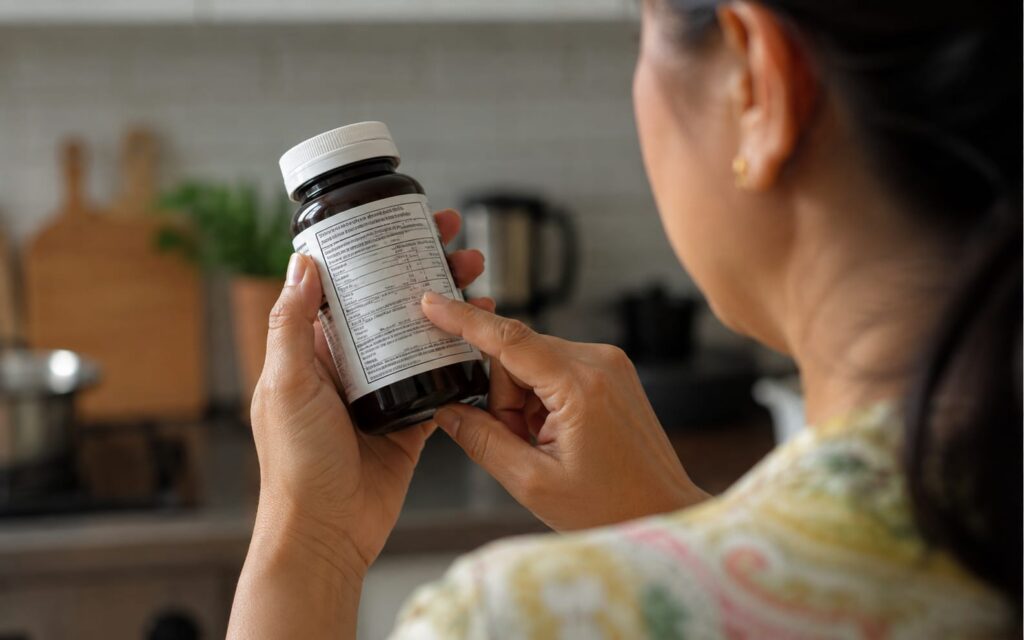
Most parents buying supplements for their children focus on the front of the bottle. The front is marketing. The back is where the real information lives.
Before buying any vegan DHA supplement for a student, check these five things:
- DHA in mg clearly stated — not just “omega 3” or “plant-based omega 3”
- Algal oil confirmed as source — not flaxseed oil or linseed oil
- Vegetarian capsule shell — look for HPMC or “vegetarian capsule” on the label
- Manufacturing and expiry date visible — especially important in Indian heat and humidity
- FSSAI certification — basic quality assurance for Indian market
| What to Check | Green Flag | Red Flag |
| DHA amount | 200mg+ clearly stated | Just “omega 3” |
| Source | Algal oil confirmed | Flaxseed or unclear |
| Capsule | HPMC vegetarian | Gelatin |
| Certification | FSSAI visible | No certification |
| Expiry | Clearly printed | Missing or vague |
Dosage for students:
For most college students, 200 to 300mg DHA daily is a practical starting point. For students in intense exam phases — JEE, NEET, UPSC — 300 to 500mg daily is more appropriate.
Timing — one simple rule:
Take it with the heaviest meal of the day. DHA absorbs significantly better alongside food. Empty stomach means poor absorption and possible nausea. Lunch works best for most students.
Consistency matters most:
One capsule daily for 8 to 12 weeks minimum before judging results. Most parents who see real results are the ones whose children stayed consistent for a full 8 to 12 weeks without switching products midway.
For a detailed daily DHA dosage breakdown — Vegan DHA Dosage Per Day
Vegan DHA for Students — When Does It Start Working?
This is the question every parent asks after the first week.
Honest answer — longer than you want.
DHA does not work like a painkiller or an energy drink. It works by incorporating into brain cell membranes gradually, over weeks and months. There is no shortcut to this process.
This is what truly takes place on a weekly basis:
Weeks 1 to 3:
Almost nothing noticeable. The DHA is being absorbed and incorporated. Nothing dramatic. The brain is simply beginning to work with better raw material. This is where most people stop — and miss everything that follows.
Weeks 4 to 6:
First subtle shifts. Mental fatigue arrives slightly later in a study session. Concentration holds for a little longer before dropping. Sleep may feel marginally more restful. Easy to miss if you are not paying attention.
Weeks 7 to 10:
Where most consistent students notice something real. Topics that were not sticking start sticking better. The ability to focus through a difficult chapter improves. Recall during practice tests feels more reliable.
Week 12 and beyond:
The clearest phase. Memory, focus, and cognitive stamina are all operating with better nutritional support than before. For students in long preparation cycles, this is where the cumulative benefit becomes most apparent.
One important reminder — DHA supports brain function. It does not replace sleep, regular breaks, good study technique, or consistent effort. A student sleeping 5 hours and studying poorly will not be rescued by a supplement. But a student already doing things right will find their brain keeping up better.
What to Expect and What Not to Expect
DHA supports the brain doing the studying — it does not replace the studying itself.
What it may help with:
- Mental fatigue arriving later in long study sessions
- Slightly better retention over consistent weeks of use
- More stable focus during demanding preparation phases
What it will not do:
- Guarantee better marks or exam results
- Replace sleep, consistent effort, or good study technique
- Show dramatic results in 2 to 3 weeks
One supplement cannot fix everything. But for a vegetarian student who has been running low on DHA for years, closing that gap is one genuine, evidence supported step worth taking.
For a complete week by week breakdown of what changes with consistent DHA use — Vegan DHA 90 Days Results in India
FAQs
Q. Can vegan DHA actually improve exam performance?
It supports the brain doing the exam — not the knowledge going into it. DHA helps with memory formation, focus, and cognitive speed. A student who studies well and supplements consistently will find their brain keeping up better. Think of it as removing one obstacle the brain should not have to fight against while studying.
Q. What is the right age to start vegan DHA for students?
From college age onwards, one capsule daily is appropriate for most healthy students. For younger students still in school, check with a doctor before starting. The dose and formulation may differ for teenagers versus college students.
Q. How much DHA does a student actually need daily?
For general brain support during studies, 200 to 300mg DHA daily is a practical starting point. For students in intense competitive exam preparation, 300 to 500mg daily is more appropriate. Always take it with food, never on an empty stomach.
Q. My child eats walnuts and flaxseeds daily. Is supplementation still needed?
Almost certainly yes. Walnuts and flaxseeds provide ALA, not direct DHA. The body’s conversion of ALA into DHA is limited — research suggests typically less than 10% for most adults. For a brain under exam stress burning through DHA faster than usual, food-based ALA alone is not enough.
Q. Which vegan DHA supplement is best for a student on a tight budget?
Carbamide Forte is the most honest budget option available in India right now. 500mg DHA from algal oil, clearly labelled, FSSAI certified. Start with one capsule daily with lunch. Give it 8 weeks before deciding if it is working.
Conclusion
Best vegan DHA for students in India is not a complicated purchase. It is one of the simplest, most direct things a vegetarian family can do for a student’s brain — and almost none of them are doing it.
Not because they do not care. Because nobody told them the connection existed.
Most vegetarian Indian students are studying hard, sleeping reasonably, attending every class — and still running their brain on near zero direct DHA. The hostel food will not change. The exam pressure will not reduce. But this one nutritional gap — the one nobody mentioned — can actually be closed.
One capsule daily. With lunch. For 12 weeks minimum.
The brain doing all that studying deserves proper nutritional support. Algal DHA is one of the most direct ways to address that nutritional gap – without changing diet, lifestyle, or the study routine that is already working.
Where to Start
Pick the option that fits your budget and situation.
Starting out or budget priority — Carbamide Forte. Higher DHA or fitness focused — Himalayan Organics or Zeroharm. Premium verified quality — Unived Ovegha.
One capsule daily after lunch. Consistent for 12 weeks. That is the whole plan.
For the complete reviewed breakdown of top vegan DHA options in India — Best vegan & vegetarian omega 3 capsules in India (top 5 picks)
About the Author
Kamal Mishra is a health & nutrition writer and vegan wellness advocate. He is the founder of VeganVitaa – India’s trusted vegan DHA resource for plant-based families.
For more in-depth information, explore our related guides below to better understand vegan DHA, algal oil, and choosing the right supplement. Blog
Disclaimer: This article is for educational purposes only. Always consult your paediatrician before starting new supplements.
Disclaimer: This post contains affiliate links. If you buy through these links, I may earn a small commission at no extra cost to you. It helps me keep sharing useful content with you.