
The first time I read “algal oil” on a supplement label, I stopped and thought about it for a second. No fish involved, but somehow the same DHA? That didn’t quite add up at first.
So, I dug into how algal oil is made. And honestly, once you see how the whole thing works, it makes a lot more sense than “fish oil, but vegan.” Knowing this process also helps when you’re standing there comparing two bottles, trying to figure out which one is actually worth buying versus which one is just slapping “vegan” on the label.
I’ve already covered product picks in my Best Algal Oil India 2025-26 guide. This post is more about what happens before any of that, back when it’s still just algae in a tank.
What Algal Oil Actually Comes From
Fish don’t produce DHA on their own. They get it by eating algae, or by eating smaller fish that ate algae first.
Algal oil skips that middle step entirely. It comes directly from a specific type of marine microalgae called Schizochytrium, grown and harvested in a controlled environment.
A few things worth knowing about this source:
- Schizochytrium is naturally rich in DHA, often 35-45% of its total fatty acid content
- It doesn’t need sunlight to grow, unlike most algae
- It’s the same original source fish rely on, just without the ocean in between
This direct-source approach is part of why algal oil has become the standard vegan alternative to fish oil.
How Algal Oil Is Made — Step by Step
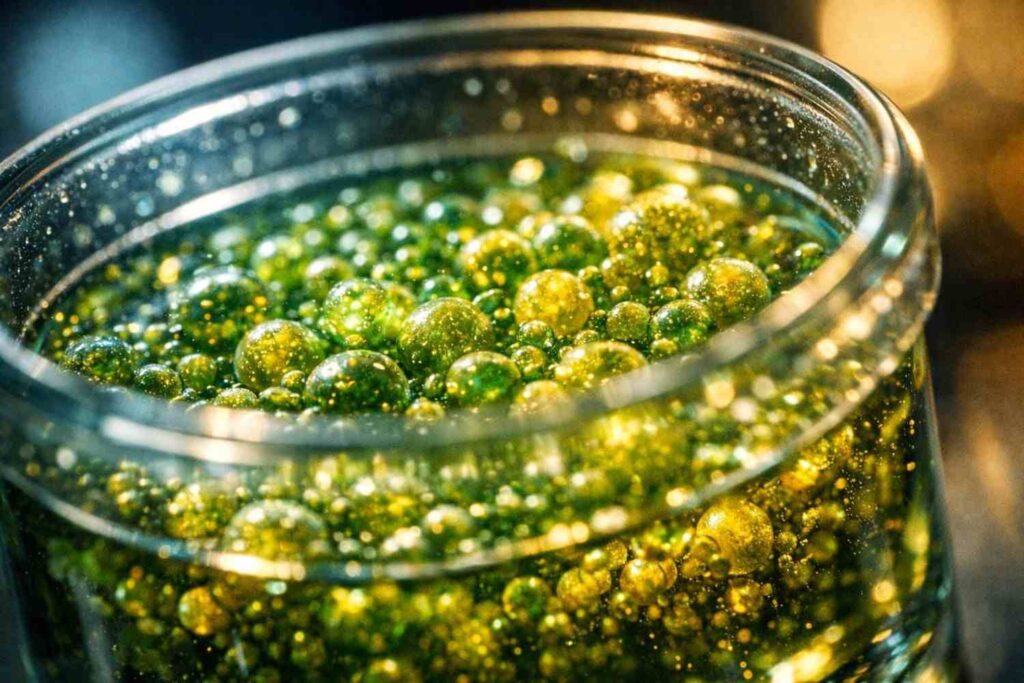
Forget the ocean, forget farms. This looks more like something out of a lab than anything grown outdoors.
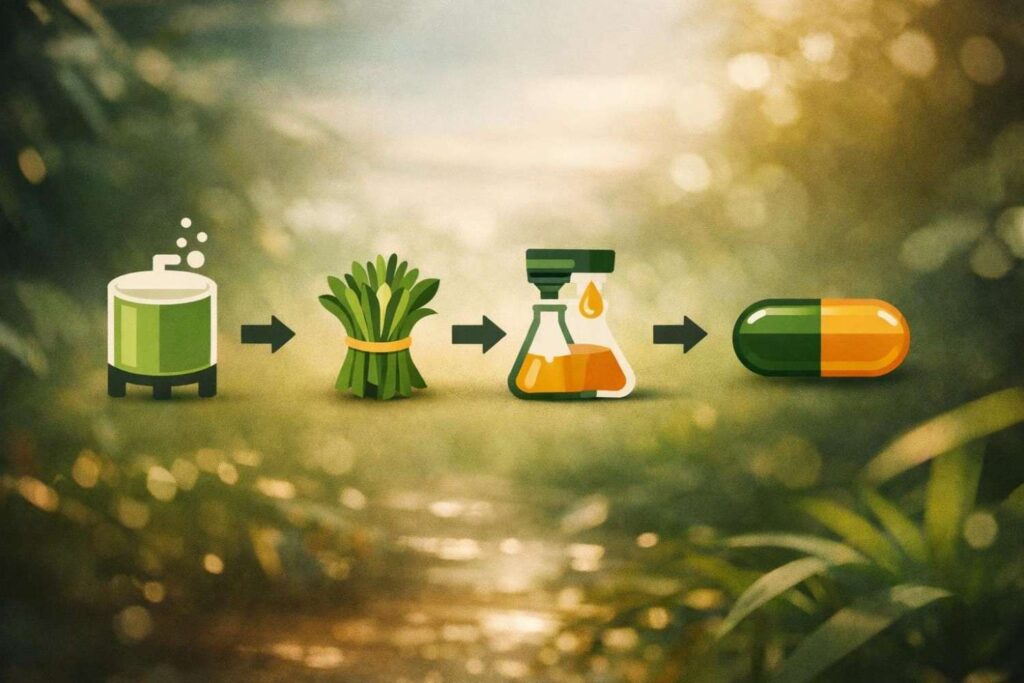
It starts with the strain. Companies pick a specific Schizochytrium strain known to produce well, and they keep it stored in a cell bank so they’re not starting from scratch every time. Same starting point, batch after batch.
From there, the algae go into large fermentation tanks. No sunlight needed. It’s fed sugar and nutrients, and the temperature and oxygen levels are watched closely the whole way through. A few days later, once DHA content peaks, the biomass gets pulled out.
Next comes extraction. The cell walls are broken open and the oil is drawn out. There are different ways manufacturers do this part, but the point is always to keep the oil as intact as possible.
After that, the crude oil goes through refining. Impurities get removed, and the batch gets tested to confirm how much DHA actually made it through. Only then does the oil get filled into capsules, either softgel or liquid-fill, sealed, and shipped out.
FDA documentation on Schizochytrium-based algal oil describes this fermentation happening under tightly controlled batch conditions, with pH, temperature, and light all managed throughout.
Why This Process Matters for Purity
Fish accumulate heavy metals and ocean pollutants over their lifetime, simply by living in open water and eating other fish.
Algal oil skips that risk almost entirely.
Since the algae is grown in a closed tank with controlled inputs, there’s no ocean contamination to worry about. This is one of the biggest quality advantages algal oil has over fish oil, and it’s also why testing still matters. Even in a controlled environment, quality can vary between brands depending on how carefully the process is managed.
If you want to know exactly what to check on a label before buying, I’ve covered that separately in How to Identify High-Quality Algal Oil.
Algal Oil vs Fish Oil — A Quick Production Comparison
The manufacturing process also has a real environmental difference, not just a health one.
A few points worth knowing:
- Fermentation-based DHA production requires significantly less energy than fish oil processing
- Algal oil production generates a noticeably smaller carbon footprint than wild-caught fish oil, according to comparative research published on Schizochytrium production methods.
- There’s no bycatch or overfishing involved, since nothing is caught from the ocean
This is part of why more brands are shifting toward algal oil, not just for the vegan label, but because the production process itself is more sustainable. If you’re comparing specific products, my Best Algal Oil India 2025-26 guide breaks down which brands actually deliver on quality.

Does the Manufacturing Process Affect Quality?
Yes, and this is where two products with the same DHA number on the label can still differ.
Things that affect final quality:
- How carefully the extraction step is handled
- Whether the oil is tested after refining, not just before
- How the finished oil is stored before capsule filling
This is exactly why label reading matters as much as the ingredient itself. A clean manufacturing process with poor testing can still result in an inconsistent product.
What Affected Me After I Realized This
Before I looked into any of this, I used to just check the DHA number on the front of the bottle and move on. That was it.
Now I look at things differently. If a brand talks openly about their extraction method, or mentions batch testing after refining, that tells me more than a big DHA number ever could. A company that understands its own process usually gets the details right elsewhere too.
I’ve also stopped trusting bottles that only say “premium algal oil” with nothing else backing it up. That phrase means nothing on its own.
It’s a small shift, but it’s made picking a supplement a lot less about marketing and a lot more about what’s actually happening before the capsule reaches you.
FAQs
1. Is algal oil vegan?
Yes. Nothing animal-derived touches the process, from the algae to the tank to the capsule shell.
2. Does algal oil lose potency over time?
It can, same as any oil. That’s part of why proper sealing and storage matter after manufacturing, not just during it.
3. Why use tanks instead of open ponds?
Control, mostly. Temperature and contamination are too unpredictable outdoors, so tanks cost more but keep every batch consistent.
Conclusion
So that’s really it. Algae in a tank, fed and watched closely for a few days, then broken open, cleaned up, tested, and sealed into a capsule.
That’s how algal oil is made, and honestly, it’s a lot less mysterious than the label makes it sound. No ocean involved, no guesswork, just a controlled process from strain to capsule.
It also explains why this has become the go-to DHA source for anyone who doesn’t want fish oil. You’re not getting a diluted, “close enough” substitute. You’re getting DHA from the same origin point fish themselves rely on, minus everything that comes with pulling it out of the ocean.
Next time you’re checking a bottle and see “algal oil” on the label, you’ll know exactly what that process looked like before it ever reached you.
About the Author
Kamal Mishra is a health & nutrition writer and vegan wellness advocate. He is the founder of VeganVitaa – India’s trusted vegan DHA resource for plant-based families.
Further Reading on VeganVitaa:
For more in-depth information, explore our related guides below to better understand vegan DHA, algal oil, and choosing the right supplement. Blog
Disclaimer: This article is for educational purposes only. Always consult your paediatrician before starting new supplements.

Pingback: Is Fish Oil Vegetarian or Vegan? The Real Answer