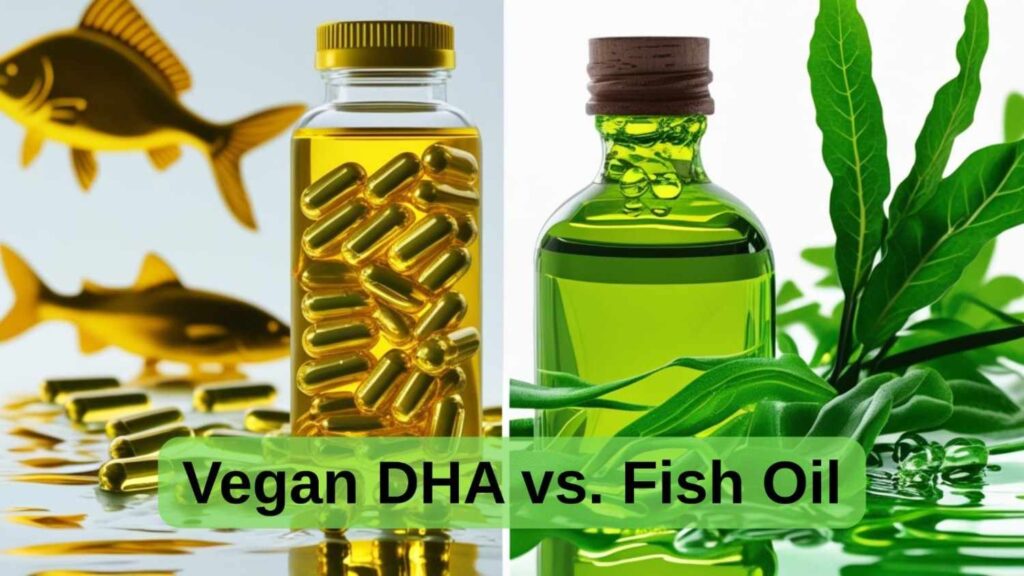
India has over 5 million IT professionals — one of the largest in the world. A significant portion of Indian IT professionals follow vegetarian diets. Almost none are supplementing with direct DHA.
Eight hours on a laptop. Two hours on a phone. Meetings that could have been emails. A canteen lunch that was whatever was left by 1pm.
By 3pm, most Indian office workers are running on their third coffee and wondering why their eyes feel like sandpaper.
Nobody connects this to nutrition. Nobody asks whether the vegetarian thali from the office canteen is providing anything useful for the brain doing all that work or the eyes staring at that screen.
Vegan omega 3 for office workers in India is one of the most relevant nutritional conversations that never happens in corporate wellness discussions. Iron gets mentioned. Protein gets mentioned. Vitamin D occasionally. DHA — the fat your retina and brain cell membranes are literally built from — almost never.
At VeganVitaa, the pattern I see most consistently among working professionals is this — vegetarian, eating carefully by their own standards, exercising occasionally, and still dealing with screen fatigue, afternoon brain fog, and a mental flatness that three cups of chai are not fixing.
The gap is almost always the same thing — near zero direct DHA, building quietly for years while everyone blamed the workload.
This guide covers the best vegan omega 3 supplements for Indian office workers — specifically chosen for screen fatigue, work stress, and the kind of sustained focus that a 9-hour desk day actually demands.
For how DHA specifically supports brain function for Indian vegetarians — DHA for Brain Health in India
The Office Worker’s Hidden Nutrition Problem
Most Indian office workers eat reasonably well by their own standards.
Dal, sabzi, roti at home. Whatever the canteen has at lunch. Maybe a banana or some nuts in the afternoon. It looks like a balanced diet. And in many ways, it is — except for one specific thing that canteen food, home cooking, and most Indian vegetarian diets consistently fail to provide.
Direct DHA.
The canteen runs on sunflower oil. The home kitchen probably does too. Both are extremely high in omega 6 — which actively competes with omega 3 in the body and reduces whatever little DHA conversion was happening from flaxseeds or walnuts.
Add a vegetarian diet with near zero algal oil intake, and you have a brain and a pair of eyes working a 9-hour screen day on consistently low DHA.

What 9 Hours of Screen Does to DHA Levels
The retina — the part of your eye that processes everything you see on that screen — has one of the highest concentrations of DHA of any tissue in the human body.
Research suggests that adequate DHA may support retinal function during sustained screen use. Tear film quality and visual processing may benefit — though individual results vary. The eye recovers faster between focus shifts.
When DHA is consistently low — which research suggests is common among vegetarian Indian office workers — the retina may be handling a 9-hour screen day with less structural support than it needs. The result shows up as:
- Eyes that feel tired and dry by early afternoon
- Difficulty focusing after sustained screen time
- Sensitivity to screen brightness that was not there a few years ago
- A burning or gritty feeling that eyedrops help temporarily but never fully resolved
Research published by the National Institutes of Health confirms that DHA is one of the most concentrated fatty acids in the retina and plays a direct role in visual function and eye health.
For how DHA specifically supports eye health for Indian screen users — Omega 3 for Eye Health in India
How Work Stress Accelerates the Gap
This is the part most people do not know.
Research suggests that chronic psychological stress may increase the body’s omega 3 requirements. For an office worker managing deadlines, client demands, and performance reviews — that stress is not occasional. It is consistent, week after week, across an entire career.
A vegetarian professional who was already running low on DHA before joining a demanding job is likely running lower with every passing year of sustained work stress.
The fatigue gets blamed on the workload. The brain fog gets blamed on getting older. Nobody looks at what the diet has been missing for the last five years.
What Changes When an Office Worker Actually Gets Enough DHA
This is where most supplement content overpromises. So here is the honest version.
DHA does not give you energy like caffeine. It does not sharpen focus instantly. What it does is address a structural deficit that has been building quietly — and when that deficit is addressed consistently over weeks, certain things shift.
Weeks 1 to 4:
Almost nothing noticeable. DHA is being incorporated into cell membranes gradually. The biology takes time. Most people who quit here never find out what comes next.
Weeks 5 to 8:
Where some consistent users begin noticing subtle changes. Individual results vary significantly.
- Eyes feel less strained by mid-afternoon than they did before
- The mental wall that used to arrive at 3pm starts arriving later
- Sleep quality may feel slightly better for some users — though this varies individually
- Concentration holds for longer before dropping off during demanding tasks
Research published in PubMed found that consistent omega 3 supplementation was associated with improved working memory and reduced mental fatigue in adults — particularly those with lower baseline omega 3 status.

Weeks 9 to 12:
For many consistent users, this is where changes become more noticeable. Results are not guaranteed and depend on baseline DHA levels, diet, and consistency. Brain fog that was accepted as normal starts feeling less constant. Screen fatigue still arrives — but later, and less severely. The difference is subtle enough that most people only realise it was working when they run out and things quietly go back to how they were.
What DHA will not do:
- Fix poor sleep habits or chronic overwork
- Replace breaks, proper hydration, or ergonomic screen setup
- Show dramatic overnight results
For a complete week by week breakdown of what consistent DHA use actually looks like — Vegan DHA 90 Days Results in India
Best Vegan Omega 3 for Office Workers in India — Top 5 Picks
For office workers specifically, two things matter most — DHA for brain and eye support, and EPA for managing the inflammatory load that chronic work stress quietly builds up.
At VeganVitaa, these five come up most when working professionals write in specifically about screen fatigue, afternoon brain fog, and sustained focus during demanding work days.
How We Selected These Products –
Five criteria only — EPA per serving clearly stated, DHA per serving clearly stated, algal oil confirmed as source, Amazon India availability verified, label transparency including manufacturing date and expiry. No brand paid for inclusion. Carbamide Forte and Rasayanam were excluded from this list.
| Product | EPA/serving | DHA/serving | Total | Price/day | Best For |
| Empire 1900 | 250mg | 250mg | 500mg | ~₹9 | Best overall value |
| Zeroharm EPA+DHA | 75mg | 125mg | 200mg | ~₹33 | Both confirmed, clean brand |
| Himalayan Organics | 80mg | 560mg | 640mg | ~₹12 | Highest DHA, eye health |
| Naturaltein | Not listed | 500mg | 500mg DHA | ~₹25 | High DHA, heavy metal tested |
| Tata 1mg | Not listed | 400mg | 400mg DHA | ~₹10 | Trusted brand, budget |
Note: EPA and DHA figures based on label information at time of research. Verify current Amazon listings before purchasing — formulations can change.
1. Empire 1900 Vegan Omega 3 — Best Overall for Daily Office Use
EPA: 250mg per capsule | DHA: 250mg per capsule | Total: 500mg | Source: Algal oil confirmed
The only product on this list with meaningful EPA and DHA both clearly printed on the label — not estimates, not percentages. For office workers who want both fatty acids in one daily capsule without paying premium prices, this is the strongest value pick.
Best for: Daily office use — brain and eye support combined at budget price.
Pros:
- Highest combined EPA+DHA on this list
- Both numbers clearly on label — not hidden
- Algal oil confirmed
- Vegetarian capsule
Cons:
- Smaller brand — verify current availability before ordering
2. Zeroharm Vegan Omega EPA+DHA — Best for High Stress Professionals
EPA: 75mg per capsule | DHA: 125mg per capsule | Total: ~200mg | Source: Marine microalgae confirmed
One of the few Indian brands with both EPA and DHA confirmed on the label from algal source. EPA content here is lower than Empire 1900 — but the formulation is clean, FSSAI certified, and available consistently on Amazon India.
Best for: Office workers who want both EPA and DHA from a clean, consistent Indian brand.
Pros:
- Both EPA and DHA confirmed on label
- Clean formulation, no fishy smell
- FSSAI certified, algal source confirmed
Cons:
- Lower combined EPA+DHA than Empire 1900
- Premium price for the EPA+DHA amount delivered
3. Himalayan Organics Vegan Omega 3 — Best for Screen Fatigue and Eye Support
EPA: ~80mg per serving | DHA: 560mg per serving (2 capsules) | Source: Algal oil confirmed
Highest DHA concentration on this list — 560mg per serving from confirmed algal source. For office workers whose primary concern is eye health and screen fatigue, DHA is the form most directly relevant to retinal support. Trusted Indian brand, vegetarian capsule, transparent labelling.
Best for: Screen fatigue and eye health — situations where DHA is the clear priority.
Pros:
- Highest DHA on this list
- Trusted Indian wellness brand
- No fishy smell or aftertaste
Cons:
- Serving size is 2 capsules daily — check before buying
- Lower EPA than Empire 1900
Check Himalayan Organics on Amazon
4. Naturaltein Ultimate Vegan Omega 3 — Best for Cognitive Performance
EPA: Not clearly listed | DHA: 500mg per serving | Source: Algae source confirmed, heavy metal tested
500mg DHA per serving from confirmed algae source, heavy metal tested. One of the few Indian brands that publishes its testing credentials clearly. For office workers whose primary goal is sustained cognitive performance and brain health, the high DHA content and testing transparency make this a strong pick.
Best for: Cognitive performance, sustained focus — office workers prioritising brain health.
Pros:
- High DHA — 500mg per serving
- Heavy metal tested
- Clean formulation, no fishy aftertaste
Cons:
- EPA not clearly listed — DHA focused product
- Price can vary — verify before buying
5. Tata 1mg Vegetarian Omega — Best Trusted Brand Pick
EPA: Not clearly listed | DHA: 400mg per capsule | Source: Algal oil confirmed
400mg DHA per capsule from confirmed algal oil. Trusted TATA brand, widely available on Amazon India at a practical price point. For IT professionals who want a recognisable, reliable brand with consistent availability and honest DHA labelling, this is a straightforward daily option.
Best for: First time buyers and IT professionals who want a trusted Indian brand with consistent availability.
Pros:
- Trusted TATA brand
- 400mg DHA per capsule clearly stated
- Algal oil confirmed
- Competitive price — ~₹10-12 per day
Cons:
- EPA not clearly listed
- Not ideal if EPA is specifically needed for stress or inflammation goals
For complete reviewed comparison of top vegan DHA options — Best Vegan DHA Supplements in India — Top 3 Picks
When and How to Take It — Office Routine Specific
Most office workers either forget to take their supplement entirely or take it at the worst possible time for absorption.
As a vegetarian myself who works long hours on research and writing, this is the exact routine I follow — supplement with lunch, alarm set, drawer storage. It’s easy enough to follow.
Here is what actually works for a desk job routine:
Best time — lunch break.
DHA is fat soluble. It absorbs significantly better alongside food — specifically food with some fat in it. Dal, sabzi, roti — a typical Indian lunch works perfectly. Taking it before chai or on an empty stomach in the morning means a significant portion passes through without being absorbed properly.
Storing it at your office desk — problem.
Indian offices with air conditioning are generally fine. But a supplement sitting in a bag in a hot car, or in a desk drawer near a window with direct sunlight, degrades faster than most people realise. Keep it in a cool, dark location — a closed drawer away from direct light.
Consistency is the actual challenge for office workers.
The supplement that gets taken every day is more valuable than the one forgotten three days a week. Two practical approaches that work:
- Keep it beside your lunch box — the visual reminder works
- Set a daily phone alarm for 1pm — takes 10 seconds to remove once the habit forms
What to realistically expect:
Week 1 to 4 — nothing dramatic. The biology takes time.
Week 5 to 8 — screen fatigue arriving slightly later. Concentration holding a bit longer. If you’re not paying attention, it’s easy to miss.
Week 9 to 12 — the clearest phase. Most consistent office workers notice the difference most clearly when they run out and things quietly go back.
For understanding how algal oil degrades in Indian conditions and how to store it properly — How to Store Algal Oil Supplements in India
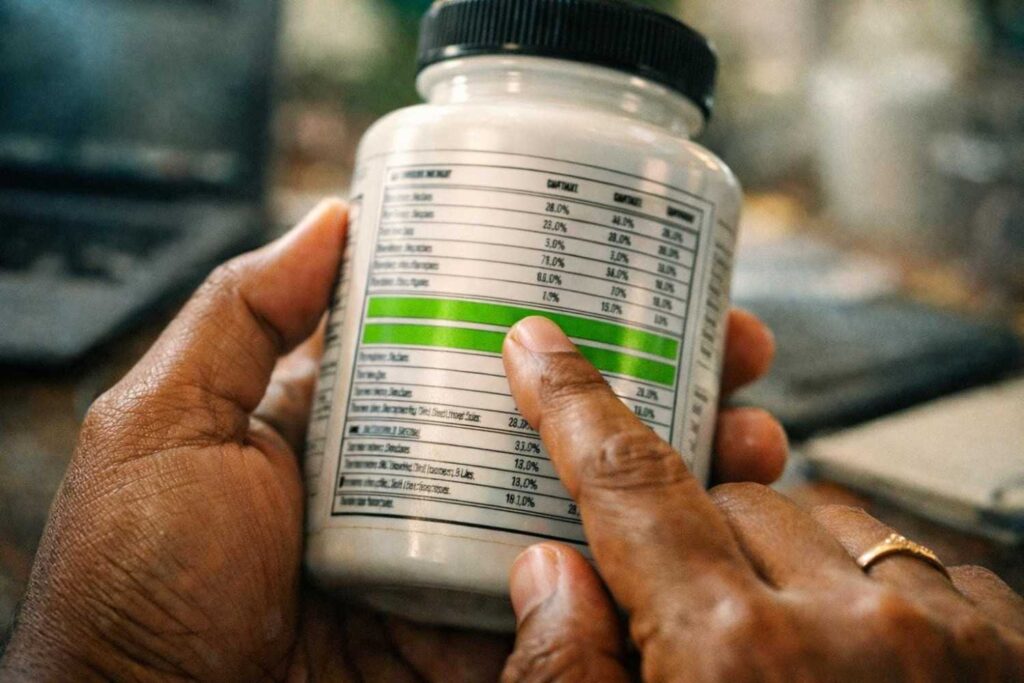
3 Label Checks Before Buying — Office Worker Edition
Most Indian buyers spend more time reading product reviews than reading the actual label. Reviews tell you how the capsule smells. The label tells you whether it is worth buying.
Three checks — in order of importance:
Check 1: DHA in mg — clearly stated
Not “omega 3 complexes.” Not “1000mg algal oil.” DHA specifically, in mg, per serving. If it is not broken out — you do not know what you are actually getting. For an office worker supplementing specifically for brain and eye health, DHA is the number that matters most.
Check 2: Algal oil confirmed as source
The label must say algal oil, microalgae oil, or a specific algae strain. “Plant based omega 3” without algal oil mentioned is almost always flaxseed or chia — ALA only, not direct DHA.
Check 3: EPA listed separately if stress and inflammation are your goal
If screen fatigue and eye health are the priority — DHA alone is fine. If work stress, inflammation, or heart health are also concerns — check that EPA is listed separately in mg alongside DHA. Most vegan supplements do not list EPA — Empire 1900 and Zeroharm are the exceptions on this list.
| What to Check | Green Flag | Red Flag |
| DHA amount | Clearly stated in mg | Just “omega 3” or total oil |
| Source | Algal oil confirmed | Flaxseed, chia, “plant based” |
| EPA | Listed separately in mg | Not mentioned |
| Serving size | Per capsule clear | Per 2 capsules hidden |
| Expiry | Clearly printed | Missing or vague |
FAQs
Q. Can vegan omega 3 actually help with screen fatigue or is it just general wellness marketing?
DHA is genuinely concentrated in the retina — the part of the eye doing the work during screen use. Research suggests adequate DHA supports tear film quality and visual processing efficiency. It will not eliminate screen fatigue — ergonomics, breaks, and hydration still matter. But for a vegetarian office worker who has been running low on DHA for years, addressing that gap is one of the most direct nutritional steps available for eye comfort.
Q. I already eat walnuts and flaxseeds at my desk. Do I still need a supplement?
Yes — walnuts and flaxseeds provide ALA, not direct DHA. The body converts less than 5% of ALA into usable DHA. For the kind of sustained daily demand that a 9-hour screen day places on your retina and brain, food-based ALA alone is not moving the needle meaningfully.
Q. Which product on this list is best for someone specifically dealing with work stress and poor sleep?
Empire 1900 — the only product here with meaningful EPA alongside DHA. EPA is the form most directly involved in managing inflammatory stress load. For someone dealing with chronic work pressure and disrupted sleep, having both EPA and DHA is more relevant than high DHA alone.
Q. How long before I notice any difference in screen fatigue or focus?
Most consistent users notice subtle changes between weeks 5 and 8. Eye comfort tends to shift first — screen fatigue arriving slightly later in the day. Brain fog and focus improvements take longer. Give it 10 to 12 weeks minimum before deciding whether it is working.
Conclusion
Vegan omega 3 for office workers in India is not a complicated supplement decision. It is a straightforward nutritional gap — near zero direct DHA in most vegetarian Indian diets — showing up as screen fatigue, afternoon brain fog, and a mental flatness that three cups of chai are not fixing.
The fix is one capsule daily. With lunch. Consistent for 10 to 12 weeks.
Empire 1900 if you want both EPA and DHA confirmed at the best cost per day. Himalayan Organics if DHA and eye health are the priority. Naturaltein if you want high DHA with heavy metal testing. Tata 1mg if a trusted Indian brand with consistent availability matters most. Zeroharm if you want both EPA and DHA from a clean Indian brand and budget is less of a concern.
The label is the only thing that matters before you buy. Flip the bottle. Find DHA in mg. Find EPA if that is relevant to your situation. If both are clearly there from algal oil — you have found your supplement.
At VeganVitaa, the office workers who write back with real improvements are almost always the ones who took it consistently past the 8-week mark without switching products midway.
Start Here
Pick the option that fits your situation from the table above.
Already have a supplement but not seeing results after 8 weeks of consistency? The most common reason is label confusion — total oil being mistaken for actual DHA. This guide explains exactly what to look for — How to Choose Vegan DHA Capsules in India
About the Author
Kamal Mishra is a health & nutrition writer and vegan wellness advocate. He is the founder of VeganVitaa – India’s trusted vegan DHA resource for plant-based families.
For more in-depth information, explore our related guides below to better understand vegan DHA, algal oil, and choosing the right supplement. Blog
Disclaimer: EPA, DHA and pricing figures are based on label information available at time of research. Always verify current Amazon India listing details before purchasing — formulations and prices change.
Disclaimer: This article is for educational purposes only. Always consult your paediatrician before starting new supplements.
Disclaimer: This post contains affiliate links. If you buy through these links, I may earn a small commission at no extra cost to you. It helps me keep sharing useful content with you.