
This blog was updated on 24th September 2026 to provide the latest information and researches on Omega 3 for Eye Health in India.
Every morning, more Indians are waking up with eyes that already feel tired before the day has even started.
Not from bad sleep. Not from illness. From screens.
The average Indian professional now spends 8 to 10 hours a day looking at a phone, laptop, or television. Students are not far behind. And in cities like Bangalore, Pune, and Mumbai — where IT culture runs deep — eye strain has quietly become an everyday complaint that most people just accept as normal.
But here is what very few people connect to this problem. Omega 3 for eye health in India is one of the most under-discussed nutritional gaps in the country right now.
Your retina — the part that actually does the seeing — runs on DHA. Without enough of it, tear production drops, inflammation increases, and the retina itself becomes more vulnerable over time.
For vegetarian and vegan Indians, this gap runs even deeper. Fish oil is not an option. Flaxseeds help but do not provide direct DHA. And most people have no idea that algal oil — the plant-based source of real DHA — even exists.
This guide is for anyone whose eyes are paying the price for how modern Indian life is lived and who wants a clean, practical, plant-based solution.
Why Indian Eyes Are Suffering More Than Ever
Ten years ago, dry eyes and eye strain were mostly complaints from older adults or people with specific medical conditions.
Now they show up in 25-year-olds.
India’s screen culture has completely changed how our eyes are being used and the damage is happening faster than most people realise. The average blink rate drops by almost 60% when staring at a screen. Less blinking means less natural moisture. Less moisture means inflammation. And once that inflammation becomes chronic, it is much harder to undo than most people expect.
In Indian cities, this problem is compounded by everything that makes urban life convenient l long hours at laptops, constant phone use during commutes, late night scrolling, and air conditioning in offices that further dries out the eyes.
Students preparing for competitive exams are spending 10 to 12 hours a day reading on screens or under harsh lighting. IT professionals in Bangalore, Hyderabad, and Pune are clocking screen hours that no human eye was designed to handle. Even homemakers are spending significantly more time on phones than a decade ago.
And here is the nutritional piece that nobody is talking about most Indians, especially vegetarians and vegans, are already low on the one nutrient that helps the eye manage all of this stress. DHA supports tear film quality, reduces eye inflammation, and helps the retina function properly under high visual demand.
Without it, the screen damage compounds faster. With it, the eye has at least a fighting chance.

How Omega 3 Actually Helps Your Eyes – The Science Simply Explained
Most people hear “omega 3 is good for eyes” and just accept it without understanding why. Here is the actual reason and it is simpler than it sounds.
DHA is found in higher concentration in the retina than almost anywhere else in the human body. Your retina is not just sitting there passively it is constantly processing light, sending signals to the brain, managing inflammation, and regenerating cells. All of that requires DHA as a structural building block.
When DHA levels are low, three things start to happen.
First, tear quality drops. The tear film that covers your eye has a fatty layer and without enough DHA, that layer thins out. Thinner tear film means faster evaporation, which is exactly what causes the burning, gritty, uncomfortable feeling that screen users know too well.
Second, inflammation increases. DHA and EPA both have strong anti-inflammatory properties. When they are absent, the eye’s inflammatory response gets louder leading to redness, sensitivity to light, and faster fatigue during screen use.
Third, the retina becomes more vulnerable. Over years of low DHA intake, the risk of age-related macular degeneration one of the leading causes of permanent vision loss increases significantly.
None of this happens overnight. It builds slowly. Which is exactly why most people do not connect their eye problems to nutrition until the damage is already significant.
The good news is that starting omega 3 early before things get serious gives your eyes a real chance to recover and stay protected.

Omega 3 for Eye Health in India – What the Research Actually Shows
Here is something most people do not know some of the best research on omega 3 and dry eyes was actually done in India.
A study in Noida looked at 256 screen users – IT professionals and students spending hours on laptops daily. After 45 days of omega 3 supplementation, their dry eye symptoms improved. Tear production improved. Eye comfort improved.
These were not sick people. Just regular young Indians staring at screens all day exactly like most of us.
Read the full study here: PubMed
The NIH also confirms that EPA and DHA supplementation has shown real benefits for dry eye in multiple clinical trials better tear quality, less inflammation, more comfortable eyes.
Honest note not every study agrees. Some larger trials found no difference. So, omega 3 is not a guaranteed fix for every eye condition.
But for dry eyes from screen use which is what most Indians are dealing with right now, the evidence is solid enough to take seriously.
Vegan DHA for Dry Eyes – Why Fish Oil Is Not the Only Answer
For most vegetarian Indians, omega 3 for eye health has always felt like a dead end.
Every article recommends fish oil. Every doctor suggests eating salmon. And if you are vegetarian, which the majority of Indians are none of that is an option. So, most people just give up and assume omega 3 is simply not available to them.
It is. Just not from fish.
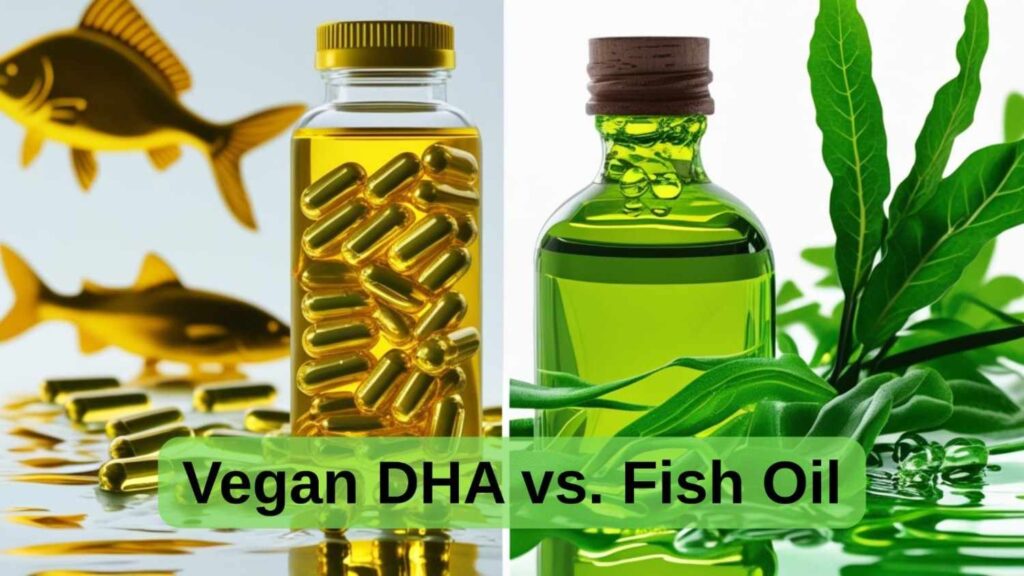
Algal oil gives you direct DHA and EPA; the same forms found in fish oil sourced from microalgae. This is actually where fish get their omega 3 from in the first place. Fish eat algae. Algae make DHA. So algal oil is simply the original source, without the fish in the middle.
For dry eyes specifically, this matters because ALA from flaxseeds and walnuts does not convert reliably into DHA. Your body converts less than 5% of ALA into usable DHA, which means even if you are eating flaxseeds every morning, your retina is probably still not getting what it needs.
Algal oil skips that entire problem. You get direct DHA straight to your eyes, no conversion, no fish.
For anyone who has tried a vegan omega 3 supplement and felt like it was not doing anything the problem is usually this exact issue. The supplement was providing ALA, not DHA. This guide breaks down exactly why that happens and how to fix it – Why Vegan Omega 3 Not Working in India
Best Vegan Omega 3 Supplements for Eye Health in India
Not every vegan omega 3 supplement is useful for eye health. For dry eyes and retinal support, you specifically need one that shows both DHA and EPA on the label – not just “omega 3” or “ALA.”
At VeganVitaa, these three come up most often when readers write in specifically about screen fatigue and dry eyes chosen on DHA and EPA content, not brand popularity.
Unived Ovegha
500mg DHA per serving from pure algal oil. One of the most trusted Indian brands for daily use. Clean ingredients, no fishy smell, affordable for long-term consistency.
Himalayan Organics Vegan Omega 3
250mg DHA per serving. Trusted Indian wellness brand, vegetarian capsule shell, easy to take daily. Good middle ground between quality and price.
Origins Nutra Algal Omega-3
Provides 300 mg DHA and 120 mg EPA per softgel from algal oil. It is a plant-based option for readers looking for both DHA and EPA without fish oil. The product also uses a vegan capsule and lists third-party testing.
Disclaimer: This post contains affiliate links. If you buy through these links, I may earn a small commission at no extra cost to you. It helps me keep sharing useful content with you.

For a full comparison of all top options available in India – including dosage, price per serving, and who each one suits best, this guide covers everything in detail: Best Vegan Omega 3 Capsules in India
And if you want to understand the difference between algal oil brands specifically before buying this breakdown helps: Best Algal Oil India.
Daily Habits That Support Eye Health Alongside Omega 3
Omega 3 alone will not fix everything. How you use your eyes every day matters just as much as what you take.
These are not complicated changes. Just small shifts that actually make a difference.
Start with your cooking oil. Most Indian kitchens run on sunflower or soybean oil, both very high in omega 6. Too much omega 6 blocks omega 3 from working properly inside the body. Switching to mustard oil for daily cooking is one of the simplest things you can do to help your omega 3 actually reach your eyes.
Take your omega 3 supplement with a proper meal not just water. DHA is fat soluble. It absorbs far better when taken alongside food. Lunch or dinner works well. This one change alone improves how much DHA your body actually uses.
Add a spoonful of ground flaxseed to your roti dough or morning curd. It will not replace algal DHA, but it supports your overall omega 3 intake without changing anything dramatic about how you eat.
And for screen use – try the 20-20-20 rule. Every 20 minutes, look at something 20 feet away for 20 seconds. Most people know about this and almost nobody actually does it. Your eyes blink properly when they are not locked onto a screen this gives them a chance to reset.
For the right daily DHA dosage to support eye health long term Vegan DHA Dosage Per Day
FAQs
Q. Can vegan DHA help with dry eyes from screen use?
Yes. Research including an Indian study on IT professionals showed improved tear production and eye comfort after consistent algal DHA supplementation for 45 days.
Q. How much omega 3 do I need daily for eye health?
For dry eye support, most studies used between 1000 to 2000mg of combined DHA and EPA daily. For general eye protection, 300mg DHA per day is a reasonable starting point. Start with one capsule daily and increase gradually, always with a proper meal, never on an empty stomach.
Q. Is algal oil as good as fish oil for eye health?
Yes, algal oil provides the same direct DHA and EPA as fish oil. For vegetarian Indians, it is actually the smarter choice because it has no mercury risk and no fishy smell. Same benefit, cleaner source.
Q. How long before omega 3 improves my eye comfort?
Most people notice subtle improvement in eye comfort and dryness within 4 to 6 weeks of consistent daily use. Significant improvement usually shows up after 8 to 12 weeks. Stopping too early is the most common reason people feel it is not working.
Q. Can I just eat flaxseeds instead of taking a supplement?
Flaxseeds provide ALA, not direct DHA. Your body converts very little of it into usable DHA. For eye health specifically, algal oil supplementation is the only reliable plant-based way to get direct DHA to your retina.
Q. Is omega 3 good for eye health in India?
Yes — especially for screen users. DHA supports tear film quality and reduces eye inflammation. For vegetarian Indians, algal oil is the only reliable plant-based source of direct DHA for eye health.
Q. Which is better for eyes — flaxseeds or algal oil?
Algal oil. Flaxseeds provide ALA which converts poorly into DHA. For retinal and tear film support, direct DHA from algal oil is what your eyes actually need.
Conclusion
Screen fatigue, dry eyes, blurry vision by afternoon, most Indians just accept this as part of modern life. Nobody connects it to nutrition. Nobody talks about DHA.
That is exactly the gap omega 3 for eye health in India needs to fill.
Your retina runs on DHA. Your tear film depends on it. And for vegetarian Indians who have never had fish oil as an option – algal oil is the answer that has always been there, just never explained properly.
You do not need to overhaul your diet or your lifestyle. One clean algal oil supplement daily, taken with your main meal, consistently for 8 to 12 weeks – that is genuinely all it takes to start giving your eyes what they have been missing.
Start simple. Stay consistent. Give it real time before judging.
Your eyes were not designed for 10 hours of screens daily. But with the right nutrition, they can handle it a lot better than they currently are.
What to Do Next
If your eyes feel tired, dry, or strained more days than not do not wait for it to get worse.
Check your current omega 3 supplement. Does it clearly show DHA and EPA on the label? Is it from algal oil? Are you taking it with food daily?
If any of those answers are unclear that is where to start.
Pick one trusted algal oil supplement from the options above. Take it every day with lunch or dinner. Give it 10 weeks.
Most people who stick with it for 8 weeks are surprised by how much difference one simple daily habit makes.
About the Author
Kamal Mishra is a health & nutrition writer and vegan wellness advocate. He is the founder of VeganVitaa – India’s trusted vegan DHA resource for plant-based families.
Further Reading on VeganVitaa:
For more in-depth information, explore our related guides below to better understand vegan DHA, algal oil, and choosing the right supplement. Blog
- Best Vegan DHA Supplements in India
- DHA Deficiency in India: Causes, Symptoms & Fix
- Omega 3 for Heart Health in India
- DHA for Brain Health in India
Disclaimer: This article is for educational purposes only. Always consult your paediatrician before starting new supplements.
Disclaimer: This post contains affiliate links. If you buy through these links, I may earn a small commission at no extra cost to you. It helps me keep sharing useful content with you.

Pingback: Best Vegan Omega 3 for Office Workers in India — Top 5