At my last checkup, the doctor glanced at my lipid panel and asked what I was doing for omega-3. Not a lecture, just a genuine question. That stuck with me more than I expected.
That’s when I actually started digging into vegan omega 3 for cholesterol in India, instead of just trusting the vague ‘good for heart health’ line printed on every bottle. What actually happens to LDL, HDL, and triglycerides when you take this stuff daily? Turns out the answer isn’t as simple as most product pages make it sound.
I’ve been vegetarian for over a decade, so getting DHA and EPA from food alone has never been straightforward for me either. This article is me going through the actual evidence, then the products, without skipping the inconvenient parts.
For a broader look at algal oil products in general, I’ve already covered that in my Best Algal Oil India 2025-26 guide.
This is the kind of thing I try to get right on VeganVitaa, since being vegetarian myself means I’ve had to sort through this exact confusion firsthand.
Omega-3 and Cholesterol — What the Evidence Actually Shows
Most bottles just say “good for cholesterol” and leave it at that. The real picture has more nuance than that one line suggests.
Omega-3, specifically DHA, does a solid job at lowering triglycerides. That part is well established across multiple studies. What gets left out is the LDL side. Some research shows DHA from algal oil can raise both HDL (the good one) and LDL (the one people usually want lower) slightly, at least in people without existing heart disease.
That’s not a reason to avoid it. It’s a reason to actually know what you’re getting into, instead of assuming omega-3 fixes every number on a cholesterol report at once.
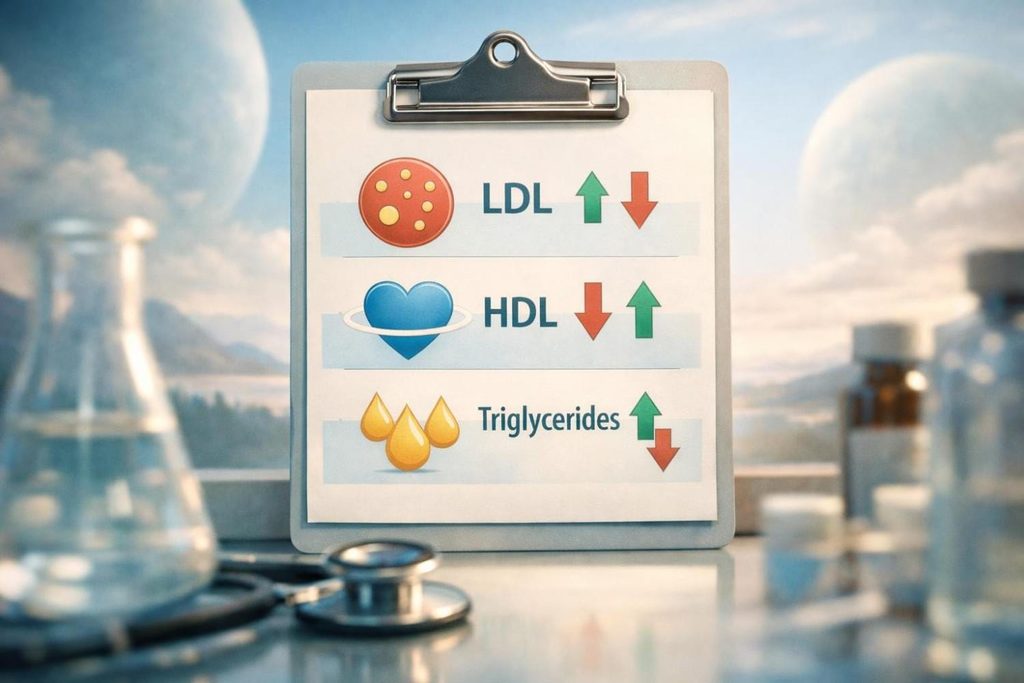
Here’s the honest breakdown:
- Triglycerides: consistently reduced with regular omega-3 intake, the strongest and most repeated finding
- HDL: tends to go up slightly, generally seen as a positive
- LDL: mixed evidence, may rise slightly in some people, especially at higher doses
A Cochrane review covering long-chain omega-3 supplementation found meaningful triglyceride reduction, while noting the LDL effect wasn’t as clear-cut.
If your main concern is high triglycerides, omega-3 has real evidence behind it. If it’s specifically LDL that’s high, this isn’t a guaranteed fix, and it’s worth discussing with your doctor rather than assuming the supplement alone will bring the number down.
EPA vs DHA for Cholesterol — Does It Matter?
Both get lumped together as “omega-3” on most labels, but they don’t do the same job when it comes to lipids.
DHA is the one more directly tied to lowering triglycerides. That’s the finding that keeps showing up across studies. EPA leans more toward the anti-inflammatory side, and its effect on triglycerides specifically is less pronounced than DHA’s, though it still contributes to overall heart health.
What this means practically:
- A DHA-heavy product is likely doing more of the triglyceride-lowering work
- An EPA-heavy product brings more anti-inflammatory support alongside general cardiovascular benefit
- Most vegan products lean DHA-dominant by default, since that’s what algal oil naturally produces
None of the three products I’m covering here are purely one or the other. Two lean DHA-heavy, one leans EPA-heavy, and I’ll get into why that actually matters when picking between them.
If you want the full picture on how triglycerides specifically respond to algal DHA, I’ve gone deeper into that separately in Vegan Omega 3 for High Triglycerides in India.
How I Chose These Products
Three products made this list, not five or ten. Fewer, but each with a genuine link to cholesterol or triglyceride support, not just a general “heart health” tagline.
What I checked for each one:
- Actual EPA and DHA mg per serving, not the total oil weight
- A specific claim tied to cholesterol or triglycerides, not just “supports heart health”
- Whether the brand’s own site matched the Amazon listing
- Price per serving, not just the bottle price
- Testing or transparency signals, like a Certificate of Analysis
One of the three, Rasayanam, has a strong cholesterol claim on paper, but I couldn’t find a named third-party lab backing its purity testing. That’s not disqualifying, just a gap worth flagging upfront rather than glossing over.
This is also where DHA vs EPA actually matters. Two of these three lean DHA-heavy, which lines up with the triglyceride-lowering evidence. One leans EPA-heavy instead, and I’ll flag why that’s still worth considering when you get to it.
Top 3 Vegan Omega 3 for Cholesterol in India — 2026
| Product | DHA | EPA | Cholesterol/Triglyceride Angle |
| Miduty Vegan Omega-3 | 200mg | 100mg | Cites outside clinical research (21-30% triglyceride reduction) |
| Rasayanam Plant-Based Omega-3 | 150mg | 450mg | Label directly claims triglyceride and cholesterol support |
| Naturaltein Ultimate | 500mg | Present | Listing states “supports healthy cholesterol & cardiovascular function |
Note: Before making a purchase, verify the most recent listings since prices change frequently.
Here’s where the actual numbers matter more than the marketing copy.
1. Miduty Vegan Omega-3 — Backed by Real Research, Not Just a Claim
DHA: 200mg per serving
EPA: 100mg per serving
Source: Algal oil
This is the only one of the three that points to actual outside research instead of just a general “heart health” line. The brand references clinical studies showing 21 to 30 percent triglyceride reductions with omega-3 supplementation. Worth being clear here, that’s general research on omega-3 dosing, not a trial run specifically on this product.
Best suited for: Anyone who wants to see real data behind a claim, even if the DHA number here is lower than the other two picks.
2. Rasayanam Plant-Based Omega-3 — The EPA-Heavy Option
DHA: 150mg per serving
EPA: 450mg per serving
Source: Algal oil
This one flips the usual ratio. Most vegan products lean DHA-heavy, but Rasayanam goes EPA-first, and the label states this directly supports lowering triglycerides and balancing cholesterol.
As mentioned earlier, I couldn’t confirm a named third-party lab for their purity testing, so that’s worth checking yourself before buying, especially if third-party verification matters to you.
I went back and forth on including this one, the lab transparency gap bothered me. But the label claim is specific enough, and honest enough about what it’s for, that I decided it belonged here with the caveat clearly stated.
Best suited for: Someone who wants an EPA-forward formula, or already knows their triglycerides respond better to EPA over DHA.
Check Rasayanam Price on Amazon
3. Naturaltein Ultimate — Trusted Name, Clear Cholesterol Claim
DHA: 500mg per serving
Source: Algal oil
Naturaltein’s own listing states it directly, supports healthy cholesterol and cardiovascular function, alongside general heart health. It’s also heavy metal tested, based on the brand’s own claim.
Best suited for: Buyers who want a well-known brand with a clear, matching claim between its site and its marketplace listing.
Check Naturaltein Price on Amazon
If you’re also curious how the label itself can mislead you before you even get to the product, I’ve covered that separately in DHA Per Capsule vs Per Serving.
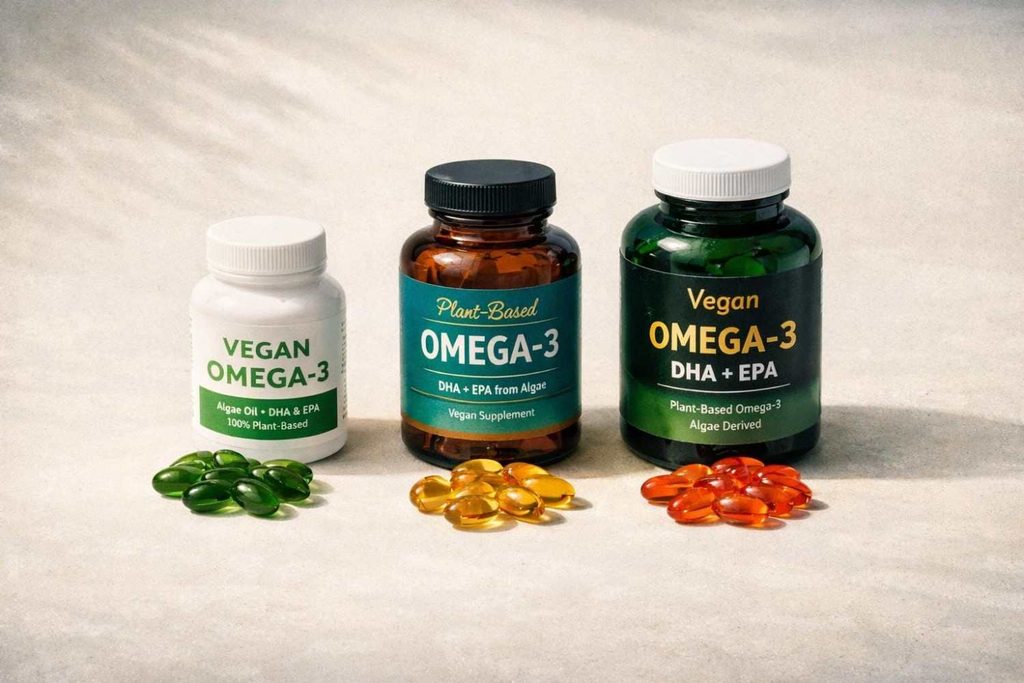
The “1000mg Omega-3” Label Trap and Cost Per Serving
Two problems on labels, both worth catching before you buy.
First, the label trick. A bottle proudly says “1000mg Omega-3” on the front. Sounds strong. But that number is usually the total oil weight, not the actual EPA and DHA content.
Take Miduty as an example. Its capsule is 500mg of algal oil, but the active DHA inside that is 200mg. If you only looked at the “500mg” on the front, you’d assume you’re getting 500mg of DHA. You’re not.
Before purchasing, turn the bottle over and search for:
- The specific DHA mg per serving
- The specific EPA mg per serving
- Whether “per serving” means one capsule or two
Second, the price trick. The bottle price alone tells you almost nothing. Say a cheaper bottle gives you 150mg DHA, while a pricier one delivers 500mg. The cheaper one can easily end up costing more per mg once you do the math, even though the price tag looked friendlier.
A quick way to check:
- Take the bottle price
- Divide by the number of servings
- That gives you cost per serving
- Then check how much actual DHA and EPA that serving contains
Prices on Amazon shift often, sometimes weekly, so it’s worth doing this math yourself instead of assuming a lower sticker price means a better deal. This matters even more for cholesterol support specifically, since the triglyceride-lowering effect comes from the actual EPA and DHA content, not the oil weight around it.
I’ve broken the label side of this down in more detail in How to Read Omega 3 Label.
Vegan Omega-3 vs Fish Oil for Cholesterol
Same question comes up every time this topic gets discussed. Does the vegan version actually hold up against fish oil for this specific use case?
Short answer, yes, when it comes to EPA and DHA content itself. The source matters less than people assume once you’re looking at the actual fatty acids.
A quick side by side:
- Both fish oil and algal oil deliver EPA and DHA, the fatty acids doing the actual work on triglycerides
- Fish get their omega-3 from eating algae in the first place, so algal oil is the more direct source, not a substitute
- Algal oil avoids the heavy metal and ocean contaminant risk that comes with fish accumulating pollutants over their lifetime
- Fish oil often causes that fishy aftertaste and burping, something algal oil generally avoids
Where fish oil sometimes wins is dose availability. Higher-concentration fish oil products are more common and often cheaper per mg, since the supply chain is more established.
For cholesterol and triglyceride support specifically, the fatty acid is what matters, not whether it came from a fish or the algae that fish ate. If avoiding fish products matters to you for any reason, algal oil isn’t a compromise here, it’s the same nutrient from its original source.
If you want to understand why algal oil has become the standard vegan DHA source in more depth, I’ve covered that separately in Why Algal Oil Is the Best Vegan DHA Source.
Who This Is (and Isn’t) For
This isn’t for everyone, and it doesn’t need to be.
Worth considering if:
- You’re vegetarian or vegan and rarely get EPA or DHA from your diet
- Your last lipid panel showed mildly elevated triglycerides
- You want general cardiovascular support alongside a healthy diet, not a replacement for one
- You’re already managing cholesterol through diet and exercise and want additional support
Probably not the priority if:
- Your cholesterol numbers are already within a healthy range
- You’re looking for a quick fix rather than something that works gradually over weeks
- You haven’t addressed bigger factors first, like overall diet, activity levels, or smoking
Check with your doctor first if:
- You’re on blood-thinning medication, including aspirin, warfarin, or clopidogrel. Higher DHA and EPA doses can mildly affect platelet function.
- Your triglycerides are already very high, above 500 mg/dL. That level usually needs medical management, not just a supplement.
- You have an existing heart condition or you’re scheduled for surgery soon.
- You’re pregnant or breastfeeding and considering a higher-than-standard dose.
- You’re already on a statin or other cholesterol medication and want to add this alongside it.
None of these medical situations rule out taking a vegan omega-3 supplement. They just mean the decision shouldn’t be made purely off a product label. A five-minute conversation with a doctor is worth more than guessing, especially once medication or an existing condition is part of the picture.

Omega-3 works best as part of a broader picture, not a standalone fix pulled in after everything else stays the same. If your diet is already low in these fatty acids to begin with, that gap is worth understanding before jumping straight to a supplement. I’ve gone into that separately in DHA Deficiency in Indian Vegetarians and Vegans.
Can Vegan Omega-3 Replace Cholesterol Medication?
No. This one needs to be said plainly, not softened.
Prescribed cholesterol medication, statins especially, are studied at a completely different level of evidence than any supplement, vegan or otherwise. A Mayo Clinic overview on statins lays out exactly how rigorously these medications are tested and monitored, a bar supplements simply aren’t held to.
They’re prescribed based on your specific numbers, risk factors, and medical history. Omega-3 doesn’t work at that same level, and it isn’t designed to.
What omega-3 can realistically do:
- Support healthy triglyceride levels alongside diet and lifestyle changes
- Add general cardiovascular support as part of a bigger picture
- Fill a genuine gap for vegetarians and vegans who don’t get EPA or DHA elsewhere
What it can’t do:
- Replace a prescribed statin or other cholesterol medication
- Reverse an existing diagnosed condition on its own
- Guarantee a specific drop in LDL or triglycerides for everyone who takes it
If you’re already on medication for cholesterol, omega-3 can sit alongside it in some cases, but that’s a decision for your doctor, not something to figure out from a supplement blog. Stopping or adjusting prescribed medication because a supplement sounded promising isn’t a good trade to make.
How to Take It for the Best Outcomes
A few basics that actually make a difference, even though they sound obvious.
Take it with food
Omega-3 is fat-soluble, so taking it with a meal that has some fat in it helps your body actually absorb it. Taking it on an empty stomach doesn’t do much, and can also upset your stomach for some people.
Stay consistent
This isn’t something you take for a week and stop. The triglyceride benefits build up with regular, daily use over weeks, not days. Skipping days on and off resets that progress more than people expect.
Check the serving size
Some of these products need two capsules to hit the DHA or EPA number on the label. Taking one when the label means two leaves you at half the intended dose without realizing it.
Store it properly
Algal oil degrades with heat and light exposure. A cool, dry place, away from direct sunlight, keeps it from breaking down before you even finish the bottle.
Give it real time before judging results
Triglyceride changes from omega-3 typically show up over 8 to 12 weeks of consistent use, not immediately. A next lipid panel a few months out is a more honest way to see if it’s working than guessing based on how you feel.
FAQs
Q. Does vegan omega-3 actually lower cholesterol?
It lowers triglycerides fairly reliably. The LDL effect is more mixed, so don’t expect it to fix every number on a lipid panel.
Q. Is EPA or DHA better for cholesterol?
DHA does more of the triglyceride-lowering work. EPA leans more toward general anti-inflammatory support.
Q. How long before I see a change in my lipid panel?
Usually, 8 to 12 weeks of consistent daily use. A follow-up blood test is the real way to check, not guessing.
Q. Can I take this with my cholesterol medication?
Possibly, but that’s a conversation for your doctor, not something to decide off a product label.
Q. Is algal oil as effective as fish oil for this?
Yes. Both deliver the same EPA and DHA, algal oil is just the more direct, fish-free source.
Conclusion
Vegan omega 3 for cholesterol in India isn’t a magic fix, and it isn’t hype either. The truth sits somewhere in between, real for triglycerides, less certain for LDL.
Out of the three products here, Miduty is the one that actually points to research behind its claim. Rasayanam goes EPA-heavy if that’s the angle you’re after. Naturaltein is the name most people already recognize, with a claim that actually holds up.
Pick whichever fits what you’re after, but give it real time and don’t just glance at the total mg on the front. Check the DHA and EPA numbers underneath it. And if you’re on any medication or already dealing with a heart condition, talk to your doctor before adding anything new.
Go back through the numbers above, pick the one that matches what you actually need, not the one with the biggest bottle.
About the Author
Kamal Mishra is a health & nutrition writer and vegan wellness advocate. He is the founder of VeganVitaa – India’s trusted vegan DHA resource for plant-based families.
For more in-depth information, explore our related guides below to better understand vegan DHA, algal oil, and choosing the right supplement. Blog
Disclaimer: EPA, DHA and pricing figures are based on label information available at time of research. Always verify current Amazon India listing details before purchasing — formulations and prices change.
Disclaimer: This article is for educational purposes only. Always consult your paediatrician before starting new supplements.
Disclaimer: This post contains affiliate links. If you buy through these links, I may earn a small commission at no extra cost to you. It helps me keep sharing useful content with you.