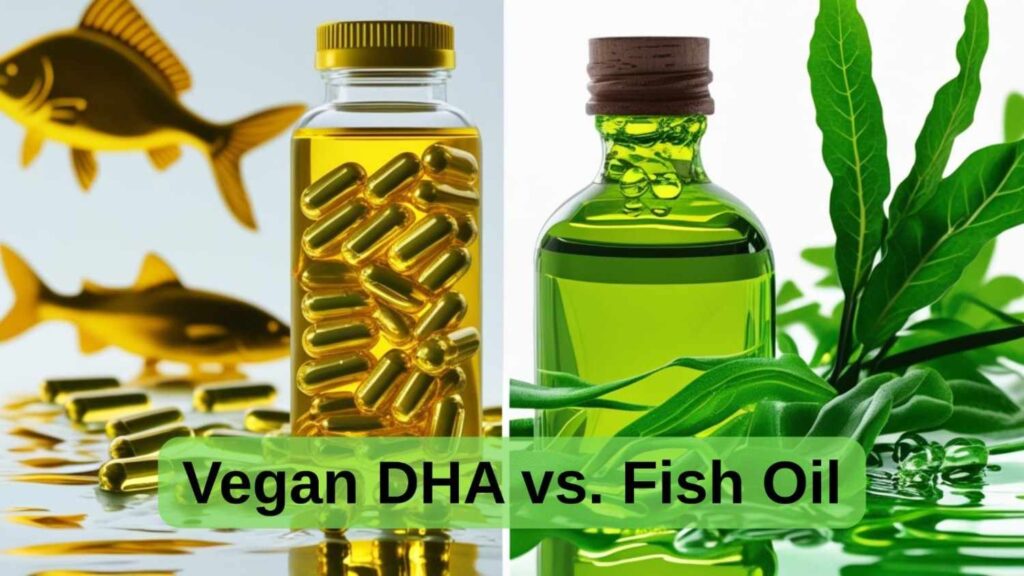
A ₹500 bottle isn’t automatically the cheaper buy. Sounds wrong until you actually crack open what’s inside two different bottles and compare.
I’ve seen products sitting at completely different price points end up delivering wildly different amounts of DHA per serving. Sometimes the cheaper bottle hands you less than half the DHA of the pricier one, which quietly undoes the whole “budget pick” argument the moment you do the math.
That’s the whole point behind vegan omega 3 price per DHA as a way to compare products. Skip the sticker price. Look instead at what you’re paying for every 100mg of DHA you’re actually getting. It’s the same math I ran while putting together Best Vegan Omega 3 Under ₹1000 in India and it genuinely takes less time than scrolling through two product pages trying to eyeball which one’s better.
Why Price Alone Can Mislead Vegan Omega 3 Buyers
Bottle price by itself doesn’t tell you much of anything useful.
Two bottles priced the same can hold completely different amounts of algal oil, or wildly different DHA concentrations within that oil. A 60-capsule bottle sitting next to a 30-capsule one at a similar price isn’t offering equal value, not once you actually divide it out. Serving size throws another wrench in, some products need two capsules to hit their stated DHA number, others get there in one, and those alone changes how long a bottle realistically lasts you.
Then there’s the classic trap, “Omega-3 1000mg” printed boldly on the front. That number is usually total oil weight, not the DHA itself, which could be sitting anywhere from 200mg to 500mg buried inside that same 1000mg.
Stack all of that together and a bottle that looks like the obvious budget option on the shelf can turn out to be the pricier one once you’re actually comparing DHA delivered, not just rupees spent.

What Is Vegan Omega 3 Price per DHA — And Why It Matters
It’s a simpler idea than the slightly technical name suggests. This is the real cost you’re paying for a fixed amount of DHA, usually worked out per 100mg, instead of the price tag on the whole bottle.
Why bother? Because “total oil” and “actual DHA” are two separate numbers, and labels almost always lead with the bigger, flashier one. A bottle can proudly wear 1000mg of algal oil on its front while only 300mg of that is DHA. Price per DHA cuts through that noise entirely and gets you straight to the number your daily dose actually depends on.
How to Calculate Cost per 100mg of DHA
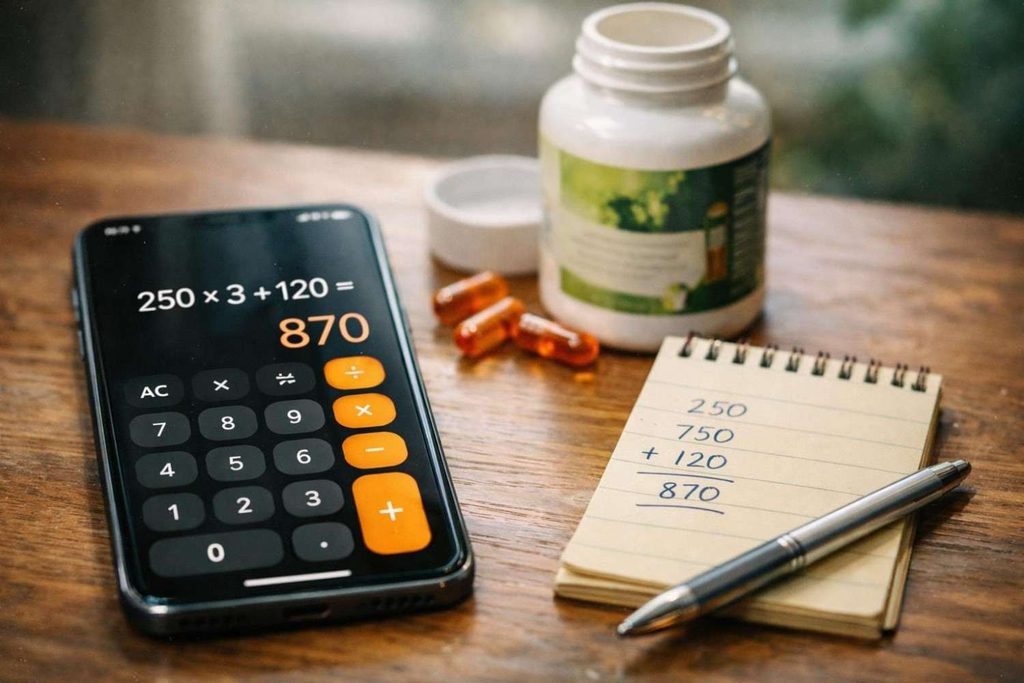
Nothing complicated here. Total price divided by total DHA in the pack, then multiplied by 100.
Take a bottle priced at ₹700 with 60 capsules, each giving 300mg of DHA. That’s 18,000mg of DHA sitting in that bottle. Divide 700 by 18,000, multiply by 100, and you land somewhere around ₹3.9 per 100mg of DHA.
Now put that against a ₹900 bottle, same 60 capsules, but each one delivers 500mg of DHA instead. That’s 30,000mg total. Run the same math and you get roughly ₹3 per 100mg.
So, the ₹900 bottle costs more at checkout. It’s still the cheaper one once you’re comparing what you’re actually paying for the DHA itself, not the number on the price tag.
The 4 Numbers You Need from Any Omega 3 Label
Grab these four before you even attempt the calculation above.
- Product price, the real amount you’d pay at checkout, not the crossed-out MRP
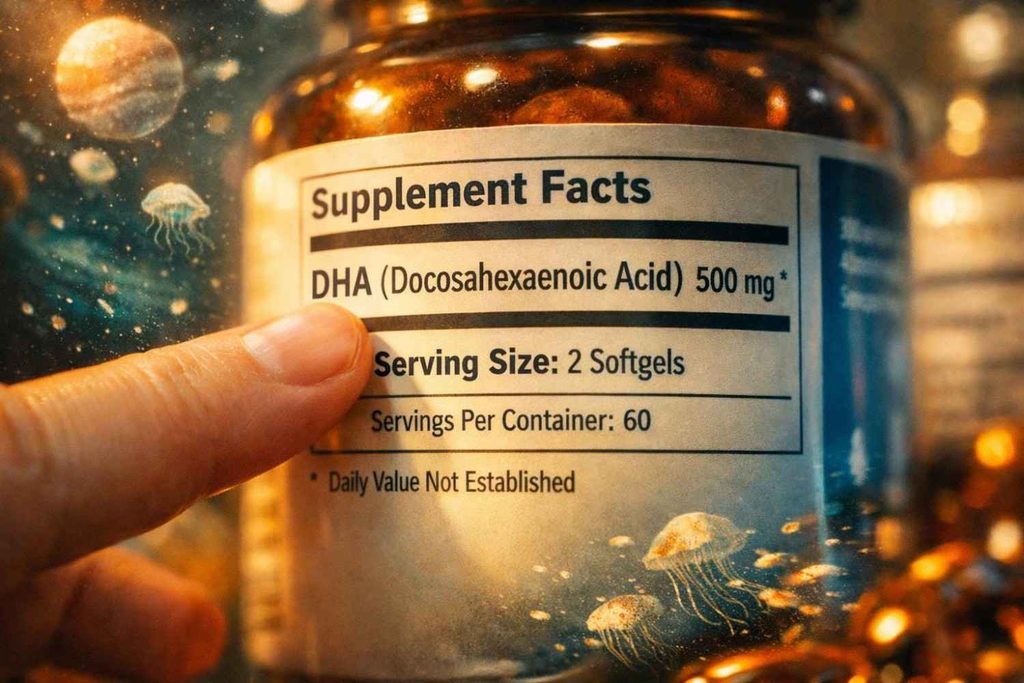
- DHA per capsule, not the bigger total omega-3 figure sitting above it
- Capsules or servings per bottle, since that decides how many actual doses you’re getting
- EPA content, if it’s listed, in case that’s something you’re factoring in separately
Skip even one of these and the comparison stops meaning much.
Why a ₹700 Supplement Can Be More Expensive Than a ₹900 Supplement
This shows up more often than people expect, and the earlier example wasn’t some rare edge case.
DHA concentration alone changes everything that comes after it. So does capsule count, and whether a full serving needs one capsule or two. Multiply all three out into an actual monthly cost, and the bottle that looked cheaper on the shelf can end up costing you more for the exact same 30-day DHA supply than the pricier one sitting right next to it.
None of this jumps out at you from glancing at two listings side by side. It only becomes obvious once someone actually sits down and runs the numbers.
Price per DHA vs Monthly Cost — Which Should You Use?
Really comes down to what you’re trying to figure out.
Price per DHA answers a product-value question, which supplement gives you more DHA for your rupee, regardless of how much you personally take. Monthly cost answers a different, more personal question, what you’ll actually spend each month once your chosen dose enters the picture.
Both are worth knowing, just for different reasons. A product can technically win on price per DHA and still cost you more every month if its recommended serving runs higher than a competitor’s. Say one brand needs two capsules daily to reach 400mg DHA, while another hits that same 400mg in a single capsule. The first might edge out slightly on price per DHA on paper, but the second could still work out cheaper monthly simply because you’re burning through fewer capsules to get there. Worth checking both before you settle on anything.
Don’t Choose Based on Price per DHA Alone
This number is a tool. It’s not the whole decision by itself.
Testing and label transparency carry just as much weight, since a cheap DHA source with zero third-party verification behind it isn’t automatically the smarter pick. I went deeper into which Indian brands actually publish testing data in Vegan Omega 3 Capsules — Which Brands in India Actually Do Third Party Lab Testing?
Ingredients beyond the DHA number, the specific EPA and DHA formulation, expiry dates, and your own personal requirements all still belong in this decision. Price per DHA narrows things down. It doesn’t hand you the final answer on its own.
Who Should Use This Calculation?
Not everyone needs to sit down and run these numbers, but a few situations make it genuinely worth the extra minute.
Budget-conscious buyers trying to stretch every rupee toward actual DHA, not just packaging or brand name, get the most out of this. So does anyone comparing three to five products at once, where eyeballing prices alone quickly stops being reliable. If you’re shopping specifically under ₹1000, small gaps in price per DHA start adding up more than they’d seem to at first glance. And if you’re weighing a high-DHA product against a low-DHA one, the sticker prices rarely tell that story honestly on their own.
This isn’t some new idea invented for supplements either. Research on unit pricing published in the European Journal of Marketing found that shoppers who lean on cost-per-unit comparisons instead of trusting sticker price alone consistently land on better value, and the effect actually gets stronger when people are shopping in a hurry.
FAQs
Q. What’s a good price per 100mg of DHA?
No fixed number exists here; prices move across brands and shift over time. The real value comes from putting two or more products side by side, not chasing some target figure.
Q. Is higher DHA always better?
Not automatically. More DHA per serving usually costs more too, and not everyone actually needs the highest dose on the shelf. It comes down to why you’re taking it in the first place.
Q. Should EPA be included in the calculation?
Only if EPA content matters to you specifically. If DHA is your real priority, keep the math focused there and treat EPA as its own separate consideration.
Q. Why does DHA price swing so much between brands?
Sourcing costs, testing standards, capsule format, and plain brand markup all play into it. A higher price tag doesn’t automatically mean a better product underneath.
Q. Does cheaper DHA mean lower quality?
Not necessarily, but it’s worth a second look. Low price per DHA paired with zero testing information is a combination worth being cautious about, not an instant red flag on its own.
Final Takeaway
Comparing vegan omega 3 price per DHA instead of just bottle price changes which product actually looks like the better deal, sometimes flipping what seemed obvious at first glance completely on its head.
Pull the four numbers off the label. Run the simple calculation. Let that guide the comparison instead of whichever bottle happens to look cheapest sitting on the shelf. Then weigh it against testing transparency and formulation before you actually decide.
If you want a starting list of verified, budget-friendly options to run this math on yourself, my Best Vegan Omega 3 Under ₹1000 in India guide is a decent place to start comparing.
About the Author
Kamal Mishra is a health & nutrition writer and vegan wellness advocate. He is the founder of VeganVitaa – India’s trusted vegan DHA resource for plant-based families.
For more in-depth information, explore our related guides below to better understand vegan DHA, algal oil, and choosing the right supplement. Blog
Disclaimer: This article is for educational purposes only. Always consult your paediatrician before starting new supplements.