
This blog was updated on 21th May 2026 to provide the latest information and researches on Algal Oil DHA vs Flaxseed Omega-3 — Which Works Better?
I believed flaxseed was enough—until I learned that my vegan brain still needed something deeper, smarter, and more complete.
You’re welcome if you’ve ever stood in a store with two bottles—flaxseed omega-3 in one hand and algal DHA in the other—and wondered which is actually better for your heart, brain, or fitness objectives. You’re not by yourself. In fact, one of the most frequent arguments in the vegan health community is the confusion surrounding Algal Oil DHA vs Flaxseed Omega 3. Today, we’re dissecting it using science, straightforward language, and a hint of emotional reality.
Because when the choice is about health — especially for your kids, your parents, or yourself — it deserves clarity, not confusion.
Omega-3 Basics (Without the Boring Science)
Before we compare Algal Oil DHA vs Flaxseed Omega 3, let’s get the foundation right.
Omega-3 has three major forms:
| Type | Full Form | Best Known For |
| ALA | Alpha-Linolenic Acid | Plant seeds (like flax), general wellness |
| DHA | Docosahexaenoic Acid | Brain, memory, eyes, pregnancy |
| EPA | Eicosapentaenoic Acid | Heart health, inflammation control |

Flaxseed = ALA
Algal oil = DHA
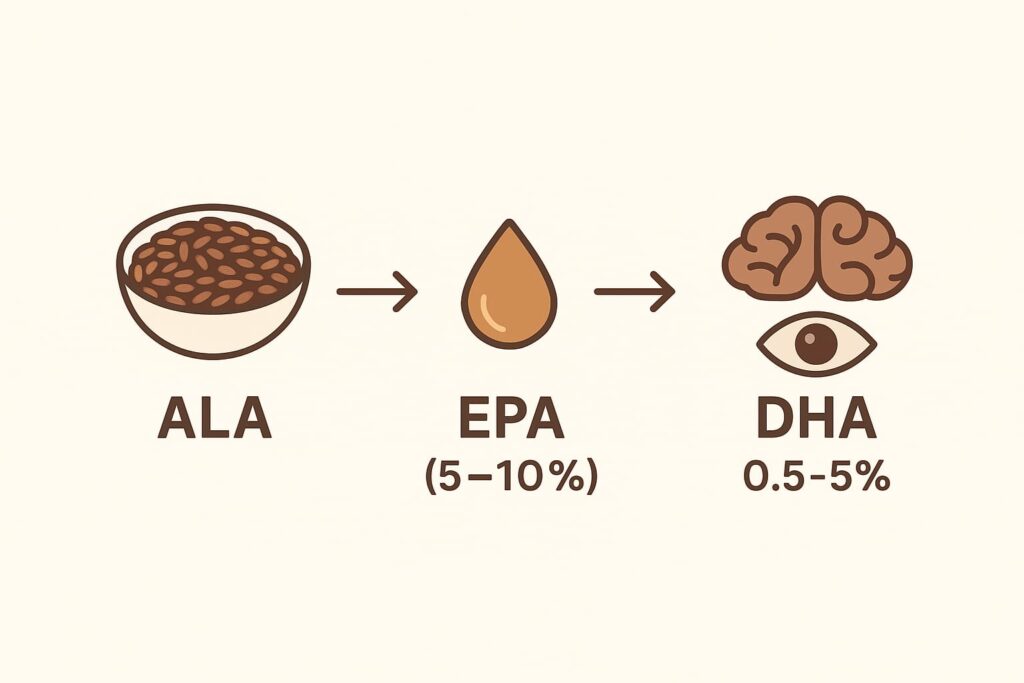
Although the body can convert ALA (found in flaxseed) into DHA, the conversion rate is only 0–4%. This means that even if a person consumes flax on a daily basis, they might not be getting enough DHA for healthy brain and eyes.
And this — right here — is where most people get misled.
Why Conversion Matters More Than Quantity (For Vegans)
- Flaxseed provides ALA, not DHA.
- The human body must convert ALA into DHA, but this process is very inefficient.
- On average, less than 5% of ALA converts into DHA.
- Factors like stress, age, pregnancy, and nutrient deficiencies reduce conversion even more.
- This means you can eat flaxseed daily and still remain low in DHA.
- DHA is the form your brain, eyes, and nervous system actually need.
- Algal oil already contains ready-to-use DHA, so no conversion is required.
- This makes algal oil more reliable, especially for vegans.
- For children, pregnant women, and people with brain fog, conversion is often too low.
- Flaxseed is healthy, but it cannot fully replace DHA.
- Using algal oil ensures your body gets what it truly needs.
My Journey: Why Flaxseed Alone Wasn’t Enough
I was that person — sprinkling flaxseeds on everything.
Oatmeal. Smoothies. Salad. Even mixed in my roti dough.
My wife would laugh. “You are eating more seeds than actual food!”
But something was off. My brain felt heavy by 3 PM. My memory was fuzzy. My mood was unstable. I could not explain it.
I was vegetarian. I ate clean. I exercised. I slept 8 hours. Everything looked perfect on paper.
One day, my doctor looked at my blood work and asked — “Do you know the difference between ALA and DHA?”
I said no.
That conversation changed my entire understanding of nutrition.
It turns out — flaxseeds give you ALA. But flaxseed alone is not enough for omega 3. Your brain actually needs DHA. And converting ALA to DHA? Your body is terrible at it.
I was eating the right food. But getting the wrong nutrient.
This guide is what I wish someone had explained to me clearly five years ago — the honest truth about why flaxseed is not enough.
ALA to DHA Conversion in the Human Body
Flaxseed is one of the richest plant sources of omega-3, but the type it contains is ALA (alpha-linolenic acid). While ALA is beneficial, the body still needs to convert it into DHA and EPA, the long-chain omega-3 fats that support the brain, eyes, skin, and heart.
The problem is that this conversion process is very inefficient.
Research suggests that only a small percentage of ALA converts into DHA, often estimated to be between 0–5% in many people. This means that even if you regularly eat flaxseed, your body may still struggle to produce enough DHA for optimal health.
Several factors can further reduce this conversion rate, including:
- High intake of omega-6 fats from processed foods
- Genetic differences between individuals
- Low overall omega-3 intake
- Nutritional deficiencies such as zinc or vitamin B6
Because of this limitation, many nutrition experts recommend that vegans combine ALA sources like flaxseed with a direct DHA source, such as algal oil, to maintain balanced omega-3 levels.
In simple terms, flaxseed is still a healthy food – but relying on it alone may not always provide enough DHA for brain and long-term health.
Can Flaxseed Alone Provide Enough DHA?
Let’s go back to the main question: Flaxseed omega-3 — is it enough? The short answer is no. While flaxseed is healthy and full of ALA, it cannot provide the direct DHA your body needs in significant amounts.
Consider it this way: DHA is the finished product your brain needs, while ALA is the raw ingredient. You won’t have enough of the final product if your body’s “factory” only produces a very small amount.
Deep Comparison — Science + Real-Life Benefits
This table makes the story crystal clear:
| Factor | Flaxseed Omega-3 | Algal Oil DHA |
| Omega-3 type | ALA | DHA (direct, pre-formed) |
| Conversion to DHA | 0–4% | No conversion needed |
| Brain function | Low | Excellent |
| Eye & memory support | Low | High |
| Pregnancy & breastfeeding | Not recommended alone | Widely recommended |
| Vegan | Yes | Yes |
| Sustainability | High | Very high |
| Taste/aftertaste | Neutral | Neutral, no fishy burps |
DHA is the type of omega-3 that the body actually uses, whether one is a student, a professional, a fitness enthusiast, or an elderly person.
That’s why in 2025; the core debate Algal Oil DHA vs Flaxseed Omega 3 now has overwhelming scientific clarity.
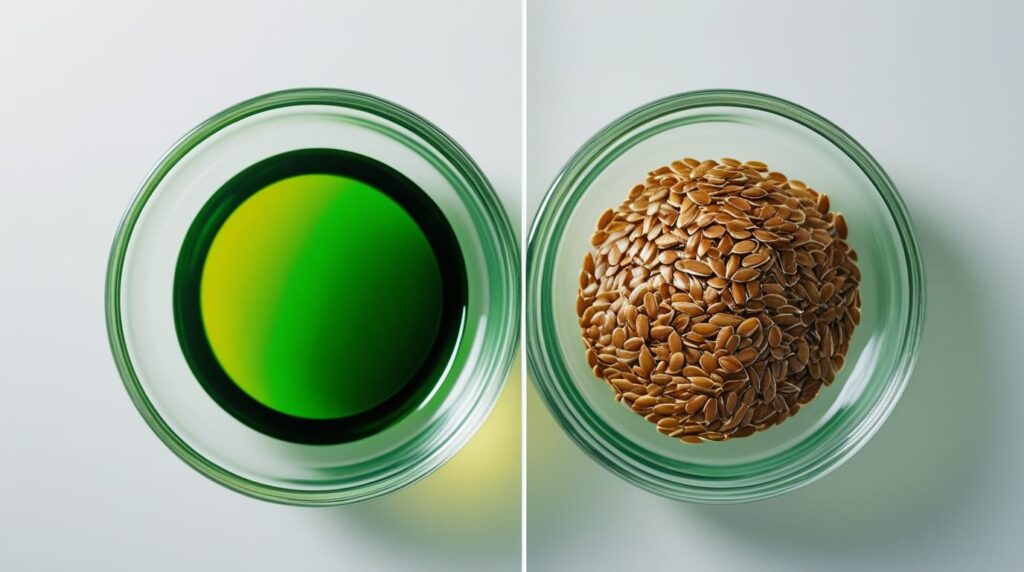
For a complete understanding of plant-based omega-3, you can read our detailed Vegan Omega-3 Guide.
Who Should Choose What?
Let’s get personal and practical — no generic advice.
Choose Flaxseed Omega-3 if:
You want basic omega-3 for general wellness
You’re focusing on digestion + skin benefits
You already eat DHA from another source
Choose Algal Oil DHA if:
You want brain, memory, eye, and nervous system support
You’re pregnant, breastfeeding, or planning pregnancy
You’re recovering from burnout or depression
You’re a student, gamer, corporate professional
You’re 40+ and want long-term cognitive health
Suddenly the conversation Algal Oil DHA vs Flaxseed Omega 3 becomes logical — the body needs DHA, not just ALA.

Recommended DHA Dosage
- Adults: 200–300 mg DHA/day
- Pregnant & breastfeeding mothers: 300–400 mg DHA/day
- Children (after doctor’s advice): 100–200 mg DHA/day
Flaxseed provides ALA, not DHA. The human body converts only 0–4% of ALA into DHA. Algal oil provides direct DHA — the form required for brain, memory, eyes, and pregnancy. For overall cognitive and neurological health, algal oil DHA is superior to flaxseed omega-3.
The Decision Moment
If you’re vegan or vegetarian and want the purest and most effective form of omega-3…
Choose algal oil DHA, not flaxseed alone.
That’s why premium DHA supplements like VeganVitaa — Plant-Based DHA (Microalgae Source) are becoming the global choice.
- No fish
- No mercury
- No smell
- Scientifically proven DHA
Take care of your brain and your future — one small capsule at a time.
The Shift People Don’t Expect
Many people compare Algal Oil DHA vs Flaxseed Omega 3 just to “improve health,” but the real change hits differently. When DHA starts working, thinking becomes clearer, focus sharpens, mood feels lighter, and suddenly… life doesn’t feel heavy anymore.
It’s not about diets or being super healthy — it’s about finally feeling like the best version of yourself. Calm, confident, emotionally balanced.
And that’s why once someone experiences DHA results, they rarely switch back. Because no one wants to return to a dull, tired version of themselves.
Related Products
You can find quality algal DHA supplements on Amazon India:
Best Algal DHA capsules — Check price
Vegan Omega-3 supplements — Check price
Plant-based DHA liquid — Check price
More Resources
Learn more about vegan DHA from our detailed guides:
Best Algal Oil India 2025-2026
Best Vegan DHA Supplements in India
Vegan DHA Dosage — How Much Do You Need Daily?
DHA Deficiency Symptoms in Vegans
For more in-depth information, explore our related guides below to better understand vegan DHA, algal oil, and choosing the right supplement. Blog
Sources
This guide is based on research from:
Harvard School of Public Health on omega-3 and brain health
National Institutes of Health (NIH) official fact sheet on omega-3 fatty acids
FAQs
Can flaxseed replace DHA?
No. Flaxseed contains ALA. The body converts only 0–4% of ALA into DHA, which is too low to meet brain and eye requirements.
Is algal oil DHA safe?
Yes. It is sourced from microalgae and is recognized as one of the safest and purest forms of DHA for vegans.
Does algal oil DHA cause fishy burps?
No. It is plant-based, odor-free, and mercury-free.
Can children take algal oil DHA?
Yes, but dosage should be based on paediatric guidance.
Which is better for memory and focus?
DHA (from algal oil) — not ALA from flaxseed.
Can flaxseed meet DHA needs during pregnancy?
No. Pregnancy increases DHA demand, and ALA conversion is too low to meet it.
Is algal oil suitable for long-term daily use?
Yes. Algal oil is clean, plant-based, and safe for daily long-term supplementation.
Final Verdict
The debate Algal Oil DHA vs Flaxseed Omega 3 is not a competition — it’s clarification. Flaxseed is great, but it provides ALA, not DHA. DHA is the omega-3 the brain and eyes actually use. So, while flaxseed supports general wellness, algal DHA supports higher neurological and cognitive functions. If your goal is memory, energy, mental clarity, pregnancy nutrition, or long-term brain health — algal DHA wins every time.
And when your health becomes a priority, choosing right feels less like a purchase and more like self-respect.
If you care about real brain nutrition, choose the omega-3 your body can actually use.
For a simple explanation, see our guide on liquid vs capsule vegan DHA in India and understand the key differences.
Disclaimer: This article is for educational purposes only. Always consult your paediatrician before starting new supplements.
Disclaimer: This post contains affiliate links. If you buy through these links, I may earn a small commission at no extra cost to you. It helps me keep sharing useful content with you.

Pingback: Vegan Omega 3 for Kids: Brain Growth, Memory & Focus Guide
Pingback: Best Vegan Omega 3 Capsules in India 2025 : Brain & Heart
Pingback: What Is Algal Oil? Pure Vegan Omega-3 Explained Simply
Pingback: DHA Deficiency in India: A Silent Health Gap in Indian Diets
Pingback: Top 10 Vegan DHA Brands in India – Honest Comparison
Pingback: Vegan Omega 3 for Pregnancy – Complete Guide for Moms to be
Pingback: Is flaxseed enough for omega 3? The Truth About ALA vs DHA
Pingback: Vegan Hair Loss & Dull Skin: DHA Omega-3 Deficiency Fix
Pingback: How to Read Omega 3 Label: Simple DHA, EPA & ALA Guide
Pingback: How Long Does Vegan DHA Take to Work? Week-by-week results
Pingback: Not Getting Enough Omega 3: 5 Subtle Signs to Watch
Pingback: Why Most Indian Diets Lack DHA - Even Healthy Ones
Pingback: Vegan Omega 3 Guide: DHA, EPA, ALA & Sources
Pingback: DHA Per Capsule vs Per Serving: Avoid This Label Mistake
Pingback: Best Vegan Omega 3 for Hair Loss in India- Does It Work?