Around 47, the hot flashes showed up first. Then sleep got worse. Then came the moments of standing in a room, having completely forgotten why she walked in there. A friend suggested omega-3 might help. So, she looked it up, and found the same problem everyone runs into online, dozens of blogs saying DHA fixes menopause symptoms, none of them actually showing you the research behind that claim.
This is a question a lot of vegetarian and vegan women ask once perimenopause or menopause starts, whether a plant-based omega-3 is actually worth taking or just another supplement riding the trend. Honestly, there’s no clean yes or no here.
Does vegan omega 3 help during menopause? The research is real, but it’s messier than most product pages let on, and it’s worth knowing what it actually says before you spend money on a bottle.
At VeganVitaa, we get asked this fairly often by readers going through this transition, so this piece pulls together what the actual research says, not what a product label promises.
Can Vegan Omega 3 Help During Menopause?
Menopause doesn’t happen overnight. It’s a stretch of years where estrogen keeps dropping, unevenly, and that shift touches way more than your period. Sleep changes. Mood shifts. Your body’s temperature control gets unpredictable. Even thinking clearly can start to feel harder some days.
Here’s the thing about DHA, your brain holds onto more of it than almost any other tissue in your body.
Researchers have also observed that estrogen levels appear connected to how the brain regulates omega-3 fatty acid metabolism, though the exact mechanisms are still being studied. So as estrogen swings around during this transition, researchers started wondering, does topping up omega-3 help smooth any of that out? That question has led to real studies on vegan omega 3 for menopause. It just hasn’t led anywhere near a tidy answer yet.

Does Vegan Omega 3 Help During Menopause — What Research Actually Shows
I’ll be straight with you here instead of dressing this up. A 2025 review looking at omega-3 and the menopausal brain called the evidence sparse, but leaning toward benefit, enough that the researchers think this transition is worth studying a lot more closely.
Hot flashes and sleep are where things get genuinely confusing. The MsFLASH trial, one of the bigger studies in this space, gave women combined EPA and DHA for 12 weeks and found basically nothing changed, not hot flash frequency, not severity, not sleep. Then a separate, smaller study by Lucas and colleagues found the opposite, EPA over 8 weeks actually cut down hot flash frequency and improved how bad they felt.
When researchers pulled together a 2023 systematic review published in the International Journal of Environmental Research and Public Health covering the available trials, their conclusion was blunt: omega 3 menopause symptoms around hot flashes and sleep just don’t have solid evidence behind them yet, though they were quick to add that the research pool is still too small to rule it out either. Read the full systematic review.
If you want to read more on how EPA and DHA actually work in the body generally, the NIH has a solid overview. NIH Omega-3 Fatty Acids Fact Sheet
Where the Evidence Is Strongest and Weakest
- Mood-related symptoms during perimenopause show the most consistent association in the research, mainly from observational studies tracking women’s diets and symptoms over time, though association isn’t the same as proof that supplementation causes improvement
- Brain fog and memory show early, promising signs, but researchers keep saying the same thing, more trials needed
- Hot flashes and sleep quality stay genuinely mixed, with the big trials contradicting each other
- Nobody’s claiming omega-3 makes menopause symptoms disappear, and you shouldn’t read any of this that way
Potential Benefits of DHA and EPA During Menopause
Brain and memory. DHA for menopause brain fog is one of the more researched angles. The brain relies heavily on DHA, and preliminary evidence suggests adequate intake during the menopausal transition may support cognitive function, though this remains an early-stage research area.
Mood. This is where the picture looks most encouraging. An analysis of baseline data from the Study of Women’s Health Across the Nation, a large observational study, found that higher omega-3 intake was associated with lower depressive symptoms during perimenopause. A 2022 systematic review similarly concluded that most available research pointed toward relieved depressive symptoms linked to omega-3 intake.
Sleep. Evidence here stays inconsistent. Some smaller trials report improvement, while the larger MsFLASH study found no measurable difference in sleep quality after 12 weeks.
Hot flashes and night sweats. As covered above, omega 3 for hot flashes shows contradicting results between studies, and current evidence doesn’t yet support treating this as a reliable fix.
If brain fog specifically is your main concern, this connects to a related life stage worth understanding, since DHA needs shift with age. Vegan DHA for Seniors: Benefits for Memory and Joints.

Can Vegan Omega 3 Replace Menopause Treatment?
No. This needs to be said plainly. Nothing in the research above suggests omega 3 menopause treatment can substitute for hormone therapy, medical evaluation, or other prescribed approaches when symptoms are significantly affecting quality of life.
Vegan DHA for women navigating menopause may offer modest support, particularly around mood, based on current evidence. It sits alongside medical care, not in place of it. Anyone experiencing severe hot flashes disrupting sleep for months, or mood changes that feel unmanageable, should be discussing options with a doctor rather than relying on a supplement alone.
It’s also worth knowing what to watch for if you do start supplementing, since omega-3 can interact with certain medications and blood thinners. Vegan Omega-3 Side Effects and Interactions: What to Know Before Taking It in India.
How Much Omega 3 Do You Need During Menopause?
There’s no menopause-specific dosage established yet in research. Omega 3 dosage for menopause studies generally used combined EPA and DHA in the range already used for general cardiovascular and brain health.
- There’s no menopause-specific recommended dose established in research right now. This is worth being precise about: the numbers below are the doses used in the studies discussed above, not an official recommendation for menopause symptoms specifically.
- Doses on the higher end were more common in studies looking at mood and cognitive outcomes
- DHA EPA dosage women should discuss specifically with a doctor if considering amounts above standard supplement levels
- Consistency over weeks to months mattered more in the studies than any single dose taken occasionally
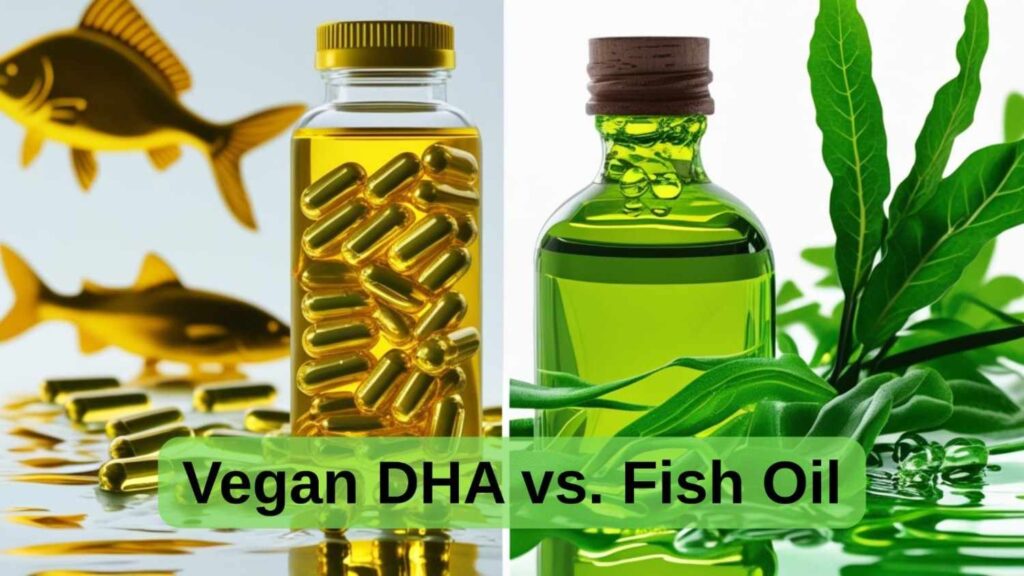
Vegan Omega 3 vs Fish Oil During Menopause
The EPA and DHA molecules are chemically identical regardless of source, algae or fish. That said, direct menopause-specific trials using algal oil specifically are limited, so most of what we know is extrapolated from fish oil research rather than tested directly on algal oil in this population.
This matters when choosing a supplement, since many vegan omega-3 products lean heavily DHA-dominant with very little EPA, while the mood-related research specifically used combined formulations.
How to Choose a Vegan Omega 3 Supplement
A few things are worth confirming on the label before buying:
- Algal oil confirmed as the DHA and EPA source, not a flaxseed or seed oil blend marketed loosely as omega-3
- Both EPA and DHA stated clearly in mg per serving, not combined into one vague number
- Manufacturing date and expiry visible, and store the product according to the manufacturer’s instructions, away from excessive heat
- No added herbal “hormone balance” compounds mixed in, since these make it impossible to know what’s actually responsible for any change you notice
These three are verified for Amazon India availability with clearly stated EPA and DHA content at the time of writing.
Rasayanam Plant Based Omega-3
450mg EPA and 150mg DHA per 2-capsule serving, sourced from marine microalgae. This is the highest EPA content among verified options, relevant given that the mood-related research used combined EPA and DHA rather than DHA-heavy formulations.
Best for: Women specifically interested in the mood and inflammation angle of the research, where EPA content matters more.
Check Rasayanam Plant Based Omega-3 on Amazon
Empire 1900 Vegan Omega-3
250mg EPA and 250mg DHA per single capsule, an even split with both numbers clearly stated on the front label. One capsule daily, algal source confirmed.
Best for: Anyone wanting a straightforward, evenly balanced EPA and DHA option without needing two capsules daily.
Check Empire 1900 Vegan Omega-3 on Amazon
Miduty Veg Omega-3
Each 500mg algal-oil serving provides 100mg EPA and 200mg DHA, sourced from Schizochytrium microalgae and delivered in vegetarian HPMC capsules. It provides a lower combined EPA and DHA amount than the other two options, but its lower price makes it a practical option for women who want to start with a vegan omega-3 supplement without a large upfront cost.
Best for: Women looking for an affordable vegan omega-3 option with clearly stated algal EPA and DHA.
Check Miduty Veg Omega-3 on Amazon
Prices and stock on Amazon India change often, so confirm current EPA and DHA figures directly on the listing before ordering.
If period-related symptoms are also part of what you’re managing alongside perimenopause, this covers that angle specifically: Omega 3 for Period Pain in India — What Does the Evidence Say?
FAQs
Q. Does vegan omega 3 actually reduce hot flashes?
Depends who you ask, honestly. One major trial found zero effect on hot flash frequency or severity. A smaller study found the opposite, that EPA cut hot flashes down. A systematic review looking at everything together said the evidence just isn’t strong enough yet to say either way for sure.
Q. Can omega-3 help with the mood swings that come with menopause?
This is the part of the research that actually looks decent. Women with higher omega-3 intake showed fewer depressive symptoms during perimenopause in one large observational study, and a separate review of multiple studies found a similar pattern. Still early days, but it’s the most encouraging angle so far.
Q. Is algal DHA just as good as fish oil DHA for this?
Chemically, yes, identical molecule either way. Most of the actual menopause research used fish oil simply because that’s what’s more common in clinical trials, not because algal oil is inferior. There’s no real reason your body would treat the two differently.
Q. How much EPA and DHA should I actually be taking?
Nobody’s landed on a menopause-specific number yet. The studies that showed benefit generally used amounts already recommended for heart and brain health, usually in the several-hundred-milligram to over a gram range daily. If you’re thinking about going higher than that, that’s a conversation for your doctor, not a blog.
Q. Should I take omega-3 instead of seeing a doctor about my symptoms?
No, and I want to be clear about that. Omega-3 might offer some modest help, mood especially, based on what we know right now. But it’s not a replacement for actual medical care, particularly if what you’re dealing with is seriously affecting your day-to-day life.
Final Verdict — Is Vegan Omega 3 Worth Taking During Menopause?
So, does vegan omega 3 help during menopause? Honestly, probably, for some things more than others. Mood seems to be where it helps most, even if the research is still early. Hot flashes and sleep are still a genuine question mark, with good studies landing on opposite conclusions.
If you decide to try it, look for something that actually states both EPA and DHA clearly, not some vague DHA-only product slapped with a “women’s health” label. Think of it as one part of a bigger picture, not a fix on its own, and talk to your doctor if things are genuinely affecting your daily life.
For the full comparison of verified options built around women’s needs, hormonal support and brain health included, this is worth a look: Best Vegan Omega 3 for Women in India — Top Picks for Hormones, Brain and Energy
About the Author
Kamal Mishra is a health & nutrition writer and vegan wellness advocate. He is the founder of VeganVitaa – India’s trusted vegan DHA resource for plant-based families.
For more in-depth information, explore our related guides below to better understand vegan DHA, algal oil, and choosing the right supplement. Blog
Disclaimer: EPA, DHA and pricing figures are based on label information available at time of research. Always verify current Amazon India listing details before purchasing — formulations and prices change.
Disclaimer: This article is for educational purposes only. Always consult your paediatrician before starting new supplements.
Disclaimer: This post contains affiliate links. If you buy through these links, I may earn a small commission at no extra cost to you. It helps me keep sharing useful content with you.