
This blog was updated in 10th March 2026 to provide the latest information and researches on How to read Omega 3 label.
Introduction: The Aisle Moment (Why This Matters)
“I once believed all omega-3 supplements were the same – until I learned that one wrong label can quietly fail your brain.”
“I used to trust the word ‘Omega-3’ on every label-until I realized my body was still missing what truly matters.”
I still remember the day my sister asked me, “Bhai, koi aisa omega-3 le aao jo vegan ho aur baby ke liye safe ho.” I walked into the shop feeling confident – and walked out more confused than ever. Bottles screaming “1000 mg” lined the shelf, but none clearly told me how much DHA or EPA was inside. That was the moment I learned the most important skill for any supplement shopper: how to read omega 3 label – properly and without stress.
This guide will walk you through real-world examples and straightforward guidelines so you can stop speculating and start making decisions with confidence. You’ll understand exactly what to look for and why it’s important by the end.
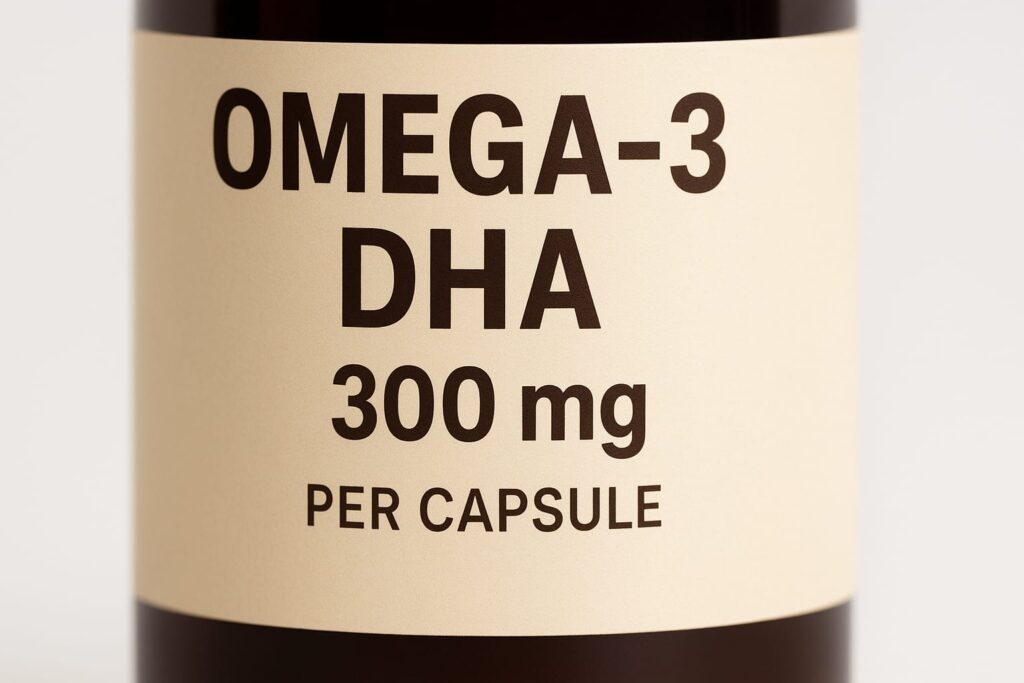
Why Most People Read Omega-3 Labels Wrong
Many people look at the total oil amount on the front of the bottle and assume they are getting that much omega-3. But that number can be misleading.
For example, a supplement might say “1000 mg Omega-3 Oil.” This does not mean you are getting 1000 mg of DHA or EPA. In many cases, the actual DHA content may be only 200–300 mg.
This is why reading the label carefully matters. The real value of an omega-3 supplement comes from the DHA and EPA amount, not the total oil weight.
Vegans should pay special attention to the DHA content, because DHA plays an important role in brain health, eye health, and nervous system function.
The Basics: Meet ALA, EPA & DHA
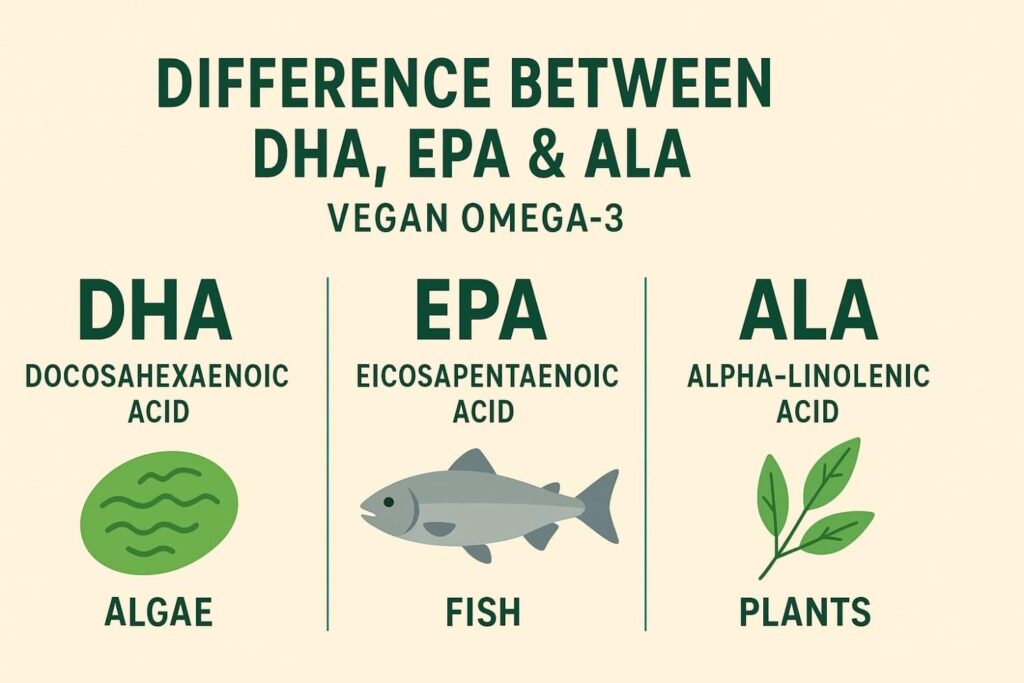
To understand omega-3 labels clearly, it helps to know the difference between ALA, EPA, and DHA.
| Omega-3 Type | Main Source | Main Benefit | Conversion in Body |
| ALA (Alpha-Linolenic Acid) | Flaxseed, chia seeds, walnuts | Supports general heart health | Body converts only a small amount into DHA/EPA |
| EPA (Eicosapentaenoic Acid) | Fish oil, algal oil | Supports heart health and reduces inflammation | Limited conversion from ALA |
| DHA (Docosahexaenoic Acid) | Algal oil, fish oil | Important for brain, eyes, and nervous system | Directly usable by the body |
For vegans, the most important nutrient on the label is usually DHA, because the body converts only a small amount of ALA into DHA.
If you want to understand the difference between plant sources and algae-based DHA, read our complete guide on algal oil vs flaxseed omega-3.
Before we jump into labels, let’s meet the trio you’ll see on every bottle.
What is ALA?
ALA (Alpha-Linolenic Acid) is a plant omega-3 found in flax, chia, and walnuts. The body only partially converts ALA into the active forms DHA and EPA, despite the fact that ALA is beneficial.
What is EPA?
EPA (Eicosapentaenoic Acid) helps with inflammation and heart support. Many fish oils are EPA-rich; some algal blends include EPA too.
What is DHA?
DHA (Docosahexaenoic Acid) is the superstar for brain and eye health. Algal oil’s DHA is the best option for vegans.
Understanding these three makes it easier to how to read omega 3 label like a pro – because not all “omega-3” numbers are created equal.
Step-by-Step: How to Read Omega-3 Label (Cheat Sheet)
| Label Element | What It Means |
| Serving Size | Capsules needed per dose |
| DHA | Most important for vegans |
| EPA | Supports heart health |
| Source | Algal oil or fish oil |
| Certifications | Quality and purity check |
A useful, store-tested cheat sheet is provided below. Every time you pick up a bottle, use it.
Step 1: Start with Serving Size
Check to see if the numbers apply to one or two capsules. Your calculations would change if the front label read “600 mg” for two capsules. This is the first rule for how to read omega 3 label correctly.
Step 2: Find the DHA & EPA Amounts
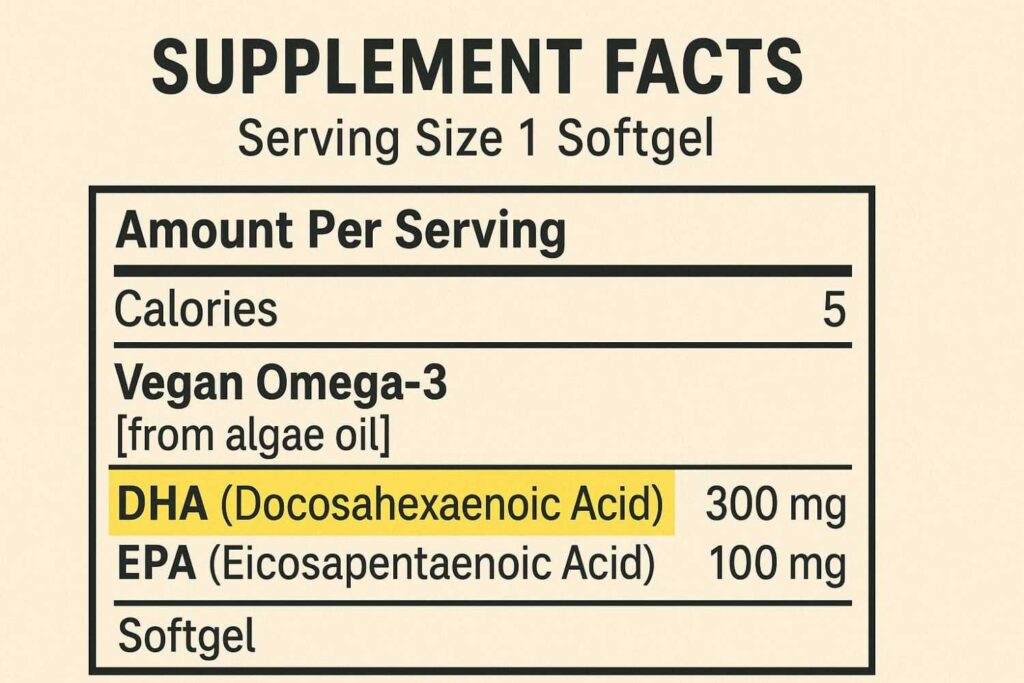
Examine the supplement’s facts. The active forms are shown if DHA 300 mg and EPA 50 mg are listed. Put “total oil” aside until you see these figures.
Step 3: Identify the Source – Algae or Fish?
The source matters to vegans. Great if “algal oil,” “Schizochytrium,” or “microalgae” are listed as ingredients. It’s not vegan if it contains “fish oil” or “anchovies.” Learning how to read omega 3 label means spotting the source immediately.
Step 4: Check Capsule Material & Fillers
Gelatin capsules can be used in products that contain algae oil. Search for “vegetarian capsule” or “plant cellulose.” Additionally, look for extraneous ingredients that weaken potency.
Step 5: Look for Certifications & Third-Party Testing
Badges like “Vegan Certified,” “IFOS,” or “Third-party tested” boost trust. They don’t guarantee perfection, but they are significant.
Step 6: Check Expiry, Storage, and Country of Manufacture
Omega oils undergo oxidation. Minor label information, such as the expiration date and storage instructions (store in the refrigerator or away from heat), affects potency.
Algal Oil vs Fish Oil on Labels
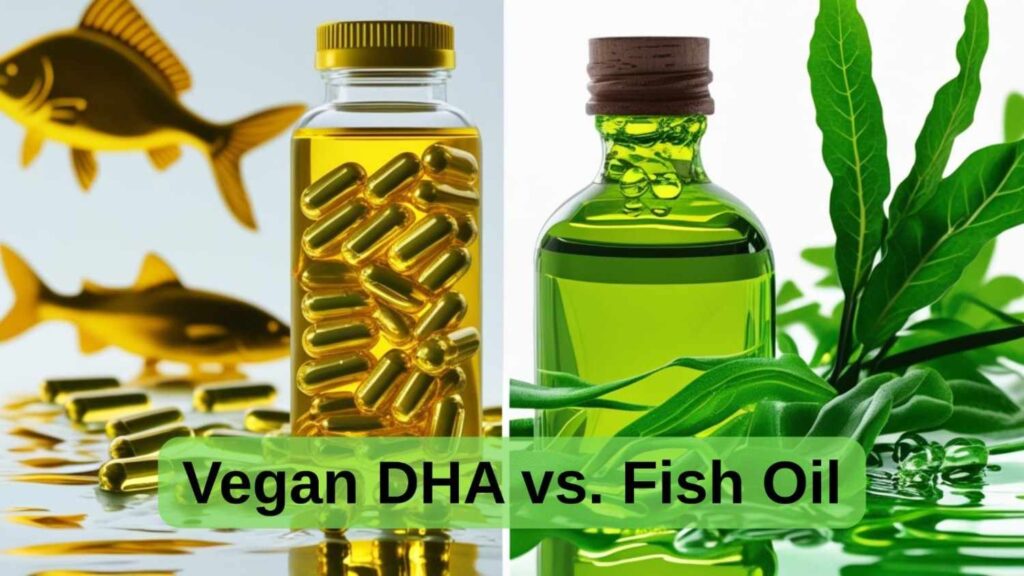
When reading omega-3 labels, the source of the oil is just as important as the amount.
Fish oil labels usually mention fish like anchovy, sardine, or mackerel. These oils contain DHA and EPA but may also carry concerns about oxidation, contaminants, or environmental toxins.
Algal oil is different. It is produced directly from marine algae, which is the original source of DHA in the ocean food chain.
For vegans, algal oil offers three clear advantages:
- 100% plant-based source of DHA
- Lower risk of heavy metal contamination
- More sustainable for the environment
That’s why many modern omega-3 supplements now clearly highlight “Algal DHA” on the label.
What Vegans Should Prioritise
If you’re searching how to read vegan omega 3 label, here are the green and red flags.
Green: “Algal oil,” “DHA 300 mg per capsule,” “Plant capsule,” “Vegan certified.”
Red: “Fish oil,” “Gelatin,” “Marine source (unspecified).”
The easiest rule is to prefer algal sources, avoid using the ambiguous term “marine” unless it refers to “algae,” and prefer specific numbers (mg of DHA and EPA).
Many people also compare different plant-based supplements before buying. You can explore our detailed comparison of the best vegan omega-3 capsules available in India.
How Much DHA & EPA Do You Actually Need?
Adults should aim for about 250–500 mg of DHA+EPA daily, though recommendations vary. At least 250–300 mg of DHA is often recommended for brain support. For information on higher DHA dosage recommendations for nursing and pregnant women, speak with a healthcare professional.
Reading labels is made easier when you know what you want to achieve; just compare the milligrams per serving to your daily goal. This is the heart of knowing how to read omega 3 label in a way that actually helps you.
What Nutrition Experts Say About Omega-3 Labels
Many nutrition experts recommend paying close attention to the actual DHA and EPA amounts on supplement labels rather than just the total oil weight. According to guidance from National Institutes of Health, the effectiveness of an omega-3 supplement depends mainly on the specific DHA and EPA content, not the overall capsule size or marketing claims on the front label.
Research summaries published by Harvard Medical School also highlight that DHA plays a key role in brain health, eye function, and nervous system support, which is why checking the DHA value on the label is especially important for vegans who may rely on plant-based omega-3 sources.
Similarly, nutrition guidelines from the World Health Organization emphasize that maintaining adequate omega-3 intake supports heart health, cognitive function, and overall metabolic balance, making it essential to choose supplements with clearly listed and transparent omega-3 amounts.
A Real Store Example: Comparing Two Bottles
Imagine two products on the shelf:
Product A: Total Omega-3 1000 mg (per 2 caps); DHA 200 mg; EPA 100 mg; Fish oil; Gelatin capsule.
Product B: Total Omega-3 600 mg (per 1 cap); DHA 300 mg; EPA 0 mg; Algal oil; Plant capsule.
If brain support (DHA) is your priority, Product B gives more DHA in one capsule with vegan capsule material. That’s exactly why learning how to read omega 3 label matters – the big “1000 mg” on A is misleading.
Common Marketing Tricks (And How to Avoid Them)
Brands use slogans like “High Potency,” “Pure Marine Omega-3,” or big front numbers to get your attention. These are marketing tools, not guarantees. The savvy consumer ignores front-label hype and verifies the supplement facts. You gain confidence as a buyer when you repeat that small action.
A Simple Rule to Choose the Right Omega-3
If you feel confused while reading labels, remember one simple rule:
Focus on DHA amount, source, and purity.
A good vegan omega-3 supplement usually provides:
- 250–500 mg DHA per serving
- Algal oil source
- Third-party testing or certifications
If a product hides the DHA amount or only mentions “omega-3 blend”, it is usually better to avoid it.
Clear labeling is often a sign that the brand is confident about the quality and purity of its omega-3.
Many vegans choose algal oil DHA supplements because they provide a direct source of DHA without relying only on flaxseed or chia.
👉 Check latest price on Amazon
Practical Tips: Shopping, Storing & Using
Take supplements with a meal that contains fat for best absorption.
Keep it in a dark, cool place and pay attention to the expiration date.
For convenience, use a single capsule and check the DHA per-capsule.
If the label states amount per two capsules, divide by two to compare amounts of a single pill. These small steps fit into your daily routine and are part of masterfully learning how to read omega 3 label.
For those who prefer a convenient option, you can check a trusted vegan DHA supplement available online here.
👉 Check latest price on Amazon
👉 Check latest price on Amazon
Disclaimer: This post contains affiliate links. If you buy through these links, I may earn a small commission at no extra cost to you. It helps me keep sharing useful content with you.
Special Groups: Moms, Athletes & Kids
For Pregnant/Breastfeeding Moms
DHA is important in pregnancy. Many prenatal formulas list DHA clearly; prefer algal DHA with third-party testing. When checking labels, you’re doing exactly what “how to read vegan omega 3 label” teaches: verifying source, mg, and certification.
For Athletes
Athletes occasionally need more EPA to reduce inflammation. Look for blended algae products that list both DHA and EPA.
For Kids
Kids need lower doses and kid-friendly formats (liquid or chewable). The DHA mg per serving should be clearly stated on the label.
My Final Story – Why I Switched Brands
After years of confusion, I found a small algal DHA brand with clear labels. It stated DHA 300 mg per capsule, vegan capsule, and third-party tested. My sister used it through her pregnancy and reported better focus and fewer cravings. That small shift happened only because I learned how to read omega 3 label details – and it changed outcomes for my family.
Quick Checklist (Copy & Use)
Use this when shopping — paste it into your phone notes:
Serving size: ______
DHA per serving: ______ mg
EPA per serving: ______ mg
Capsule material: ______
Source (Algal / Fish / Other): ______
Certifications & third-party testing: ______
Checking this simple list is the final habit that turns label reading into a reliable shopping skill: how to read omega 3 label in under one minute.
FAQ: Common Doubts About Reading Labels
Q1: Can I trust “Plant-Based” written on bottle?
➡️ Only if it says “from algae oil,” not flaxseed only.
Q2: What if DHA/EPA not mentioned?
➡️ Avoid it. Transparency = trust.
Q3: Are all vegan omega-3 supplements same?
➡️ Nope! Only algal-based ones give true DHA.
Q4: Can a label say “Omega-3” but still not provide DHA?
➡️Yes. Many products only contain ALA, which converts poorly into DHA in the body.
Q5. Why should vegans prioritize DHA over ALA?
➡️Because DHA directly supports brain, eyes, and nervous system—ALA does not replace it effectively.
Q6. Can Omega-3 labels be misleading for vegans?
➡️Yes. Many labels show “Omega-3” but contain only ALA, not brain-active DHA.
Q7. Is DHA amount more important than total Omega-3?
➡️For brain health, yes. DHA matters more than total omega-3 numbers.
For a deeper comparison of trusted supplements, see our guide on the top vegan DHA supplements in India.
Final Thoughts: Read Smart, Buy Better
If you only remember one thing from this guide, it should be that you should trust the supplement facts rather than large front numbers. Learning how to read omega 3 label turns confusing shelves into quick decisions. For vegans, algal DHA in a plant capsule with clear milligram values is the best option. After a few tries, it becomes automatic.
👉 Read labels smartly – your brain deserves clarity, not confusion.
🔗 Read the full guide now | 💚 Save & share with a conscious vegan
VeganVitaa Blogs
For more in-depth information, explore our related guides below to better understand vegan DHA, algal oil, and choosing the right supplement. Blog
If you want to understand the recommended DHA intake and why it matters for fetal brain development, read our detailed guide on how much DHA is needed during pregnancy.
You can also explore our detailed guide on the best algal oil supplements available in India for pure vegan DHA support.
For readers looking for budget-friendly options, explore our guide on affordable vegan DHA sources in India and smart algal oil buying tips.
Curious about when you might start noticing results? See our detailed guide on how long vegan DHA takes to work and what changes you can expect week by week.
Disclaimer: This article is for educational purposes only. Always consult your paediatrician before starting new supplements.
Disclaimer: This post contains affiliate links. If you buy through these links, I may earn a small commission at no extra cost to you. It helps me keep sharing useful content with you.

Pingback: 7 Vegan Lead Magnet Ideas to Grow Your Email List Fast
Pingback: Why Vegan Omega 3 Not Working in India? 7 Mistakes
Pingback: Best Vegan DHA Capsules for Pregnancy in India (2026 Guide)
Pingback: Best Algal Oil India 2025-2026 – Top Brands and DHA
Pingback: Not Getting Enough Omega 3: 5 Subtle Signs to Watch
Pingback: 5 Best Vegan Omega 3 Capsules in India (2026 Buying Guide)
Pingback: What Is Algal Oil? Pure Vegan DHA Omega-3 Guide
Pingback: DHA Deficiency in Indian Vegetarians and Vegans
Pingback: Vegan Omega 3 Capsules in India: How to Choose the Right One