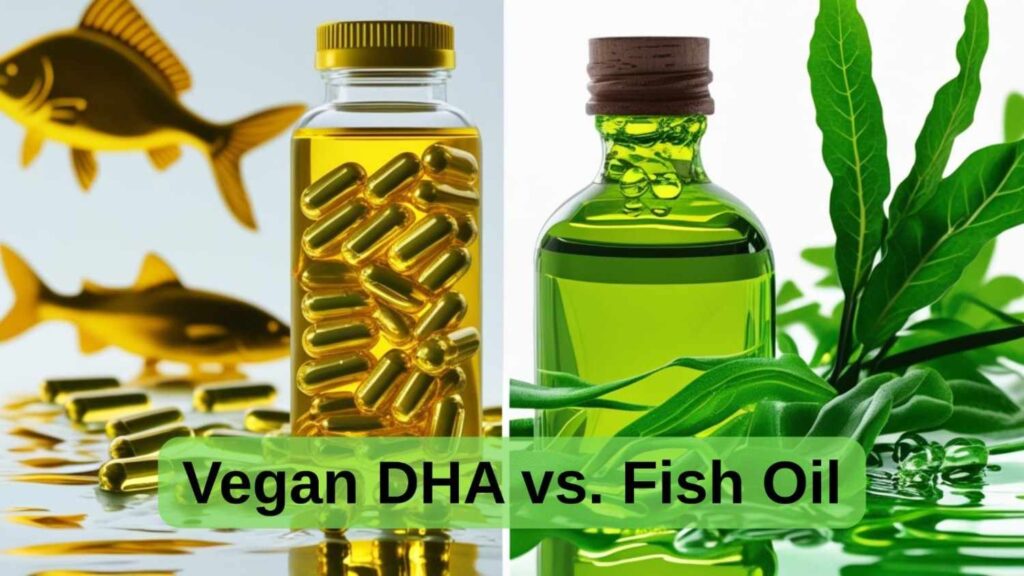
My neighbour’s daughter-in-law showed up at our door last month, prenatal bottle in one hand, phone in the other, asking me to just look at the label and tell her if it had DHA in it or not. Her doctor started her on the multivitamin back in month two. Then her mother said that’s not enough, DHA needs its own separate capsule. Two people telling her two different things, and she just wanted a straight answer. I looked. No DHA on that bottle. Not even a trace amount.
That mix-up is more common than it should be. Vegan DHA vs prenatal multivitamin during pregnancy in India comes up constantly because “multivitamin” sounds like it should cover everything, and most women assume it does. It mostly doesn’t, and we hear some version of this question a lot at VeganVitaa.
Vegan DHA vs Prenatal Multivitamin During Pregnancy in India — What’s Actually the Difference
Think of a prenatal multivitamin as a wide net. Folic acid, iron, calcium, vitamin D, a bit of this, a bit of that, all in small doses meant to cover the basics. It’s not built to go deep on any one nutrient. DHA is trickier because it’s an oil, not a dry powder you can compress into a tablet easily, so a lot of brands either skip it or throw in a tiny amount just so they can print “omega 3” somewhere on the box.
A separate vegan DHA capsule isn’t there to replace your multivitamin. It’s filling a hole the multivitamin was never really built to fill in the first place.
Why DHA Often Gets Left Out of Prenatal Multivitamins
There’s nothing sinister about it, honestly, it’s just a manufacturing headache. Squeezing an oil-based nutrient into a tablet alongside a dozen other vitamins doesn’t work well, which is why DHA usually lives in its own softgel or capsule.
- Although the real amount is less than 50 mg, some labels refer to it as “omega 3,” making it hardly noticeable.
- A few use flaxseed-derived ALA instead of direct DHA, and your body converts very little of that
- Only a small number of premium prenatal brands in India bother including a real, useful DHA dose
- You genuinely have to check the label yourself; the packaging alone won’t tell you the truth
So, Do You Actually Need Both?
For most vegetarian and vegan women here, yes. Your multivitamin is doing its job on iron and folic acid. It’s not doing much, if anything, on DHA, and that matters more than people realize since your baby’s brain and eyes are developing off exactly that fat your diet probably isn’t supplying enough of, especially without fish anywhere near your plate.
This isn’t about piling on supplements just because more feels safer. It’s that DHA is its own separate need during pregnancy, and treating it as a footnote on a multivitamin label doesn’t really cut it. At VeganVitaa this is basically the entire reason we exist, DHA is the one thing vegetarian and vegan diets in India keep coming up short on, multivitamin or not.
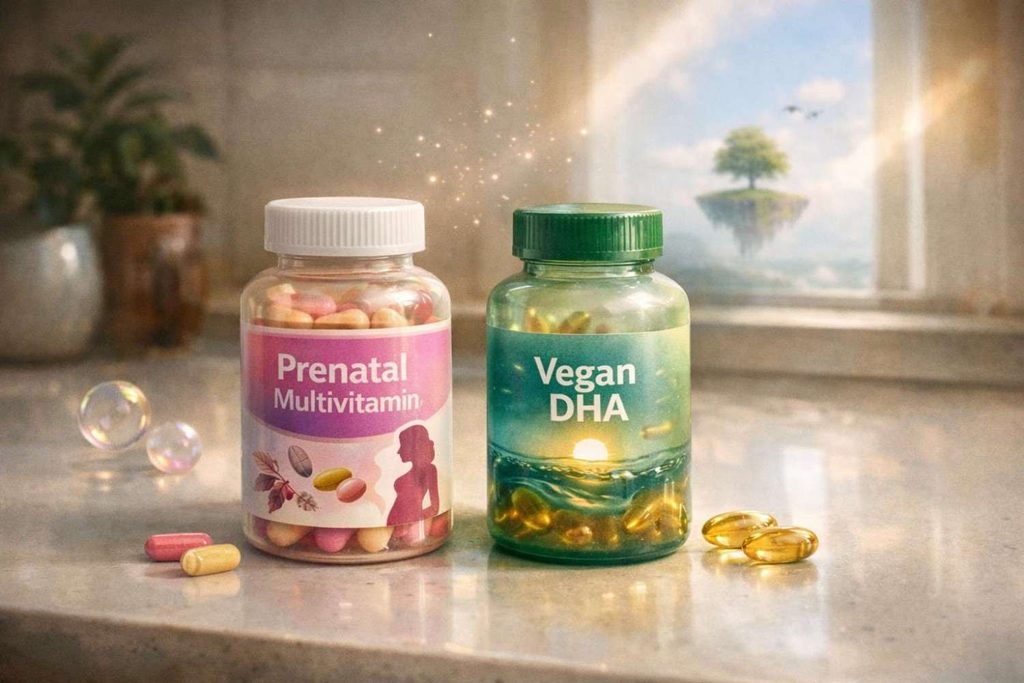
How to Check What Your Current Multivitamin Actually Has
Before you buy anything new, just look at what’s already sitting in your cupboard.
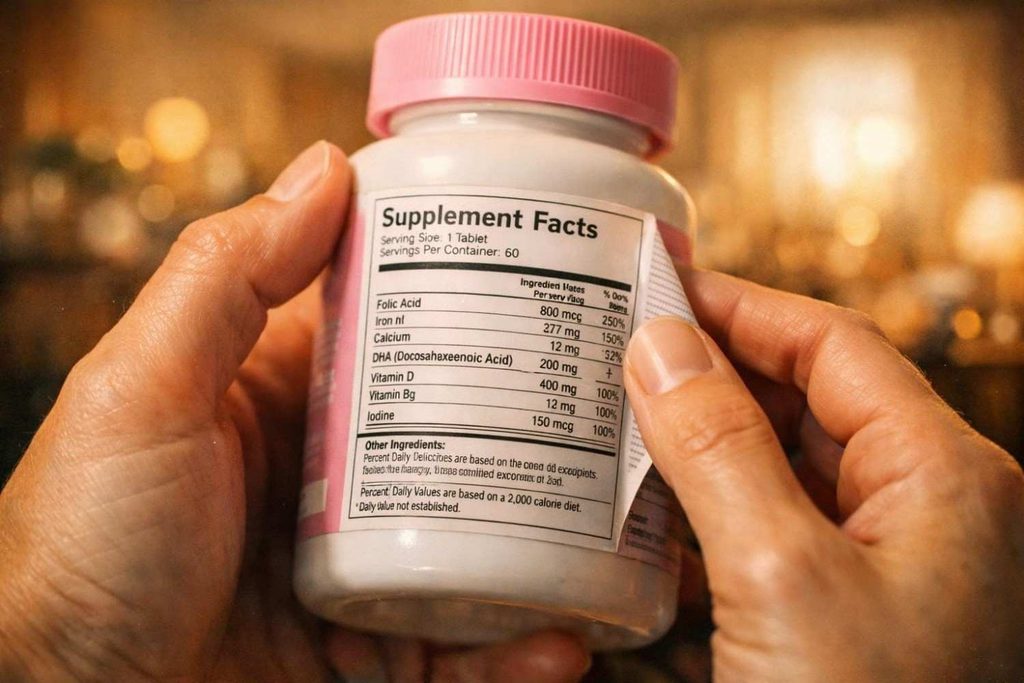
- Flip the bottle, search for the word “DHA” specifically, not “omega 3” or “fish oil derivative”
- If it’s listed, check the mg number, anything under roughly 150mg won’t do much
- See whether the source is marine or algal, marine isn’t vegetarian
- Nothing listed at all? Assume it’s not in there
- Ask your doctor outright instead of trying to figure this out from a label alone
For the full breakdown on choosing a proper DHA supplement, this one’s worth a read — Vegan DHA Capsules for Pregnancy in India: Is It Safe?
What This Actually Looks Like Day to Day
Say your multivitamin has decent folic acid, iron, calcium, vitamin D, but the DHA is either missing or so small it doesn’t register. In that case adding a separate capsule alongside it makes sense, it’s not overdoing things. Let your doctor confirm the dosage though, especially if your multivitamin does list some DHA already, so the two don’t end up overlapping more than they need to.
And if you’ve just started a DHA supplement and noticed some burping or a faint aftertaste, don’t panic, that’s usually just your body getting used to it. There’s more on that here — Vegan DHA Side Effects During Pregnancy — What to Watch for in India
What About the Combo Packs That Claim to Include DHA?
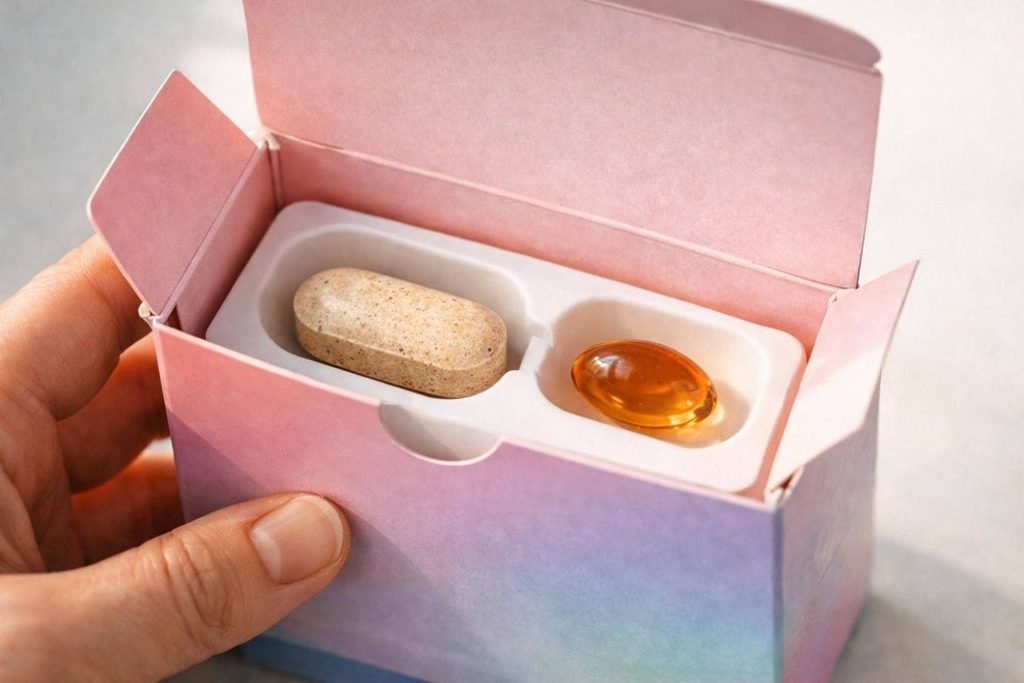
There’s a newer trend of combination prenatal packs floating around, one box, a multivitamin tablet plus a small separate DHA softgel bundled in. Worth double checking before assuming the box has already done the work for you.
- Is the DHA softgel algal or marine? Marine ones aren’t vegetarian or vegan
- The mg amount still needs checking, bundling two products together doesn’t guarantee an effective dose
- Some combo packs quietly use flaxseed oil and call it “omega 3,” which isn’t the same as direct DHA
- You’re often paying for the convenience of the bundle more than the actual DHA content, compare numbers, not packaging
If the softgel checks out on those points, fine, go ahead. If not, a separate, clearly labelled vegan DHA capsule is the safer bet, at least you know exactly what’s in it.
Does It Matter Which Trimester You Start DHA In?
A lot of women wait until someone mentions it, which is often the second or third trimester by accident, not by plan. Earlier is better where possible, since your baby’s brain development runs through the entire pregnancy, not just the final stretch. That said, starting late isn’t a reason to skip it either, some DHA from month five or six still helps more than none at all.
Your multivitamin’s timeline and your DHA timeline don’t have to match exactly. If you only just found out your multivitamin has little or no DHA and you’re already in month six, that’s fine, talk to your doctor and start the separate capsule now rather than waiting for some “ideal” starting point that doesn’t really exist. The gap matters more than the exact week you close it.
Frequently Asked Questions
Q. Will my prenatal multivitamin’s DHA be enough on its own?
Usually not, for most brands sold here. Check the actual mg number before assuming “contains omega 3” means you’re covered.
Q. Is it safe to take a DHA supplement alongside a multivitamin?
Generally, yes. Different nutrients, no real conflict. Still worth mentioning both to your doctor so they can check for overlap.
Q. Can’t I just eat more plant foods instead of a supplement?
You could try. Flaxseed and walnuts give you ALA, but the conversion to actual DHA in your body is weak. Most vegetarians and vegans won’t close the gap that way during pregnancy.
Q. How do I know for sure if my multivitamin has DHA?
Look at the back of the bottle. “DHA” should be spelled out with a number next to it. No number, no real DHA, basically.
Q. My multivitamin lists 100mg of DHA already, is that enough?
Probably still short. Most pregnancy DHA recommendations run higher than that, so 100mg likely leaves a gap. Ask your doctor what number makes sense for you specifically.
The NIH notes that DHA needs go up during pregnancy for the baby’s brain and eye development, and diet alone often doesn’t cover it — NIH Omega 3 Fatty Acids Fact Sheet
Conclusion
Short version, in case you scrolled straight here: a prenatal multivitamin and a vegan DHA supplement aren’t competing for the same job. Most multivitamin brands in India were never designed to carry a real DHA dose, and vegetarian and vegan mothers feel that gap more since fish was already off the table. That’s the honest answer to vegan DHA vs prenatal multivitamin during pregnancy in India, and it comes down to actually reading your bottle instead of guessing.
Go check yours right now. Missing DHA, or a number too small to matter, means a separate capsule is worth adding, not because more is always better, just because that gap needs filling. Want the fuller picture first? Start here — Vegan DHA Capsules for Pregnancy in India: Is It Safe?
Read the label. Ask your doctor. Stop assuming one bottle is quietly covering for two.
About the Author
Kamal Mishra is a health & nutrition writer and vegan wellness advocate. He is the founder of VeganVitaa – India’s trusted vegan DHA resource for plant-based families.
For more in-depth information, explore our related guides below to better understand vegan DHA, algal oil, and choosing the right supplement. Blog
Disclaimer: This article is for educational purposes only. Always consult your paediatrician before starting new supplements.