
This blog was updated in 24th July 2026 to provide the latest information and researches on Fake Vegan DHA Supplements in India: 5 Red Flags (2026).
Fake vegan DHA supplements in India are more common than most people realize and I learned this the hard way.
I was in a medical store in Surat. Looking for a clean omega-3 supplement for myself.
One bottle caught my eye. Bold label. “Pure Omega-3 – Best for Brain Health.” Price was reasonable. Packaging looked premium.
I almost bought it.
Then I flipped it over. Bottom of the label. Small print. “Contains Fish Oil.”
I kept it back.
That moment taught me something I never forgot – most people buying vegan omega 3 capsules in India never flip the bottle. They trust the front. They miss the truth at the back.
As a 54-year-old vegetarian who has spent months researching supplements for my own family, I have made every mistake possible. So you don’t have to.
Here are 5 red flags I wish someone had told me before I started buying.

If you want detailed comparisons, explore our guide on the best vegan omega-3 capsules in India (2026) to find reliable options.
Why Fake Vegan DHA Supplements in India Are a Real Problem
Omega-3 is not just another supplement. It supports:
- Brain focus & clarity
- Eye health
- Nervous system & mood
- Inflammation recovery
But here’s the truth nobody likes to say aloud:
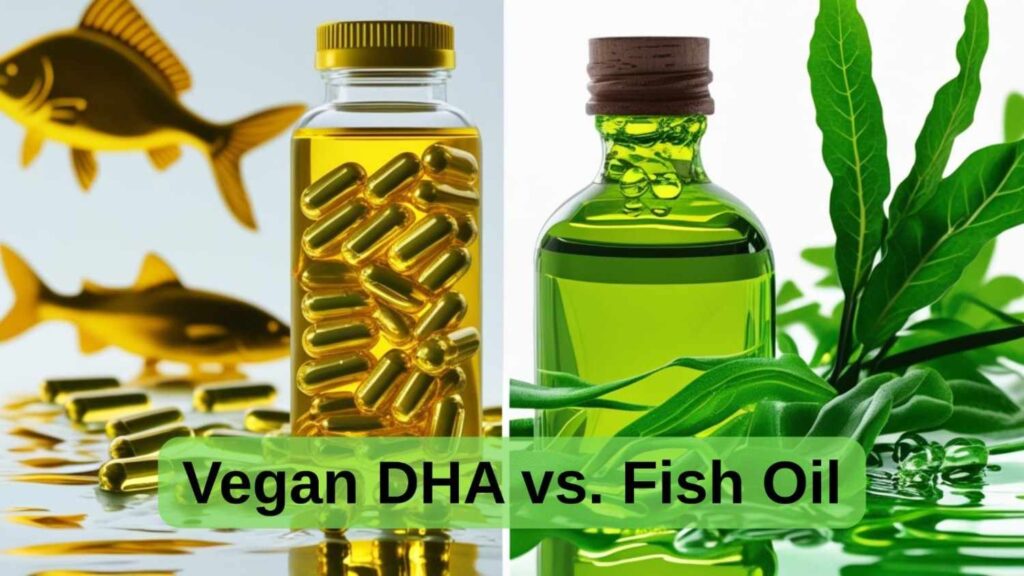
Fish oil may contain microplastics, heavy metals, and allergens since fish eat anything found in contaminated seas. Many people are switching to plant-based omega 3 supplements since algal oil comes from clean, regulated plant-based sources (microalgae) instead of the ocean food chain.
If you are making this shift, you’re already ahead of 90% of buyers.
Research from National Institutes of Health highlights that omega-3 fatty acids like DHA play an important role in brain, heart, and overall health.
For a complete understanding of plant-based omega-3, you can explore our guide on vegan omega-3 for vegetarians covering DHA, EPA, ALA sources, and supplements.
The 5 Red Flags to Avoid
1. The label doesn’t show DHA/EPA numbers
If the brand only writes “Omega-3: 1000 mg,” but doesn’t mention DHA or EPA, it’s a red flag.
Why? Because omega-3 is a broad category. The benefits come mainly from DHA + EPA.
Look for:
- DHA: 150–300 mg per capsule
- EPA: 50–150 mg (optional but good)
If the brand is hiding the numbers, ask yourself: what are they hiding?
2. Words like “marine source” or “deep ocean oil”
Many companies avoid the word “fish oil” and use emotional packaging.
But if it doesn’t clearly say algal oil, it’s not vegan.
Words to trust:
- Algal oil
- Plant-based omega-3
- Schizochytrium algae source
If you are buying vegan omega 3 capsules in India, transparency is everything.
3. No 3rd-party testing or batch verification
Good health brands always show lab testing, batch reports, or certificates.
If a brand doesn’t mention testing anywhere, think twice.
Reference to understand safety: National Institute of Health (NIH)
You don’t need to read a science journal. Just check if the product page mentions testing.
4. Suspiciously cheap pricing
A ₹200 capsule with “pure omega-3”?
Either dosage is too low, ingredients weak, or sourcing unclear.
Cheap doesn’t mean “value.” It can also mean “compromise.”
5. No clarity on softgel material
Many capsules use gelatin (from animals).
A real vegan product mentions:
- “Vegan softgel” or
- “Plant-based capsule”
If it doesn’t mention it, assume it’s not vegan.

How Much DHA Do Indian Vegetarians Actually Need Daily?
Nobody told me this when I started my health journey.
I was taking one capsule daily just because the bottle said so. No idea if it was enough. No idea what my body actually needed.
Then I did proper research. And honestly, the numbers surprised me.
An adult Indian vegetarian needs around 250 to 300 mg of DHA every single day. Pregnant women need even more – close to 400 mg. And seniors above 50 like me – same range, sometimes higher.
Now here is the part that shocked me most.
Flaxseeds do not give DHA. Walnuts do not give DHA. Chia seeds do not give DHA.
These are all ALA sources. Your body tries to convert ALA into DHA but only 5 to 10 percent actually converts. Baaki sab waste ho jaata hai.
So even if you eat flaxseeds every morning like I did – your brain is still running low on DHA.
This is why the DHA number on your supplement label is not just a detail. It is the most important number on that bottle.
Check it every single time.
Mini Checklist Before Buying
| Question | Why it Matters |
| Is it algal oil? | Confirms it’s vegan & ocean-free |
| DHA/EPA numbers clear? | Shows potency |
| Any batch testing mentioned? | Safety & trust |
| Capsule plant-based? | Truly vegan or not? |
If 3/4 answers are YES, it’s a safe pick.
To understand these details better, you can read our guide on how to read omega-3 labels and identify DHA content clearly before buying.
How to Check DHA Content on the Label (Simple Guide)
Many people look at the total omega-3 amount on a supplement label, but the most important number is the actual DHA content per serving.
A product may claim “1000 mg omega-3,” but the DHA inside could be much lower. This is why it’s important to read the label carefully and focus on DHA specifically.
Look for these key points:
- DHA per capsule or serving (ideally clearly mentioned)
- Source of omega-3 (should say algal oil for vegans)
- Serving size clarity (1 capsule vs 2 capsules)
- No hidden blends or unclear labeling
A simple habit of checking these details can help you avoid low-quality supplements and choose a more effective vegan omega-3 option.
Common Mistakes Indians Make When Buying Omega-3
Many people focus only on price or brand name, but ignore key details like DHA content, source clarity, and ingredient quality.
- Buying based on marketing claims
- Not checking DHA vs total oil
- Ignoring algae source verification
- Overlooking capsule ingredients
These small mistakes can lead to poor supplement choices.
VeganVitaa Resources for More Help
If you want to go deeper before buying, these guides will help:
For a detailed comparison and buying tips, you can explore our guide on the best algal oil in India (2025–2026) for choosing a pure vegan DHA supplement.
To compare options more clearly, you can read our guide on fish oil vs vegan omega-3 to understand differences in safety, absorption, and brain benefits.
To recognize early signs, you can read our guide on omega-3 and DHA deficiency symptoms in vegans and the warning signs to watch for.
A Lesson From My Own Family
Last year, someone in my own family was taking omega-3 for almost 4 months.
Same bottle. Same brand. Every single day.
One evening I checked the label properly. Fish oil. Gelatin capsule. No DHA numbers anywhere.
4 months. Wasted.
This happens in almost every Indian household. We trust the front of the bottle. We never read the back.
Where to Start (Simple Guide)
If I had to sum it up in one line:
“Choose clarity over fancy packaging. Choose algal oil over ocean oil. Choose science over slogans.”
When you see a label that openly mentions:
- Algal Oil (Schizochytrium)
- DHA 200–300 mg
- Vegan Capsule
- Batch Testing / Certificate
…that’s when you know the brand respects you.
This is how you find trustworthy vegan omega 3 capsules in India – not through ads, but through informed decisions.
If you want quick recommendations, explore our guide on the top 3 best vegan DHA supplements in India to find trusted options easily.
If you’re choosing a vegan Omega-3 capsule in India, make sure it’s algae-derived, clearly mentions DHA content, and is third-party tested-you can check a trusted option here. Check a trusted option here:
FAQ
Q. Do vegan omega-3 supplements improve general health?
Yes, especially if they have a clear EPA or DHA. They support eye, brain, and heart health without the risks that come with fish.
Q. How much DHA should I look for on the label?
Look for at least 150-300mg of DHA per serving — not total omega-3, specifically DHA. If a brand only shows “Omega-3: 1000mg” without breaking down the DHA number separately, that’s a red flag. The DHA number is what actually matters for brain and eye health.
Q. Are all omega-3 fatty acid supplements vegan?
No. Many of them are made of fish oil. Vegan options are always clearly labeled with plant-based capsules and algae oil.
Q. In India, is algae oil or fish oil better?
For Indian vegetarians — algae oil, without question. It gives you the same DHA as fish oil, directly from the original source. No mercury risk, no fishy smell, no gelatin capsule, and no compromise on vegetarian values. Fish oil works, but it was never designed for vegetarian families.
Q. How do I choose the right vegan omega-3 capsule in India?
Look for clear DHA content, algal oil source, clean ingredients, and transparent labeling before buying.

Final Thoughts
Fake vegan DHA supplements in India are everywhere but now you know exactly how to spot them.
Choosing vegan omega 3 capsules in India is not complicated – once you know what to look for.
Flip the bottle. Check the DHA number. Confirm algal oil. Verify the capsule.
That is it. Four simple steps. Two minutes maximum.
I spent months learning this the hard way. You do not have to.
If you want a clean, transparent, vegan option for brain, heart & eye health, read the full comparison here:
Read the complete guide: 5 Best Vegan Omega 3 Capsules in India (2026 Buying Guide)
Disclaimer: This article is for educational purposes only. Always consult your paediatrician before starting new supplements.
Disclaimer: This post contains affiliate links. If you buy through these links, I may earn a small commission at no extra cost to you. It helps me keep sharing useful content with you.

Pingback: Vegan Omega 3 Third Party Lab Tested India Brands