
This blog was updated on 12th August 2026 to provide the latest information and researches on 15 top sources of vegetarian Omega 3 foods in India.
Most Indian vegetarians searching for omega 3 rich vegetarian foods in India already eat flaxseeds, walnuts, and chia seeds daily.
But low energy. Poor focus. No clear reason why.
I was one of them.
For almost a year, I followed every advice — flaxseeds in roti, walnuts as snack, chia seeds soaked overnight. And still nothing changed.
That is when I researched vegetarian omega 3 foods in India seriously — not casually, but properly. What I found changed everything.
This guide covers all 15 sources honestly — what each one actually gives you, where they fall short, and what I do differently now.

The Importance of Omega-3 for Your Health
Omega-3 plays a deeper role than most people realize.
It directly affects how your brain functions every day. Your ability to concentrate, think clearly, and stay mentally active depends on it.
It also supports heart health by helping maintain healthy cholesterol levels and reducing internal inflammation.
This nutrient is not just another nutrient.
It quietly affects how you feel every day.
Think about your daily routine.
If your mind feels slow, focus टूटता है, या energy low रहती है –
your body may be lacking something crucial.
Omega-3 plays a key role in:
- Brain function – helps you think clearly and stay focused
- Heart health – supports healthy cholesterol levels
- Inflammation control – reduces internal stress in the body
- Mood balance – helps you feel more stable and less drained
Many people don’t notice it at first.
But when healthy fats intake improves, small changes start to show.
Better focus.
More stable energy.
Clear thinking.
It’s not a quick fix.
But over time, the impact becomes real and noticeable.
ALA vs DHA vs EPA – The Real Difference
Most people get confused at this stage.
Omega-3 is not just one type.
There are three main forms:
- ALA – found in plant-based foods like seeds and nuts
- DHA – supports brain health
- EPA – helps with heart health and inflammation
Here’s the important part.
When you eat vegetarian foods, you mainly get ALA.
Your body then tries to convert ALA into DHA and EPA.
But the problem is:
- Conversion is very low
- Your body struggles to do it efficiently
In simple words, plant-based nutrient is helpful, but it does not directly give your body what it actually needs.
This is why many people eat healthy food regularly but still don’t feel any improvement in focus or energy.
If you want a deeper understanding of how ALA, DHA, and EPA actually work, you can read this complete Vegan Omega 3 Guide for Vegetarians: DHA EPA ALA Sources & Best Supplements for more clarity.

My Experience with Vegetarian Omega-3 Intake
For almost a year, I ate flaxseeds every morning. Walnuts daily. Chia seeds in water. I was doing everything right – at least I thought so.
But my focus was still weak. Energy still low.
My wife used to say “Itna healthy khate ho phir bhi thake thake kyun rehte ho?”
That question stayed with me.
Then I learned about ALA vs DHA. And everything made sense. I was eating the right foods but my body could not convert ALA into the DHA it actually needed.
That one discovery changed my entire approach.
Vegetarian Omega-3 Food Comparison Table
Here is a quick comparison of all vegetarian omega 3 sources available in Indian kitchens — including how much each one actually provides and where each falls short.
| Food Item | Type of Omega-3 | Approx Content (per 100g) | Best Way to Consume | Notes |
| Flaxseeds | ALA | ~22g | Ground in roti/smoothie | Best plant source |
| Chia Seeds | ALA | ~17g | Soaked in water | Easy daily use |
| Walnuts | ALA | ~9g | Raw snack | Brain support |
| Hemp Seeds | ALA | ~8g | Sprinkle on meals | Balanced fats |
| Soybeans | ALA | ~1.3g | Cooked sabzi | Budget friendly |
| Tofu | ALA | ~0.4g | Stir fry | Light option |
| Mustard Oil | ALA | ~6–8% fat content | Cooking oil | Traditional use |
| Spinach | ALA | Low | Cooked | Supportive food |
| Rajma | ALA | Low | Curry | Not primary source |
| Algal Oil | DHA | Direct DHA | Supplement form | No conversion needed |
This table gives a quick overview, but as you can see, most vegetarian sources provide ALA and not direct DHA, which your body actually needs.
Top 15 Omega 3 Rich Vegetarian Foods in India
Now let’s go deeper into the most practical and accessible vegetarian omega 3 foods in India that you can include in your daily life.
1. Flaxseeds (Alsi)
One of the greatest vegetarian sources of Omega-3 is flaxseed.
- Very rich in ALA
- Small but highly nutritious
- Easy to add in daily meals
They can be used in straightforward ways:
- Mix in roti dough
- Sprinkle on sabzi
- Add to smoothies
Important:
Always consume flaxseeds in ground form. Whole seeds are not absorbed properly.
They are great for daily use, but remember – they mainly provide ALA, not direct DHA.
2. Chia Seeds
Chia seeds are very popular now, and they are easy to use.
- Rich in Omega-3 and fibre
- Helps with hydration
- No cooking needed
When you soak them in water, they become soft and gel-like, so they are easy to consume.
Simple way to use:
- Soak overnight
- Add to your morning drink or breakfast
They are convenient and easy to follow daily, which makes them a good long-term habit.
3. Walnuts (Akhrot)
Walnuts are one of the simplest additions you can make.
They are easily available and can be consumed without any preparation.
Just a few walnuts daily can contribute to your healthy fats intake while also supporting brain health.
Many people prefer eating them in the morning or as an evening snack.
4. Hemp Seeds
Hemp seeds are not very common in Indian diets yet, but they are worth trying.
- Provide a balanced nutrient profile
- Light and easy to mix with food
- Simple to include in daily routine
They can be used in simple ways:
- Sprinkle over salads
- Mix with curd
- Add to smoothies
They require very little effort, which makes them easy to follow consistently.
5. Soybeans
Soybeans are widely available and affordable.
They provide a mix of protein and Omega-3, making them a useful addition to vegetarian meals.
You can cook them as curry, add them to rice dishes, or use them in salads.
Consistency is key here, as occasional intake won’t make much difference.
6. Tofu
Tofu is a versatile food that fits well into many Indian recipes.
It is light, easy to cook, and absorbs flavors well.
You can prepare it as a sabzi, grill it, or add it to stir-fries.
While it is not the highest source of Omega-3, it still contributes to overall intake.
7. Mustard Oil
Mustard oil has been used in Indian cooking for generations.
It contains small amounts of Omega-3 and can be a better option compared to some refined oils.
Using it in daily cooking is a simple way to improve your diet without extra effort.
8. Canola Oil
Not common in Indian kitchens, but worth knowing about. Canola oil has a noticeably better Omega-3 profile than most refined oils we typically use. If you’re open to switching your cooking oil occasionally, this is a decent option.
9. Spinach (Palak)
Palak won’t move the needle much on its own, but every bit counts. It’s already a staple in most Indian homes, so there’s no extra effort involved – just keep including it regularly alongside other sources on this list.
10. Fenugreek Seeds (Methi)
Most of us know methi for digestion, not Omega-3. But it does contain small amounts. Soak a spoon overnight and have it in the morning – an easy habit if you’re already doing this for digestion.
11. Rajma
Don’t expect much Omega-3 from rajma alone – the amount is minor. But if it’s already part of your weekly meals, it adds a small contribution on top of your other sources.
12. Edamame
Basically young soybeans, more common in urban or restaurant-style meals than traditional Indian cooking. Easy to toss into a salad or eat as a light snack if you want some variety.
13. Brussels Sprouts
Not a traditional Indian vegetable, but increasingly available in metro cities. They bring a small Omega-3 contribution along with fibre and vitamins – a decent addition if you enjoy experimenting with vegetables.
14. Seaweed
This one’s interesting – it’s rarely eaten in Indian diets, but it’s actually part of the original marine food chain that gives fish their Omega-3 in the first place. Worth knowing, even if you don’t eat it regularly.
15. Algal Oil
This is where things change.
Unlike all other foods listed above, algal oil provides direct DHA.
It does not depend on conversion.
It is completely plant-based and comes from algae, which is the original source of Omega-3 in the food chain.
If you want to explore practical options, you can check this detailed guide on the 5 Best Vegan Omega 3 Capsules in India (2026 Buying Guide) to understand which algal oil supplements are actually worth choosing.
This is why many health-conscious vegetarians today prefer algal oil.
It provides direct DHA without depending on slow conversion.
If you’re considering adding a reliable source, you can check this simple breakdown of the best algal oil supplements available in India and what to look for before choosing one.
If you want a practical way to meet your daily DHA needs, adding a good algal oil supplement can help. You can check these popular options on Amazon to see its quality, ingredients, and real user reviews.
Disclosure: This post contains affiliate links. As an Amazon Associate, I earn from qualifying purchases.
The Hidden Problem with Vegetarian Omega-3 Sources
Here’s something I wish someone had told me earlier.
I ate flaxseeds every morning for almost a year. Walnuts daily. Chia seeds in water. And still low focus, low energy, no real change.
The problem wasn’t the food. The food was fine.
The problem was conversion.
Most vegetarian omega-3 foods give you ALA. But your brain doesn’t run on ALA – it runs on DHA. And your body has to convert one into the other. Research published by the National Institutes of Health confirms that less than 5% of ALA actually converts into usable DHA in most adults.
So even with a perfectly healthy vegetarian diet, your brain may quietly be running low on what it actually needs.
This is not a failure of effort. It’s just biology.
Many people don’t realize how common this issue is. If you want to understand the bigger picture, you can read this detailed guide on DHA Deficiency in India: Why Most Indians Are Not Getting Enough DHA and why it affects so many vegetarians today.
When Should You Consider Omega-3 Supplements?
Food should always be your base.
But there are situations where adding a supplement makes sense.
If you are fully vegetarian and do not consume a wide variety of foods, your Omega-3 intake may remain low.
If you feel low energy, struggle with focus, or find it hard to stay consistent, it may be worth looking deeper.
If you are ready to explore a supplement, this detailed breakdown of the Best Vegan DHA Capsules in India 2026 — Top 10 Reviewed covers exactly what to look for and which options are worth considering.
Why Algal Oil Is the Best Vegan Omega-3 Source
Algal oil offers a simple solution to a complex problem.
It provides DHA directly, without relying on conversion.
It is plant-based, clean, and aligned with a vegan lifestyle.
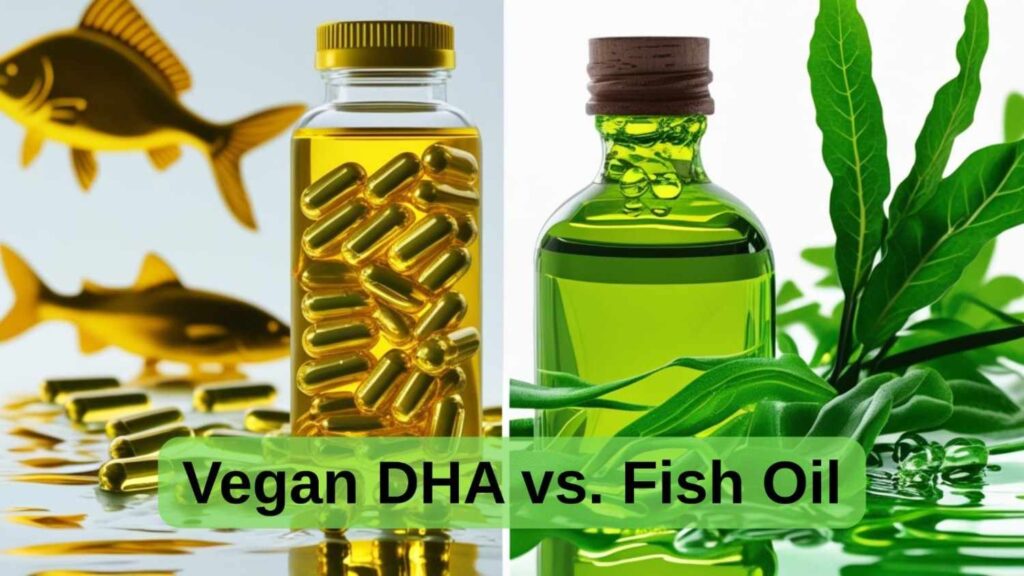
Fish oil comes from fish, but fish themselves get Omega-3 from algae.
So, when you choose algal oil, you go directly to the original source.
This approach is now supported by multiple global health discussions, including research summaries available through institutions like the National Institutes of Health.
Daily Omega-3 Requirement
For most adults, a daily intake of around 250 to 500 mg of DHA and EPA is considered beneficial.
Reaching this through food alone can be difficult in a vegetarian diet.
This is why awareness matters more than random food choices.
Sample Indian Diet Plan for Omega-3
Here’s a simple way to include Omega-3 in your daily routine.
- Morning: Start with soaked chia seeds
- Breakfast: Add flaxseed powder to your meal
- Lunch: Include palak or rajma
- Evening: Have a few walnuts as a snack
- Dinner: Add tofu to your meal
This kind of routine helps you include vegetarian omega 3 foods in India in a practical way.
But keep in mind, this mainly supports ALA intake, not direct DHA.
This routine mainly supports ALA intake – it’s a good start, but not a complete DHA solution on its own.

Common Mistakes People Make
Many people try to improve their diet, but small mistakes hold them back.
- Eating seeds only occasionally
- Not being consistent daily
- Ignoring how nutrients are absorbed
- Expecting quick results
These habits slow down progress.
If you stay consistent and make small changes, results will build over time.
What I Personally Recommend
Begin with simple food sources such as flax seed, chia seed and walnut. Keep them consistent for multiple weeks.
But if your goals are to have improved concentration, energy levels, and long-term health, don’t just rely on dietary sources alone to achieve your goals.
Understanding the impact of DHA will help you make a better decision.
FAQs
Q. Which is the best vegetarian omega 3 food in India?
If you ask me, flaxseeds and chia seeds are the easiest to start with. Walnuts and tofu work too. They’re all easily available and fit into a normal Indian diet without much effort.
Q. Can vegetarians get enough Omega-3 from food alone?
Not really, in most cases. Plant foods give you ALA, and your body converts very little of it into DHA — usually less than 5%. So food alone often isn’t enough, even if your diet is healthy.
Q. What’s the actual difference between ALA and DHA?
ALA comes from plants. DHA is what your brain actually uses. Your body tries to convert ALA into DHA, but the process is slow and inefficient — which is the whole problem.
Q. Is algal oil better than flaxseeds?
For DHA specifically — yes. Flaxseeds give you ALA, which needs conversion. Algal oil gives you DHA directly, no conversion needed. I’d still eat flaxseeds for overall health, but I wouldn’t rely on them alone for DHA.
Q. How much Omega-3 should I take daily?
Most adults need around 250-500mg of combined DHA and EPA. Getting this from a vegetarian diet alone is genuinely hard — this is where a supplement helps.
Q. Are walnuts actually good for Omega-3?
Yes, they’re a solid ALA source. But like other plant foods, they still depend on your body’s conversion process — which isn’t very efficient.
Q. What are the warning signs of Omega-3 deficiency?
Low energy, poor focus, dry skin, and mood that feels off for no clear reason. I’ve felt most of these myself before I understood what was actually missing.
Q. Can I rely on just these 15 foods for daily Omega-3 needs?
Honestly — they’re a great starting point, but I wouldn’t rely on them completely. Pair them with a clean algae-based DHA source if you want real, noticeable results.
Q. What are the top vegetarian omega 3 sources for daily diet?
Flaxseeds, chia seeds, and walnuts are the easiest daily options for most Indian vegetarians. But these only provide ALA — not direct DHA. For brain and energy support, pairing these with an algal oil supplement gives you what food alone cannot.
Conclusion
I spent months eating flaxseeds, walnuts, and chia seeds daily. No shortcuts. Full commitment.
But real change came only when I understood one thing – vegetarian omega 3 foods in India give you ALA, not direct DHA.
That is not a failure of the food. That is just biology.
So start with these 15 foods. Build the habit. But if your goal is better focus, sharper memory, and long-term brain health- pair these foods with a clean algae-based DHA source.
Simple. Consistent. Honest.
That is what actually works.
If you’re serious about improving your focus, energy, and long-term health, explore our recommended vegan DHA supplements in India here → Top 3 Best Vegan DHA Supplements in India (2026 Guide)
About the Author
Kamal Mishra is a health & nutrition writer and vegan wellness advocate. He is the founder of VeganVitaa – India’s trusted vegan DHA resource for plant-based families.
Further Reading on VeganVitaa:
For more in-depth information, explore our related guides below to better understand vegan DHA, algal oil, and choosing the right supplement. Blog
- Omega 3 for Eye Health in India
- Liquid vs Capsule Vegan DHA in India
- Vegan Omega 3 Stomach Upset in India
- Best Vegan Omega 3 with EPA and DHA in India
- Omega-3 & DHA Deficiency Symptoms
Disclaimer: This article is for educational purposes only. Always consult your paediatrician before starting new supplements.
Disclosure: This post contains affiliate links. As an Amazon Associate, I earn from qualifying purchases.

Pingback: DHA Deficiency in Indian Vegetarians and Vegans: Causes & Solutions
Pingback: Low Fat Vegan Diet Problems: Are You Getting Enough Healthy Fats?
Pingback: Top 3 Best Vegan DHA Supplements in India- Honest 2026 Picks
Pingback: Best Vegan Omega 3 Sources India 2026 — Plant-Based Guide
Pingback: Vegan Omega 3 Without Fishy Burps India (2026 Guide)