
This blog was updated on 7th July 2026 to provide the latest information and researches on Low Fat Diet Problems to Vegans.
Many people in India go vegan to feel lighter and healthier. Some add low-fat eating on top of that for weight loss. On paper, it sounds like the right move.
Real life tells a different story.
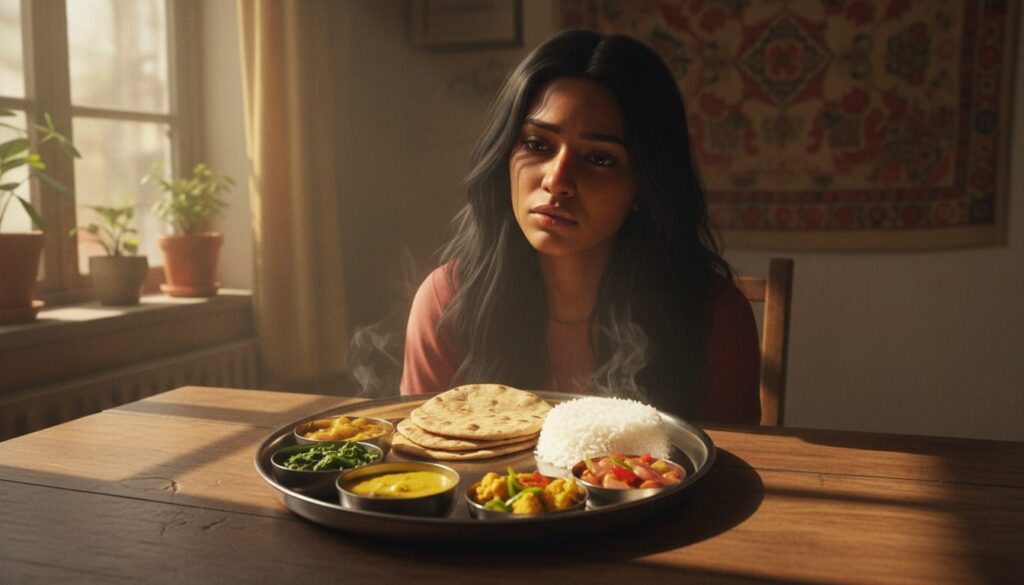
They cut oil. They skip nuts. They eat mostly roti, rice, dal, and sabzi. The first few weeks feel fine. Then the body starts sending signals.
Energy drops. Skin gets dry. Hair fall increases. Mood goes flat. Hunger returns too fast after meals.
This is where low fat vegan diet problems in India begin – quietly, slowly, without any obvious reason.
The problem is not vegan food. The problem is too little fat for too long. Healthy fats are not optional. Your brain, hormones, skin, and energy all depend on them daily.
This guide covers the real signs, the common mistakes, and the simple fixes so you can eat vegan and actually feel good doing it.
If you are not sure where to get healthy fats from, you can also check this guide on top vegetarian omega-3 rich foods in India.
Quick Answer
Yes, low fat can cause problems if it goes too far.
- Energy can drop
- Skin and hair can suffer
- Hormones can get out of balance
- The body may not absorb nutrients well
- Many vegans eat less fat without noticing
A vegan diet should not be only about removing food. It should also be about adding the right foods.
What Is a Low-Fat Vegan Diet?
A low-fat vegan diet means very little oil, nuts, seeds, or coconut in daily meals. Most plates look like this – roti, rice, dal, sabzi. Light, simple, clean.
In many Indian homes, this is just normal eating. Nobody calls it low-fat. It just is.
The problem starts when fat stays too low for too long. Carbs give quick energy. Fat gives lasting support – for hormones, brain function, skin, and nutrient absorption. When every meal is heavy on carbs and low on fat, the body slowly runs out of that deeper support.
Most people do not realize this. They copy diet tips from the internet — tips designed for Western food habits and apply them to Indian meals without adjusting. What works on paper does not always work on a thali.
That gap is exactly where the real trouble begins.
Why Healthy Fats Matter
Your body needs healthy fat every day. Not more than needed Not too little. Just enough.
Healthy fats help with:
- Energy
They keep you active for longer.
- Brain work
They support focus and clear thinking.
- Skin and hair
They help both stay healthy and soft.
- Hormones
They support balance inside the body.
- Vitamin use
Some vitamins need fat to work properly.
If fat intake is not enough, the body starts feeling off slowly. That is why balanced eating matters more than extreme low-fat eating.
Healthy fats like omega-3 are important for your body, and you can learn more in this guide on the best vegan omega 3 sources for a healthy plant-based diet.
According to Healthline, including healthy fats in your diet is essential for energy, brain function, and hormone balance.
Signs You May Not Be Eating Enough Fat
Your body often shows clear signs first. You just need to notice them.
- You feel tired even after sleep.
- Your skin becomes rough or flaky.
- Hair fall increases.
- You feel hungry soon after eating.
- You get irritated more easily.
- Your thinking feels slow.
- Exercise recovery becomes weak.
- You crave food again and again.
A simple daily example:
You eat dal-rice, but after 1–2 hours you feel hungry again. That is often a sign of not eating enough fat vegan meals.
Another example:
You follow a strict low-oil diet for weeks. Then your skin gets dull, and your hair starts shedding. Many people blame stress or weather. Sometimes the real issue is fat intake.
Even after getting a full night’s sleep, you wake up exhausted.
You may also notice cold hands, low drive, or less interest in activity. These signs are easy to ignore. But they matter.
Sometimes these signs are linked to low omega-3 intake, which you can understand better in this vegan DHA dosage guide.
Major Low Fat Vegan Diet Problems
A very low-fat vegan diet can look clean. But it may not work well for the body.
1. Low energy
You may feel tired even after a full meal.
You sit to work, but your focus keeps breaking.
This is common when food has too many carbs and too little fat.
2. Dry skin
Your skin may feel rough, dull, or tight.
You apply cream, but skin still feels dry.
Some people also notice dry lips and weak nails.
3. Hair fall
Hair can become weak when fat intake stays too low for a long time.
4. Mood changes
You may feel irritated, low, or mentally tired.
This is not always stress. Food might also have an impact.
5. Poor satisfaction after meals
You eat, but you still feel hungry soon after.
That often happens when meals do not have enough healthy fat.
For example, you sit to work after lunch, but you feel sleepy or low on energy.
These issues do not appear in one day, but they slowly build over time.
These are the real low fat vegan diet problems many people ignore at first.
Low Fat vs Balanced Vegan Diet
| Habit | Low Fat Vegan Diet | Balanced Vegan Diet |
| Oil use | Very little | Moderate (2–3 tsp) |
| Nuts & seeds | Rarely eaten | Daily intake |
| Energy level | Low after meals | Stable energy |
| Hunger | Comes quickly | Controlled |
| Skin & hair | Dry | Healthy |
Why This Happens in Indian Vegan Diets
This problem is common in India for a few reasons.
First, many people believe oil is always bad. So, they reduce it too much. They forget that small amounts of good fat are useful.
Some people think less oil means healthier food, so they cut fat without understanding the long-term effect.
Second, Indian meals are often carb-heavy. Rice and roti are staples. That is fine, but the plate also needs fat. A meal without fat can leave you hungry soon.
Third, nuts and seeds are often seen as small extras. People forget they are useful daily foods. They are not just “garnish.” They are real nutrition.
Fourth, there is not enough awareness about balance. A person may eat clean food and still feel low because the body is missing healthy fat. Some people also fear that fat will stop weight loss. In reality, the wrong balance is the real problem.
This is one of the most common mistakes in Indian vegan diets today.
This is how low fat vegan diet problems quietly grow in daily life. The body does not complain loudly at first. Then the signs become harder to ignore.
How to Fix It
The good news is that the fix is simple.
Eating junk food is not necessary. You do not need to stop being vegan. You only need better balance.
Daily changes to make
- Add a small handful of nuts.
- Use seeds in breakfast or salad.
- Cook with a fair amount of healthy oil.
- Add peanut or sesame foods.
- Do not fear coconut in normal amounts.
Easy Indian meal idea
- Breakfast: poha with peanuts and a few seeds
- Lunch: roti, dal, sabzi, salad, and a spoon of oil-based chutney
- Evening: fruit with walnuts or peanuts
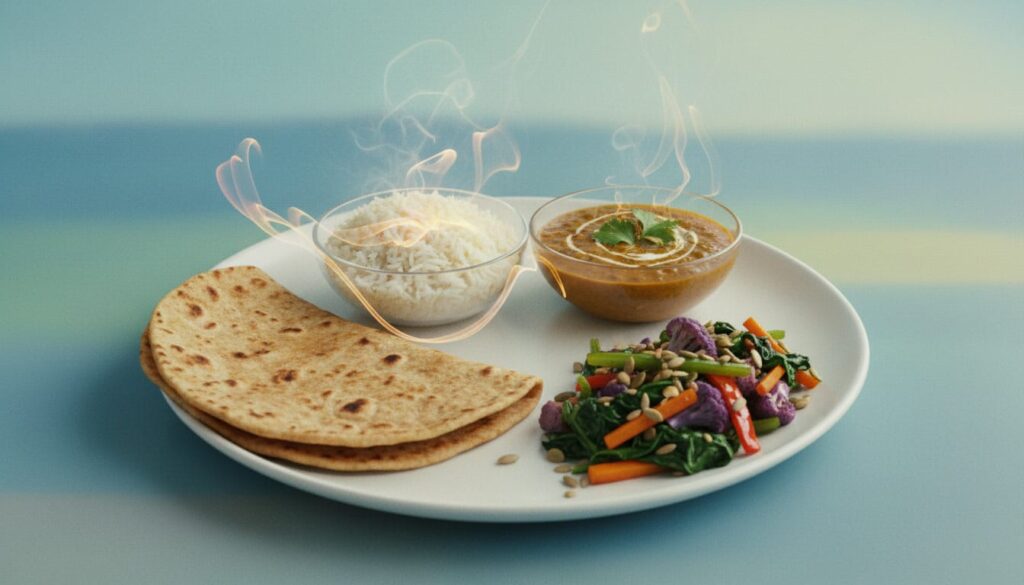
- Dinner: rice or roti with dal and vegetables cooked in healthy oil
You can also add fat through simple food swaps. For example, replace a plain snack with roasted peanuts. Add flax seeds to chutney. Use sesame in chutney or laddoo. Keep the changes small, but keep them daily.
For example, adding a few peanuts or seeds to your meal can help you stay full longer.
Add 5–6 almonds or 2 walnuts daily
This kind of plate gives more balance. It also helps reduce issues from low fat vegan diet problems without making your food complicated.
Best Plant-Based Healthy Fat Sources
You do not need exotic foods. Most of these are already in Indian kitchens.
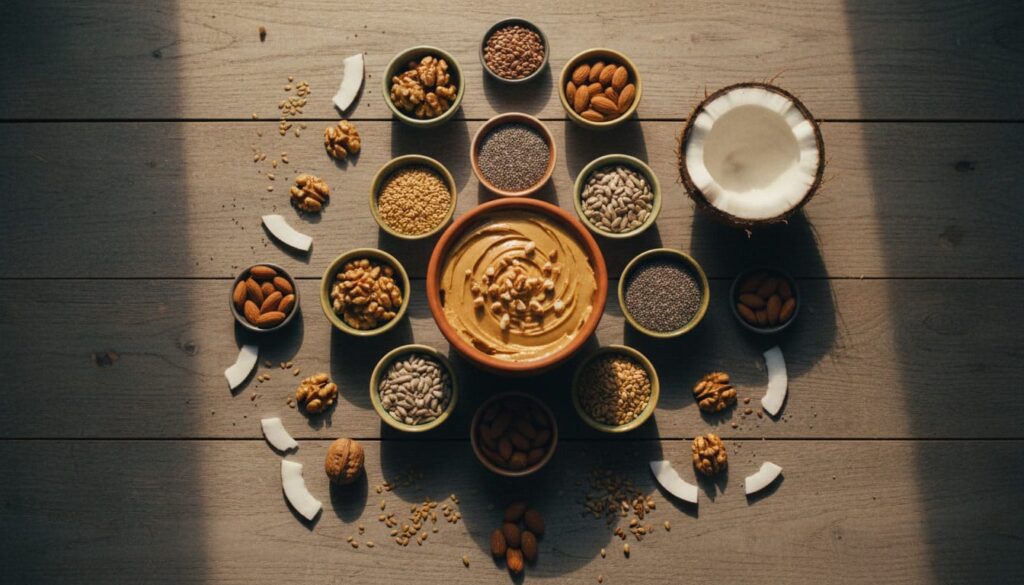
Almonds, walnuts, peanuts, chia seeds, flax seeds, sesame seeds, coconut, and peanut butter – these are your everyday options. Pick 2 or 3 and stay consistent. That is enough.
Adding them is easier than you think.
Throw a few walnuts into morning oats. Mix chia into curd or plant milk. Spread peanut butter on toast. Sprinkle flax on dal or sabzi. Use sesame chutney with lunch.
Small additions. Daily habit. Real difference over time.
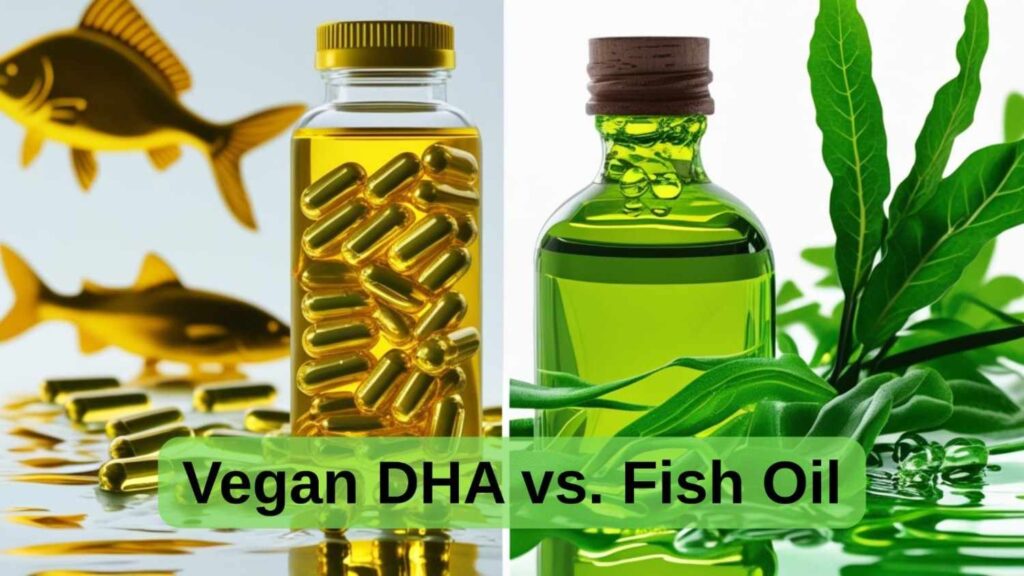
For algal oil specifically, this guide covers the best options available in India → Best Algal Oil in India
Harvard studies show that plant-based omega-3 sources like flax and chia seeds can support heart, brain, and eye health.
Simple Eating Tips
Do not remove fat completely. That is the first mistake most people make.
Add fat in small, regular amounts – not a lot, just enough. A handful of nuts, a spoon of peanut butter, some sesame in your chutney. Daily, not occasionally.
Keep meals simple and balanced. Extreme diet rules rarely work long term.
Watch your body. Energy levels, skin, hair fall – these tell you more than any diet chart. If something feels off, check your plate before anything else. Enough fat, enough protein, enough variety.
A healthy vegan diet is not about being strict. It is about being smart.
Explore More on VeganVitaa
Still have questions? These guides will help:
How long does vegan DHA take to work? → Read this guide
How to read an omega-3 supplement label → Omega-3 Label Reading Guide for Vegans
Best plant-based omega-3 sources and supplements → Vegan Omega-3 Guide for Vegetarians
For more in-depth information, explore our related guides below to better understand vegan DHA, algal oil, and choosing the right supplement. Blog
FAQs
Q. Can a low-fat vegan diet be harmful?
Yes, if fat stays too low for too long. Your body needs fat for energy, hormones, and absorbing vitamins. Cutting it completely always backfires.
Q. How much fat do vegans need daily?
No fixed number works for everyone. But fat should appear in every meal – not just once a week. Small and consistent is better than none.
Q. Can I lose weight while eating healthy fats?
Yes. Healthy fats keep you full longer, which means you eat less overall. Balance and portion size matter more than cutting fat out.
Q. Can low fat eating cause hair loss?
Yes. Dry hair and increased hair fall are common early signs of fat deficiency especially in women following strict low-fat diets.
Q. Which fats are best for vegans in India?
Walnuts, almonds, peanuts, chia seeds, flax seeds, sesame, coconut, and cold-pressed oils. All easily available, all affordable.
Q. Can I stay full longer on a vegan diet?
Yes – but only if fat is part of the meal. Fat slows digestion and keeps hunger away longer. Without it, even a big plate leaves you hungry in two hours.
Conclusion
A vegan diet can be genuinely healthy. But it should never become a zero-fat diet.
Your body needs healthy fats every day – for energy, skin, hair, hormones, and brain function. These are not extras. They are basics.
If you feel weak, tired, dry, or hungry too soon after meals – do not cut more. Check your fat intake first. You may not need less food. You need better balance.
Most low fat vegan diet problems in India start not from bad food choices, but from quietly removing fat over time without realizing it.
Start small. Add a handful of nuts, some seeds, a spoon of peanut butter. Daily. Steady. That is all it takes.
Balance always works better than extreme rules.
About the Author
Kamal Mishra is a health & nutrition writer and vegan wellness advocate. He is the founder of VeganVitaa – India’s trusted vegan DHA resource for plant-based families.
Disclaimer: This article is for educational purposes only. Always consult your paediatrician before starting new supplements.
Disclaimer: This post contains affiliate links. If you buy through these links, I may earn a small commission at no extra cost to you. It helps me keep sharing useful content with you.

Pingback: Vegan DHA Dosage Per Day: How much DHA do you need?
Pingback: How to Read Omega 3 Label: Don’t Miss DHA, EPA & ALA
Pingback: Why Vegan Omega 3 Not Working in India: Read this first 2026