This blog was updated on 25th June 2026 to provide the latest information and researches on Signs, Risks & Best Sources of Vegan DHA.
Do vegans need DHA? This is a question I get asked more often than you’d think.
I’ve been vegetarian for 15 years. For a long time, I assumed flaxseeds and walnuts were enough. Most of us do. We eat clean, we avoid processed food, and we think our omega-3 needs are covered.
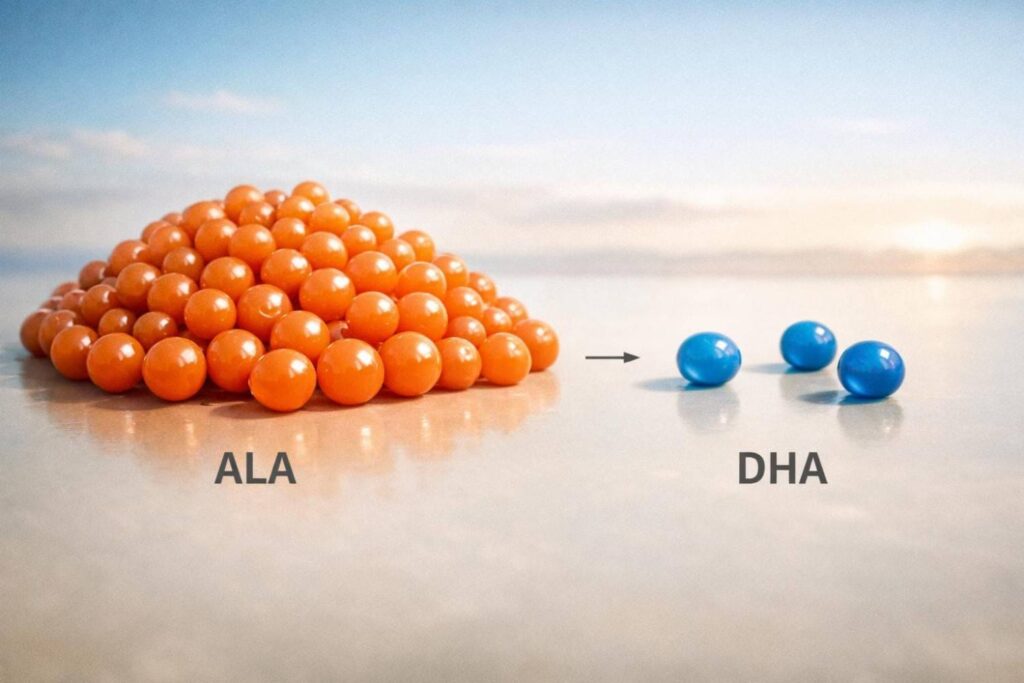
But here’s what I didn’t know then – flaxseeds and walnuts only give ALA, not DHA. And the body converts only a tiny amount of ALA into DHA. Less than 5% in most people.
So even with a perfectly clean plant-based diet, your brain and eyes may quietly be running low on one of their most important building blocks.
That’s exactly why I started researching DHA specifically for vegans and vegetarians – and what I found surprised me.
In this guide, you’ll understand why DHA matters, what happens when levels drop, and the simplest way to fix it on a plant-based diet.

If you want to understand the basics first, you can also read our detailed guide on vegan omega-3 sources and how they work in the body.
What Is DHA and Why Does It Matter?
DHA – docosahexaenoic acid is an omega-3 fatty acid your body needs but cannot make on its own in useful amounts.
Most people associate it with fish. But fish don’t actually produce DHA – they get it from algae. Which means the real source has always been plant-based.
Here’s why DHA matters more than most people realize:
Your brain is nearly 60% fat and DHA is one of its core building blocks. It keeps brain cells flexible, supports communication between neurons, and directly affects memory, focus, and mental clarity.
Your retina works the same way. DHA is structurally present in eye tissue – not just helpful, but physically part of how your eyes function.
The body can convert ALA from flaxseeds and walnuts into DHA but the conversion rate is very low. Research from the National Institutes of Health confirms that most people convert less than 5% of ALA into usable DHA.
For vegans, this gap is real and often invisible until symptoms start showing up.
Do Vegans Need DHA? Here’s the Honest Answer
Short answer – yes. But let me explain why, because most vegans don’t realize this until something feels off.
Plant foods give you ALA – a type of omega-3 your body has to convert into DHA. The problem is this conversion is very inefficient. Less than 5% of ALA actually becomes usable DHA in most people.
So even if you eat flaxseeds every morning and walnuts every evening, your brain and eyes may still not be getting enough DHA.
What makes this tricky is that DHA isn’t used for energy like most nutrients. It becomes part of your brain tissue and retina – physically embedded in these organs. Which means a deficiency builds up slowly and silently.
Some groups feel this gap sooner than others:
Pregnant and breastfeeding women need higher DHA for the baby’s brain development. Growing children need it for focus and learning. Older adults lose DHA faster as they age. And students or anyone with high mental workload burn through it quicker than average.
If you fall into any of these categories and you’re fully plant-based – DHA deserves your attention.
Signs of DHA Deficiency in Vegans
This is the part most vegans miss because the signs don’t feel like a deficiency. They feel like a bad week.
Brain fog that won’t clear. Forgetting things you normally wouldn’t. Eyes that feel dry or tired by afternoon. Mood that feels flat for no real reason. A kind of low-grade fatigue that sleep doesn’t fix.
I’ve heard this from many vegetarians and vegans who reached out after reading VeganVitaa – “I eat so clean, why do I still feel this way?”
In many cases, DHA was the missing piece.
Here are the most common signs to watch for:
Brain fog or difficulty thinking clearly. Poor memory or weak focus. Dry, irritated eyes. Low motivation or mood swings. Constant tiredness even after rest.
None of these symptoms point directly to DHA – they can have many causes. But if you’re fully plant-based, eating well, and still feeling these things consistently; low DHA is worth looking into.
Your body doesn’t announce a deficiency. It just quietly underperforms.
Why ALA Alone Isn’t Enough
This is the part that surprises most vegans – including me when I first learned it.
Flaxseeds, chia seeds, walnuts – these are genuinely healthy foods. I’m not saying avoid them. But they give you ALA, not DHA. And these are not the same thing.
Your body has to convert ALA into DHA. The problem is, this conversion is remarkably poor. Research published on PubMed confirms that less than 5% of ALA actually becomes DHA in most healthy adults.
The rest gets used for energy or other functions – never reaching your brain or retina.
Now add one more layer – most Indian cooking uses refined oils high in omega-6 fats. A high omega-6 diet directly competes with ALA conversion, making an already inefficient process even worse.
So the reality for many Indian vegans and vegetarians is this: you’re eating the right foods, but your body isn’t converting them into what your brain actually needs.
Flaxseeds daily. Walnuts in the morning. Chia in the smoothie. And still – low DHA.
That’s not a diet failure. It’s just how the body works. And once you understand this, the solution becomes simple.
To understand this better, you can read our detailed comparison of plant-based omega-3 and fish oil and how their effects differ in the body.
Best Vegan DHA Sources
If you’ve read this far, you already know plant foods alone aren’t reliable for DHA. So what actually works?
One source stands out – algal oil.
This is where it gets interesting. Fish are considered the classic DHA source. But fish don’t make DHA themselves – they get it from algae. So algal oil simply cuts out the middleman. You get the same DHA, directly from the original source, without the fish.
I find this genuinely elegant – the answer was always plant-based. We just didn’t know it.
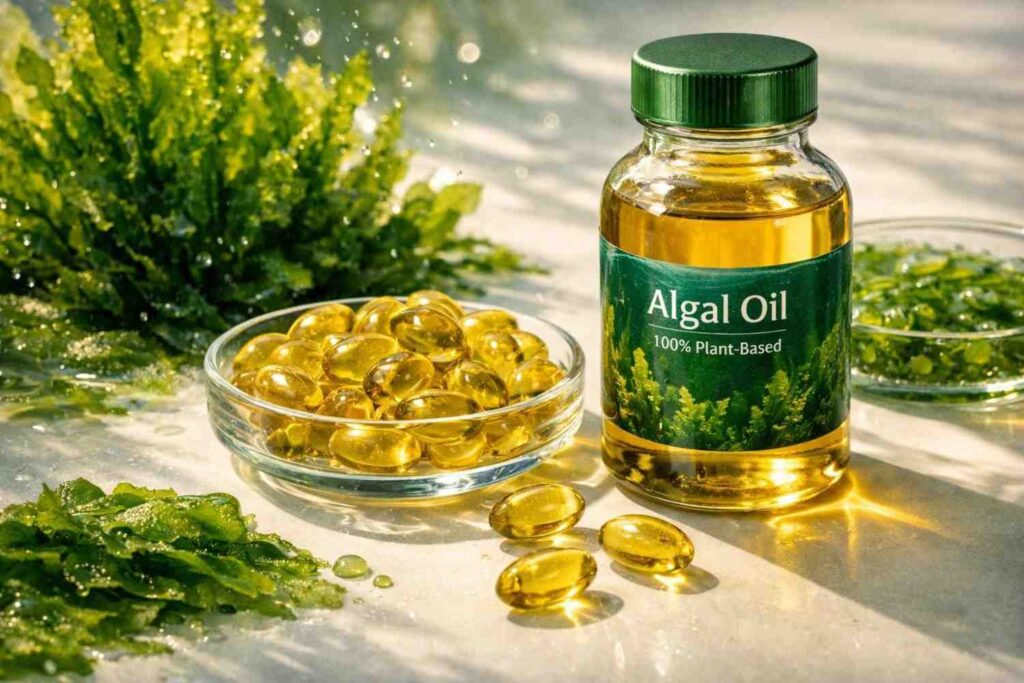
Algal oil provides DHA in its active, ready-to-use form. No conversion needed. No mercury risk. No fishy smell. And fully vegan.
For Indian vegans and vegetarians, this is the most practical and reliable way to close the DHA gap.
Some fortified foods like plant-based milk or cereals do contain added omega-3 – but the amounts are small and inconsistent. You can’t depend on them as your primary source.
If you want to go deeper on why algal oil works better than other options, I’ve written a detailed guide here: Why Algal Oil Is the Best Vegan DHA Source
For a reliable algal oil supplement available in India: Check latest price on Amazon
Should Vegans Take DHA Supplements?
Honestly – for most vegans and vegetarians, yes.
I know that’s not what everyone wants to hear. We want food to be enough. But when the conversion from ALA to DHA is this poor, and when most Indian diets have no direct DHA source at all – a supplement fills a real gap, not an imaginary one.
That said, some people need it more urgently than others.
If you’re pregnant or breastfeeding, your baby’s brain development depends on DHA — this is non-negotiable. If you’re a growing child or a student with high mental workload, DHA directly affects focus and learning. If you’re over 50, your body’s ability to convert ALA drops even further with age. And if you’re fully plant-based with no algae-based foods in your diet – you’re almost certainly running low.
For most healthy adults, 200-300mg of algae-based DHA daily is a safe and effective starting point. Take it with a meal that has some healthy fat – absorption improves significantly.
One thing I always say – supplements are meant to fill a gap your diet can’t close, not replace a good diet. Eat well. Then supplement smartly.
If you’re unsure which product to choose, I’ve put together a list of the best vegan DHA supplements available in India: Top Vegan DHA Supplements in India
DHA vs Fish Oil – What Makes More Sense for Vegans?
This comparison comes up a lot – and I understand why. Fish oil has been around for decades. It’s cheap, widely available, and most doctors still recommend it.
But here’s what changed my perspective.
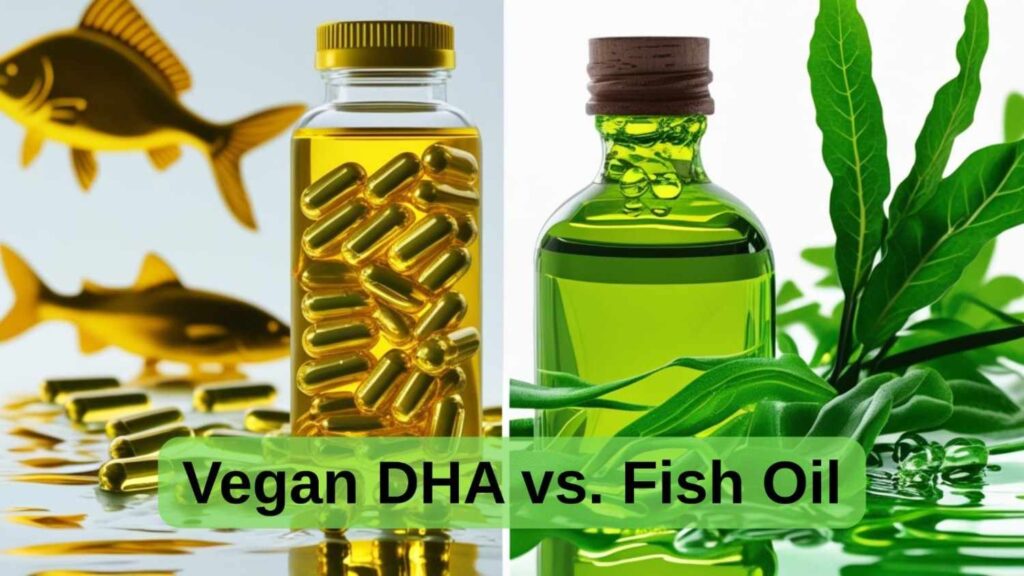
Fish oil works – but fish don’t actually make DHA. They accumulate it by eating algae. So fish oil is essentially a second-hand source, filtered through an animal, exposed to whatever that fish absorbed from polluted ocean water.
Algal oil skips all of that. Same DHA. Original source. No fish involved.
For vegetarians and vegans, this isn’t even a close comparison – algal oil wins on every front that matters. It’s fully plant-based, free from mercury and ocean contaminants, easier on the stomach, and no fishy burps.
And beyond personal preference – from a purely scientific standpoint, algal oil delivers DHA in the same bioavailable form as fish oil. You’re not compromising on effectiveness. You’re just choosing the cleaner, more direct path.
I’ve covered this in much more detail here if you want the full breakdown: Fish Oil vs Vegan Omega 3 – Which Is Safer for Indians?
FAQs
Q. Can vegans get DHA naturally?
It’s not that simple. Most plant foods don’t provide DHA directly, so your body has to convert it- and that process doesn’t work well for everyone.
Q. Is flaxseed enough for DHA?
Flaxseeds are healthy and should be part of your diet, but they mainly provide ALA. Since conversion is very low, they may not fully meet your needs.
Q. Do vegetarians also need DHA?
Yes, vegetarians can also have low intake, especially if they are not consuming enough direct or fortified sources in their daily routine.
Q. Is a DHA supplement safe?
In most cases, yes. Algae-based supplements are generally considered safe when taken in moderate amounts and can be a practical option for many people.
Q. How much DHA should vegans take daily?
A common range is around 200–300 mg per day for adults. This is a broad rule that may change depending on personal requirements.
Q. Which vegan source of DHA is the best?
Algal oil is considered the most reliable option because it provides DHA in its direct form without the need for conversion.
Conclusion
So, do vegans need DHA? After 15 years as a vegetarian and years of researching plant-based nutrition – my honest answer is yes.
Not because a vegan diet is unhealthy. It isn’t. But because DHA is one nutrient where plant foods genuinely fall short – and most of us don’t realize it until focus drops, eyes tire faster, or energy just feels off.
Flaxseeds and walnuts are good. Keep eating them. But don’t rely on them for DHA – the conversion simply doesn’t work well enough.
Algal oil is the simplest fix. Clean, plant-based, and the same source fish use anyway.
One small addition to your daily routine. That’s all it takes to close a gap that most vegans don’t even know exists.
If your diet lacks direct DHA sources, adding a good algal oil supplement can be a simple step. Check price on Amazon
About the Author
Kamal Mishra is a health & nutrition writer and vegan wellness advocate. He is the founder of VeganVitaa – India’s trusted vegan DHA resource for plant-based families.
For more in-depth information, explore our related guides below to better understand vegan DHA, algal oil, and choosing the right supplement. Blog
If you’re planning to choose a supplement, it’s important to know what makes it high quality – you can read our detailed guide on how to identify high quality algal oil before buying.
If you want to understand this deeper, you can explore our detailed guide on omega-3 and DHA deficiency symptoms in vegans and the warning signs to watch for.
If you’re confused about the exact daily requirement, read this detailed guide on How Much Omega 3 Do You Really Need Daily? (For Vegans, Athletes, Kids & Moms-to-Be).
If your current omega-3 isn’t giving results, you can check our guide on the best vegan omega-3 capsules in India to find more effective options.
Disclaimer: This article is for educational purposes only. Always consult your paediatrician before starting new supplements.
Disclaimer: This post contains affiliate links. If you buy through these links, I may earn a small commission at no extra cost to you. It helps me keep sharing useful content with you.

Pingback: How much Omega 3 do you really need daily- Simple guide