
This blog was updated on 15th August 2026 to provide the latest information on How much Omega 3 do you really need daily.
Most people I know eat well. They exercise. They take care of themselves.
But ask them “How much omega 3 do you really need daily?” — and they go blank.
I was exactly like that.
I thought my vegetarian diet was covering everything. Flaxseeds, walnuts, chia — I was eating all of it.
But by mid-afternoon every day, my brain would shut down. Fog. Fatigue. No reason.
My doctor asked me one question — “Are you getting enough DHA?”
That question changed how I understand nutrition completely.
Turns out — most vegans, athletes, parents, and pregnant women are missing the same thing. And it is not about eating more. It is about eating the right thing.
In this guide, I am breaking down exactly:
- How much omega 3 do you really need daily (for your specific life)
- Why flaxseeds alone are not enough
- Which vegan sources actually work
- Practical steps you can start today
No guessing. No marketing. Just honest answers based on what my research and real experience taught me.
How Much Omega-3 Do You Really Need Daily? (Quick Answer)
Most adults need 250–500 mg of combined DHA + EPA per day for general health.
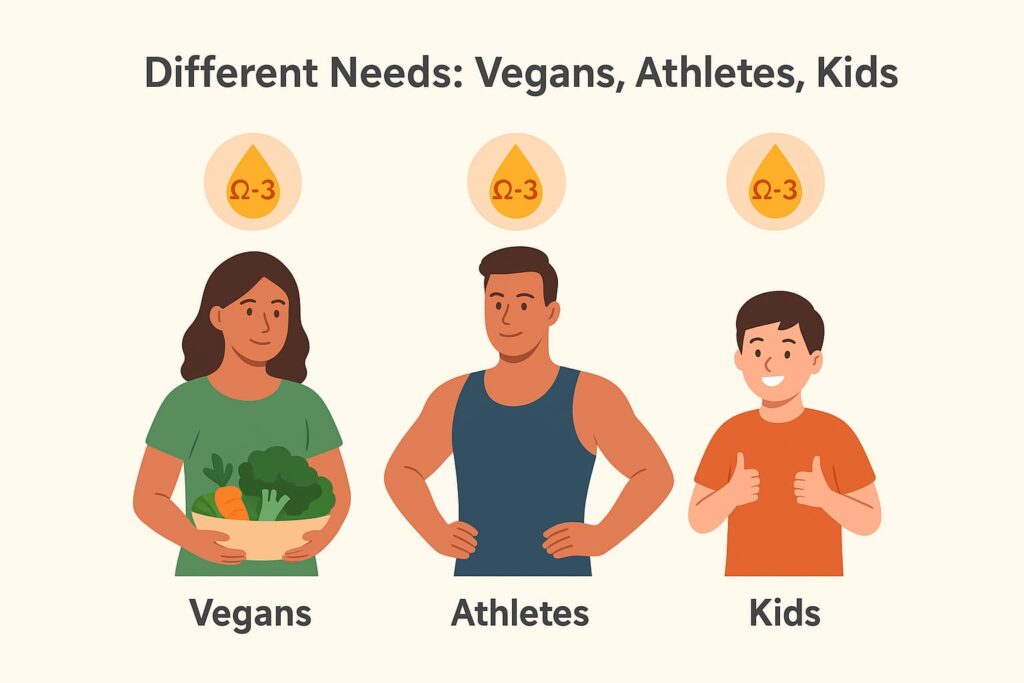
However, omega-3 requirements vary depending on age, lifestyle, and physiological needs:
- Children → Brain development support
- Athletes → Recovery & inflammation balance
- Pregnant women → Fetal brain development
- Vegans → Reliable DHA/EPA sources matter
Because plant foods mainly provide ALA, many people benefit from a direct DHA/EPA source like algae oil.
Why Daily Omega-3 Matters for Everyone
Most people think omega-3 is optional. It is not.
Your brain needs it. Your heart needs it. Your mood depends on it.
But here is the thing — knowing this and actually doing something about it are two different things.
I learned this the hard way. I knew flaxseeds were good. I ate them daily. But my brain fog did not go away. My energy was still low.
Why? Because I was getting ALA — not DHA. And my body was converting barely 5 percent of it into usable DHA.
For vegans, athletes, and pregnant women — this gap is even bigger. Seeds alone will never be enough.
That is why algae DHA exists. It gives your body what it actually needs — direct DHA.
250 to 500 mg daily. That is the range. That is the answer.
Everything else is just noise.
Why Omega-3 Is Not Optional
Consider the following scenarios:
- A child eats well, but finds it difficult to concentrate in class.
- Athletes who put in a lot of training experience days of pain.
- A pregnant woman is concerned about the development of her unborn child’s brain.
Different lives, different people, but one nutrient is lacking: omega-3.
Omega-3 fatty acids function similarly to oil in your body. The engine becomes rusty, slows down, and runs rough without them.
They
- Increase mental capacity
- Remain strong at heart
- Prevent inflammation
- Encourage the development and pregnancy of children
No wonder doctors and nutritionists keep asking: “Are you getting enough Omega-3 daily?”
But again, the bigger question is: “Your daily omega-3 needs”
Types of Omega-3 (Simple Explanation)
Omega-3 isn’t just one thing-it’s a family of fats.
1. ALA (Alpha-Linolenic Acid)
- Found in flaxseeds, chia seeds, walnuts, hemp.
- Body converts it into EPA/DHA, but very poorly (~5–10%)
2. EPA (Eicosapentaenoic Acid)
- Works like a natural anti-inflammatory.
- Good for heart and joint health.
3. DHA (Docosahexaenoic Acid)
- Star nutrient for the brain and eyes.
- Especially vital for kids and during pregnancy.
Vegans can easily get ALA, but DHA is tricky. That’s where algae oil comes in.
So, the real answer to omega-3 requirement for you depends on ALA + DHA balance.
Recommended Omega-3 Daily Intake
Here’s a clear breakdown for different groups:
| Group | ALA (Plant Sources) | DHA (Optimal) | Notes |
| Vegans (Adults) | 1.6g (men), 1.1g (women) | 250–500mg | Best from algae oil |
| Athletes | 2–3g ALA | 500–1000mg | Supports recovery & endurance |
| Kids (4–12 yrs) | 0.7–1g ALA | 100–250mg | Brain & eye development |
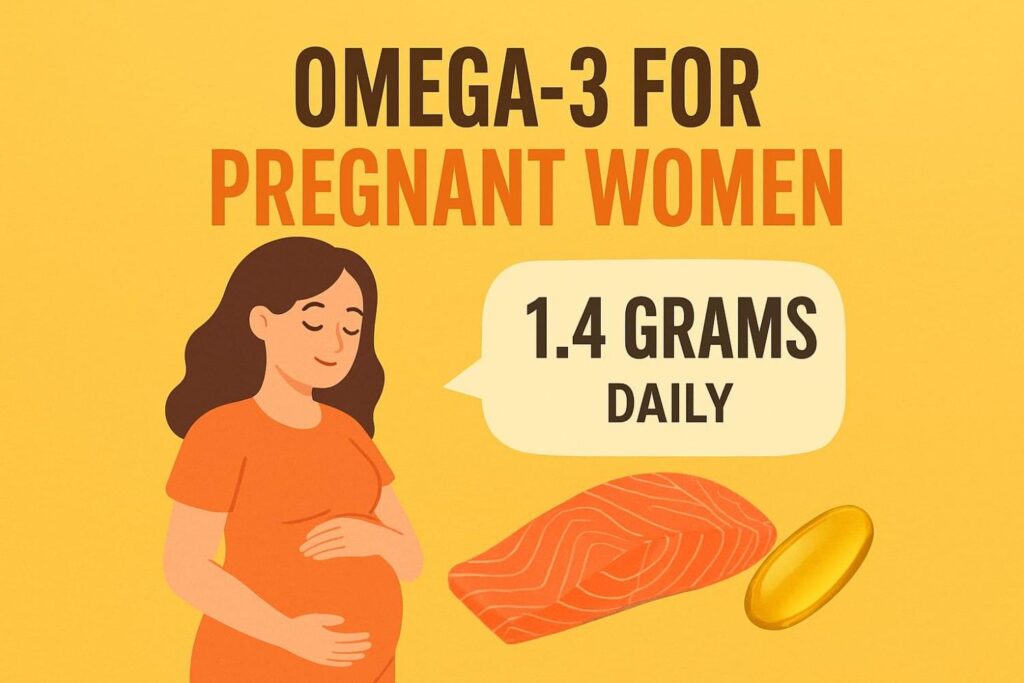
| Pregnant / Nursing Women | 1.4g ALA | 300–500mg | Supports baby’s brain |
When you see this table, the question suddenly feels easier to answer: This is exactly how much DHA you need.
You can also find smart buying strategies in this Cheap Vegan DHA Capsules India Guide.
A Story That Explains It All
I remember sitting at my desk one afternoon — completely brain-dead by 3 PM.
It happened every single day. Like clockwork.
I was eating well. Sleeping enough. Exercising regularly. Everything seemed fine on paper.
But my energy was not there. My focus was scattered. And I had no idea why.
My doctor asked one simple question that changed everything — “How much omega-3 are you actually getting?”
That question sent me down a research rabbit hole. Daily omega-3 dosage? What was I missing?
Six months later — after I figured out the right dosage and started taking algae DHA consistently — everything shifted. My afternoon brain fog disappeared. My focus came back. I could actually think clearly again.
This guide is what I wish someone had explained to me clearly back then — without the confusion, without the guesswork, just the simple truth about how much omega-3 your body actually needs.
Practical Vegan Sources of Omega-3
It’s not complicated. Here’s how you can meet your ALA needs:
- 1 tbsp chia seeds → 2.5g ALA
- 2 tbsp ground flaxseed → 3g ALA
- 7 walnuts → 2.5g ALA
- 1 tbsp hemp seeds → 1g ALA
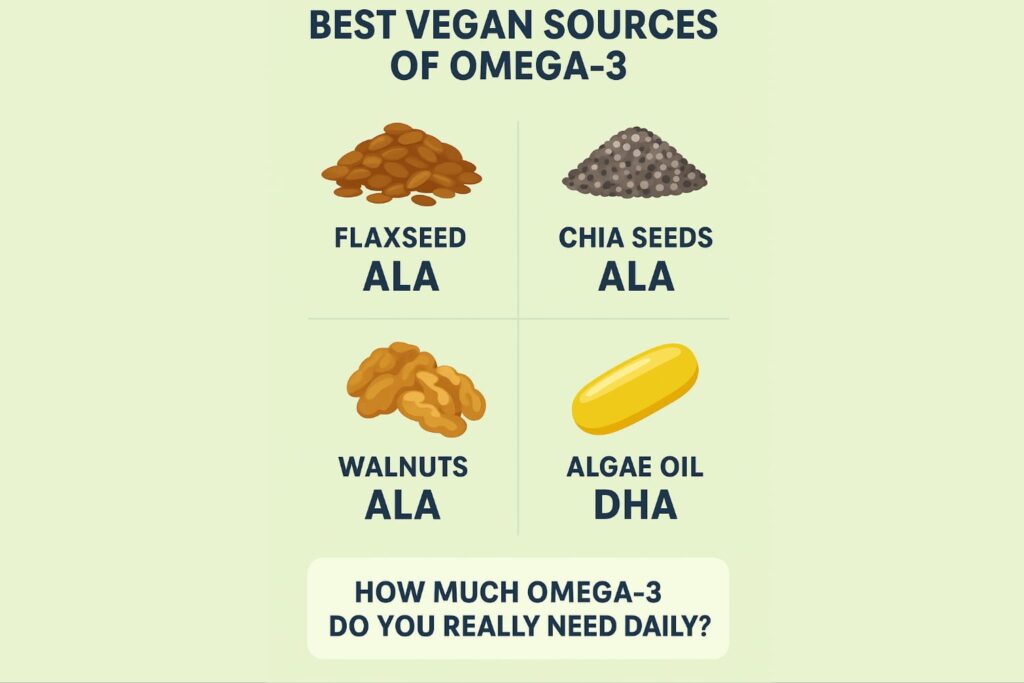
But here’s the truth: seeds alone aren’t enough. You still need DHA.
If you want to know exactly how much DHA you need based on your life, check our guide on Vegan DHA Dosage Per Day which breaks it down for adults, kids, athletes, and pregnant women.
Tips for Each Group
Vegans
- Mix flax + chia in smoothies.
- Add walnuts as snacks.
- Take 250–500mg algae DHA daily.
Athletes
- Focus on higher DHA (500–1000mg).
- Pre-workout oats with chia, post-workout shake with flax.
Kids
- Use vegan DHA drops.
- Sprinkle flax in chapati or porridge.
Pregnant / Nursing Women
- Must include 300–500mg DHA daily (doctor-approved).
- Add chia to laddoos, smoothies, or salads.
Common Mistakes People Make
1. Thinking flaxseed alone covers everything (it doesn’t).
2. Skipping DHA supplements.
3. Overdosing on fish oil/omega capsules.
4. Ignoring Omega-3 during pregnancy and childhood.
If you want a deeper breakdown, this detailed guide explains everything clearly: Omega 3 deficiency symptoms in Vegans
Where These Numbers Come From
The dosage recommendations in this guide come from:
— Harvard School of Public Health on omega-3 and nutrition
— National Institutes of Health (NIH) official fact sheet on omega-3 fatty acids
— Research from Healthline sources on brain health and DHA
All numbers and recommendations are based on peer-reviewed research — not marketing claims.
Sample Daily Meal Plan for Omega-3
Here’s what an actual day looks like when you’re serious about omega-3.
Breakfast: Make overnight oats the night before — mix 1/2 cup oats with yogurt, add 1 tbsp chia seeds and a handful of walnuts. Wake up, eat it. Done. You’ve hit 3-4g omega-3 already.
Lunch: Make your regular chapati dough, but mix 1 tbsp ground flaxseed into it before rolling. Tastes the same, no effort, and flax becomes part of your meal. Serve with any veggie curry.
Snack: Around 4 PM when energy dips — grab a handful of walnuts (about 7-8 pieces) and blend them into a quick hemp smoothie with banana and almond milk. Keeps your brain sharp through evening.
Dinner: Whatever veggie curry you’re making, add 1 tbsp flax oil at the end (don’t cook it, just drizzle). Or mix it into your dal. One spoon covers a lot of ground.
Supplement: Right before bed or with breakfast — one algae DHA capsule (300-500mg) with food so your body absorbs it properly.
That’s it. One day. No counting, no stress, no special shopping. Just real food + one supplement.
Most people who follow this see results in 6-8 weeks. Better focus, steadier energy, clearer mornings.
Myths About Omega-3 (Busted)
Myth 1: “The only source of omega-3 is fish oil.”
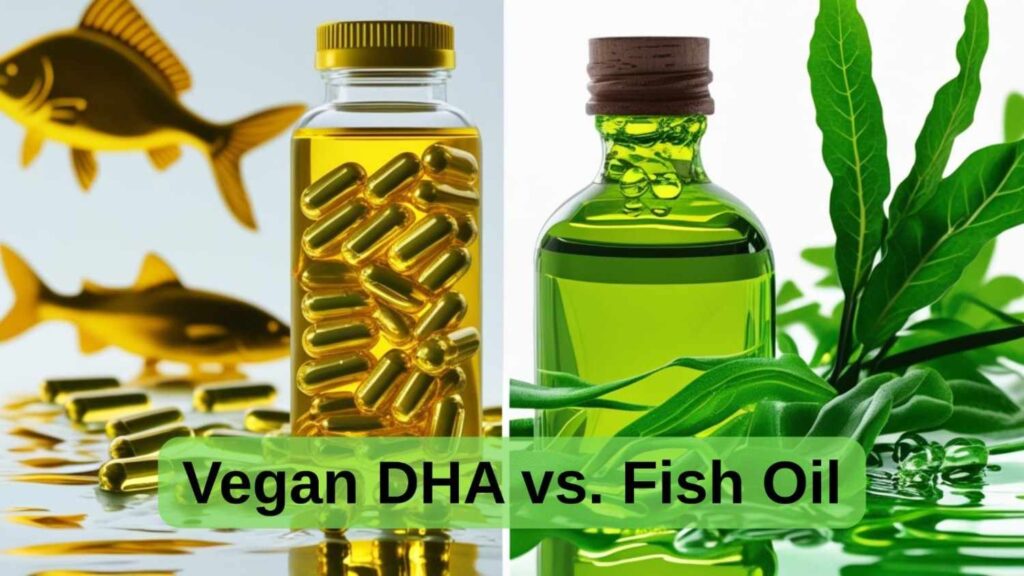
Truth: Fish do not make DHA — they get it from algae. So algae oil gives you the same DHA, without harming any fish.
Myth 2: “Seeds like flax and chia are enough.”
Truth: Seeds give you ALA. Your body converts barely 5 percent of it into DHA. It is not enough.
Myth 3: “Kids do not need omega-3 supplements.”
Truth: Kids actually need more DHA than adults do — their brains are still developing. Seeds alone will not cut it.
FAQs
Q1: Is flaxseed enough for Omega-3?
No. I ate flaxseeds for a year thinking they covered everything. The problem? Flaxseeds give ALA, not DHA. Your body converts maybe 5% of ALA into DHA. That’s almost nothing. You need direct DHA from algae.
Q2: How much DHA per day for vegans?
250–500mg daily is the sweet spot. Start at 300mg if you’ve had brain fog or fatigue. After 6-8 weeks, you’ll notice the difference.
Q3: How much Omega-3 does an athlete need daily?
Athletes burn more omega-3 during intense training. You need 2–3g ALA from food plus 500–1000mg DHA from supplements. Recovery gets noticeably better at these levels.
Q4: Can kids get Omega-3 without fish oil?
Absolutely. Algae DHA drops work perfectly for kids. No fishy taste, easy to mix in food, and kids’ brains develop faster with direct DHA. Start with 100–150mg daily.
Q5: How much Omega 3 do you need daily during pregnancy?
At least 300–500mg DHA daily. Your baby’s brain develops fastest in trimesters 2-3, and that’s when DHA matters most. Talk to your doctor, but don’t skip this.
Q6: Can too much Omega-3 be harmful?
Yes, but you’d have to work hard to overdose. Over 3g DHA/EPA daily might cause blood thinning or other issues. Stick to 300–500mg and you’re completely safe.
Q7: Are supplements safe for long-term?
Completely safe. I’ve been taking algae DHA daily for 2+ years with zero issues. It’s cleaner than fish oil, no ocean contaminants, and your body uses it naturally. No concerns with long-term use.
Want more details?
Check our guide on Best Vegan Omega 3 capsules in India for specific brand comparisons.
Conclusion
I spent months confused about how much omega 3 do you really need daily.
Now — 6 months later — I know it by heart.
Adults need 250 to 500 mg. Athletes need more — up to 1000 mg. Kids need 100 to 250 mg. Pregnant women need 300 to 500 mg.
Simple numbers. Nothing fancy.
Flaxseeds give you part of the answer. But algae DHA gives you the complete answer.
That is it. That is all you need to know.
The real work is not in learning — it is in doing. Take one capsule daily. Pair it with seeds. Be consistent.
My energy came back in 6 weeks. My focus sharp by week 8. And honestly — that is worth more than any expensive supplement.
Start today. Your brain will thank you.
About the Author
Kamal Mishra is a health & nutrition writer and vegan wellness advocate. He is the founder of VeganVitaa – India’s trusted vegan DHA resource for plant-based families.
Further Reading on VeganVitaa:
For more in-depth information, explore our related guides below to better understand vegan DHA, algal oil, and choosing the right supplement. Blog
- DHA Per Capsule vs Per Serving
- Best Vegan DHA Supplements in India — Top 3 Picks
- Best Algal Oil India 2025-2026
- DHA for Brain Health in India
Disclaimer: This article is for educational purposes only. Always consult your paediatrician before starting new supplements.
Disclaimer: This post contains affiliate links. If you buy through these links, I may earn a small commission at no extra cost to you. It helps me keep sharing useful content with you.

Pingback: Omega-3 Deficiency Symptoms in Vegans: 7 warning signs
Pingback: Vegan DHA for Athletes: Boosts Recovery & Enhances Focus
Pingback: 7 Vegan Lead Magnet Ideas to Grow Your Email List Fast
Pingback: Vegan Hair Loss & Dull Skin: Best DHA Omega-3 Deficiency Fix
Pingback: How Long Does Vegan DHA Take to Work? Weekly Results
Pingback: Vegan Omega 3 for Kids: Brain Growth, Memory & Focus Guide
Pingback: Vegan DHA for Children Brain Development | Parent’s Guide
Pingback: Best Vegan DHA Capsules for Pregnancy in India (2026 Guide)
Pingback: Best Algal Oil India 2025-2026 – Top Brands and DHA
Pingback: Affordable Vegan DHA Sources in India (2026 Guide)
Pingback: Vegan Omega 3 for Athletes: Benefits and Dosage
Pingback: DHA for Skin: The Secret to Glow, Acne & Dark Spot Repair
Pingback: Not Getting Enough Omega 3: 5 Subtle Signs to Watch
Pingback: Why Vegan Omega 3 Not Working in India: 7 Real Reasons
Pingback: Best Vegan DHA Supplements in India — Top 3 Picks for 2026
Pingback: Vegan DHA: What Most Vegans Get Wrong About Omega-3
Pingback: Do Vegans Need DHA? Signs, Risks & Best Sources
Pingback: Best Vegan Omega 3 for Athletes in India (2026)