
This blog was updated on 7th July 2026 to provide the latest information and researches on Vegan Omega 3 Stomach Upset.
Vegan omega 3 stomach upset in India is something I hear about more than you’d think – from real people who made the switch to plant-based omega-3 and expected it to feel easy on their body.
No fish oil. No fishy smell. No guilt. Just a clean supplement that matched their values.
And for the first few days, everything felt fine.
Then day three or four arrived. The stomach started feeling heavier after meals. Some bloating that refused to leave. A dull, uncomfortable feeling that hung around for hours – almost like the capsule just sat there, not going anywhere.
Most people at this point quietly assume omega-3 is not for them. They stop taking it. And they never find out that the problem had a simple fix.
I have spoken to enough Indian readers to know this pattern well. And in most cases, it was never about omega-3 being wrong for their body. It was about timing. Or dose. Or a product that simply was not good enough.
This blog is about understanding exactly what causes vegan omega 3 stomach upset – and what you can actually do about it without giving up on omega-3 altogether.
Because in most cases, you do not need to stop. You just need to take it differently.

Is stomach discomfort normal with vegan omega-3?
Some people feel nothing at all. But others start noticing subtle discomfort, especially in the beginning.
Many people take algal oil daily without any issues-but a noticeable group does experience mild discomfort early on. But some first-time users do feel digestive discomfort, especially in the beginning.
In most cases, this doesn’t mean the supplement itself is a problem. Usually, the problem comes from three things:
The product may not be very good.
The supplement may be taken in a way that does not suit your body.
Your system may simply need time to adjust.
Once you identify the real cause, the problem usually becomes manageable.
Research suggests omega-3 supplements can cause mild digestive symptoms like nausea or bloating in some people, especially in the beginning: PubMed article on omega-3 side effects.
Why vegan omega 3 causes stomach upset in India
Most brands talk about the health benefits. Very few explain why a supplement can feel uncomfortable in real life. There are a few clear reasons behind this.
1. The oil may not be fresh
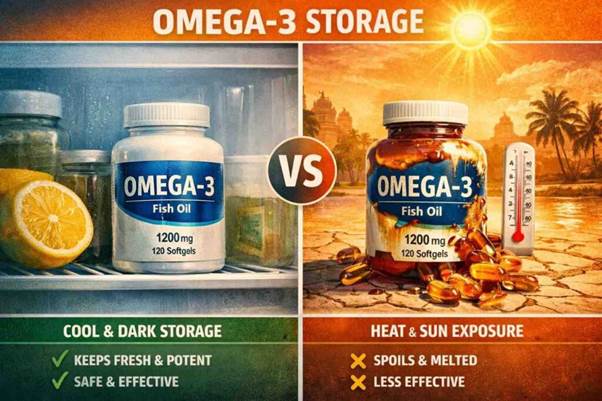
Algal oil is sensitive. If it is stored poorly, exposed to heat, or handled badly during manufacturing or transport, quality can drop.
This matters even more in India, where high temperatures and humidity can affect supplements during storage and shipping. In India, heat during storage and delivery is one of the most overlooked reasons for omega-3 instability especially in non-refrigerated supply chains.
A product that looked fine in the bottle may still be less stable than it should be.
2. The oil may have oxidized
Omega-3 fats do not handle air, heat, and light very well. When they break down, they can become harder to digest and less pleasant to take.
An oxidized capsule may not always smell obviously bad, but sometimes there is a strange odor or aftertaste. That is often a warning sign that the oil is no longer at its best.
3. You may be taking it without food
This is one of the most prevalent mistakes.
Omega-3 is a fat-based supplement. Your body handles it much better when it is taken with a meal. On an empty stomach, nausea or heaviness is more likely.
4. The capsule may break down too early
Not all capsules are made the same. Some dissolve too soon and release the oil in a way that irritates the stomach.
Better-quality capsules are designed to open at the right stage of digestion.
5. The starting dose may be too high
A lot of people begin with the full recommended dose on day one. That is not always the smartest move.
If your body is not used to omega-3 supplements, a sudden jump in intake can cause discomfort. Starting smaller is often better.
Simple rule: if it causes discomfort, first fix timing, dose, and quality before blaming omega-3.
If you’re unsure how much to start with, this guide on vegan DHA dosage explains a safe daily range in simple terms.
Omega-3 fats are sensitive to heat, light, and oxygen, which can affect their stability and digestion if not handled properly: Harvard Health
Capsules or liquid: which one feels easier?
There is no one answer for everyone, but both forms have clear strengths.
Not sure which form is right for you? Read our comparison of Liquid vs Capsule Vegan DHA in India to see the pros, cons, absorption differences, and who each option is best suited for.
Liquid omega-3
Liquid algal oil can work well for people who do not like capsules. It can be mixed into food or smoothies, which makes it easier to take. Some people also find it gentler because there is no capsule shell involved.
The downside is storage. Once opened, liquid oil is more vulnerable to spoilage. In Indian weather, that means you need to pay attention to refrigeration and shelf life.
Capsules
Capsules are simple, portable, tasteless, and easy to track. That makes them the more practical option for most people.
The problem usually comes when the capsule quality is poor. A weak shell or bad formulation can lead to stomach discomfort, especially if you take it without food.
| Form | Best for | Problem |
| Capsules | Convenience | Can irritate if low quality |
| Liquid | Easy digestion | Storage sensitive |
For most people in India, capsules are still the more convenient choice. If capsules are upsetting your stomach, the answer is usually not to avoid them forever. It is to choose a better one.
What kind of vegan omega-3 is easier to digest?
If vegan omega 3 stomach upset in India keeps coming up in your search history, there is a good chance the product itself needs to change.
If you’re comparing options, this guide to choosing the best vegan omega-3 capsules in India can help you filter out low-quality products.
Most issues I see are linked to low-quality or poorly stored products-not DHA itself.
Here is what matters when choosing a supplement that is easier on digestion.
Fresh algal oil with clear sourcing
Choose brands that are transparent about where the oil comes from and how it is processed. A clearly printed manufacturing date and expiry date are basic signs of a more serious product.
A meaningful DHA amount
A supplement that provides at least 200–300 mg of DHA per serving is usually more useful than a weak formula. If the dose is too low, you may need multiple capsules just to reach a decent intake. That means more oil in your stomach at once.
Enteric-coated or delayed-release capsules
These are designed to stay intact until they reach the intestine. That can reduce nausea and make the supplement feel lighter on the stomach.
Brands that test their products
Third-party testing is a strong sign. It shows that the brand cares about purity, quality, and stability instead of just packaging and marketing.
A few product types worth looking at
These are not recommendations. Just categories to help you decide what suits your body best.
High-DHA enteric-coated capsule
Best choice for people who have already felt nausea or bloating with omega-3. The delayed-release design means the capsule dissolves in the intestine – not the stomach. That one difference removes most of the discomfort.
The trade-off is price. Better technology costs more.
Liquid vegan omega-3 with DHA and EPA
Good option for people who dislike swallowing capsules or have had repeated trouble with them. Easy to mix into a meal or smoothie.
The downside is storage – liquid omega-3 needs a cool, dark place. In Indian summers, that needs extra attention.
Budget vegan DHA capsule
A reasonable starting point if you are new to supplementation. Just make sure the label clearly shows DHA content and an expiry date. Without those two, skip it.
The trade-off is that budget versions rarely include enteric coating or advanced capsule technology.
Vegan omega-3 combined with vitamin D3
Convenient for Indian users already thinking about both nutrients. Fewer bottles, easier daily habit.
Just check whether you are already getting vitamin D from another source before doubling up.
What I usually suggest to beginners:
Start with 1 capsule after lunch – not breakfast. Continue for 5 to 7 days before increasing the dose. Never take it on an empty stomach.
If you’re choosing a supplement, focus on DHA content, freshness, and capsule design-not just price.
Disclaimer: This post contains affiliate links. If you buy through these links, I may earn a small commission at no extra cost to you. It helps me keep sharing useful content with you.
How to prevent vegan omega 3 stomach upset in India
Small changes can fix this.
Take it with a proper meal
Do not swallow it on an empty stomach. Even a light meal is better than nothing. Lunch or dinner usually works well.
Begin with a smaller amount
There is no reward for starting at full dose. Try one capsule first and let your body adjust before increasing.
Store it carefully
Keep it away from sunlight, heat, and moisture. A cool, dry cupboard is fine for many products. In peak summer, refrigeration may help if the label allows it.
Check the expiry date before buying
This sounds basic, but many people ignore it. A supplement close to expiry is not the one you want, especially in warm weather.
Take it regularly
Using omega-3 randomly does not give your body a fair chance to adapt. A steady routine with food is usually easier on digestion.

Mistakes that make the problem worse
Some mistakes make it worse.
Buying the cheapest option available
Low-cost supplements often cut corners somewhere. The oil quality, capsule material, or storage standards may not be strong enough.
Ignoring smell or freshness
A bad smell, weird aftertaste, or stale feel should not be ignored. These can point to oil that has gone past its best stage.
Rushing the dose
Taking too much too soon is a common reason people feel uneasy. Your body does not need to be forced into adapting.
Reading only the front label
The front of the pack says “vegan” and “omega-3,” but the useful details are usually on the back. That is where you find DHA content, storage guidance, coating type, and serving size.
When it is time to switch or stop
If you have taken the supplement with meals, used a sensible dose, and stayed consistent for two to three weeks, but the discomfort still feels strong, it is time to reassess.
A different brand may solve the issue. In some cases, switching from a regular capsule to an enteric-coated version helps. For others, a liquid formula is easier.
If the problem continues for more than a month even after you have made changes, speak with a doctor. Sometimes the issue is not the supplement itself but something else in the digestive system that needs attention.
Simple questions to ask before buying
Before you purchase a new vegan omega-3, check these things:
- Does the label clearly show DHA content?
- Is the product fresh and within a safe expiry window?
- Does it explain how to store it?
- Is the capsule delayed-release or enteric-coated?
- Does the brand share testing or quality information?
These details matter more than flashy packaging.
You can also check a curated list of reliable Top 3 Best Vegan DHA Supplements in India here if you don’t want to research everything from scratch.
FAQs
1. Why does vegan omega-3 cause stomach discomfort?
It usually happens due to poor-quality oil, taking it on an empty stomach, or starting with a high dose too quickly.
2. Can I take vegan omega-3 on an empty stomach?
No. It is best taken with meals to improve digestion and reduce nausea or heaviness.
3. How long does stomach discomfort last?
In most cases, it settles within 5–7 days as your body adjusts, if taken correctly.
4. Is algal oil harder to digest than fish oil?
Not necessarily. Good-quality algal oil is easy to digest, but poor-quality or oxidized oil can cause issues.
5. Should I stop taking omega-3 if I feel discomfort?
Not immediately. First adjust timing, dose, and product quality. If discomfort continues, then consider switching.
Bottom line
Vegan omega-3 is supposed to make you feel better – not leave you dreading the next capsule.
If your stomach has been reacting badly, chances are it is not the omega-3 that is the problem. It is something fixable – the product you chose, the time you took it, or how much you started with.
Most cases of vegan omega 3 stomach upset in India come down to exactly these three things. And once you sort them out, the discomfort usually disappears on its own.
Start with one capsule after a proper meal. Give your body a week to adjust. Choose a product that clearly shows DHA content and an expiry date. Store it away from heat.
No complicated protocol. No expensive solution.
Your body is not rejecting omega-3. It is just waiting for you to give it the right product in the right way.
Look at the supplement you are currently taking. Check the DHA amount, the expiry date, the capsule type, and whether you are taking it with meals. If any of those are unclear – that is probably where the problem begins.
A better product and a better routine. That is all it takes.
About the Author
Kamal Mishra is a health & nutrition writer and vegan wellness advocate. He is the founder of VeganVitaa – India’s trusted vegan DHA resource for plant-based families.
For more in-depth information, explore our related guides below to better understand vegan DHA, algal oil, and choosing the right supplement. Blog
Struggling with hormonal issues alongside digestion? Read how omega-3 supports hormonal balance → Omega 3 for PCOS in India — Can Vegan DHA Help?
For detailed testing methods and accurate DHA deficiency diagnosis in vegetarians, read our complete guide on “Which Blood Test Shows DHA Deficiency in Vegetarians? (Accurate Tests in India Explained)”.
To understand the common causes, early symptoms, and practical ways to fix low DHA levels, check out our complete guide on “DHA Deficiency in India: Causes, Symptoms & Fix (2026)”.
Want to know the ideal daily Omega-3 intake for your age, lifestyle, and health goals? Read our complete guide on “How Much Omega 3 Do You Really Need Daily — Complete Guide”.
Disclaimer: This article is for educational purposes only. Always consult your paediatrician before starting new supplements.
Disclaimer: This post contains affiliate links. If you buy through these links, I may earn a small commission at no extra cost to you. It helps me keep sharing useful content with you.

Pingback: Liquid vs Capsule Vegan DHA in India: Which is Better? (2026)
Pingback: Vegan Omega 3 Side Effects & Interactions in India