
DHA for brain health in India is a conversation that almost never happens and it should be the first thing every vegetarian Indian is told about nutrition.
Your brain is 60% fat. Not a metaphor. Literally; the organ you use to read this sentence, remember your morning, and make every decision today is mostly fat.
The single most important fat in that brain – concentrated most heavily in the part responsible for memory, focus, and thinking clearly – is DHA.
Most Indian vegetarians have almost none of it.
Not because they eat badly. Not because they are careless. Because DHA does not exist in meaningful amounts in any plant food except algal oil. And almost nobody in India is taking it.
I started noticing this at VeganVitaa about a year ago. Readers writing in about omega 3 for various reasons – pregnancy, joint pain, heart health. But underneath almost all of it, the same pattern.
Brain fog that had quietly become normal. Memory that used to be sharper. A mental flatness nobody expected to fix anymore.
Almost none of them had been told their vegetarian diet might be leaving their brain’s most critical fat chronically underfunded.
This blog is about that gap and what actually closes it.
For a broader vegan perspective on DHA — DHA for Vegans: The Missing Link
The Brain Fat Nobody Talks About
Most nutrition conversations in India go like this – protein, iron, calcium, vitamin B12. Maybe vitamin D if you are lucky.
DHA never comes up.
And yet DHA makes up roughly 25% of the total fat in your cerebral cortex – the part of your brain doing the heaviest lifting every single day. Memory formation. Sustained attention. Emotional regulation. Processing speed.
Every neuron in your brain has a membrane. That membrane needs to be fluid and flexible for signals to pass through efficiently. DHA is the fat that keeps those membranes working the way they should.
When DHA levels drop and they drop slowly, quietly, over months and years – the membranes get stiffer. Signals slow. Thinking gets hazier. Memory gets less reliable.
Nobody notices because it does not announce itself. One day you just realise your brain feels slower than it used to and you have stopped expecting otherwise.
What DHA actually does in the brain:
- Keeps neuron membranes fluid so signals travel efficiently
- Supports the production of neurotransmitters linked to mood and focus
- Reduces neuroinflammation – the low-grade brain inflammation linked to cognitive decline
- Helps clear waste products from brain cells including compounds linked to Alzheimer’s risk
The brain does not make DHA on its own. It must be derived from your diet or supplements. For vegetarian Indians specifically, this makes DHA for brain health in India one of the most overlooked nutritional conversations happening right now.
A Pattern I Keep Seeing at VeganVitaa
Over the past year, a specific type of message started appearing regularly.
Not always about brain health directly. Sometimes about energy. Sometimes about pregnancy or joint pain. But when I asked more questions – the same picture kept emerging underneath.
Someone in their late thirties or forties. Vegetarian their whole life. Eating carefully, sleeping reasonably, not doing anything obviously wrong. And yet a mental tiredness that rest did not fix. A memory that felt less reliable than five years ago. A difficulty concentrating that they had quietly accepted as just getting older.
The common thread in almost every case – near zero DHA intake. No algal oil. No awareness that it even existed as an option.
What struck me most was not the deficiency itself. It was the duration of the situation. Most of these readers had been running low on DHA for years – possibly a decade or more without ever being told it was something to think about.
Their doctors had checked B12. Some had checked vitamin D. Nobody had asked about DHA.
This is not a criticism of doctors. DHA simply does not show up in routine Indian health conversations the way it should especially for vegetarians, who have no obvious dietary source of it.
That pattern is why this blog exists. Not to sell supplements but because most vegetarian Indians are simply never told this.
I am not a doctor. I am a vegetarian from Surat who has spent the last two years researching plant-based nutrition for Indian families and this is the gap that comes up more than almost any other.
DHA for Brain Health in India — What the Research Is Actually Saying
I want to be careful here because the research is genuinely interesting but not always reported honestly.
This is what the evidence truly demonstrates.
Each additional 100mg of DHA or EPA intake daily was associated with an 8 to 10% lower risk of cognitive decline.
That is not a small number and it held consistently across multiple studies. That is not a small number. And it held across multiple studies – not just one or two isolated trials.
Lower omega 3 status in older adults is linked to evidence of accelerated brain aging in MRI studies – reduced brain volume, amyloid beta accumulation, and white matter abnormalities.
For Indian vegetarians – who are running near zero on direct DHA; these numbers are not abstract. They are describing what is likely happening quietly in a large population that has never been told DHA exists as a concern.
The honest caveat – most of this research has been done on older adults. The evidence for younger adults and students is less settled. What does appear consistently is that small cognitive decrements associated with lower omega 3 status have been observed even in young adults with overall normal cognitive function.
Meaning – you do not have to be elderly for low DHA to be affecting how your brain performs day to day.
The brain does not wait for old age to start feeling the deficit.
For the full research overview on omega 3 and cognitive function – NIH Omega 3 Brain Health Overview
For how this connects to broader vegetarian nutrition gaps in India – Why Indian Diets Lack DHA
Why Indian Vegetarian Brains Are Running a Deficit
This is where the Indian context makes everything more urgent.
Most vegetarian Indians are not just low on DHA. They are low on DHA while simultaneously consuming cooking oils that actively work against whatever omega 3, they do get.
| Indian Vegetarian Diet | What Brain Needs | |
| Main omega 3 source | Flaxseeds, walnuts — ALA only | Direct DHA |
| ALA to DHA conversion | Less than 5% | 100% usable |
| Cooking oil | Sunflower, soybean — high omega 6 | Low omega 6 ratio |
| Direct DHA source | Almost none | 200-300mg daily |
| Brain DHA status | Likely chronically low | Consistently adequate |
That table is what most Indian vegetarians are never shown.
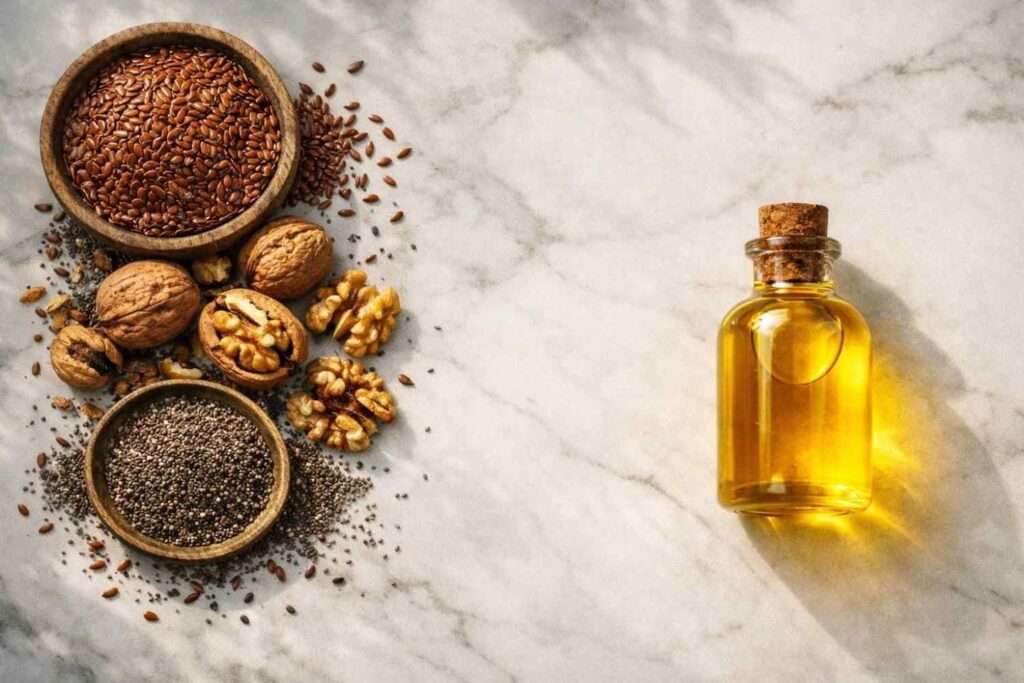
Flaxseeds give you ALA. Your body converts less than 5% of that into DHA. Meanwhile, sunflower and soybean oil – dominant in Indian kitchens are extremely high in omega 6. Excess omega 6 competes with omega 3 for the same cellular pathways, further reducing whatever little DHA conversion was happening.
The result is a brain doing its best on a diet that was never built to support it properly.
This is not about eating poorly. A vegetarian Indian diet is genuinely nutritious in many ways. But it was never designed around DHA because algal oil was not part of traditional Indian food culture.
For understanding the broader DHA deficiency picture across Indian vegetarians – DHA Deficiency in Indian Vegetarians and Vegans
For the full PubMed research on omega 3 and cognitive health, read here.
What Changes When You Actually Fix the Gap
This is the section most supplement blogs get wrong by promising too much.
So here is what I have actually seen happen and what the research supports – when Indian vegetarians start taking algal DHA consistently.
What most people notice first – weeks 4 to 6:
- Mental fatigue arrives later in the day than it used to
- Concentration holds for longer before dropping off
- Morning brain fog clears faster
These are not dramatic changes. Nobody messages me after four weeks saying their life changed. That is not how this works. But they are consistent – reported repeatedly by VeganVitaa readers who stayed with it long enough.
What takes longer – weeks 8 to 12:
- Memory feels more reliable – names, details, tasks
- Mood stability improves – fewer unexplained low days
- Overall mental sharpness feels closer to what it used to be
What omega 3 will not do:
- Fix severe cognitive decline already in progress
- Replace sleep, exercise, or stress management
- Show dramatic overnight results
The research supports a modest but real improvement in cognitive function with consistent DHA supplementation – particularly for people who were deficient to begin with. For Indian vegetarians who have been running low for years, that improvement is more likely to be noticeable than for someone who was never deficient.
I started tracking this after enough VeganVitaa readers wrote back after 8 to 12 weeks. The pattern was consistent enough that I started recommending algal DHA as a baseline for almost every vegetarian Indian asking about brain health.
For how much DHA you actually need daily for brain support – Vegan DHA Dosage Per Day
Which Vegan DHA Supplement Actually Supports Brain Health
For brain health specifically, DHA matters more than EPA. Choose a supplement that clearly shows DHA content on the label – not just total omega 3.
At VeganVitaa, these three come up most when readers specifically mention memory, focus, or mental fatigue:
Zeroharm Vegan Omega DHA
400mg DHA per serving from marine algae. One of the highest DHA concentrations available in India right now. FSSAI certified, no fish smell, vegetarian capsule. Strong choice for anyone serious about brain support.
Deva Vegan Omega 3
Globally trusted, third-party tested, transparent DHA numbers. Good for anyone who wants international quality standards without paying premium prices.
Tata 1mg Omega 3
1000mg per capsule, clearly labelled DHA and EPA, 100% vegetarian, FSSAI certified. Practical option for buyers who want higher potency in one capsule.
One thing worth knowing – for brain health specifically, consistency matters more than dose. 200mg DHA daily taken every single day for 12 weeks will do more than 500mg taken randomly three times a week.
For a complete reviewed comparison of all top vegan DHA capsules available in India – Best Vegan DHA Capsules in India 2026- Top 10 Reviewed

FAQs
Q. Can DHA actually improve memory and focus or is it just marketing?
The research says modest but real improvement – particularly for people who were already deficient. It will not turn you into a different person. But for someone who has been deficient for years – the difference is real enough to notice. But for vegetarian Indians who have been running low on DHA for years, fixing that gap has a measurable effect on how the brain functions day to day.
Q. How long before I notice any difference in brain function?
Most people notice subtle changes in mental fatigue and concentration around weeks 4 to 6. Memory and mood improvements take longer – usually 10 to 12 weeks of consistent daily use. The biggest mistake is stopping at week 3 and deciding it does not work.
Q. I already take flaxseed oil. Is that enough for brain health?
No and this is the most common misunderstanding. Flaxseed oil gives you ALA, not DHA. Less than 5% of ALA converts into usable DHA. For brain support specifically, you need direct DHA from algal oil. Flaxseed oil alone will not move the needle.
Q. Is DHA safe to take daily for brain health long term?
Yes – algal DHA is considered safe for long term daily use for most healthy adults. It is the same DHA found in breast milk and is given to infants in formula. For anyone on blood thinners or other medication- check with your doctor before starting.
Q. Does omega 3 help with heart health too or just the brain?
Both – EPA and DHA support heart health alongside brain function. If you want to understand the heart health side specifically – Omega 3 for Heart Health in India
Conclusion
DHA for brain health in India is one of those gaps that builds quietly – for months, sometimes years before anyone connects it to nutrition.
A year ago, most VeganVitaa readers writing about brain fog and memory had one thing in common. Nobody had ever asked them about DHA. Not their doctor. Not their nutritionist. Not anyone.
Their vegetarian diet was careful, considered, and missing this one thing completely.
That is what this blog is about. Not a dramatic promise. Just one piece of information most vegetarian Indians is never given.
Your brain needs DHA. It cannot make it on its own. Plant foods except algal oil do not provide it directly. And Indian cooking oils actively reduce whatever little conversion was happening.
One clean algal oil capsule daily. With your main meal. For 12 weeks minimum.
At VeganVitaa, I started taking algal DHA consistently after understanding this research myself. The mental clarity difference after 10 weeks was subtle but real enough to make it permanent.
That is the gap. That is the fix.
Where to Start
Check your current supplement – does it clearly show DHA on the label?
If not – that is your first fix.
For a complete reviewed comparison of top vegan DHA supplements specifically for brain health- Best Vegan DHA Supplements in India – Top 3 Picks
About the Author
Kamal Mishra is a health & nutrition writer and vegan wellness advocate. He is the founder of VeganVitaa – India’s trusted vegan DHA resource for plant-based families.
Further Reading on VeganVitaa:
For more in-depth information, explore our related guides below to better understand vegan DHA, algal oil, and choosing the right supplement. Blog
- Vegan DHA for Brain Fog
- Best High DHA Vegan Omega 3 in India
- Vegan Omega 3 for Office Workers in India
Disclaimer: This article is for educational purposes only. Always consult your paediatrician before starting new supplements.
Disclaimer: This post contains affiliate links. If you buy through these links, I may earn a small commission at no extra cost to you. It helps me keep sharing useful content with you.

Pingback: DHA for Vegans: The Missing Link to Brain Health (2026)
Pingback: Best Vegan Omega 3 for Men in India — Top 5 Picks
Pingback: Best Vegan DHA for Students in India — Top 5 Picks
Pingback: Best Vegan Omega 3 Under 1000 in India — Top 5 Picks
Pingback: Best Vegan Omega 3 for Office Workers in India — Top 5
Pingback: Vegan Omega 3 vs Ashwagandha in India: Which First?
Pingback: Best Vegan Omega 3 for Sleep in India (2026)