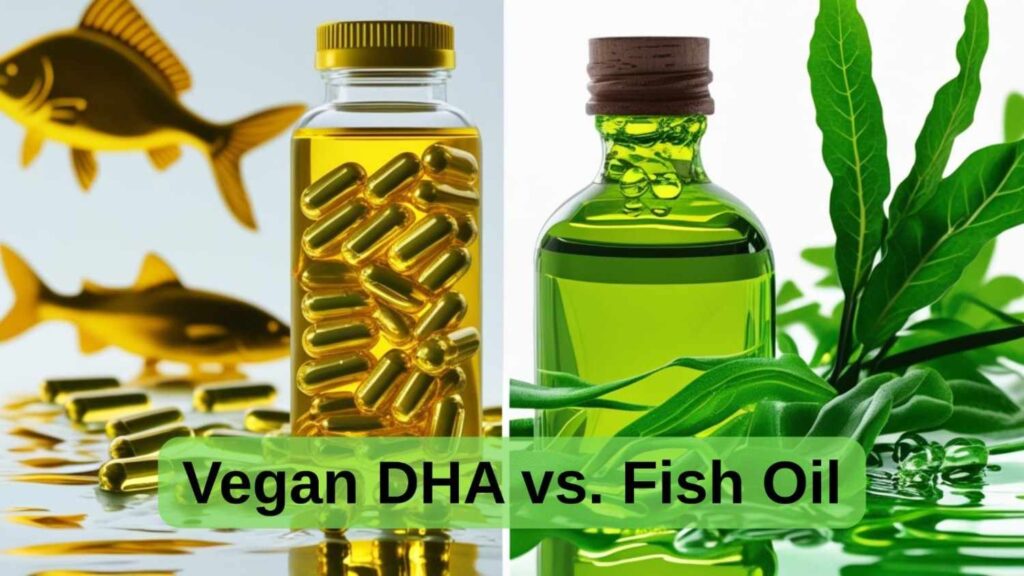
You’re vegetarian, work stress has been building for weeks, sleep isn’t quite right, and now you’re standing between two bottles, omega 3 in one hand, ashwagandha in the other, not sure which one to actually start with. Three different blogs, three different opinions, and you’re no closer to an answer.
That’s basically the whole mess around vegan omega 3 vs ashwagandha in India right now. Everyone treats it like a competition between two products, pick a side, buy the winner. It isn’t that. It’s really about figuring out which specific problem you’re trying to solve first, and once you do that, the choice gets a lot less confusing.
Vegan Omega 3 vs Ashwagandha in India — Which One Should You Actually Buy First
Vegan omega 3 vs ashwagandha in India comes down mostly to what’s missing in your day-to-day, not which supplement has better marketing. A quick way to think about it:
| Your main goal | First consideration |
| Vegan or vegetarian diet with low direct DHA intake | Vegan Omega 3 |
| Brain and eye nutrition | Vegan Omega 3 |
| Stress management | Ashwagandha |
| Sleep support | Ashwagandha |
| Multiple goals at once | Don’t buy both blindly, prioritize the bigger gap |
| Mainly filling a dietary omega 3 gap | Vegan Omega 3 |
This isn’t a universal medical recommendation, just a starting point. Your actual situation, medications, and health history matter more than any table on the internet, this one included.

These Aren’t Really Competing Supplements
People treat this like a versus match, but it isn’t one. They’re built for different things entirely.
- Vegan Omega 3 provides DHA, and EPA depending on the product, sourced from algal oil, supporting normal fatty acid needs your diet may not be covering
- Ashwagandha is an adaptogenic herb, used traditionally in Ayurveda, with modern research mostly looking at stress-related outcomes
- One is a nutrient your body needs in a specific fat form, the other is an herbal supplement with a completely different mechanism
Comparing them head-to-head only makes sense once you know which gap you’re actually trying to close.
Compare Them by Your Actual Goal
For brain health.
Omega 3, specifically DHA, is structurally part of brain tissue, and research consistently points to dietary DHA mattering for cognitive function. For a deeper look at why this matters specifically for vegetarians, see DHA for Brain Health in India — Why Vegetarians Are Running Low on the Brain’s Most Important Fat. Ashwagandha’s research here leans more toward stress reduction indirectly supporting mental clarity, not a direct nutritional role the way DHA has.
For stress and feeling overwhelmed.
Ashwagandha has more direct research behind it here. A clinical study published on PubMed found ashwagandha root extract associated with reduced stress and cortisol levels in adults over an eight-week period — PubMed study on ashwagandha and stress. Omega 3 wasn’t really studied for managing acute stress the same way.
For sleep.
Neither supplement should automatically be labelled a sleep aid. Ashwagandha has more research interest in this area, but sleep issues often come from something else entirely, screen time, irregular schedules, anxiety, and no supplement fix a root cause it isn’t targeting.
For focus and mental performance.
Nutritional support and cognitive-enhancement claims are two different things. Omega 3 supports the nutritional side. Be cautious of anything, from either category, promising sharper focus overnight.
If you follow a vegan or vegetarian diet.
This is where vegan omega 3 pulls ahead clearly. Vegetarian and vegan diets generally provide little or no direct DHA, since the main dietary source is fish. Ashwagandha doesn’t address that gap at all; it was never meant to.
The Real Question for Vegans — Are You Actually Getting DHA?
A lot of people assume flaxseed, chia, or walnuts are “covering” their omega 3 needs. Most of them aren’t, not directly, and almost nobody checks this until someone points it out.
Flax and chia give you ALA, a plant-based omega 3 that your body has to convert into DHA on its own, and that conversion to DHA is limited and varies between individuals. Algal oil skips that conversion step entirely, since algae is the original source fish get their DHA from in the first place. If your DHA is coming exclusively from flax or chia, there’s a real chance you’re falling short without realizing it.
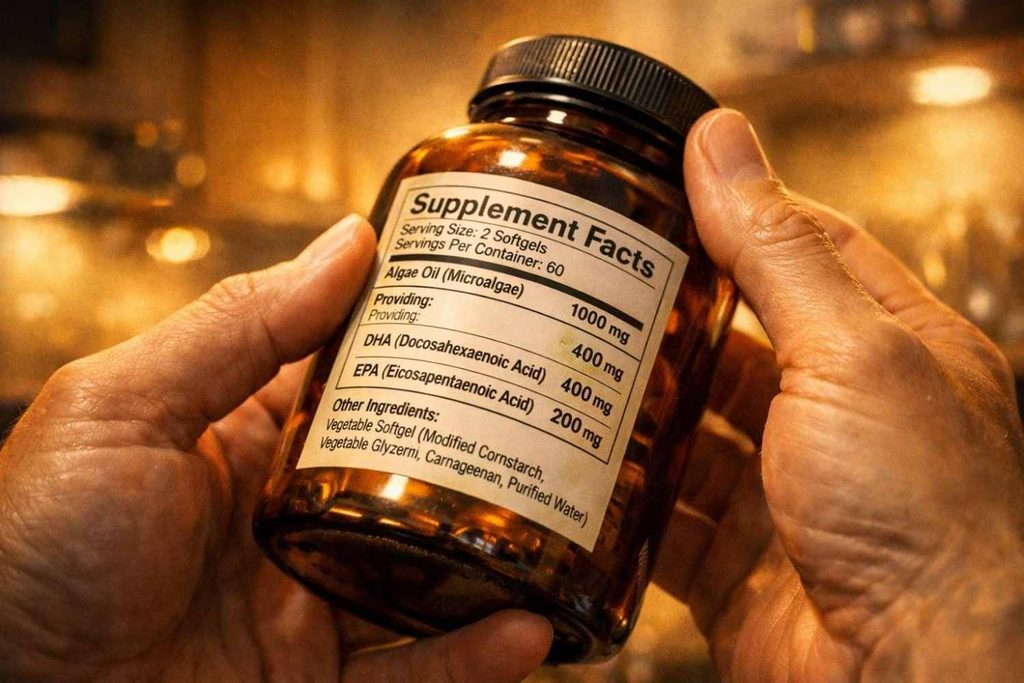
Checking a label matters here too, “1000mg omega 3” on the front usually refers to total oil weight, not actual DHA content, which is often much lower and printed in smaller text on the back. For more on how algal oil actually works as a DHA source, this is worth reading — Why Algal Oil Is the Best Vegan DHA Source
Can You Take Vegan Omega 3 and Ashwagandha Together?
Most healthy adults can take both, though it’s worth being a little careful about it. A few things to know before you do.
- There’s no well-documented direct interaction between algal DHA and ashwagandha for most people
- Taking both isn’t automatically better just because it’s “more supplements,” each one is targeting a different gap, and stacking without a clear reason wastes money more than it helps
- Someone might reasonably take both if they have a genuine DHA gap from diet and separately deal with high stress, that’s two distinct problems, not one
- If you’re on medication, managing thyroid issues, or have any existing condition, check with your doctor or pharmacist before adding either, not just ashwagandha
If You Choose Vegan Omega 3, Check These Before Buying
Most people stop reading the label at the front, and that’s exactly where the mistakes happen.
- DHA amount specifically, don’t stop at the front label’s “1000mg omega 3” figure
- EPA amount, and whether it’s even included, some products are DHA-only
- Confirm the source is genuinely algal oil, not a flaxseed or chia blend mislabelled as omega 3
- DHA per capsule versus per serving, some products need two capsules to hit the number they advertise
- Third-party testing or a certificate of analysis, not just a “lab tested” claim with nothing behind it
- Capsule shell material, check it’s actually HPMC or vegetarian cellulose, not gelatin
- Cost per day based on actual DHA delivered, not the price of the bottle alone
If you’re unsure how to spot inflated numbers on a label, this breaks down exactly what to look for — DHA Per Capsule vs Per Serving: The Label Mistake That Can Waste Your Money
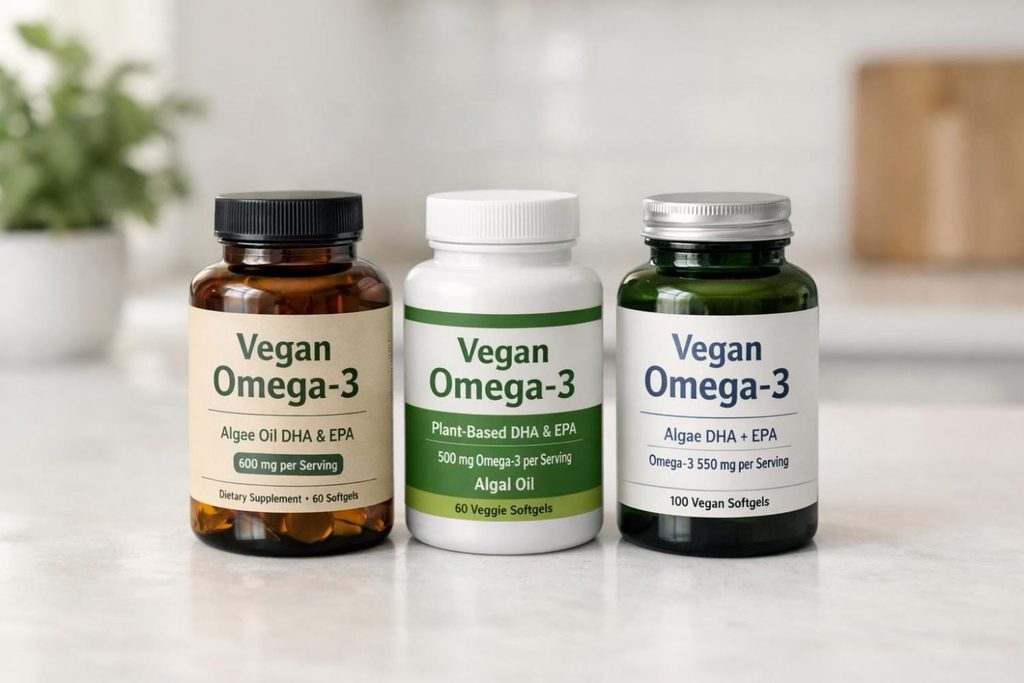
Vegan Omega 3 Options Worth Comparing in India
Once you’ve decided omega 3 is your priority over ashwagandha, here’s where actual product comparison starts. These are evaluated on the same checklist above, real EPA and DHA numbers, not front-label claims.
| Product | EPA per day | DHA per day | Total EPA+DHA | What Stands Out |
| Rasayanam Plant Omega 3 | ~450mg | ~150mg | ~600mg | Highest EPA on this list |
| Empire 1900 Vegan Omega 3 | 250mg | 250mg | 500mg | Even EPA and DHA split |
| Himalayan Organics Vegan Omega 3 | ~80mg | ~560mg | ~640mg | Highest DHA concentration |
Note: verify current EPA, DHA, and pricing on Amazon India before ordering, formulations change.
Rasayanam Plant Omega 3
EPA: ~450mg per serving | DHA: ~150mg per serving | Total: ~600mg | Serving: 2 capsules
Rasayanam uses Schizochytrium algae, a strain that naturally produces more EPA than most vegan omega 3 sources. The EPA-heavy profile makes it stand out on this list, since most vegan products lean toward DHA instead. Ministry of AYUSH approved, GMP certified, no fishy aftertaste.
Pros:
- Highest EPA content on this list
- Natural EPA and DHA from a single algae strain
- No fishy aftertaste
Cons:
- Lower DHA compared to the other two options
- Needs two capsules daily to reach the stated dose
- Price can vary during discount periods, check current listing before ordering
Check Rasayanam Plant Omega 3 on Amazon
Empire 1900 Vegan Omega 3
EPA: 250mg per capsule | DHA: 250mg per capsule | Total: 500mg | Serving: 1 capsule
Empire 1900 gives an even DHA and EPA split; both numbers clearly printed on the label from confirmed algal oil. A straightforward option if you want general coverage of both fatty acids without leaning heavily toward one or the other. Single capsule serving, vegetarian capsule, gluten free.
Pros:
- Even EPA and DHA split, clearly stated on the label
- Single capsule serving, easy to build into a routine
- Confirmed algal oil, not a flaxseed blend
Cons:
- Smaller, less recognised brand
- Fewer reviews currently, worth checking current stock before ordering
Check Empire 1900 Vegan Omega 3 on Amazon
Himalayan Organics Vegan Omega 3
EPA: ~80mg per serving | DHA: 560mg per serving | Total: ~640mg | Serving: 2 capsules
Himalayan Organics carries the highest DHA concentration of the three, from confirmed algal oil. A trusted, widely available Indian brand with transparent labelling and no fishy smell or aftertaste, useful if your priority is DHA specifically over EPA.
Pros:
- Highest DHA concentration on this list
- Trusted, widely available Indian brand
- Transparent labelling, vegetarian capsule
Cons:
- Low EPA content
- Needs two capsules daily to reach the stated dose
- Price occasionally crosses budget range during low discount periods
Check Himalayan Organics Vegan Omega 3 on Amazon
If You Choose Ashwagandha, What Should You Check
Keeping this focused only on what matters for comparison purposes, not a full ashwagandha buying guide:
- Root extract versus plain powder, extracts are typically more concentrated and standardized
- Standardization percentage of withanolides, listed clearly on quality products
- Amount per serving in mg
- Ingredient transparency, no vague “proprietary blend” language
- Manufacturer information that’s actually traceable
- Avoid brands making exaggerated claims like guaranteed stress elimination or instant results
Vegan Omega 3 vs Ashwagandha — Side by Side
| Factor | Vegan Omega 3 | Ashwagandha |
| Category | Fatty acid supplement | Herbal adaptogen |
| Vegan source | Algae | Plant root/leaf |
| Main compounds | DHA, EPA | Withanolides and related constituents |
| Primary nutritional role | Omega 3 fatty acid intake | Studied mainly for stress response |
| Brain relevance | Direct structural role | Indirect, via stress reduction |
| Sleep relevance | Not a sleep supplement | More research interest here |
| Vegetarian suitability | Yes, when algal-derived | Generally, plant-derived |
| Main thing to check before buying | Actual DHA/EPA mg | Extract type and standardization |
5 Mistakes People Make Choosing Between Them
- Picking one because it’s trending on social media, not because it matches an actual gap
- Assuming both supplements basically do the same thing, they don’t
- Buying a bottle that says “1000mg omega 3” without checking how much of that is actually DHA
- Adding multiple supplements at once without identifying which specific problem each one is meant to solve
- Expecting a supplement to fix chronic poor sleep, a stressful lifestyle, or a genuinely unbalanced diet on its own
This last one comes up often enough that it’s worth its own read, especially if you’ve already tried a supplement and felt nothing — Vegan Omega 3 Not Working in India? 7 Mistakes That Stop Results
What I’d Prioritize as a Vegetarian Buyer in India
Not going to say everyone needs DHA, that’s not accurate for everyone reading this. Having followed a vegetarian diet, myself for over fifteen years, I know how easy it is to assume your diet is “healthy enough” without actually checking where your fats are coming from. But if you follow a vegan or vegetarian diet and rarely eat direct DHA sources, which describes most vegetarian households in India, checking your omega 3 intake is a sensible first step before adding anything else. This is genuinely the gap we focus on at VeganVitaa, because it’s the one most Indian vegetarian diet consistently miss without anyone noticing.
If stress is your bigger, more immediate concern, and your diet already includes some omega 3 through walnuts, flax, or a supplement, ashwagandha might be the more relevant next thing to look into. There’s no rule that says you must start with omega 3 just because this is a DHA-focused website.
Frequently Asked Questions
Q. Can I take vegan omega 3 and ashwagandha together?
Generally, yes. No major documented interaction for most healthy adults. Mention both to your doctor anyway if you’re on medication.
Q. Is omega 3 better than ashwagandha for the brain?
Omega 3 has the more direct, structural role here since DHA is literally part of brain tissue. Ashwagandha’s brain benefit is indirect, mostly through lowering stress.
Q. Is ashwagandha better than omega 3 for stress?
Ashwagandha has more direct research around stress-related outcomes. Omega 3 was never really studied for managing acute stress the way an adaptogen is.
Q. Which one is better for sleep?
Honestly, neither should be your first move for sleep. Figure out what’s actually disrupting your sleep before reaching for either bottle.
Q. Can vegans take ashwagandha?
Yes. It’s root or leaf extract, fully plant-derived, no animal component involved anywhere in it.
Q. Does ashwagandha contain omega 3?
No, it’s a completely different category of supplement, an herb, not a fatty acid source.
Q. Should I take omega 3 or ashwagandha first?
Depends on your bigger gap. Low dietary DHA means start with omega 3. High stress with a diet that’s already decent means ashwagandha probably makes more sense first.
Q. Can I take both every day?
For most healthy adults, sure, as long as there’s an actual reason for each one. Check with a doctor if you’re managing any existing condition.
Q. What should I check before buying vegan omega 3 in India?
Real DHA and EPA mg, confirmed algal source, capsule shell material, third-party testing. Not the total number printed on the front of the bottle.
According to the NIH, omega 3 fatty acids play a documented role in normal brain and eye function, while research on ashwagandha’s effects on stress is still developing and should be discussed with a healthcare provider before use — NIH Omega 3 Fatty Acids Fact Sheet
Conclusion
At the end of the day, this comes down to matching the supplement to the actual gap in front of you, not picking a winner. If you’re vegetarian or vegan and rarely get direct DHA in your diet, that’s usually the first thing worth evaluating. If stress is the bigger, more pressing issue and your diet’s already reasonably covered, ashwagandha deserves a closer look instead.
Need both for genuinely different reasons? That’s fine too, they aren’t substitutes for each other, but buying both just because it feels safer isn’t necessary either. That’s really the whole answer to vegan omega 3 vs ashwagandha in India, start with whichever gap is actually costing you something right now.
If vegan omega 3 turns out to be your starting point, Rasayanam, Empire 1900, and Himalayan Organics above are a solid place to begin. For a deeper comparison across more products, this pillar guide covers the full lineup — Best Vegan DHA Supplements in India– Top 3 Picks 2026
About the Author
Kamal Mishra is a health & nutrition writer and vegan wellness advocate. He is the founder of VeganVitaa – India’s trusted vegan DHA resource for plant-based families.
For more in-depth information, explore our related guides below to better understand vegan DHA, algal oil, and choosing the right supplement. Blog
Disclaimer: This article is for educational purposes only. Always consult your paediatrician before starting new supplements.
Disclaimer: This post contains affiliate links. If you buy through these links, I may earn a small commission at no extra cost to you. It helps me keep sharing useful content with you.