This blog was updated on 15th August 2026 to provide the latest information and researches on recommended DHA intake for vegans.
Vegan DHA dosage per day for most adults is 200–300 mg.
Children usually need 100–200 mg, while pregnant or breastfeeding women may require 300–400 mg, depending on diet and health.
This guide explains the right DHA dosage, safety limits, and who needs more omega-3.
For almost a year, I ate flaxseeds every single morning.
One tablespoon. Mixed in water. Like clockwork.
I genuinely believed I was taking care of my omega-3. I was vegetarian, eating clean, living healthy. What could possibly be missing?
But my focus was weak. By 3 PM every day, my brain felt like it had shut down. I was tired in a way that sleep could not fix.
I went to a doctor. Everything was “normal.” But something clearly was not.
That is when I started researching vegan DHA dosage seriously – not just omega-3 in general, but specifically DHA.
What I found shocked me. Flaxseeds give ALA – not DHA. And my body was converting barely 5 percent of that ALA into usable DHA. Matlab – almost nothing was reaching my brain.
I was doing everything right. But I was missing the one thing that actually mattered.
This guide is what I wish someone had told me two years ago – the right vegan DHA dosage for every Indian vegetarian, explained simply and honestly.
For a complete understanding of plant-based omega-3, you can read our detailed Vegan Omega-3 Guide.
Vegan DHA Dosage Per Day (Recommended Amount)
| Age / Group | Recommended Vegan DHA (per day) |
| Adults | 200–300 mg |
| Pregnant women | 300–400 mg |
| Breastfeeding mothers | 300 mg |
| Kids (4–12 years) | 100–200 mg |
| Seniors | 250–300 mg |
According to global health guidelines like the World Health Organization, adults should ensure an adequate daily intake of omega-3 fatty acids for overall health.
Check the best vegan DHA supplements in India to make sure you’re actually meeting your daily needs.
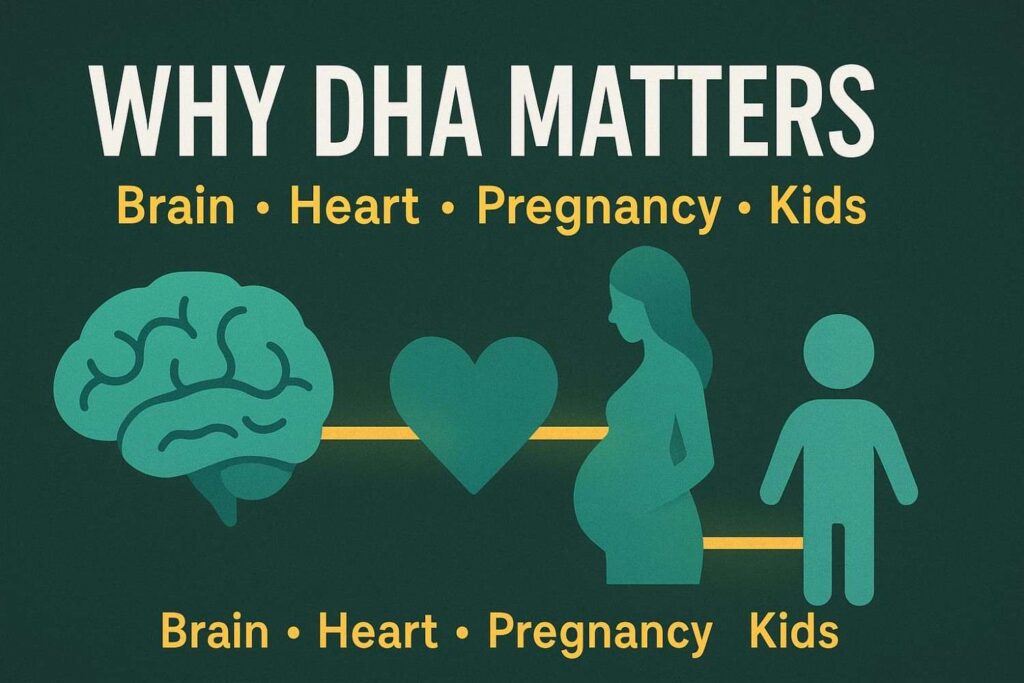
Why DHA Matters for Vegans
One kind of omega-3 fatty acid is DHA. In contrast to ALA (alpha-linolenic acid), which is present in plants, the body uses DHA directly to support essential processes. This is why it’s important:
- Brain health: DHA is an essential component of the brain that promotes focus, mood, and memory.
- Heart health: It lowers inflammation and helps keep cholesterol levels within normal ranges.
- DHA is crucial for the development of the baby’s brain and eyes during pregnancy and lactation.
- Children’s and teens’ developing brains require DHA for focus and learning.
The difficulty? DHA is naturally very low in a plant-based diet. It comes from fish or fish oil for most non-vegans. However, algal oil supplements are a direct plant-based source that vegans require.
This is where the benefits of vegan omega-3 really show. You can promote your health without endangering marine life by using algal oil.
Recommended Vegan DHA daily intake
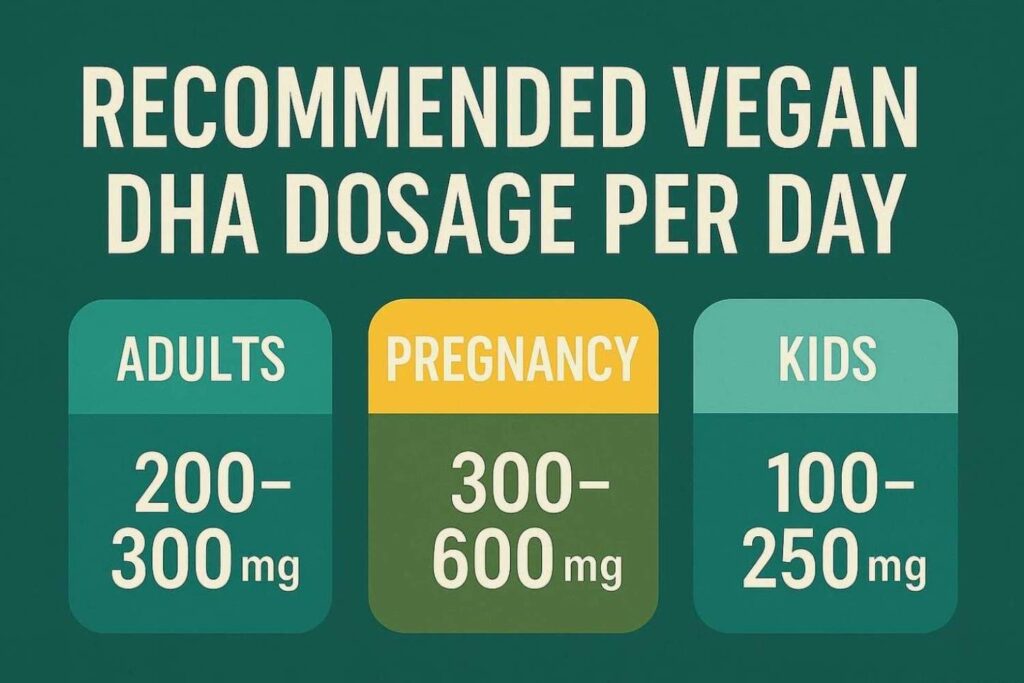
The crucial question now is: how much vegan DHA is sufficient each day? Research studies and experts recommend the following:
- For adults: 200–300 mg per day
- Breastfeeding and pregnancy: 300–600 mg daily
- Children: 100–250 mg daily, based on age
This means that getting the recommended amount of DHA is important for long-term health, regardless of your age-student, working professional, parent, or senior citizen.
Let’s dissect it into different categories.
Daily DHA requirement for Adults
For most healthy adults, a vegan DHA dosage for adults is between 200–300 mg per day.
Why? Since this sum supports:
- Brain activity (memory, concentration, and equilibrium of mood)
- Heart health
- Decreased inflammation
For illustration, let’s say you are a thirty-year-old professional who frequently feels mentally exhausted. Like recharging your brain’s battery, taking 250 mg of algal oil every day can improve your ability to concentrate.
Daily DHA requirement during Pregnancy
During pregnancy, your baby’s brain and eyes are rapidly developing. That’s why vegan DHA dosage for pregnancy is slightly higher – usually 300–600 mg per day.
Babies born to mothers who use DHA are more likely to develop cognitively and visually. DHA may also reduce the risk of preterm birth, according to some research.
For instance, if you are a vegan expecting mother, consider DHA to be the “nutrient bridge” that links your diet to the brain health of your unborn child.
The American Pregnancy Association recommends adequate DHA intake during pregnancy for proper brain and eye development of the baby.
Daily DHA requirement for Kids & Teenagers
For children and teens, DHA plays a key role in brain growth, focus, and immunity. Recommended vegan DHA dosage for kids is about 100–250 mg/day, depending on age.
Example: If your child is struggling with concentration at school, adding DHA to their diet may help with focus and overall development.
Real-Life Results: What 300mg DHA Actually Did for Me
I started with 200mg thinking it was enough. Six months of no real change. Then I jumped to 300mg consistently.
By week 4, afternoon brain fog lifted. By week 8, my focus lasted all day. By week 12, I couldn’t imagine life without it.
The difference? I finally met the minimum dosage my brain actually needed.
Most people make this mistake — they start too low, see no results, and give up. Don’t be that person.
300mg is the minimum. Not a suggestion. A requirement.
Vegan DHA vs Omega-3 from Flaxseed, Chia & Walnuts
Many vegans believe that eating walnuts, chia seeds, or flaxseeds is enough to meet their omega-3 needs. These foods are healthy and rich in ALA (a type of omega-3), but here’s the problem-your body can only convert a small amount of ALA into DHA (around 5–10%).
That means even if you eat these foods daily, your body may still not get enough DHA.
For example, one tablespoon of flaxseed contains ALA, but only a small part of it turns into DHA in your body.
That’s why many experts suggest taking a direct DHA supplement, especially for vegans.
Bottom line: Vegan omega-3 foods in India are great for overall health, but they are not a reliable replacement for DHA.
If you’re vegan and want to make sure you’re getting enough DHA, the easiest way is to use a clean, algae-based supplement.
Not sure which form works better? Explore our guide on liquid vs capsule vegan DHA in India for a clear comparison.
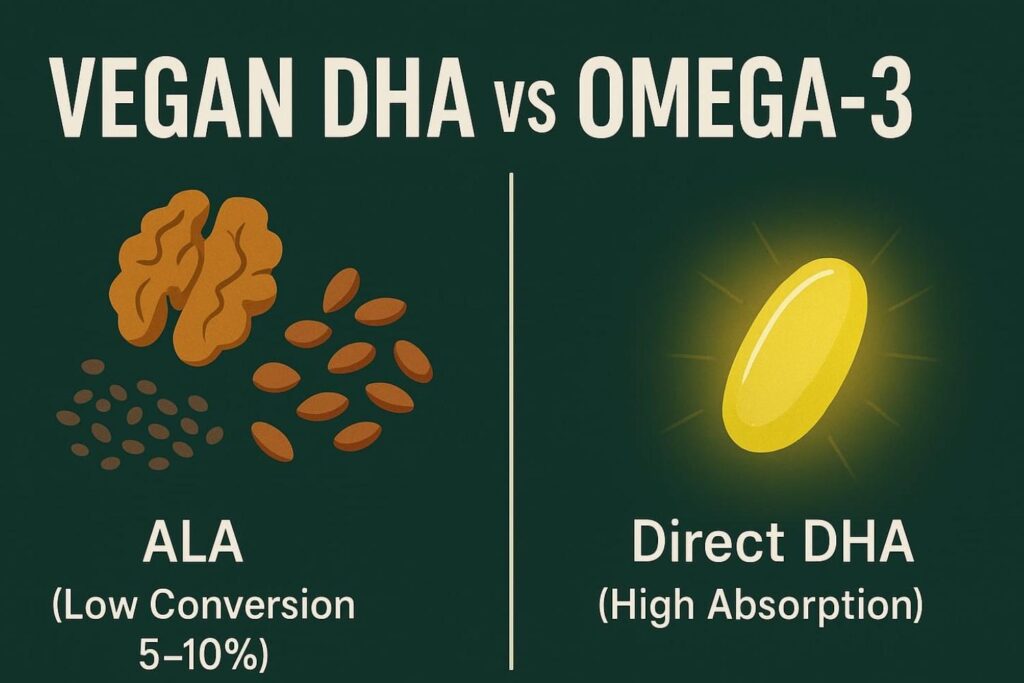
Research from the National Institutes of Health shows that the body converts only a small percentage of ALA into DHA.
How to Choose a Vegan DHA Supplement
Choosing a vegan DHA supplement doesn’t have to be confusing. Once you know what to look for, it becomes much easier to pick the right one for your daily needs.
Here are a few simple things to check before buying:
- Go for algal oil (not plant seeds)
Look for DHA made from algae. It’s the only direct plant-based source of DHA and works much better than relying on flaxseed or chia. - Check the DHA dosage clearly
Make sure the supplement provides at least 200–300 mg DHA per serving. This helps you meet your daily requirement without guessing. - Purity matters
Choose products that are free from heavy metals and toxins. Clean sourcing is important, especially for daily use. - Look for third-party testing
This ensures the supplement is safe, high-quality, and actually contains what it claims. - Choose the right form
Capsules are easy and convenient for most people. Liquid DHA can be a better option for kids or those who don’t like swallowing pills.
Quick Tip
If you’re vegan, the easiest and most reliable way to meet your DHA needs is to use a clean, algae-based supplement consistently.
Not sure which one to choose? Check the best vegan DHA supplements in India to find the right option based on dosage, quality, and value.
- Check this plant-based DHA supplement
- Shop trusted vegan DHA supplements here
- Find top vegan DHA supplements here
Here’s a detailed guide to help you choose the best vegan omega-3 supplement based on quality and dosage.
When to Take Vegan DHA – Morning or Night?
When to take DHA supplements is one of the most frequently asked questions. Is it better to take it at night or in the morning?
The fact is, it doesn’t really matter. Timing is not as important as consistency. On the other hand, DHA is better absorbed when taken with meals.
For instance, taking your supplement at breakfast with avocado toast is ideal.
Possible Side Effects & Safety of Vegan DHA
In general, DHA is quite safe, especially when consumed in the recommended dosages. However, some people might encounter:
- Mild upset stomach
- Burping is less common with algae oil than fish oil.
- Soft capsules that leak if not properly stored
Selecting a high-quality supplement and following the suggested how much DHA do vegans need are crucial. If you take any medications or have any medical conditions, always get advice from your doctor.
Frequently Asked Questions (FAQ)
1. Are DHA supplements necessary for vegans?
Because plant-based foods like flax, chia, and walnuts only contain ALA, which converts poorly into DHA, the majority of vegans do benefit from taking DHA supplements. Your body will receive adequate DHA for heart, brain, and eye health if you take a direct algal oil supplement.
2. What is the recommended vegan DHA dosage per day?
For adults, the typical vegan DHA dosage is 200–300 mg daily. Pregnant and breastfeeding women may need 300–600 mg, and kids usually need 100–250 mg depending on age. Always consult your doctor before starting any supplement.
3. Are vegan DHA supplements safe for kids to take?
Yes, children can take 100–250 mg of vegan DHA per day. It promotes learning, concentration, and brain development. Always pick a product made especially for kids.
4. Is algal oil a better omega-3 source than chia or flaxseed?
Indeed. Although chia and flaxseed are high in ALA, only 5–10% of them are converted to DHA. The most dependable vegan source of DHA is algae oil, which delivers it directly.
5. Should I take my DHA supplements at night or in the morning?
DHA is best taken with meals for optimal absorption, but you can take it whenever you want. Consistency is more important than timing.
If you’re serious about your brain, heart, and long-term health, don’t leave DHA to guesswork.
Don’t guess your DHA intake-find the best options available in India here.
Final Thoughts
I wasted almost a year eating flaxseeds daily – thinking I was covered.
I was not.
The moment I understood vegan DHA dosage properly – 200 to 300 mg daily from algal oil – things started shifting. Slowly but clearly.
Better focus by week 6. Less afternoon fatigue. Sharper mornings.
Flaxseeds are good food. Walnuts are good food. But they are not DHA. Your brain needs DHA directly – and algal oil is the only clean plant-based way to get it.
If you are vegetarian or vegan in India, start simple. One algal oil capsule daily. Consistent. With food.
Do not overthink it. Do not wait for the perfect supplement.
Just start. Your brain will show you the difference in 6 weeks.
About the Author
Kamal Mishra is a health & nutrition writer and vegan wellness advocate. He is the founder of VeganVitaa – India’s trusted vegan DHA resource for plant-based families.
Further Reading on VeganVitaa:
For more in-depth information, explore our related guides below to better understand vegan DHA, algal oil, and choosing the right supplement. Blog
- Omega-3 & DHA Deficiency Symptoms
- Vegan Omega 3 for High Triglycerides in India
- Best Vegan Omega 3 for Men in India
Disclaimer: This post contains affiliate links. If you buy through these links, I may earn a small commission at no extra cost to you. It helps me keep sharing useful content with you.

Pingback: How Much Omega-3 Do You Really Need Daily? For everyone
Pingback: Top 10 Vegan DHA Brands in India – Honest Comparison
Pingback: How Long Does Vegan DHA Take to Work? Weekly Results
Pingback: Vegan Omega 3 for Kids: Brain Growth, Memory & Focus Guide
Pingback: Algal Oil DHA vs Flaxseed Omega 3: Better Choice 2025
Pingback: Fish Oil vs Vegan Omega 3: India’s 2025 Clean DHA Guide
Pingback: Best Algal Oil India 2025: Pure Vegan DHA Your Brain Deserve
Pingback: Vegan DHA vs. Fish Oil: Which Is Better for Brain & Body?
Pingback: Best Algal Oil in India: Choose Clean, Choose Kind
Pingback: Fish Oil vs Algal Oil: Which Omega-3 Truly Cares?
Pingback: Vegan Omega 3 Guide: DHA, EPA, ALA & Sources
Pingback: Low Fat Vegan Diet Problems: Are You Getting Enough Healthy Fats?
Pingback: Vegan Omega 3 Stomach Upset India: Causes & Fix
Pingback: Liquid vs Capsule Vegan DHA in India: Which is Better? (2026 Guide)
Pingback: Best Vegan Omega 3 Sources for a Plant-Based Diet (2026)
Pingback: Omega 3 for PCOS in India — Can Vegan DHA Help? (2026)
Pingback: Omega 3 for Eye Health in India- Can Vegan DHA Help? (2026)
Pingback: Omega 3 for Diabetes in India - Can Vegan DHA Help? (2026)
Pingback: DHA for Vegans: The Missing Link to Brain Health (2026)
Pingback: DHA for Brain Health in India — Why Vegetarians Miss It
Pingback: Omega 3 for Heart Health in India — What Vegetarians Miss
Pingback: Best Vegan Omega 3 for Liver Health in India: 2026 Guide
Pingback: Best Vegan Omega 3 for Sleep in India (2026)