
This blog was updated on 17th August 2026 to provide the latest information and researches on Why Algal Oil is the Best Vegan DHA source.
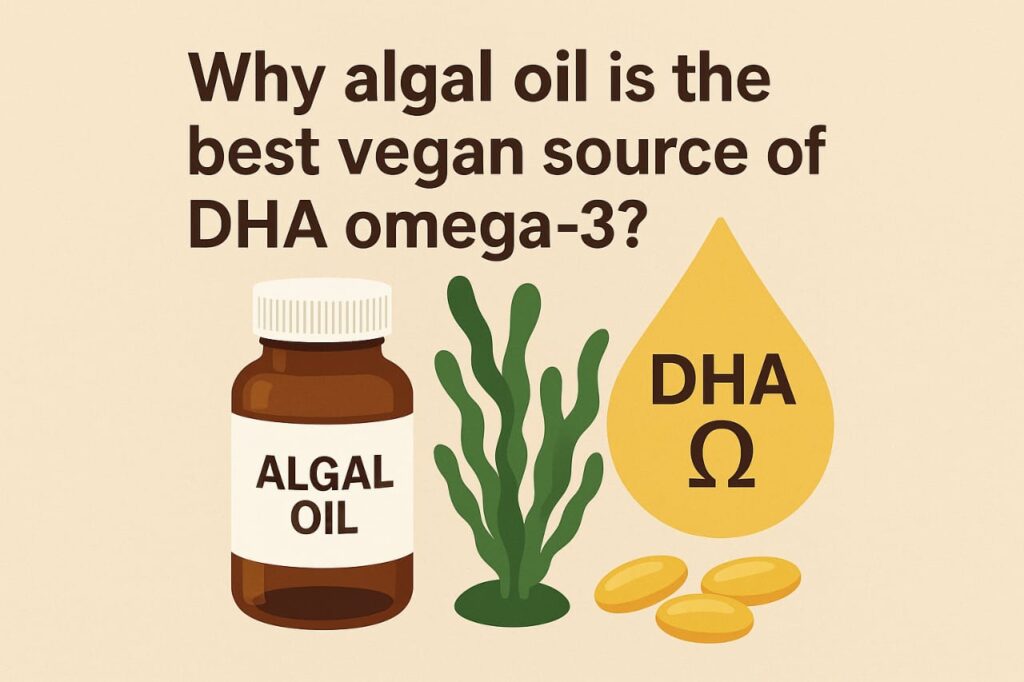
Algal oil is the best vegan DHA source — and as someone who has been vegetarian for 15 years, I wish I had known this earlier.
When I first started researching omega-3 for my own health, the answer everyone gave was fish oil. But I don’t eat fish. I never have. And I wasn’t alone — most Indian vegetarians face the same gap without even knowing it exists.
The question is simple: if your body needs DHA for brain health, eye function, and heart health and you don’t eat fish — where do you actually get it?
The answer surprised me. Fish don’t make DHA themselves. They get it from algae. So the original source of DHA has always been plant-based. Algal oil just cuts out the fish entirely — giving you the same DHA, cleaner, and directly from the source.
This guide explains why algal oil stands out among all vegan omega-3 options, how it compares to fish oil, and what to look for before buying.
If you’re serious about choosing the right product, explore our complete guide on the best algal oil in India (2025–2026), where we compare top options based on DHA content, purity, and real-world usability.
DHA Explained – Why Our Body Needs It
DHA, or docosahexaenoic acid, is a type of omega-3 fatty acid. It’s not just an ordinary nutrient—it’s a vital part of our body itself.
About 30% of the fatty acids in the brain are DHA.
It is abundant in the retina of the eyes.
Given how quickly the brain develops during pregnancy and the early years of life, it is essential.
Put simply, DHA acts as a guard for your eyesight and an energy source for your brain. A lack of it can weaken both.
According to guidance from Harvard T.H. Chan School of Public Health, omega-3 fatty acids like DHA are important for supporting heart health, brain function, and overall well-being.
Research from National Institutes of Health highlights that DHA plays a key role in brain function, eye health, and overall cellular development.
Vegan Omega-3 Sources: Helpful but Limited
Vegans often rely on foods like:
- Flaxseeds
- Chia seeds
- Walnuts
- Hemp seeds
These foods are delicious! They contain alpha-linolenic acid (ALA), which is a type of omega-3 fatty acid. Here’s the issue, though:
ALA needs to be transformed into DHA within the body. Additionally, that conversion rate is extremely low, frequently below 5%.
This implies that in order to obtain adequate DHA for the health of your brain and eyes, you would need to consume large quantities of flax or chia. Not very useful, is it?
We therefore require a direct source of DHA. Algal oil is the solution.
For a complete understanding of plant-based omega-3, you can read our detailed Vegan Omega-3 Guide.
What is Algal Oil?
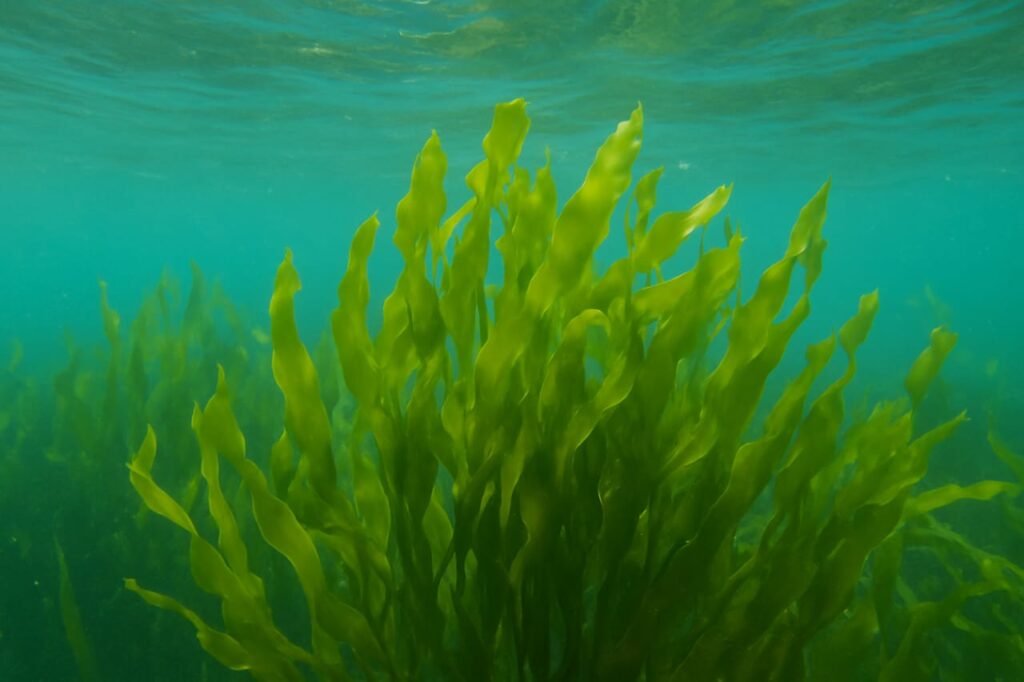
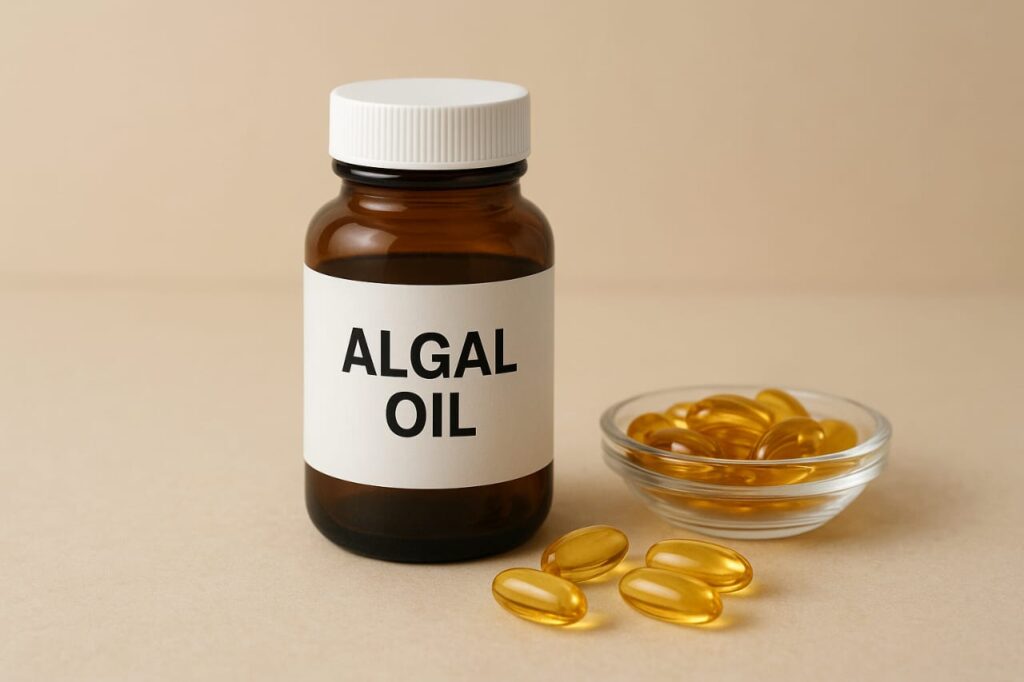
Oil derived from microalgae is known as algal oil.
It may surprise you to learn that fish do not produce DHA on their own. After eating algae, they keep DHA stored in their bodies. DHA is essentially obtained second-hand-through the fish-when people consume fish oil.
Algal oil allows you to get directly to the source, which is algae. Because it is plant-based, clean, and direct, experts frequently claim that algal oil is the best vegan DHA source.
If you’re new to this topic, start with our guide on what algal oil is and how it provides a clean vegan source of DHA omega-3.
How Algal Oil Is Produced (Simple Overview)
Algal oil is produced from marine microalgae grown in controlled environments. This process avoids ocean contamination and ensures a cleaner source of DHA.
The oil is extracted, purified, and tested to maintain consistent quality. This controlled method is one of the reasons why algal oil is considered a reliable vegan omega-3 source.
Why Algal Oil is the Best Vegan DHA Source
Let’s divide it into straightforward points:
1. Direct DHA
No conversion is required. You get DHA from algae oil in a form that your body can use right away.
2. Free of Pollution
Microplastics, heavy metals, and mercury can occasionally be found in fish oil. Algal oil is pure and safe as it comes from algae raised in carefully monitored, clean tanks.
3. Eco-friendly and vegan
Overfishing is the source of fish oil. Lab-grown algae are the source of algae oil. It is cruelty-free and environmentally friendly.
4. Scientifically Verified
Similar to fish oil, algal oil has been shown to increase blood DHA levels. The same advantage, but without the drawbacks.
In short: whether you care about health, environment, or ethics – it all points to one truth: Among plant-based options, algal oil stands out as a strong source of DHA.
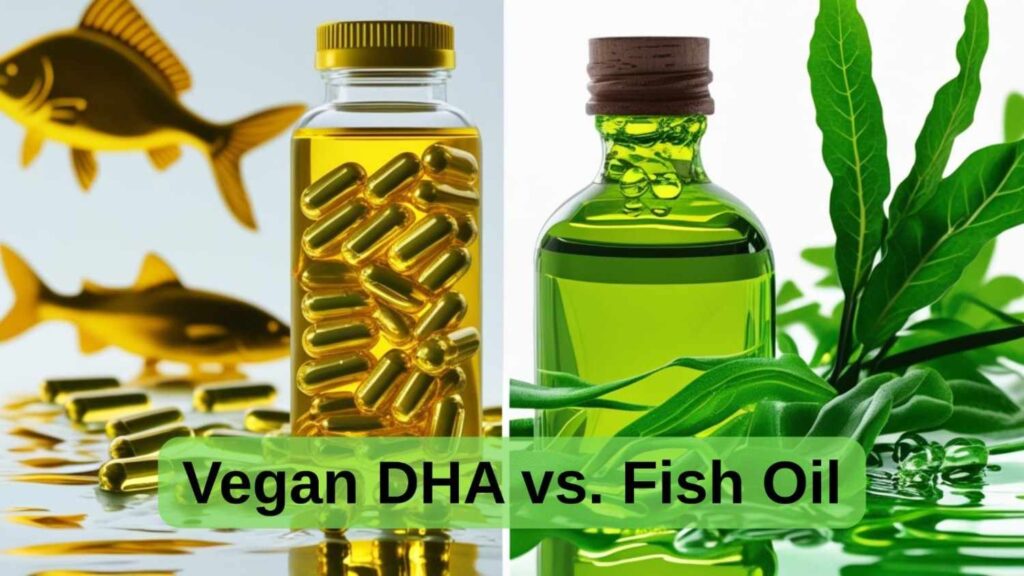
Algal Oil vs Fish Oil: Which is Better?
| Feature | Fish Oil | Algal Oil |
| Source | Fish (via algae indirectly) | Directly from algae |
| Vegan-friendly | No | Yes |
| Pollution risk | Higher (mercury, plastics) | None |
| Sustainability | Overfishing issues | Eco-friendly |
| Taste/smell | Fishy burps | Neutral taste |
That’s why many people now agree algal oil is the best vegan source of DHA omega 3, giving the same benefits without harming fish.
Algal Oil DHA Benefits
Now, let’s look at why these matters for your body:
Brain Health
- DHA supports memory, focus, and mood.
- Students and working professionals report better concentration.
Eye Health
- Helps protect against age-related eye problems.
- Reduces dry eyes and supports sharper vision.
Heart Health
- Lowers triglycerides (unhealthy fats in blood).
- Supports healthy blood pressure and circulation.
Pregnancy & Infants
- Essential for baby’s brain and eye development.
- Many prenatal supplements now use algal oil instead of fish oil because it’s safer.
So, when people talk about algal oil DHA benefits, they mean benefits for your whole body-from mind to heart.

How to Add Algal Oil to Your Vegan Diet
- Supplements (Capsules)
- The easiest way. Just one capsule daily gives enough DHA.
- Many brands now market it as the best vegan DHA supplement.
- Fortified Foods
- A few plant milks and formulas for infants include algal oil for extra nutrition.
- Dosage
- Adults: 200–400 mg DHA daily
- Pregnancy: 400–600 mg daily (always consult your doctor first)
Common Mistakes When Choosing Algal Oil
Many people choose omega-3 supplements without checking key details.
- Not checking DHA per serving
- Ignoring source clarity (algae vs blend)
- Overlooking additives
- Choosing only based on price
Understanding these basics can help you make a better decision.
To make smarter choices, you can also read our guide on how to read omega-3 labels and understand DHA, EPA, and ingredient quality clearly before buying.
A Personal Note
Before I understood DHA, I assumed my vegetarian diet covered everything. Clean food, no processed meals, regular exercise. But brain fog and low focus kept showing up — and I kept blaming stress.
When I finally looked into it, the answer was DHA. And when I switched from generic omega-3 supplements to algal oil specifically, the difference was noticeable within 6-8 weeks. Clearer thinking, steadier energy, less afternoon fatigue.
No fishy smell. No ethical compromise. Same DHA your brain actually needs.
FAQs
Q1. Is algal oil as good as fish oil?
Yes — and in some ways better. Algal oil provides the same bioavailable DHA as fish oil, confirmed by multiple studies. But it comes without mercury risk, without fishy burps, and without any animal product. For vegetarians and vegans, it’s simply the cleaner path to the same result.
Q2. Can children take algal oil DHA?
Yes — and for growing children, it’s one of the most important supplements to consider. DHA directly supports brain development, focus, and vision during the early years. Look for child-appropriate doses and plant-based capsule formats. Always consult your paediatrician before starting.
Q3. Is algal oil safe during pregnancy?
Yes — it’s actually the preferred DHA source during pregnancy for vegetarian mothers. Many prenatal supplements now use algal oil specifically because it’s free from mercury and ocean contaminants. The baby’s brain and eye development depend on DHA from the earliest weeks.
Conclusion: The Better Option
For vegetarians and vegans in India, algal oil is the best vegan DHA source — and the reasoning is straightforward.
Fish don’t make DHA. They get it from algae. So algal oil simply removes the middleman — giving you the same omega-3 your brain, eyes, and heart depend on, directly from the original source. No fish. No mercury. No ethical compromise.
Whether you’re a student managing a heavy mental load, a pregnant mother building your baby’s brain, or someone in their 50s trying to stay sharp — the gap is the same. And the fix is the same.
300mg of algal DHA daily. With a meal. Consistently.
I’ve been vegetarian for 15 years. This one addition made a quiet but real difference. It can do the same for you.
If you’re planning to choose a high-quality option, you can explore our detailed comparison of the best algal oil supplements in India (2025–2026), where we break down purity, DHA content, and overall value.
About the Author
Kamal Mishra is a health & nutrition writer and vegan wellness advocate. He is the founder of VeganVitaa – India’s trusted vegan DHA resource for plant-based families.
Further Reading on VeganVitaa:
For more in-depth information, explore our related guides below to better understand vegan DHA, algal oil, and choosing the right supplement. Blog
- Vegetarian Omega-3 foods in India
- Best Vegan DHA supplements in India
- Best Vegan & Vegetarian Omega 3 Capsules in India
Disclaimer: This article is for educational purposes only. Always consult your paediatrician before starting new supplements.

Pingback: Vegan DHA: Why Vegans Need It & Common Myths
Pingback: Omega 3 Deficiency Symptoms in Vegans: Identify and Fix Them
Pingback: Is flaxseed enough for omega-3? The Truth About ALA vs DHA
Pingback: How to Read Omega 3 Label (So Vegans Don’t Get Misled)
Pingback: Best Vegan Omega 3 Capsules in India(2026): Clean, High-Strength Options
Pingback: DHA Deficiency in Indian Vegetarians and Vegans: Causes & Solutions
Pingback: Do Vegans Need DHA? Signs, Risks & Best Sources
Pingback: Vegan Omega 3 for Glowing Skin in India — Top Picks
Pingback: Vegan Omega 3 vs Ashwagandha in India: Which First?
Pingback: How Is Fish Oil Made? From Fish to Capsules
Pingback: High DHA Vegan Omega 3 in India (2026) – Top 5 Picks