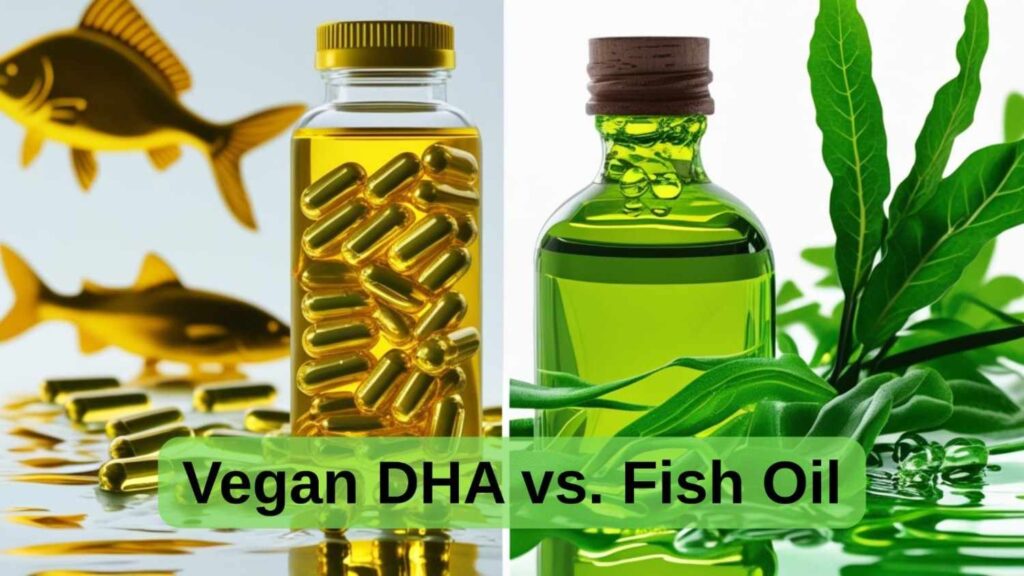
For years I assumed skin issues had one fix, better products. Better face wash, better moisturizer, whatever the ad promised that month.
It was only later that I started paying attention to nutrition as part of the picture, not just what goes on the skin, but what goes into the body. That’s what led me to look closely at vegan omega 3 for glowing skin in India, less out of vanity and more out of curiosity about whether the science actually held up.
What I found was more nuanced than most product pages suggest. Some of it is genuinely backed by research. Some of it is stretched further than the evidence supports. This article goes through both, along with the products themselves, using what’s actually verifiable rather than what sounds convincing on a label.
For a broader look at algal oil products in general, I’ve already covered that in my Best Algal Oil India 2025-26 guide.
I’ve been vegetarian for over a decade, so DHA gaps aren’t theoretical for me, they’re something I’ve had to actively manage.
Does Omega-3 Actually Help Your Skin? What the Evidence Says
Most product pages throw around words like “skin barrier” and “hydration” without ever explaining what they mean. Here’s what’s actually going on.
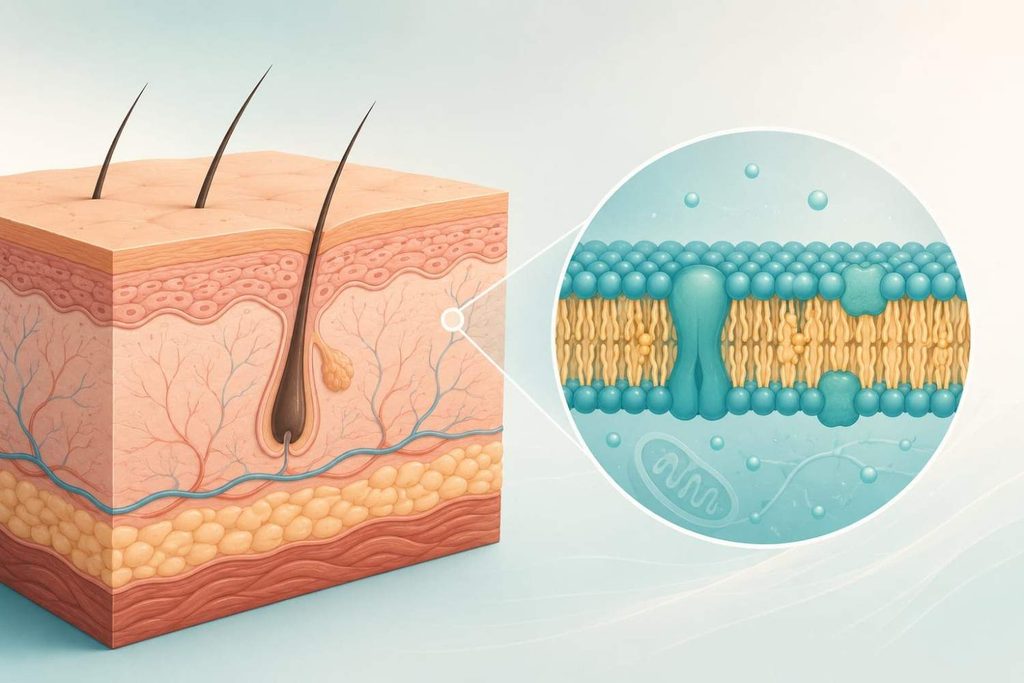
EPA and DHA are literally part of the structure of your skin cells, built into the membranes. They’re linked to ceramide levels in the skin, and ceramides play a role in how well skin holds onto moisture. The body can’t make either fatty acid on its own. Food or a supplement is the only way in.
There’s a real anti-inflammatory side to this too, not just something brands print for effect. Omega-3s have actually been studied for conditions like eczema and psoriasis, not just for a nice glow.
Hydration is where the data gets more concrete. One PubMed-published study found fish oil supplementation cut down water loss through the skin and improved hydration, but the changes only started showing up around 60 days in. Not overnight, and definitely not from a single dose.
There’s also some research linking omega-3 intake to lower UV-related inflammation in skin, though this area is studied far less than hydration and barrier function.
Now, the part most blogs skip. This evidence mostly comes from smaller clinical studies, not massive trials. It’s promising, not proven beyond doubt. What it doesn’t establish:
- That any one supplement will visibly change your skin in a fixed number of weeks
- That oral omega-3 works exactly like topical omega-3 applied directly to skin
- That results look the same for everyone, regardless of diet or starting omega-3 levels
That distinction rarely makes it into product marketing, but it matters.
DHA vs EPA for Skin — Does the Difference Matter?
Most labels just say “omega-3” like it’s one single ingredient. It isn’t.
DHA and EPA behave differently once they’re in the body, and skin research actually treats them separately.
DHA: The Structural One
DHA makes up a bigger share of cell membrane structure, including in skin cells. It’s more tied to keeping membranes flexible and intact over time.
EPA: The Anti-Inflammatory One
EPA is more closely linked to the inflammation pathway. It shows up more often in studies about reducing redness, irritation, and inflammatory skin conditions.
Neither one is simply “better.” They do different jobs:
- A DHA-heavy product supports skin structure well, but may do less on the inflammation side
- An EPA-heavy product may help more with redness or irritation, but less with structural support
- Most vegan omega-3 products in India lean DHA-dominant, since that’s what algal oil naturally produces
If inflammation-related skin issues are your main concern, that’s worth checking on the label rather than assuming any omega-3 product covers everything equally.
Why Consider Algal Omega-3 Instead of Fish Oil?
Setting the vegetarian angle aside, there’s a practical reason algal oil has become the smarter choice, even for people who’d normally take fish oil.
The Contamination Problem
Fish accumulate whatever’s in the water they live in. Heavy metals, microplastics, ocean pollutants, all of it can end up in the extracted oil. Algal oil sidesteps this entirely, since it’s grown in a controlled tank, not the ocean.
The Oxidation Issue
Fish oil tends to oxidize faster once exposed to heat or air, which is part of why some fish oil capsules have that strong fishy aftertaste. Oxidized oil isn’t just unpleasant, it’s also less effective. Algal oil is generally more stable when stored properly.
The Label Transparency Problem
This is where I’ve run into the most trouble while researching products for this site:
- Several vegan omega-3 listings advertise a big total mg number without separating out actual DHA content
- More than one product got dropped from earlier articles because the Amazon number didn’t match the brand’s own site
- A clean, consistent label is often a better-quality signal than the brand name itself
A Linus Pauling Institute review on essential fatty acids confirms EPA and DHA play a direct, structural role in skin barrier health, not just a general wellness claim.
If you want the full picture on why algal oil holds up better on paper, I’ve gone into more depth in Why Algal Oil Is the Best Vegan DHA Source.
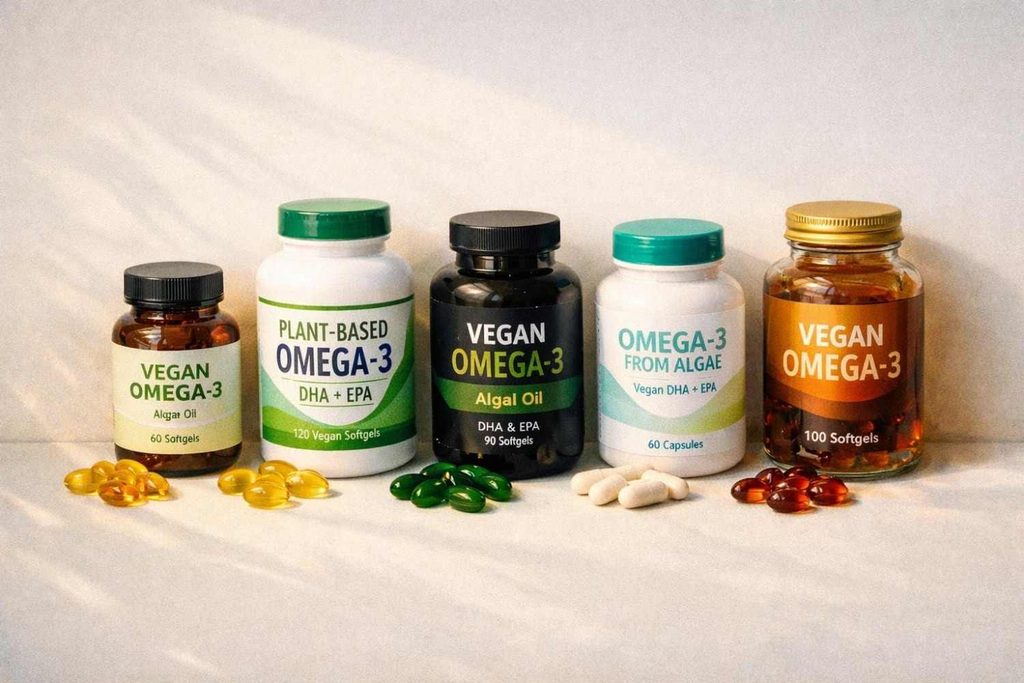
Top 5 Vegan Omega 3 for Glowing Skin in India — 2026
Before listing anything here, I checked each brand’s product page against its Amazon listing and, where possible, third-party retailer data. One product got dropped during this process because its skin claim didn’t hold up once I looked closer at customer reviews questioning the actual DHA content.
| Product | DHA/Serving | EPA/Serving | Skin Claim Source |
| Unived Ovegha | 500mg | Present | Brand listing: Heart, Hair, Skin, Joint, Brain & Eye |
| Naturyz Algae + Sea Buckthorn | 400mg | Present | Sea buckthorn, dedicated skin ingredient |
| Miduty Vegan Omega-3 | 200mg | 140mg | Brand-cited 16-week skin study |
| Neuherbs Veg Omega 3 | 200mg | 100mg | Label: Heart, Brain, Skin & Joint |
| Tata 1mg Vegetarian Omega | 400mg | – | Product data: Skin Health as target concern |
Note: Prices shift often, so check current listings before buying.
None of these five paid for placement here, the ranking is based purely on DHA amount, source verification, and how directly each brand connects its product to skin health.
All five products here have one thing in common that mattered most while shortlisting them, a real, brand-stated connection to skin health, not just general omega-3 marketing.
1. Unived Ovegha — Highest DHA With a Direct Skin Claim
DHA: 500mg per serving
Source: 100% algal oil
This is the strongest option on the list for anyone who wants both a high DHA number and a brand that specifically speaks to skin and hair. Unived lists skin support directly alongside heart, joint, and brain benefits, and at 500mg, it also delivers the highest DHA concentration among the five products compared here.
The brand publishes a Certificate of Analysis for each batch, which is a good transparency signal in a category where that’s often missing.
Best suited for: Anyone who wants the strongest DHA dose along with a product that’s explicitly positioned for skin.
2. Naturyz Algae + Sea Buckthorn — Two Skin-Relevant Ingredients in One Capsule
DHA: 400mg per serving
Source: Algal oil, blended with sea buckthorn oil
This one goes about it a bit differently. Sea buckthorn oil has been used for skin repair and its antioxidant properties long before algal DHA became mainstream, and here it’s paired with 400mg of DHA in the same capsule. Two ingredients, two different pathways, working toward the same goal.
Best suited for: Someone who’d rather not rely on DHA alone and like the added ingredient angle.
3. Miduty Vegan Omega-3 — Backed by an Actual Skin Study
DHA: 200mg per serving
EPA: 140mg per serving
Source: Algal oil
This is the one product here where the brand actually points to a study, a 16-week trial showing improvements in skin hydration and acne from algae-derived omega-3. The DHA number is lower than the top two picks, but it’s also the only one on this list backed by something more concrete than a general claim.
Best suited for: Anyone who cares more about seeing actual study data than chasing the highest DHA number.
When I first came across this one, I almost skipped it because of the lower DHA number. But the study reference is what changed my mind, most brands don’t bother citing anything specific.
4. Neuherbs Deep-Sea Veg Omega 3 — Clean Label, Skin Listed on the Bottle
DHA: 200mg per serving
EPA: 100mg per serving
Source: Algal oil
Neuherbs lists “Heart, Brain, Skin & Joint” directly on the product itself, and both the brand’s site and Amazon listing state the same DHA number consistently, something several other brands in this category struggle with.
Best suited for: Buyers who want a verified, no-surprises label with skin listed as one of the core benefits.
5. Tata 1mg Vegetarian Omega — Trusted Name with Skin Listed as a Target Concern
DHA: 400mg per serving
Source: 100% algal oil
Tata 1mg is one of the most recognized names in Indian supplements, and their vegetarian omega-3 product data specifically lists skin health as a target concern, alongside heart and brain support.
Best suited for: First-time buyers who want a well-known brand at a reasonable price, with skin as part of the stated benefit list.
If you’re also looking at hair specifically, I’ve covered that separately in Best Vegan Omega-3 for Hair Loss & Growth in India.
Omega-3 Supplements vs Skincare Products — Inside-Out vs Outside-In
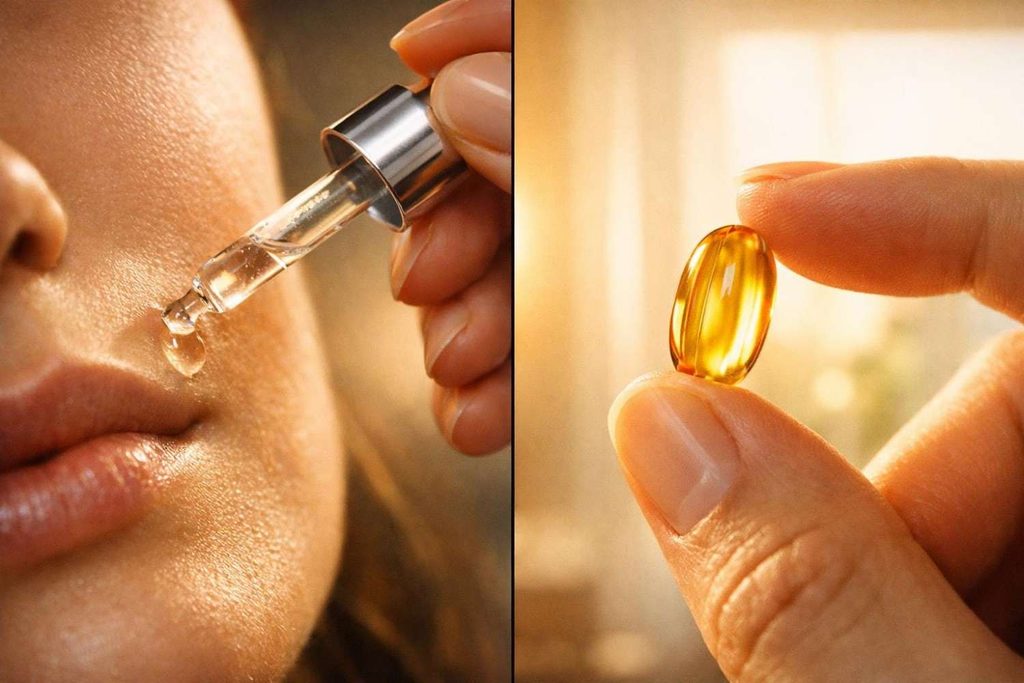
A serum works exactly where you apply it. Nutrition works differently, through pathways inside the body that eventually show up on the surface.
Neither one replaces the other. A good vitamin C serum still does its job on the skin surface directly. Omega-3, taken orally, works through cell membranes and inflammation pathways from the inside. The two aren’t competing approaches, they’re different layers of the same goal.
Here’s a simple way to think about it:
- Topical products act fast, often visible within days, but the effect is usually surface-level and temporary
- Oral omega-3 works slower, but the changes (cell membrane structure, hydration from within) tend to be more foundational
- Neither one fixes issues rooted in something else entirely, like a medical skin condition or a nutrient deficiency unrelated to omega-3
If you already have a skincare routine, adding a vegan omega-3 supplement isn’t about replacing it. It’s closer to giving your skin support from a direction a topical product simply can’t reach.
Before picking a product, it also helps to actually understand what’s on the label instead of trusting the marketing claim. I’ve broken that down separately in How to Read Omega 3 Label.
How Long Does Vegan Omega-3 Take to Affect Skin?
There’s no fixed number here, no matter what a product page promises.
The specific study referenced earlier showed measurable hydration changes at the 60-day mark. That’s one data point, not a universal timeline, so think of it as the outer end of a realistic range rather than a fixed number. That’s roughly two months of taking it daily, without skipping.
A few things influence how fast, or slow, this shows up for you:
- Your starting omega-3 levels matter. If your diet has been low in omega-3 for a long time, initial changes may take longer to become noticeable
- Consistency matters more than dosage. Taking it occasionally, then stopping, then starting again, resets the clock every time
- Individual response varies. Age, skin type, and overall diet all play a role, so two people taking the same product won’t necessarily see results on the same timeline
If someone tells you a supplement will visibly change your skin in a week, that’s not something the research supports. Omega-3 works through gradual tissue changes, not a quick fix.
The realistic expectation is somewhere between four to eight weeks for early signs, with more consistent results building up over two to three months.
Who Shouldn’t Expect Omega-3 to Fix Their Skin?
This part rarely makes it into product marketing, but it matters more than most of the rest of this article.
Omega-3 supplements support general skin health. They aren’t designed to treat, or fix, actual skin conditions. If any of the following apply to you, a supplement isn’t the right first step:
- Persistent acne that hasn’t responded to basic skincare or lifestyle changes
- Diagnosed eczema or dermatitis
- Any unexplained rash that keeps returning
- Sudden pigmentation changes with no clear cause
- Significant, rapid changes in skin or hair that came on unexpectedly
A dermatologist should be handling those, not a supplement. Once an underlying issue is actually identified and being treated, omega-3 can fit into the broader routine, but it’s not something to reach for the moment your skin starts acting up out of nowhere.
One more thing worth mentioning, if you’re on any blood-thinning medication. Higher DHA doses can mildly affect platelet function, so check with your doctor before starting a high-dose supplement, vegan source or not.
How to Choose a Vegan Omega-3 for Skin
Once you strip away the marketing, choosing the right product comes down to a handful of practical checks.
DHA and EPA amount
Check the exact mg per serving, not just the total oil weight. A “1000mg” bottle can still deliver very little actual DHA.
Algae source
Confirm it is algal oil, not flaxseed passed off as omega-3. Flaxseed gives you ALA, which the body converts to DHA very inefficiently.
Serving size
Some products need two capsules to hit their stated DHA number. Check what “per serving” actually means before comparing prices across brands.
Third-party testing
Look for a Certificate of Analysis or batch-testing claim. It’s not a guarantee of quality, but its absence is a red flag worth noticing.
Oxidation and freshness
Algal oil degrades over time, especially with heat exposure. Manufacture date and storage instructions matter more than most buyers realize.
Unnecessary additives
A few stabilizers like tocopherol are common and generally fine. A long list of unfamiliar ingredients on a “simple” DHA supplement is worth a second look.
Manufacturer transparency
Does the brand’s own website match what’s written on the Amazon listing? A mismatch between the two is one of the clearest quality red flags in this entire category, and it’s come up more than once while researching products for this site.
None of these checks take more than a few minutes, but together they separate a genuinely good product from one that just has good marketing copy.
FAQs
Q. Which supplement is best for glowing skin?
Among the products covered here, Unived Ovegha stands out for combining the highest DHA (500mg) with an explicit skin and hair claim. Miduty is worth considering too, since it’s backed by an actual clinical study on skin outcomes.
Q. Can I take omega-3 daily?
Yes, for most healthy adults. That’s actually how these are meant to be taken. If you’re on medication or dealing with a health condition, run it by your doctor first.
Q. How long does omega-3 take to improve skin?
Based on what the research shows, early changes usually start around the 4-to-8-week mark, with more noticeable results after two or three months of sticking with it.
Q. Can I put omega-3 capsules directly on my face?
Not really the point of them. These are made for oral use. Puncturing a capsule and dabbing it on your skin isn’t the same as an actual topical product, and there’s not much evidence backing that specific practice.
Q. Is DHA or EPA better for skin?
They do different jobs. DHA supports cell membrane structure, while EPA is more tied to reducing inflammation. Most good products include both, so it’s less about one being better and more about knowing what each contributes.
Q. Does vegan omega-3 help dry skin?
There’s reasonable evidence for this specifically, since several of the hydration studies referenced earlier measured improvements in skin dryness and water loss with consistent omega-3 supplementation.
Conclusion
Vegan omega 3 for glowing skin in India isn’t a marketing gimmick, but it isn’t a miracle fix either. The evidence sits somewhere in between, real, but gradual.
DHA and EPA genuinely support skin barrier function and hydration from the inside, backed by real research, not just supplement copy. What it won’t do is replace a dermatologist for an actual skin condition, or work overnight like a serum promises to.
Out of the five products covered:
- Unived Ovegha leads on both DHA amount and direct skin positioning
- Miduty stands out for having actual clinical data behind its skin claim
- Naturyz, Neuherbs, and Tata 1mg all bring something different to the table, extra ingredients, a cleaner label, or just a name people already trust
Whatever you pick, give it actual time. Two to three months is a far more honest timeline than the two weeks some product pages imply.
If you’re vegetarian or vegan and want to understand why DHA gaps happen in the first place, I’ve covered that separately in DHA Deficiency in Indian Vegetarians and Vegans.
About the Author
Kamal Mishra is a health & nutrition writer and vegan wellness advocate. He is the founder of VeganVitaa – India’s trusted vegan DHA resource for plant-based families.
For more in-depth information, explore our related guides below to better understand vegan DHA, algal oil, and choosing the right supplement. Blog
Disclaimer: EPA, DHA and pricing figures are based on label information available at time of research. Always verify current Amazon India listing details before purchasing — formulations and prices change.
Disclaimer: This article is for educational purposes only. Always consult your paediatrician before starting new supplements.
Disclaimer: This post contains affiliate links. If you buy through these links, I may earn a small commission at no extra cost to you. It helps me keep sharing useful content with you.