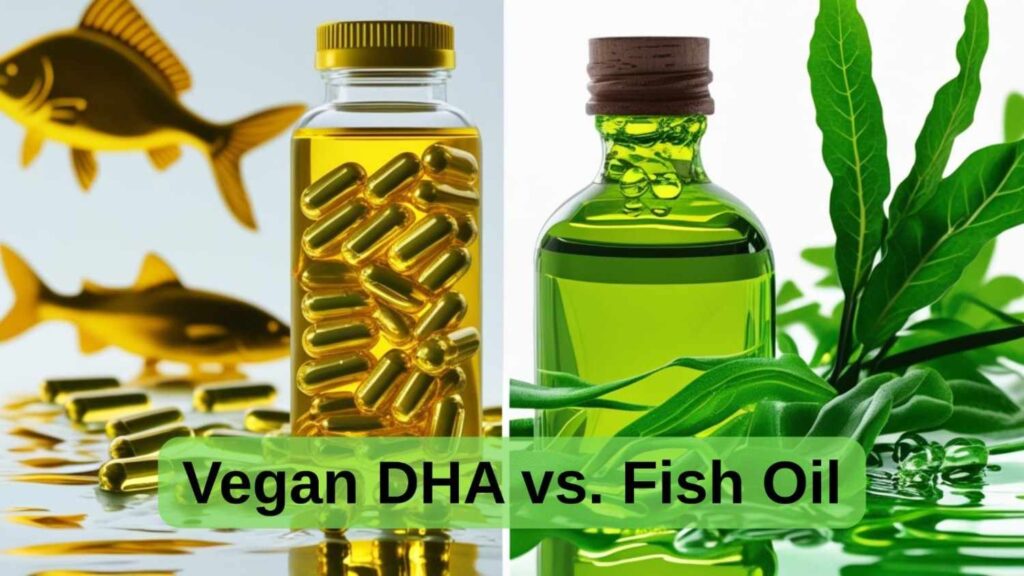
Two bottles, both labelled “algal oil, 500mg per serving.” One mentions 40% DHA somewhere on the box. The other just says 500mg and leaves it at that.
Most people assume both bottles are handing them roughly the same thing. They’re often not, and the gap between them can be bigger than you’d expect. I ran into this myself while comparing products for VeganVitaa, two labels that looked nearly identical turned out to deliver very different amounts of actual DHA once I did the math.
This is where vegan omega 3 DHA percentage actually starts to matter. The 500mg figure only tells you how much oil is packed into each capsule. It says nothing about how much of that oil is actually DHA. A 500mg serving at 40% DHA works out to 200mg of actual DHA. The same 500mg at 20% gets you just 100mg, half as much, sitting under a label that looks every bit as impressive.
For a full comparison of verified high-potency options where this math is already worked out, my Best High DHA Vegan Omega 3 in India guide covers the actual DHA mg figures directly.
What Does “DHA Percentage” Actually Mean?
Algal oil isn’t pure DHA. It’s a blend of several fatty acids, and the percentage figure just tells you how much of that blend is specifically DHA.
- “40% DHA” means 40 out of every 100mg of oil is DHA, the rest is other fatty acids and carrier material
- “20% DHA” means half that concentration sitting in the exact same amount of oil
- A product that skips the percentage and only lists a flat DHA mg number has usually already done this math for you, though it’s worth double-checking rather than taking it on faith
Once you know this one number, a lot of the confusion around two seemingly identical bottles starts making sense.
Why Two “500mg” Bottles Can Deliver Very Different DHA
The math here is simple, but it rarely gets spelled out anywhere on the packaging.
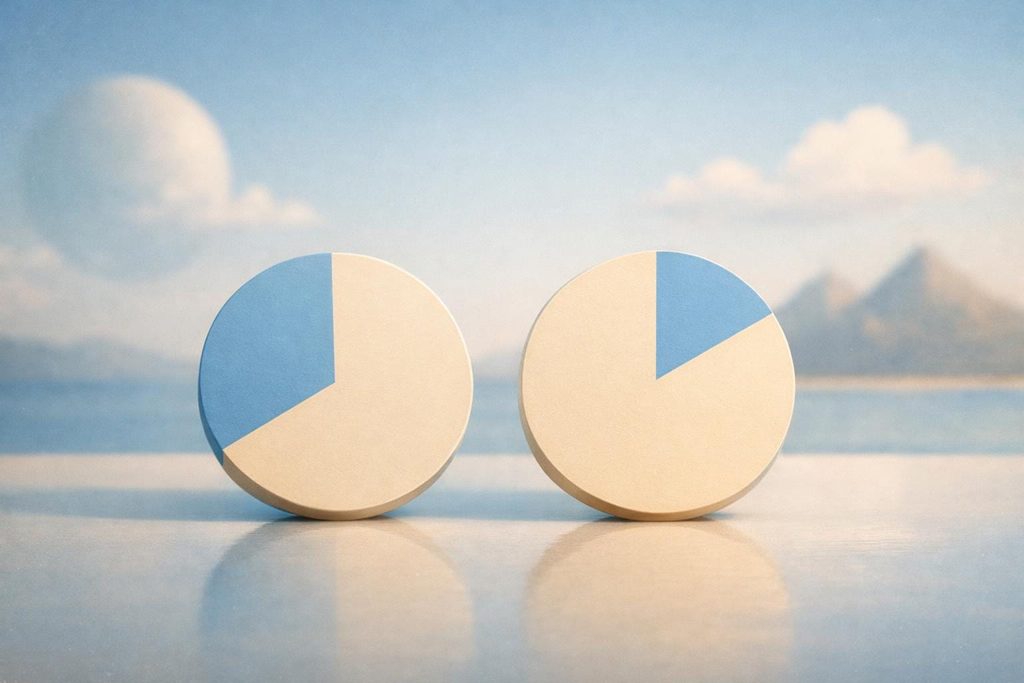
Take a 500mg serving standardized to 40% DHA. That works out to 200mg of actual DHA content. Now take another 500mg serving at 20% DHA, a lower concentration mentioned by at least one Indian brand as a common range in the wider market, though I haven’t independently verified that as a market-wide average. That’s just 100mg of DHA, delivered in an identically sized capsule with an identical headline number.
Neither label is technically false. Both accurately state the total oil weight. But if you’re comparing two products purely by that 500mg figure, you’d have no way of knowing one delivers double the DHA content of the other, and the price tag rarely gives that away either.
This is exactly why checking for a stated DHA percentage, or better yet, an actual mg-of-DHA figure, matters more than the total oil weight ever will.
Vegan Omega 3 DHA Percentage — What the Market Actually Looks Like
Here’s where things get genuinely useful, and where I want to be careful about what’s verified versus what’s a brand’s own claim.
One Indian brand states directly on its own product page that most vegetarian omega-3 products on the market sit in the 10 to 20 percent DHA range, positioning its own 40% formulation as notably higher than that baseline. That’s a single brand’s claim, not an independently verified market average, so I’d treat the specific range with some caution. What I can say from researching other listings for this site is that many vegan omega-3 labels either omit the DHA percentage entirely or leave it out of the prominent front-of-label numbers.
That absence is worth noticing on its own. A brand confident in a high DHA percentage usually says so clearly. One that stays quiet about it isn’t necessarily hiding something, but it does mean you’re working with less information than you’d like.
If you’re trying to compare potency across products properly, my Best High DHA Vegan Omega 3 in India — Top High Potency Picks guide walks through verified DHA mg figures directly, which sidesteps this percentage confusion by working from the actual delivered dose instead.
How to Actually Compare Two Products Using This Number
A short, practical way to check before buying.
- Look for a specific mg-of-DHA figure first, that’s the number that matters most, not the total oil weight
- If only a percentage is listed, multiply it against the total oil weight yourself, don’t assume it’s already been done for you
- Treat “algal oil, 1000mg” with no DHA breakdown as an incomplete label, not a red flag exactly, but a reason to dig further
- Compare percentage claims against the brand’s own product page, not just the Amazon listing, since the two sometimes differ
- Remember that a higher percentage in a smaller total serving can still deliver less DHA than a lower percentage in a larger one, so always come back to the final mg number
None of this requires special math skills. It just means not stopping at the first number a label puts in bold, and treating a total oil figure as a starting point rather than the final answer.
Does a Higher Percentage Always Mean a Better Product?
Not automatically, and this is where I don’t want to oversell the percentage figure either.
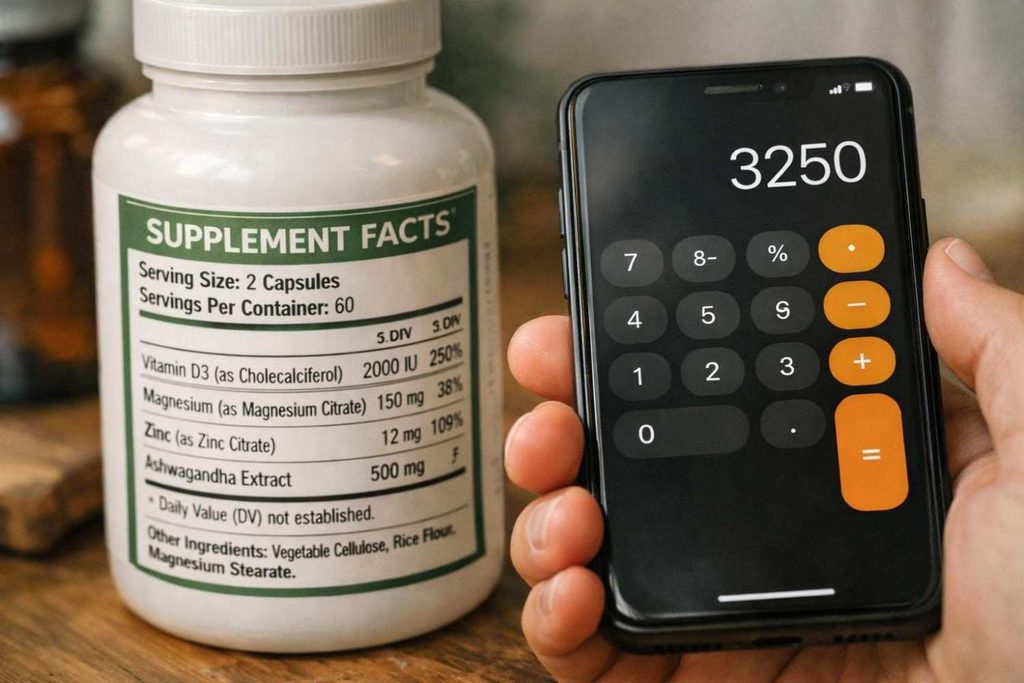
A higher DHA percentage tells you the oil is more concentrated, nothing more. It doesn’t tell you about testing, freshness, capsule quality, or whether the absorption form is efficient. A 40% DHA product with no testing behind it isn’t automatically a smarter buy than a 25% product from a brand that publishes clear lab results.
Percentage is one useful data point in a bigger comparison, not the entire decision on its own. Once you’ve confirmed the actual DHA mg you’re getting, the rest of the usual checks, source, testing, freshness, still apply exactly as they would otherwise. Think of percentage as the first filter, not the final verdict.
Why This Confusion Persists in Indian Supplement Labels
Worth asking honestly why this isn’t clearer to begin with.
Supplement labelling in India, under FSSAI’s rules, requires ingredients and quantities to be declared, but there isn’t a clear, consistent requirement pushing brands to prominently break out DHA as a percentage of total algal oil specifically. Total omega-3 or total oil weight makes for a bigger, more marketable number on the front of a bottle, so that’s usually what gets the prominent placement. The DHA percentage, when it’s disclosed at all, often ends up in smaller text on the back, if it appears at all. For the general framework, the FSSAI’s official site covers how food and supplement labelling is regulated in India.
This isn’t unique to any one brand, and it isn’t necessarily a compliance issue either, since the broader oil quantity is still being disclosed. It’s more a gap in what gets emphasized versus what buyers actually need to make a fair comparison. That gap is part of why I keep coming back to this specific confusion across different posts on VeganVitaa, it genuinely trips up a lot of buyers who are otherwise doing their homework.
FAQs
Q. What’s a good DHA percentage to look for?
There’s no official benchmark, but anything meaningfully above the 10 to 20 percent range some brands describe as typical is worth noting. The final mg-of-DHA number still matters more than the percentage alone.
Q. Why do some labels skip the percentage entirely?
Usually because they’ve already listed a flat DHA mg figure, which covers the same information more directly. If neither number appears, that’s worth treating as an incomplete label.
Q. Can a lower percentage product still be the better buy?
Yes, if the total oil serving is larger, or if testing and freshness are stronger. Percentage alone doesn’t decide product quality.
Q. Is a 40% DHA claim something I should just trust?
Treat it the same way you’d treat any brand claim, worth noting, better if it’s backed by testing information, but not something to accept purely on the strength of the number itself.
Q. Does percentage affect price?
Not in any consistent, verifiable way I could confirm. Price differences across brands come down to several factors, sourcing, testing, brand positioning, not DHA percentage alone.
Conclusion
Vegan omega 3 DHA percentage comparisons come down to one habit worth building, checking what portion of the total oil is actually DHA, instead of stopping at the headline mg figure on the front of the bottle.
A 500mg total-oil serving can mean 200mg of actual DHA or 100mg, depending entirely on a percentage most labels don’t make easy to find. Once you know to look for it, the comparison between two “identical” products stops being a guess.
For a full list of verified options where the actual DHA dose is already worked out, my Best Vegan Omega 3 Under ₹1000 in India guide is a solid place to start comparing.
About the Author
Kamal Mishra is a health & nutrition writer and vegan wellness advocate. He is the founder of VeganVitaa – India’s trusted vegan DHA resource for plant-based families.
For more in-depth information, explore our related guides below to better understand vegan DHA, algal oil, and choosing the right supplement. Blog
Disclaimer: This article is for educational purposes only. Always consult your paediatrician before starting new supplements.