
This blog was updated on 27th February 2026 to provide the latest information and research on Vegan Omega 3 for Athletes.
Introduction
Imagine you have just completed an excellent training session. Legs aching, breathing heavy and heart still pounding. And as you know, muscles will be sore tomorrow morning.
The real challenge for every athlete is not working out, but recovering from it. That is nutrition, and it is not just protein shakes and carbohydrates, but one thing many athletes do not know: omega 3 fatty acids.
If you are vegan or do not eat fish, the question comes to mind- “Am I missing out on Omega 3?” The answer is-absolutely not! Today’s vegan omega 3 for athletes from clean, plant-based sources takes stamina, recovery and overall performance to a whole new level.
It’s not just supplements; it’s fuelling your body without compromising your values.
This is why the demand for vegan omega 3 for athletes is increasing all over the world today.
According to Healthline, Omega-3 fatty acids play a key role in reducing inflammation, improving stamina, and supporting heart health – all of which are essential for athletes.
Why Omega 3 is Important for Athletes
Have you ever noticed that some athletes recover from fatigue more quickly, while others take longer? Omega 3 is the big secret.
What you get:
- Stamina: You can get more blood flow and oxygen when you work out.
- Recovery: Reduces muscle inflammation and speeds up the repair process.
- Performance: Sharpens the brain, improving focus and reaction time.
Think of Omega 3 as engine oil. Without it, a car won’t run smoothly. Similarly, athletes’ bodies can’t function fully without vegan omega 3.
The Science Behind Omega-3 and Athletic Performance
Omega-3 fatty acids, especially EPA and DHA, play an important role in managing inflammation in the body. Intense training creates small amounts of muscle damage and inflammation. While this is normal, excess inflammation can slow recovery.
Research suggests that omega-3 intake may help reduce exercise-induced muscle soreness and support faster recovery. Some studies also show improvements in joint comfort and endurance capacity when omega-3 levels are adequate.
For vegan athletes who do not consume fish, algae-based DHA and EPA can provide a direct source without relying only on ALA from seeds, which converts poorly in the body.
Do Vegan Athletes Need DHA Supplements?
Fish oil is very popular for omega 3. But did you know that fish doesn’t make omega 3 either? It gets it from algae.
Flax seeds, chia seeds, and walnuts are some vegan sources that only contain ALA. The body can convert ALA into EPA and ALA. DHA is converted to DHA, but the conversion rate is very low (less than 10 percent).
The consequences that vegan athletes may have faced include:
- Delayed muscle gain
- Joint stiffness
- Fatigue or tiredness
- Increased risk of injury
This is why vegan omega 3 recovery has become such an important issue today. It’s not just about preventing deficiency, but about maximizing your potential.
How Much Omega-3 Do Athletes Need?
Omega-3 needs can vary depending on training intensity and overall diet.
Most adults benefit from around 250–500 mg of combined EPA and DHA daily. Athletes who train intensely may benefit from staying toward the higher end of that range.
However, exact needs depend on body weight, diet quality, and recovery demands. It’s best to review your overall intake and consult a healthcare professional before starting high-dose supplementation.
For a deeper understanding of general omega-3 requirements by age and lifestyle, you can also read our detailed guide on how much omega-3 you really need daily.
Signs You May Be Low in Omega-3
Some athletes may not realize they are low in omega-3. Here are a few common signs to watch for:
- Slow recovery after workouts
- Joint stiffness, especially after training
- Frequent muscle soreness
- Low endurance or unusual fatigue
If you notice these regularly, it may be helpful to review your diet and overall omega-3 intake.
You can also read our detailed guide on omega-3 deficiency symptoms in vegans to understand this better.
Best Vegan Sources of Omega 3 for Athletes
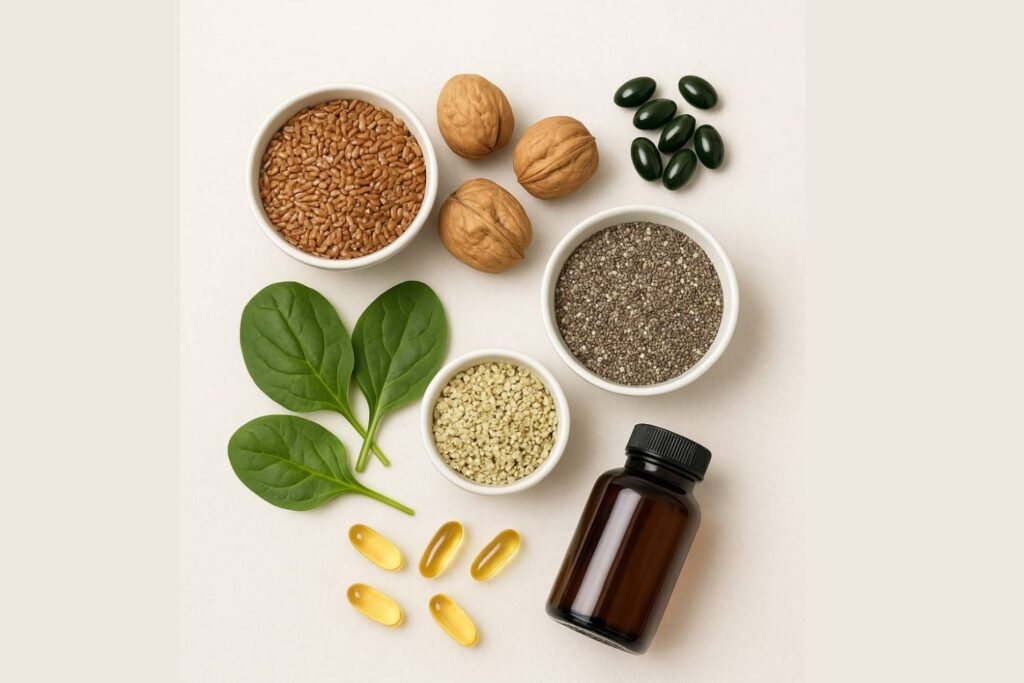
Let’s discuss natural foods before supplements. Athletes can benefit from these:
- Flax Seed: You can add these to smoothies, oats or salads.
- Chia Seeds: Works well in energy gels, overnight oats or puddings.
- Almonds: Good for a quick snack.
- Hemp Seeds: Have protein and omega 3.
- Seaweed: Aquatic plant that also has some EPA.
These are good for health, but need more support when training hard. Now there are supplements that are especially important for vegan omega 3 fitness.
Why Vegan Omega 3 Supplements Are Important
You no longer need fish oil to get DHA and EPA. Algal oil supplements can be made directly from algae.
Athletes benefit from:
- Faster muscle recovery
- Reduce inflammation from exercise
- Protect joints for longer periods of time
- Support heart and brain health
This means vegan omega 3 for athletes is a clean and sustainable way to boost performance.
Especially for those who do intense daily training, vegan omega 3 for athletes is almost essential.
How Vegan Omega 3 Boosts Performance
It shows the following effects when athletes start taking it regularly:
- Faster recovery: Back on track sooner after leg day.
- Better endurance: Better oxygen delivery, meaning more distance covered
- Sharper Focus: Staying focused on gaming and training
- Joint health: Joints are less stressed than running, weightlifting or cycling.
Many athletes report that both their performance and feeling of well-being improved after taking vegan omega 3 rehabilitation aid.

How to choose the right Vegan Omega 3 supplement
Notes before taking the supplement:
- EPA + DHA content – Both should be clearly mentioned on the label.
- Certified Vegan – Avoid capsules containing gelatin.
- Third-Party Tested – Assurance of purity and quality.
- Dosage – Usually 250–500 mg of EPA + DHA daily is good for athletes.
The National Institutes of Health recommends specific daily intake levels of Omega-3s, making it easier for vegan athletes to choose the right supplement for performance and recovery.
If you’re already looking for a trusted supplement, you can try UNIVED Vegan Omega-3 DHA available: 👉 Check latest price on Amazon
Omega 3 Tips to increase benefits
Supplements alone won’t do. Adopt these habits to boost vegan omega 3 health:
- Protein: Eat protein-rich foods to build and repair muscles quickly.
- Stay hydrated, otherwise recovery will be slow.
- Get plenty of sleep, because that’s where the real repair happens.
- Include antioxidant foods (berries, spinach, turmeric) to reduce inflammation.
Most nutritional changes take time and consistency. If you want a detailed week-by-week explanation, you can read our guide on how long vegan DHA takes to work.
Research from Harvard School of Public Health highlights that Omega-3s are linked with faster recovery, better brain function, and enhanced endurance in athletes.
Recommended Vegan Omega-3 Supplements
Below are plant-based omega-3 options suitable for vegan athletes. These supplements provide algae-based EPA and DHA to support recovery, inflammation control, and performance. Always check labels and consult a healthcare professional before use.
Real-Life Story: Vegan Runner’s Journey
Imagine Arjun, a 27-year-old marathon runner who follows a plant-based diet. Energy was good, but after long runs, leg pain lasted three to four days and performance dropped.
Then he started taking algal oil supplements for vegan omega 3 for athletes.
Today he believes vegan omega 3 for athletes is his secret weapon to endurance.”
The difference was evident in 2 months-knee pain decreased and recovery was faster. Her new personal best wasn’t due to running more miles, but rather due to her healthier diet.
F A Q s
Q1. Can vegan athletes be deficient in omega-3?
👉Well, that’s because most of a plant-based diet contains ALA (the precursor), which the body converts to DHA and EPA. But qualified foods and supplements can make up for this deficiency.
Q2. What are the best sources of omega-3 for vegan athletes?
👉Algal oil supplements are the most popular because they contain straight EPA and DHA. Almonds, chia seeds and flax seeds are also good sources.
Q3. Is omega-3 just for heart health or does it benefit athletes too?
👉Omega-3 is important for heart protection, rehabilitation and brain function. This is why it is considered an important part of a performance diet.
Q4. How much omega-3 should vegans consume each day?
👉Most athletes are advised to take 250-500 mg of EPA + DHA at a time, but the amount depends on the intensity of your exercise. It also depends.
Q5. Does vegan omega 3 for athletes really help improve performance?
👉Yes, absolutely. Both research and real-life examples show that vegan omega 3 for athletes speeds up muscle recovery, increases endurance and protects joints.
Q6. How long does omega-3 take to show benefits?
👉Nutritional improvements are gradual. Some athletes report noticing recovery benefits within 4–8 weeks of consistent intake.
If you’re already looking for a trusted supplement, you can try VITAL LIFE Vegan Omega-3 DHA available:👉 Check latest price on Amazon
Conclusion
Athletic performance doesn’t just happen in the gym or on the track-it’s also in your cells and in your kitchen.
Omega 3 is a mineral that boosts recovery, stamina, and performance. And the best part is, you don’t need fish oil anymore.
With vegan omega 3 for athletes, you can:
- Train hard
- Rebuild smart
- And function at your best
All while being completely plant-based and pure.
So, the next time you gear up for a workout, remember this-protein builds muscle, but omega 3 keeps you fit. The same goes for an athlete. And that’s why every serious plant-based athlete should consider vegan omega 3 for athletes.”
“If Omega-3 could transform my performance, focus, and recovery as a plant-based athlete, I truly believe it can do the same for you – stay consistent, your best version is already on the way.”

Get more information about Vegan DHA from our other blogs. Blog
Disclaimer: This post contains affiliate links. If you buy through these links, I may earn a small commission at no extra cost to you. It helps me keep sharing useful content with you.

Pingback: How Much Omega-3 Do You Really Need Daily? For everyone
Pingback: Vegan DHA for Athletes: Boosts Recovery & Enhances Focus
Pingback: 25 Essential Vegan DHA FAQs: The Ultimate Guide for Parents