
This blog was updated on 9th September 2026 to provide the latest information and researches on Best Vegan Omega 3 with EPA and DHA in India.
You open Amazon. Search “vegan omega 3.” Click the first result. The bottle’s front states, “1000mg Omega 3.”
Sounds solid. Feels like the right choice.
At VeganVitaa, this label confusion is the most common reason vegetarian Indians write in saying omega 3 did not work for them.
You buy it. Take it daily for three months. Go back to the doctor. Triglycerides same. Energy same. Nothing moved.
The supplement was not fake. The DHA number on the back was real. But here is what nobody told you — that 1000mg was total oil. The actual EPA and DHA combined was 200mg. The rest was filler.
This is the single most common reason vegan omega 3 does not work for Indian buyers. Not the wrong brand. Not inconsistency. The wrong number on the wrong line of the label.
Vegan omega 3 with EPA and DHA in India is not hard to find. But finding one where the EPA and DHA numbers are actually worth paying for — that requires knowing what to look for.
This guide cuts through that. Five products. Actual EPA. Actual DHA. Cost per day. Who each one is actually for.
For why vegan omega 3 stops working for most Indian buyers — Vegan Omega 3 Not Working in India
The “1000mg Omega 3” Trap That Most Indian Consumers Fall For
Most supplement labels in India are designed to impress, not inform.
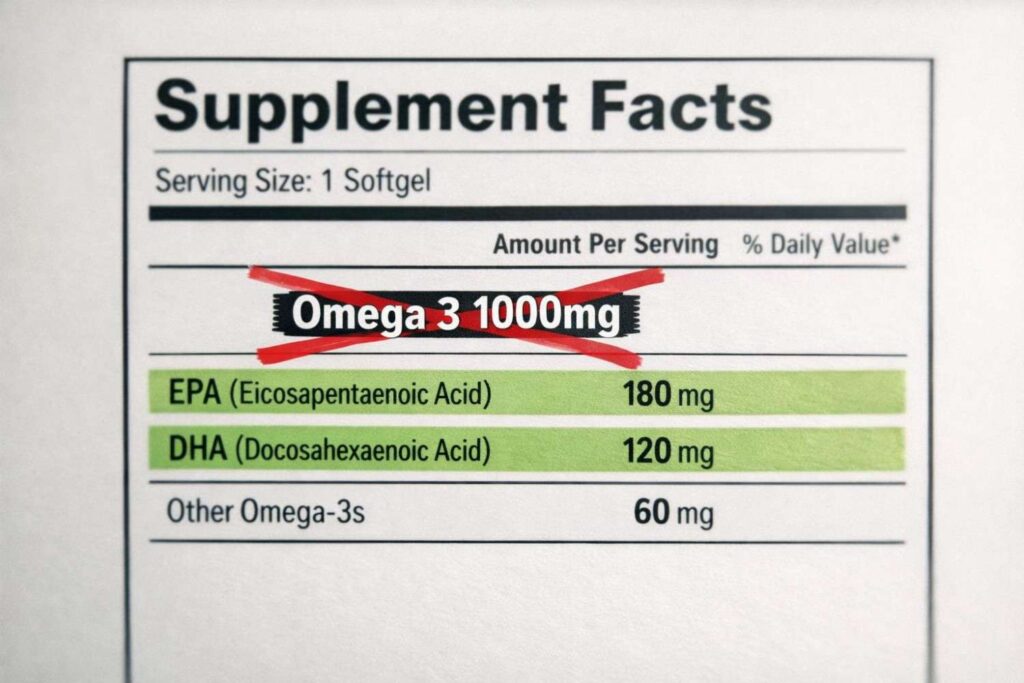
“1000mg Omega 3” sounds like a strong dose. And it is — if that 1000mg is all EPA and DHA. But in most cases, it is not. That number is total oil weight. The actual EPA and DHA sitting inside that oil is often 200 to 300mg combined.
The rest is everything else in the oil — other fats, carrier compounds, stabilisers. Fine for the capsule. Not what your body was actually asking for.
Here is what the numbers actually mean:
- Total omega 3 — the omega 3 fatty acids within the oil. Still not all EPA and DHA.
- EPA (Eicosapentaenoic Acid) — the anti-inflammatory form. Heart, joints, triglycerides.
- DHA (Docosahexaenoic Acid) — the structural form. Brain, eyes, cell membranes.
- Total oil — everything in the capsule. The least useful number for comparing supplements.
What EPA Actually Does
EPA is the omega 3 form most directly involved in reducing inflammation. Triglycerides, joint pain, heart health, hormonal balance — EPA is working on all of these. Most Indian vegan supplements either contain very little EPA or none at all.
For official guidance on EPA and DHA intake — NIH Omega 3 Overview
What DHA Actually Does
DHA is the structural fat your brain and eyes are built from. Memory, focus, eye health, fetal brain development — DHA is the form doing the foundational work. Most Indian vegan supplements lead with DHA because algae naturally produce more of it.
Why You Need Both
DHA and EPA are not interchangeable. They do different jobs in the body. A supplement with 500mg DHA and no EPA is a different product from one with 300mg DHA and 200mg EPA — even if the total omega 3 number looks similar on the front.
Buying vegan omega 3 with EPA and DHA in India means specifically checking that both numbers appear on the label, separately, in mg.
Why Most Vegan Omega 3 Supplements in India Are DHA Only
This is something most buyers never find out until after they have already bought the wrong thing.
The reason most Indian vegan omega 3 supplements are DHA dominant — or DHA only — comes down to the algae itself.
Different algae strains produce different omega 3 profiles. The most commonly used strain in supplement manufacturing — Schizochytrium — produces predominantly DHA. Very little EPA. This makes it cheaper and easier to source at scale, which is why most budget Indian vegan supplements use it.
EPA+DHA formulations require either a different algae strain — like Nannochloropsis, which produces more EPA — or a blending process that combines strains. Both cost more. Which is why fewer brands offer it, and those that do charge more for it.
Here is what you will actually find in the Indian market:
| Type | Main Omega 3 | Direct EPA | Direct DHA |
| Flaxseed oil | ALA only | No | No |
| Chia seed oil | ALA only | No | No |
| Algal DHA only | DHA | No | Yes |
| Algal EPA+DHA | EPA and DHA | Yes | Yes |
Simple rule — if EPA is not listed separately in mg on the label, assume it is not there. DHA only is not a bad product. But it is a different product from EPA+DHA. Be aware of which one you are purchasing.
How We Selected These Products
No brand paid for inclusion in this list. No samples were accepted.
Every product below was evaluated on five criteria only:
- EPA per serving — clearly stated in mg on the label, not estimated
- DHA per serving — clearly stated in mg on the label, not estimated
- Algal oil confirmed — not flaxseed, not chia, not “plant-based blend”
- Label transparency — serving size, manufacturing date, expiry date all visible
- Amazon India availability — available to order and deliver across India
Products where EPA was not clearly listed were excluded — regardless of brand reputation or price.
One product that looked strong on DHA but showed zero EPA on the label did not make this list. One product with verified third party testing but unclear serving size also did not make it.
The list is short because honest EPA+DHA products in India are genuinely limited. Five made it. That is the honest reality of the current Indian vegan supplement market.
I have personally checked each of these labels — EPA and DHA amounts, algal oil source confirmation, and Amazon India availability. Regardless of brand reputation, products with ambiguous numbers were removed.
Best Vegan Omega 3 with EPA and DHA in India — Top 5 Picks
Before the list — one quick reference table. This is the most useful thing in this entire guide.
| Product | EPA/serving | DHA/serving | Total EPA+DHA | Price/day | Best For |
| Deva Vegan Omega-3 | 150mg | 300mg | 450mg | ~₹35 | Best International Brand |
| Rasayanam Plant Omega 3 | 450mg | 150mg | 600mg | ~₹37 | Best EPA Balance |
| Miduty Veg Omega-3 | 100mg | 200mg | 300mg | ~₹20-22 | Best Budget |
| Origins Nutra Algal Omega-3 | 120mg | 300mg | 420mg | ~₹25 | Best Mid-Range |
| Nordic Naturals | 195mg | 390mg | 585mg | ~₹40 | Best Premium |
Note: Verify exact EPA and DHA numbers from current Amazon listings before purchasing — formulations can change.
Note: Prices approximate — verify current Amazon pricing before publishing.
1. Deva Nutrition Vegan DHA-EPA
EPA: ~150mg | DHA: ~300mg | Total: ~450mg | Price/day: ~₹35
Deva Nutrition is a globally recognized vegan supplement brand with a long track record in plant-based nutrition. Their Vegan DHA-EPA supplement is made from algal oil and provides both DHA and EPA in clearly stated amounts — making it one of the few products in the Indian market where both numbers are transparent on the label.
What sets Deva apart is the carrageenan-free formula. Many algal oil supplements use carrageenan as a stabilizer — Deva specifically removed it after feedback from health-conscious buyers. For anyone particular about every ingredient in their supplement, that level of transparency matters.
The DHA and EPA combination covers brain development, eye health, and inflammation support in one capsule. Vegan Society registered, no gelatin, no fish-derived ingredients at any stage.
Best for: Buyers who want an internationally trusted brand with clearly stated EPA and DHA, carrageenan-free formula, and Vegan Society certification.
Pros:
- Both EPA and DHA clearly stated on label
- Carrageenan-free formula
- Vegan Society registered
- No gelatin or animal-derived ingredients
- International brand with long track record
Cons:
- Imported — availability on Amazon India can vary
- Slightly premium pricing compared to Indian brands
Check Deva Nutrition on Amazon
2. Rasayanam Plant Based Omega 3
EPA: 450mg | DHA: 150mg | Total: 600mg | Price/day: ~₹37
Rasayanam Plant Based Omega-3 uses marine microalgae as its source of omega-3 and currently lists 450mg EPA and 150mg DHA per 2-capsule daily serving. The brand states that the algae source is Schizochytrium and that the capsules are vegetarian and gelatin-free. This makes it one of the Indian vegan options that specifically provides both EPA and DHA rather than DHA alone.
Best for: Buyers who specifically want a vegan omega-3 supplement that provides both EPA and DHA in a higher-EPA formulation.
Pros:
- 450mg EPA + 150mg DHA per daily serving
- Both EPA and DHA are clearly stated by the brand
- Marine microalgae source
- Vegetarian, gelatin-free capsules
- No additives or preservatives claimed by the brand
Cons:
- EPA:DHA ratio is EPA-heavy rather than evenly balanced
- Verify the current label and batch details before buying
3. Miduty Plant Omega 3
EPA: ~100mg | DHA: ~200mg | Total: ~300mg | Price/day: ~₹20
Miduty is an Indian wellness brand focused on clean, transparent formulations. Their Plant Omega 3 supplement provides both EPA and DHA from algal oil — with both numbers clearly stated on the label, which is still uncommon among budget-range Indian vegan omega 3 products.
At 100mg EPA and 200mg DHA per serving, this is not the highest dose on this list. But for first-time omega 3 users, older adults starting supplementation, or anyone who wants a gentle entry point into EPA+DHA without committing to a higher dose product, it is a practical starting option.
The daily cost is one of the lowest on this list for a product that actually lists both EPA and DHA separately — making it a genuine budget EPA+DHA option rather than a DHA-only product dressed up as omega 3.
Best for: First-time buyers, older adults, and budget-conscious users who want a verified EPA+DHA supplement without paying premium prices.
Pros:
- Both EPA and DHA clearly stated on label
- Algal oil source confirmed
- Budget-friendly daily cost
- Indian brand — easily available on Amazon India
- No fish-derived ingredients
Cons:
- Lower EPA and DHA dose than higher-strength options
- Not ideal if your doctor has recommended 300mg+ combined EPA+DHA daily
4. Origins Nutra Vegan Omega 3
EPA: ~120mg | DHA: ~300mg | Total: ~420mg | Price/day: ~₹25
Origins Nutra is an Indian supplement brand that has positioned itself around clean, clearly labelled formulations. Their Vegan Omega 3 provides both EPA and DHA from algal oil — with both numbers stated separately on the label. For a mid-range Indian brand, that level of transparency is worth noting.
At 120mg EPA and 300mg DHA per serving, it sits comfortably between the budget options and premium products on this list. The DHA dose is meaningful for brain and eye support. The EPA contribution, while not the highest, is still clearly present — which puts it ahead of DHA-only products in the same price range.
For Indian vegetarians who want a domestic brand with both EPA and DHA at a reasonable price point — Origins Nutra fills that gap practically.
Best for: Mid-range buyers who want both EPA and DHA from an Indian brand at a fair price, without paying for international brand premium.
Pros:
- Both EPA and DHA clearly stated on label
- Algal oil source confirmed
- Indian brand — reliable Amazon India availability
- Mid-range price with meaningful DHA dose
- No fish-derived ingredients
Cons:
- EPA dose is lower than Rasayanam or Nordic Naturals
- Less established brand compared to international options
5. Nordic Naturals Algae Omega — Best Premium
EPA: 195mg | DHA: 390mg | EPA+DHA: 585mg | Total Omega-3: 715mg | Price/day: ~₹40
Nordic Naturals Algae Omega is a premium vegan omega-3 made from sustainably sourced microalgae. Each 2-softgel serving provides 195mg EPA and 390mg DHA, giving a combined 585mg of EPA+DHA, while the product lists 715mg total omega-3s. Nordic Naturals states that its products are third-party tested for quality, purity and potency, with Certificates of Analysis available.
Best for: Premium buyers who want a well-established international brand with clearly stated EPA+DHA and strong quality-control practices.
Pros:
- 195mg EPA + 390mg DHA per serving
- 585mg combined EPA+DHA
- Made from microalgae
- Third-party tested for quality, purity and potency
- Non-GMO and hexane-free
Cons:
- Premium price compared with Indian vegan omega-3 options
- Availability and final price can vary in India
Check Nordic Naturals on Amazon
For a complete reviewed comparison of top vegan DHA options — Best Vegan DHA Supplements in India — Top 3 Picks
Disclaimer: This post contains affiliate links. If you buy through these links, I may earn a small commission at no extra cost to you. It helps me keep sharing useful content with you.
EPA+DHA Comparison — Which Product Actually Gives You More?
Most buyers compare supplements by the number on the price tag. The number that actually matters is cost per 100mg of real EPA+DHA. Those two numbers rarely point to the same product.
Here is why that matters. A ₹1,500 supplement with 600mg EPA+DHA per serving costs less per mg of active omega 3 than an ₹800 supplement with only 200mg EPA+DHA per serving. The cheaper bottle costs more per mg of what you actually need. That is the trap most buyers never see coming.
| Product | EPA | DHA | Total EPA+DHA | Price/month approx | Cost per 100mg |
| Deva Vegan Omega-3 | 150mg | 300mg | 450mg | ~₹6000 | ~₹12.2 |
| Rasayanam | 450mg | 150mg | 600mg | ~₹1200 | ~₹9.8 |
| Miduty | 100mg | 200mg | 300mg | ~₹600 | ~₹10 |
| Origins Nutra | 120mg | 300mg | 420mg | ~₹1800 | ~₹9.5 |
| Nordic Naturals | 195mg | 390mg | 585mg | ~₹9000 | ~₹20.5 |
Note: Prices are approximate. Verify current Amazon pricing before purchasing.
What the table shows clearly — Origins Nutra offers strong cost per 100mg EPA+DHA for an Indian brand with clearly stated numbers. Rasayanam remains the strongest value pick for buyers who want the highest combined EPA+DHA dose at a mid-range price.
Nordic Naturals costs more overall but brings international third-party testing — worth it for buyers who prioritize verified quality over price.
For how much omega 3 you actually need daily — How Much Omega 3 Do You Really Need Daily
DHA Only vs EPA+DHA — Which Should You Buy?
This is not a simple answer — and anyone who tells you EPA+DHA is always better than DHA only is oversimplifying.
Here is the honest breakdown:
DHA only makes sense when:
- Your primary goal is brain health, eye health, or pregnancy DHA support
- You are already getting some EPA from other dietary sources
- Budget is a constraint and a high DHA product fit better
- Your doctor has specifically recommended DHA supplementation
EPA+DHA makes more sense when:
- You are supplementing for triglycerides, heart health, or inflammation
- You have joint pain or chronic inflammation as a concern
- You want a more complete omega 3 profile from one supplement
- You are a vegetarian with no other EPA source in your diet
The honest caveat:
Most Indian vegetarians eating a standard dal roti sabzi diet have near zero EPA from food. Which means even for goals that are primarily DHA focused, having some EPA in the supplement is not a bad thing. It just should not be the only reason you pay significantly more.
If the price difference between a DHA only option and an EPA+DHA option is small — choose EPA+DHA. If the price difference is large and your goal is purely brain or eye health — a high DHA product may serve you better for less money.
If you are still unsure which one fits your situation — Which Vegan DHA Supplement Is Best for You
Research on algal oil EPA and DHA bioavailability — Read the PubMed study here
7 Things to Check Before Buying Vegan EPA+DHA — Red Flags Included
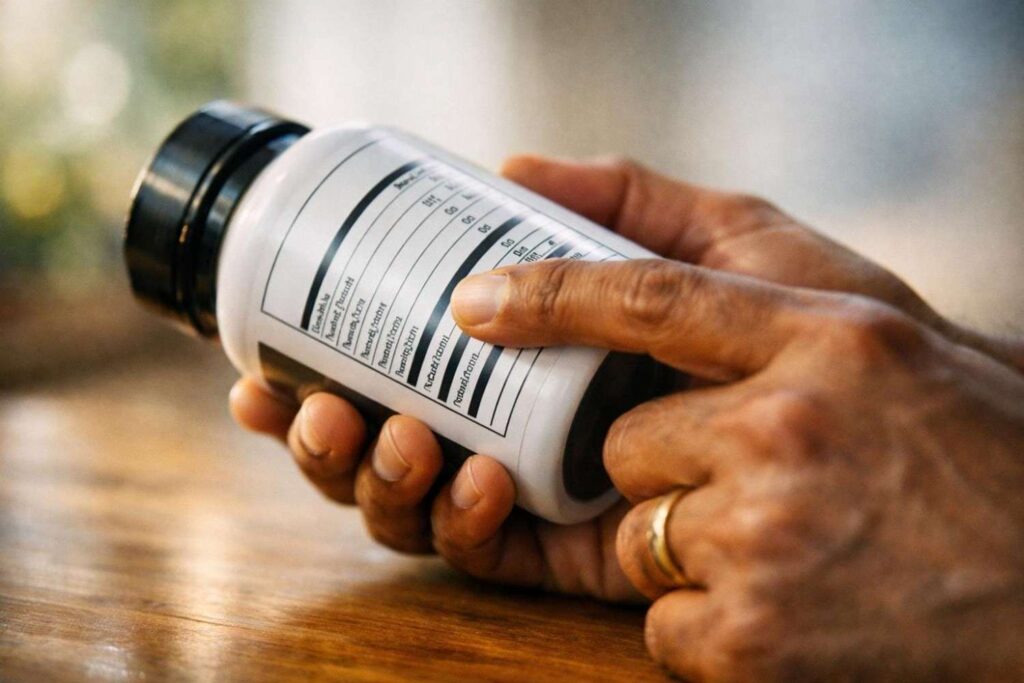
Most people check the front of the bottle and move on. The front is marketing. The back is information. Most people never flip the bottle.
Seven things worth checking before any vegan EPA+DHA supplement goes in your cart:
1. EPA listed separately in mg
Not “omega 3 blends.” Not “total fatty acids.” EPA specifically, in mg, per serving. If it is not there — assume it is not in the product in any meaningful amount.
2. DHA listed separately in mg
Same rule. DHA must be broken out separately. “1000mg omega 3” with no DHA breakdown tells you nothing useful.
3. Algal oil confirmed as source
The label must say algal oil, microalgae oil, or a specific algae strain name. Without mentioning algal oil, “plant based omega 3” is usually always flaxseed or chia, which supply ALA rather than EPA or DHA.
4. Serving size clearly stated
Some products show EPA and DHA per two capsules, not one. The numbers look strong until you realise you need to take twice as many to reach that dose. Check serving size before comparing products.
5. Manufacturing and expiry date visible
Omega 3 oil degrades over time — especially in Indian heat and humidity. A product close to expiry or without a visible manufacturing date is a product to avoid.
6. FSSAI certification for Indian products
Basic regulatory requirement. Its absence does not automatically mean a bad product — but its presence is one more quality signal worth having.
7. No “proprietary blend” language
When a label says “proprietary omega 3 blends — 500mg” without breaking out EPA and DHA separately, the brand is hiding the actual numbers. Walk away.
The one red flag that overrides everything else:
A supplement showing “1000mg Omega 3” on the front with no EPA or DHA breakdown on the back is not a vegan EPA+DHA supplement. It is a marketing exercise. Do not buy it regardless of price, brand, or review count.
For how to read supplement labels properly before buying — How to Read Omega 3 Label
FAQs
Q. Can vegans actually get both EPA and DHA from supplements?
Indeed, the only plant-based source that directly supplies both is algae oil. Not all algal oil supplements contain meaningful EPA though. Check that EPA is listed separately in mg before buying. If it is not on the label, it is probably not there in any useful amount.
Q. Is vegan EPA as effective as fish oil EPA?
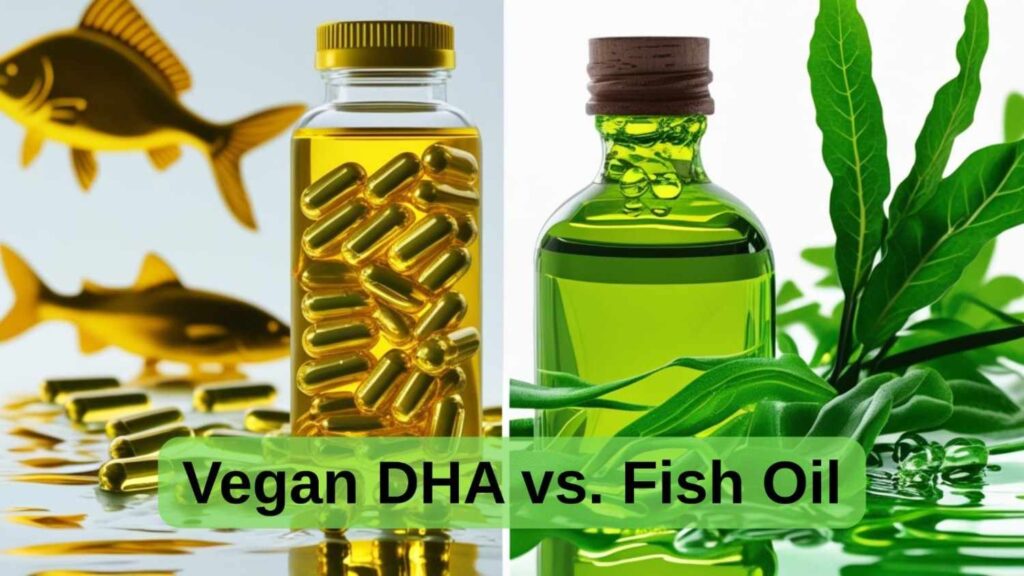
The EPA molecule is identical whether it comes from fish or algae. Fish get their EPA from algae to begin with. Algal oil simply removes the fish from the supply chain. When taken with food, the body absorbs both forms similarly. The source does not change what the EPA molecule actually does once it is in your system.
Q. Is DHA only better than EPA+DHA for brain health?
Not necessarily better — just more focused. If brain health is your only goal and budget is a consideration, a high DHA product may serve you well. If you want broader support covering heart, inflammation, and brain together, EPA+DHA makes more sense. Neither is universally superior.
Q. How much EPA and DHA should a vegetarian actually take daily?
General guidance points to 250 to 500mg combined EPA and DHA daily for healthy adults. For specific conditions like high triglycerides or joint inflammation, higher amounts are used in research. Always check the product label and speak with a doctor if you have a specific health condition.
Q. Is “1000mg vegan omega 3” actually 1000mg EPA+DHA?
Almost never. That number is typically total oil weight. The actual EPA+DHA combined is usually 200 to 400mg within that 1000mg of oil. Always look for the EPA and DHA breakdown on the nutrition facts panel — not the headline claim on the front.
Conclusion
Vegan omega 3 with EPA and DHA in India exists — but finding one where the numbers are actually worth paying for takes more than reading the front of the bottle.
Most Indian buyers pick the supplement with the biggest number on the front. “1000mg Omega 3” looks impressive. Nobody reads the back to find out that the actual EPA and DHA combined is often 200mg.
This guide gave you five products where both numbers are clearly stated, the algal oil source is confirmed, and the cost per 100mg EPA+DHA actually makes sense.
For most Indian vegetarians — Rasayanam if you want the highest combined EPA+DHA dose at best value, Nordic Naturals if you want international third-party verified quality, Deva Nutrition if you want a carrageenan-free internationally trusted formula, Origins Nutra if you want a reliable Indian brand at a mid-range price, Miduty if you are starting out and want both EPA and DHA at a budget price.
One capsule daily. With your main meal. Consistent for 12 weeks.
That is the whole plan.
Where to Start
Flip the bottle. Find EPA. Find DHA. Both should be there, separately, in mg.
If they are — you are looking at a real vegan omega 3 with EPA and DHA supplement. If they are not — put it back.
For how these products compare on overall quality and reviews — Best Vegan Omega 3 Capsules in India — Top 5 DHA Picks
About the Author
Kamal Mishra is a health & nutrition writer and vegan wellness advocate. He is the founder of VeganVitaa – India’s trusted vegan DHA resource for plant-based families.
For more in-depth information, explore our related guides below to better understand vegan DHA, algal oil, and choosing the right supplement. Blog
Disclaimer: This article is for educational purposes only. Always consult your paediatrician before starting new supplements.
Disclaimer: This post contains affiliate links. If you buy through these links, I may earn a small commission at no extra cost to you. It helps me keep sharing useful content with you.

Pingback: Vegan Omega 3 for Period Pain in India — Evidence
Pingback: Is Vegan Omega 3 Working? 7 Things to Check First