
This blog was updated on 1st August 2026 to provide the latest information and researches on Vegan DHA vs Fish Oil during pregnancy.
Vegan DHA vs fish oil during pregnancy is a question I get asked more than almost any other on VeganVitaa.
And I understand why. You’re pregnant. You want to do everything right. You’ve heard DHA is essential for your baby’s brain. But you’re vegetarian and fish oil feels wrong.
As someone who has spent years researching plant-based nutrition for Indian families, I want to give you a clear, honest answer — not a generic comparison that leaves you more confused.
The short version: both provide DHA. But for vegetarian and vegan mothers in India, algae-based DHA is the cleaner, safer, and more practical choice and I’ll show you exactly why.
If you’re also looking for specific product recommendations for pregnancy, I’ve covered the top options in detail here: Vegan DHA Capsules for Pregnancy in India: Is It Safe?
This guide focuses on the comparison itself — safety, effectiveness, and how to choose without overthinking it.
What Is DHA & Why It Matters During Pregnancy
DHA (docosahexaenoic acid), a long-chain omega-3 fatty acid, is essential for the development of the fetal brain and retina.
During pregnancy, especially in the third trimester, your baby’s brain develops very quickly and needs a good amount of DHA.

According to the National Institutes of Health (NIH), pregnant women are generally advised to consume around 200–300 mg of DHA daily to support fetal development.
DHA contributes to:
- Brain structure formation
- Retina and vision development
- Nervous system support
- Cognitive function later in life
Research also suggests adequate DHA intake during pregnancy may support optimal birth weight and overall maternal health.
Since our bodies aren’t great at making enough DHA on their own, it becomes really important to get it from what we eat or from supplements. This is especially true for folks who don’t eat fish, like vegetarians or vegans.
This is where the debate around vegan DHA vs fish oil during pregnancy begins.
What Is Vegan DHA? (Algae-Based Omega-3)
Vegan DHA is derived from microalgae – the original source of DHA in the marine food chain. Fish actually obtain DHA by consuming algae. This means algae-based supplements provide the same DHA molecule found in fish oil.
Key characteristics of vegan DHA:
- Extracted directly from algae
- Contains DHA without relying on fish
- Free from marine contaminants
- Suitable for vegetarians and vegans
- More environmentally sustainable
Most clinical guidelines recommend around 200–300 mg of DHA daily during pregnancy to support fetal brain development.
One of the biggest benefits of algae oil is that you don’t have to worry about mercury, which can sometimes be found in certain types of fish. It gives you omega-3 directly from the original source, without the contamination risk linked to fish oil.
The American Pregnancy Association notes that while omega-3s are important, pregnant women should avoid high-mercury fish.
For mothers following a plant-based diet, algae oil is often considered a practical and reliable DHA source.
Many people who ask if algae DHA is better than fish oil usually care about purity and sustainability. Both give you DHA—the main difference is the source and the extra omega-3s that come with it.
What Is Fish Oil DHA?
Fish oil supplements are derived from fatty fish such as sardines, anchovies, or mackerel. Both DHA and EPA (eicosapentaenoic acid), another advantageous omega-3 fatty acid, are commonly found in these oils.
Characteristics of fish oil DHA:
- Derived from marine fish
- Contains both EPA + DHA
- Requires purification to remove contaminants
- Can oxidize if low quality
- May cause fishy aftertaste
High-quality fish oil brands undergo molecular distillation to reduce mercury and heavy metals. However, not all supplements maintain the same standards.
Some pregnant women report digestive discomfort or fishy burps when taking fish oil. While this does not indicate harm, it can affect consistency.
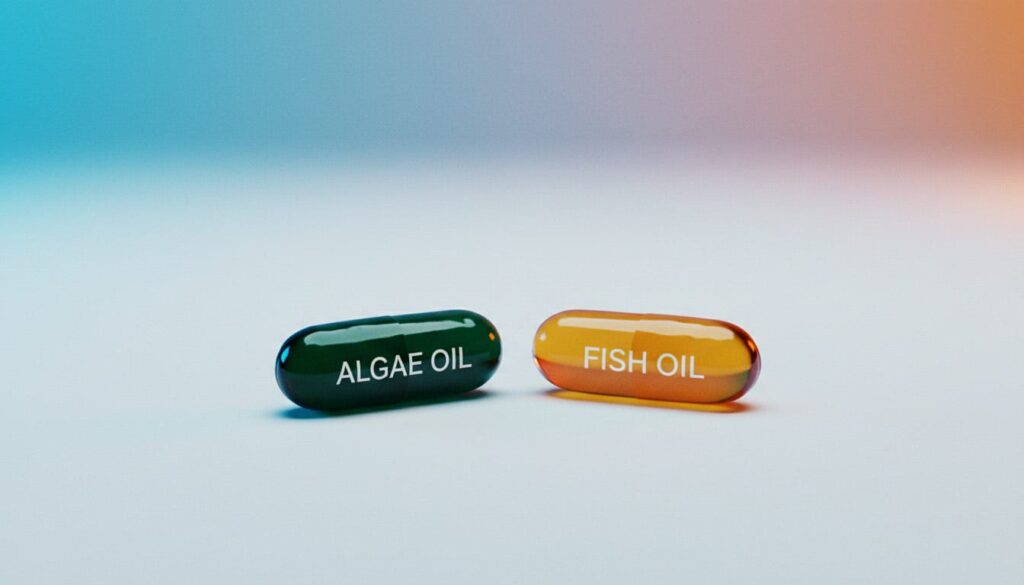
When comparing vegan DHA vs fish oil during pregnancy, the question isn’t which contains DHA – both do. The real difference lies in purity, sustainability, and dietary compatibility.
Vegan DHA vs Fish Oil During Pregnancy: Direct Comparison
| Feature | Vegan DHA | Fish Oil DHA |
| Source | Microalgae | Marine fish |
| Mercury Risk | None | Possible (if low quality) |
| Suitable for Vegetarians | Yes | No |
| Sustainability | High | Moderate |
| Taste | Neutral | Fishy |
| EPA Content | Usually lower | Higher |
This comparison shows that both can provide DHA, but they differ in source and additional omega-3 composition.
For mothers looking for safe vegan omega-3 during pregnancy, algae oil feels more reassuring because it avoids the risk of marine pollutants.
Which Is Safer During Pregnancy?
Safety depends more on quality and dosage than on the source alone.
For vegetarians and vegans, algae-based DHA is the practical and consistent choice. It delivers the required DHA without conflicting with dietary principles.
For non-vegetarians, a high-quality purified fish oil supplement can also be appropriate. What matters most is:
- Third-party testing
- Proper dosage (200–300 mg DHA)
- Fresh, non-oxidized oil
- Doctor approval
Some studies report up to a 40–50% increase in maternal DHA levels after consistent supplementation.
Studies comparing algae oil and fish oil suggest that both effectively raise blood DHA levels when taken consistently.
So, when evaluating the safer option is the one that is:
- High quality
- Properly dosed
- Tolerated well
- Approved by your healthcare provider
Both forms provide DHA required for fetal development when taken in appropriate dosage.
If you’re unsure about dosage guidelines, you can also read our detailed breakdown on DHA requirements in our guide on DHA deficiency symptoms and causes.
Potential Side Effects of Vegan DHA and Fish Oil
Both algae-based DHA and fish oil are generally considered safe when taken in recommended amounts. However, like any supplement, they may cause mild side effects in some women.
Here’s what you should know:
Common Side Effects of Fish Oil
- Fishy aftertaste or burping
- Mild nausea
- Stomach discomfort
- Loose stools (if taken in high doses)
These side effects are usually dose-related and may improve when taken with meals.
Possible Side Effects of Vegan DHA (Algae Oil)
- Mild digestive upset
- Slight bloating in sensitive individuals
- Rare allergic reactions
Because algae oil is plant-based and does not come from fish, it usually does not cause a fishy aftertaste.
When comparing vegan DHA and fish oil, tolerance can vary from person to person. The key is:
- Start with the recommended dose
- Take supplements with food
- Choose high-quality, tested products
If you experience persistent discomfort, consult your healthcare provider before continuing.
How to Choose a Safe DHA Supplement During Pregnancy
The source matters less than the quality. Here is what to actually check before buying.
First — look at the DHA amount specifically, not just “omega-3.” You want at least 200-300mg of DHA per serving clearly stated on the label. If a brand only shows total omega-3 without breaking down DHA, skip it.
Second — check for third-party testing. During pregnancy, purity is non-negotiable. Look for brands that mention heavy metal testing and purity certifications on the label. This is especially important for fish oil.
Third — check the ingredient list. No artificial fillers, no unnecessary additives. For algae oil, the label should clearly say microalgae source. For fish oil, look for molecularly distilled or purified.
And finally — talk to your doctor before starting any supplement during pregnancy, especially if you are on medication or have any complications. This is not optional advice.
The safest supplement is clean, properly dosed, and approved by your healthcare provider.
Can You Get Enough DHA From Food Alone?
Fatty fishlike salmon and sardines contain DHA. However, pregnant women are advised to limit certain fish due to mercury concerns.
Vegetarian sources like flaxseeds and chia seeds contain ALA (alpha-linolenic acid), not DHA directly. The body converts ALA into DHA, but conversion rates are low.
For plant-based mothers, relying only on food may not guarantee sufficient DHA levels – which is why many consider supplements after consulting their doctor.
If You Prefer Algae-Based Supplements in India
If you are considering algae-based supplements during pregnancy, here are some well-reviewed vegan DHA options available in India:
For a complete breakdown of top-rated options, dosage comparison, and price analysis, read our full guide on Best Vegan DHA Supplements in India (Top 3 Picks 2026).
This helps you compare ingredients and choose wisely without overpaying.

Affiliate Disclosure: This article may contain affiliate links. We may earn a commission at no extra cost to you.
Medical Disclaimer:
This content is for informational purposes only. Please consult your doctor before taking any supplement during pregnancy.
FAQs
Q. Is vegan DHA as effective as fish oil?
Yes. Algae-based DHA contains the same DHA that you get from fish oil. Studies show that when taken in the right dose, both can effectively increase DHA levels in the blood.
Q. How much DHA should pregnant women take daily?
Most health authorities recommend around 200–300 mg of DHA per day during pregnancy. However, individual needs may vary based on diet and medical advice.
Q. Can I get enough DHA from plant foods?
Plant foods have ALA, which your body needs to convert into DHA. Since this conversion is very low, many vegetarians choose to take direct DHA supplements instead.
Q. Is algae DHA safe during all trimesters?
Algae-based DHA is generally considered safe when taken within recommended dosage limits. Always consult your healthcare provider before starting supplements.
Q. Does fish oil contain mercury?
Good-quality fish oil is usually purified to remove heavy metals. But cheaper or low-quality products may still carry contamination risks. That’s why it’s important to choose a trusted brand.
Making the Right Choice During Pregnancy
Choosing between vegan DHA and fish oil doesn’t have to feel complicated — and I say this as someone who has gone through this research extensively for Indian vegetarian families.
If you follow a plant-based diet, algae-based DHA is the most practical and consistent option. It gives you the same DHA your baby needs, without mercury risk, without fish, and without compromising what you eat or believe.
If you eat fish occasionally, a high-quality purified fish oil can also work — but the key word is quality. Cheap fish oil carries real contamination risks that matter more during pregnancy than at any other time.
If mercury concerns you — and during pregnancy it should — algae-derived DHA removes that worry entirely. It is the original source of DHA in the marine food chain, just without the fish in between.
And if you are still unsure about dosage or safety for your specific situation, your doctor is the right person to ask. Every pregnancy is different.
In the end, the source matters less than the consistency. Whatever you choose — take it daily, with food, at the right dose. That is what actually makes the difference for your baby.
Final Thoughts
When it comes to vegan DHA vs fish oil during pregnancy, the honest answer is simple — both provide DHA, but they are not equal in every way that matters during pregnancy.
Vegan DHA from algae is cleaner, mercury-free, and works just as effectively. Fish oil provides more EPA alongside DHA, but comes with contamination risks that are harder to ignore when you are pregnant.
For Indian vegetarian mothers, this is not even a difficult choice. Algae-based DHA gives your baby exactly what it needs — without asking you to compromise your diet, your values, or your peace of mind.
I have spent years researching this topic for VeganVitaa, and the conclusion has always been the same. Quality matters more than source. Consistency matters more than perfection. And for vegetarian families in India, algal DHA is simply the most practical, clean, and reliable path to getting there.
Start with 300mg daily. Take it with food. Give it your full pregnancy and beyond.
Your baby’s brain development depends on what you do consistently — not on what you do occasionally.
For specific product recommendations and safety details, this guide covers everything you need: Vegan DHA Capsules for Pregnancy in India: Is It Safe?
About the Author:
Kamal is a health blogger focused on evidence-based vegan nutrition and maternal wellness. He researches peer-reviewed studies and global health guidelines to simplify complex nutrition topics for expecting mothers.
Further Reading on VeganVitaa:
For more in-depth information, explore our related guides below to better understand vegan DHA, algal oil, and choosing the right supplement. Blog
Disclaimer: This article is for educational purposes only. Always consult your paediatrician before starting new supplements.
Disclaimer: This post contains affiliate links. If you buy through these links, I may earn a small commission at no extra cost to you. It helps me keep sharing useful content with you.

Pingback: DHA Deficiency in India: A Silent Health Gap in Indian Diets
Pingback: Best Vegan DHA Capsules for Pregnancy in India (2026 Guide)
Pingback: Best Vegan Omega 3 Sources for a healthy Plant-Based diet
Pingback: Vegan Omega 3 for Pregnancy – Complete Guide for Moms
Pingback: How Much DHA During Pregnancy? Vegetarian Guide
Pingback: Indian Diets Lack DHA: Why Even Healthy Ones Fall Short