This blog was updated on 11th July 2026 to provide the latest information and researches on Vegan Omega 3 Guide for Vegetarians.
Vegan omega 3 is something most Indian vegetarians think they are already getting- from flaxseeds, chia, walnuts, dal. It feels balanced. It looks complete.
But one critical gap keeps showing up.
Omega-3 has three forms. ALA comes from plant foods and most vegetarians get enough of it. But the brain and eyes run on DHA and EPA, not ALA. And converting ALA into DHA is something the human body does very poorly – barely 3 to 5 percent on a good day.
This guide covers everything a vegetarian or vegan needs to know – what omega-3 actually is, why DHA and EPA matter more than ALA, why Indian diets fall short, and what actually helps.
No jargon. No unnecessary detail. Just what is useful.
If you want to understand why this gap is so common in Indian diets specifically, start here: Why Indian Diets Lack DHA (Even When You Eat Healthy)

What Is Omega-3?
Omega-3 is a type of fat your body cannot make on its own. That one fact makes it essential meaning you have to get it from food or supplements, no shortcut exists.
It works quietly in the background – supporting brain function, memory, heart health, eye health, mood, skin, and inflammation control. Not one system. All of them.
When omega-3 is low for a long time, nothing breaks dramatically. Things just slowly stop working at their best. Focus gets harder. Energy feels lower. Recovery takes longer.
According to the World Health Organization, essential fatty acids like omega-3 play a critical role in maintaining overall health and normal body function. WHO
The Three Types of Omega-3
Omega-3 is not one single nutrient. It comes in three different forms and they do not all work the same way.
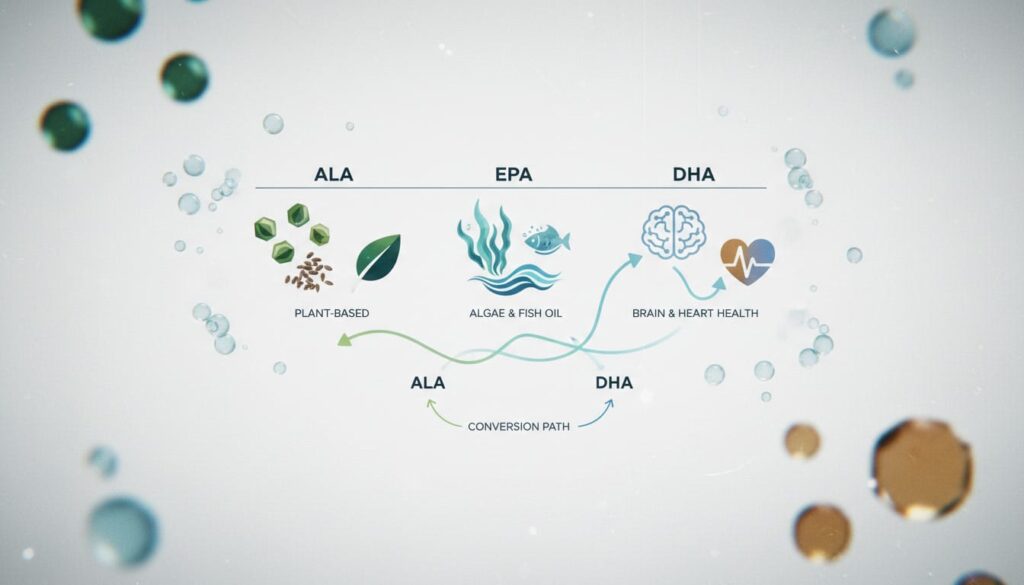
ALA (Alpha-Linolenic Acid)
ALA is the plant form of omega-3. It is what you get from flaxseeds, chia seeds, walnuts, and hemp seeds.
| Source | Form |
| Flaxseeds | ALA |
| Chia seeds | ALA |
| Walnuts | ALA |
| Hemp seeds | ALA |
ALA is healthy but the body has to convert it into DHA and EPA to actually use it. And that conversion rate is very low for most people.
Is Flaxseed Enough for Omega-3? The Truth About ALA vs DHA
DHA (Docosahexaenoic Acid)
DHA is the most critical omega-3 for brain health. It is a structural fat – meaning it physically makes up brain cells and eye tissue. Memory, focus, learning, vision, nervous system function – all depend on it directly.
For people on a plant-based diet, DHA is the hardest gap to fill. No plant food provides it directly.
DHA for Vegans: The Missing Link to Brain Health
EPA (Eicosapentaenoic Acid)
EPA works differently from DHA. Where DHA supports the brain and nervous system, EPA focuses on the heart reducing inflammation, supporting cardiovascular health, and helping with mood balance.
Both matter. But for most vegetarians, DHA is the bigger gap.
| Omega-3 Type | Common Sources | Main Role in the Body |
| ALA (Alpha-Linolenic Acid) | Flaxseeds, chia seeds, walnuts, hemp seeds | Basic plant omega-3 that the body can convert into EPA and DHA |
| EPA (Eicosapentaenoic Acid) | Algal oil, fish oil | Supports heart health, inflammation control, and mood balance |
| DHA (Docosahexaenoic Acid) | Algal oil (vegan source), fish oil | Important for brain function, eye health, and nervous system |
Why Many Vegetarians May Lack DHA
Vegetarian diets are genuinely healthy – rich in fiber, vitamins, and antioxidants. But DHA is the one nutrient that keeps coming up short, and most vegetarians never see it coming.
Three reasons this happens:
ALA conversion is too low. The body converts ALA from flaxseeds and walnuts into DHA but only 3 to 5 percent at best. The rest is lost.
Too much omega-6 blocks conversion. Sunflower oil, refined vegetable oil, packaged snacks – all high in omega-6. Excess omega-6 competes with omega-3 and makes ALA conversion even harder.
Seeds are not enough. Most vegetarians eat flaxseeds or chia and assume their omega-3 is covered. It is not. ALA and DHA are different nutrients with different roles.
The result – a vegetarian eating carefully and consistently can still have very low DHA without knowing it.
According to the National Institutes of Health, conversion of ALA into DHA in the human body is limited and often insufficient to meet daily needs.
DHA Deficiency in Indian Vegetarians and Vegans: Causes, Risks & Solutions
Signs of Omega-3 Deficiency
Omega-3 deficiency does not arrive suddenly. It builds slowly and most people blame stress, sleep, or age before they ever think about nutrition.
These are the signs worth paying attention to:
Brain fog that does not clear even after rest. Dry skin that lotion does not fix. Hair thinning without any obvious reason. Low mental energy through the day. Mood that feels flat or irritable. Poor memory. Eyes that feel dry or tired.
None of these are dramatic. That is exactly why they go unnoticed for so long.
These symptoms can have other causes too but omega-3 deficiency is one of the most commonly overlooked ones in vegetarian diets.
Omega-3 & DHA Deficiency Symptoms in Vegans: 9 Warning Signs You Shouldn’t Ignore
5 Subtle Signs You’re Not Getting Enough Omega-3
Why DHA Matters for Brain Health
Nearly 40 percent of your brain’s fatty acids are DHA. Not omega-3 in general – specifically DHA. That number alone explains why it matters so much.
When DHA levels are adequate, the brain works the way it should. Thinking feels clear. Learning sticks. Focus holds. Memory forms properly.
When DHA drops, the first signs are subtle – mental fatigue that arrives too early in the day, concentration that keeps slipping, a general feeling that the brain is working harder than it should for ordinary tasks.
Most people never connect this to nutrition. They push through, drink more chai, blame the workload.
If mental fatigue feels familiar, this might explain why: Vegan DHA for Brain Fog & Mental Fatigue
Omega-3 for Skin, Hair & Beauty
Most people think omega-3 is only for the brain. The skin and hair connection is just as real and just as overlooked.
Healthy skin needs good fats. DHA helps maintain the skin’s natural moisture barrier. When levels drop, the barrier weakens and it shows.
Dry or rough skin that does not respond to moisturiser. Hair thinning without obvious reason. Dull texture. Slow skin recovery after breakouts or irritation. These are not random – they are often nutrition gaps showing up on the outside.
Omega-3 also reduces inflammation in the body. Lower inflammation means calmer, clearer skin over time.
For vegetarians and vegans, this connection matters more than most people realise. Plant diets do not provide DHA directly and skin and hair health can quietly suffer for years before anyone thinks to check omega-3 levels.
DHA During Pregnancy
Pregnancy is when DHA demand increases most and the stakes are highest.
The developing baby draws DHA directly from the mother for brain formation and eye development. If maternal levels are already low, both mother and baby feel the gap. The baby takes what little is available, leaving the mother even more depleted.
For vegetarian and vegan mothers in India, where plant diets provide no direct DHA, supplementation is not optional – it is essential.
How Much DHA During Pregnancy? A Complete Vegetarian Guide
DHA for Children and Teenagers
The brain develops fastest in childhood and teenage years. DHA is the primary fat driving that development – supporting attention, memory, and learning ability during exactly the years when it matters most.
For children in vegetarian families, the gap is real. No fish, no direct DHA from food. Parents assume seeds and nuts are enough. They are not.
If your child struggles with focus or learning, nutrition is worth checking before anything else.
Vegan DHA for Children Brain Development: Memory & Focus
DHA for Teenagers: Boost Brain Development and Study Focus Naturally
Omega-3 for Athletes and Active People
If you exercise regularly, omega-3 is worth paying attention to beyond just brain health.
DHA and EPA support muscle recovery after training, help reduce inflammation that builds up from regular physical stress, keep joints comfortable, and support mental focus during performance.
For vegan and vegetarian athletes, this gap shows up faster – higher physical demand, lower DHA intake from food.
Vegan DHA for Muscle Recovery: Faster Recovery for Athletes
Best Vegan Omega 3 Food Sources
Plant foods give you ALA- which is a start, but not the whole picture. Here is what actually works and what each source gives you.
Flaxseeds
One of the richest plant sources of ALA. Ground flaxseed absorbs better than whole. Add it to roti dough, dal, curd, or sprinkle over sabzi. One tablespoon daily is enough.
Chia Seeds
Another solid ALA source. Easy to add to overnight oats, smoothies, or curd. No cooking needed – just soak and eat.

Walnuts
Good ALA source and easy to snack on. A small handful daily with breakfast or as an evening snack works well.
Algal Oil
This is the only plant-based source that gives DHA and EPA directly – no conversion needed. Fish get their omega-3 by eating microalgae. Algal oil skips the fish and goes straight to the source.
For vegetarians and vegans, algal oil is the only reliable way to close the DHA gap that food alone cannot fill.
Why Algal Oil Is the Best Vegan Source of DHA Omega-3
| Food Source | Type of Omega-3 | Approx Amount |
| Flaxseeds (1 tbsp) | ALA | ~2300 mg |
| Chia Seeds (1 tbsp) | ALA | ~1700 mg |
| Walnuts (28 g) | ALA | ~2500 mg |
| Hemp Seeds (1 tbsp) | ALA | ~1000 mg |
| Algal Oil Supplement | DHA / EPA | 200–500 mg per capsule |
Common Mistakes Vegans Make with Omega-3
Most vegans assume they are covered. Flaxseeds in the morning, walnuts as a snack – it feels like enough. It usually is not.
Relying only on flaxseeds. Flaxseeds give ALA, not DHA. The body converts very little of it. Eating flaxseeds daily and assuming DHA is covered is the most common mistake.
Too much omega-6 oil. Sunflower oil, refined vegetable oil, packaged snacks – all high in omega-6. Excess omega-6 blocks the body’s ability to convert even the small ALA it gets.
Taking supplements irregularly. Omega-3 builds up in tissue over time. Taking it three days a week and skipping the rest defeats the purpose entirely.
Ignoring DHA numbers on labels. Many supplements show a big “omega-3 total” number. What matters is DHA content specifically. If that number is not clearly listed, the product is probably not worth buying.
Expecting quick results. Omega-3 is not a medicine. It works slowly, consistently, over weeks. Most people give up before it has had time to do anything.
Small consistent habits beat occasional effort every time.
Is Flaxseed Alone Enough?
Short answer – no.
Flaxseed is healthy and worth eating daily. But it gives you ALA, not DHA. And the body converts very little ALA into DHA especially when stress, age, or high omega-6 intake is already working against you.
Many vegetarians eat flaxseed every day and still have low DHA. The food is not the problem. The conversion is.
This is why algal oil exists – direct DHA, no conversion needed.
Algal Oil DHA vs Flaxseed Omega-3: Which Is Better?
Vegan Omega 3 Supplements
For most vegetarians in India, food alone will not close the DHA gap. That is where algal oil supplements come in.
Algal oil is plant-based, free from fish contaminants, and provides DHA directly – no conversion required. It is the same source fish use, just without the fish.
If you are new to supplementation, start simple. One capsule after a meal, daily, for at least 8 weeks. Give it time before judging results.
Best Vegan DHA Capsules in India 2026 – full comparison of top Indian brands by DHA content, price, and quality.
Disclaimer: This post contains affiliate links. If you buy through these links, I may earn a small commission at no extra cost to you. It helps me keep sharing useful content with you.
How to Read a Vegan Omega-3 Supplement Label
Most people look at the front of the bottle and buy. That is the mistake.
Flip it. The back label tells you everything that matters.
Check DHA content first – not total omega-3. Many supplements show a large “omega-3 total” number. What matters is DHA specifically. If it is not clearly listed, skip that product.
Look for algal oil as the source. If it says “plant-based blend” or “omega-3 blend” without mentioning algae, the DHA content is probably negligible.
Check the expiry date. Omega-3 oil oxidizes over time. Old stock means rancid oil which causes burps and reduces effectiveness.
Capsule type matters. Enteric-coated capsules dissolve in the intestine, not the stomach. Less burping, better absorption.
Serving size vs per capsule. Some labels show DHA “per serving” which means 2 capsules. Check per capsule separately.
How to Read an Omega-3 Label: Complete Guide for Vegans
How Much Omega-3 Do Vegans Need?
For most healthy adults, 250 to 500 mg of combined DHA and EPA per day is the commonly suggested range. Not a fixed rule but a practical starting point.
Needs vary by life stage. Pregnant women need more for fetal brain development. Children need consistent daily intake during growth years. Athletes recovering from training benefit from higher EPA. Older adults need DHA to support long-term brain health.
Most vegans are getting close to zero direct DHA from food. Even reaching 250 mg daily through an algal oil supplement makes a real difference.
Vegan DHA Dosage Per Day: How Much Omega-3 Do You Really Need?
How Long Does Vegan DHA Take to Work?
Omega-3 is not a quick fix. It builds up in tissue slowly and that is exactly how it is supposed to work.
Most people notice nothing in the first two weeks. By week 3 to 4, focus and mental clarity start improving. By week 6 to 8, energy, concentration, and skin hydration show more consistent changes.
Results vary. Sleep, stress, diet, and consistency all play a role. The one non-negotiable – take it daily without gaps.
How Long Does Vegan DHA Take to Work?
Fish Oil vs Vegan Omega-3
Fish oil has been the default omega-3 supplement for decades. But more people are moving away from it and for good reasons.
Fish oil can carry environmental toxins and heavy metals depending on sourcing. The fishy aftertaste and burps put many people off within the first week. And for vegetarians and vegans, it simply does not fit.
Algal oil gives the same DHA and EPA – from the same original source fish use – without any of those problems.
Fish Oil vs Algal Oil: Which Omega-3 Is Better and Why It Matters
Simple Daily Habits to Improve Omega-3 Intake
No complicated changes needed. Small, consistent habits work better than perfect plans.
Add ground flaxseed or chia to breakfast – mix into curd, oats, or roti dough. Eat a small handful of walnuts as an evening snack. Switch one refined vegetable oil meal to cold-pressed where possible. If food alone is not enough, one algal oil capsule after dinner daily closes the gap.
That is it. Simple, affordable, repeatable.
When to Take Omega-3 for the Most Benefits
Timing matters less than most people think. But one rule is non-negotiable – always take it with food.
Omega-3 is fat-soluble. It absorbs better when there is fat in the stomach. Empty stomach means poor absorption and a higher chance of discomfort.
Best time – whichever meal is your biggest. Lunch or dinner works well for most people. Morning is fine too if that fits your routine better.
Evening has one small advantage – omega-3 supports nervous system balance, which may help with sleep quality over time.
The real secret is consistency. Same meal, same time, every day. Keep the bottle near your plate so you never forget.
FAQs
Q. Can vegetarians get enough Omega-3 from plant foods?
ALA – yes. DHA – usually not. Flaxseeds, chia, and walnuts give ALA, but the body converts very little of it into DHA. Most vegetarians have lower DHA than they realise.
Q. Is flaxseed every day enough?
No. Flaxseed is healthy but gives ALA only. DHA conversion from ALA is too low to meet daily needs consistently.
Q. What is the best vegan source of DHA?
Algal oil. It is the only plant-based source that gives DHA directly – no conversion needed. It is also where fish get their DHA from originally.
Q. How much Omega-3 should a vegan take daily?
250 to 500 mg of combined DHA and EPA is the commonly suggested range for adults. Needs vary by age, health, and lifestyle.
Q. Best time to take vegan Omega-3?
With your biggest meal of the day. Fat in food improves absorption. Empty stomach is always a bad idea.
Q. Why do vegetarians often have low DHA?
Plant foods give ALA, not DHA. The body converts only 3 to 5 percent of ALA into DHA. That gap adds up over months and years.
Q. Vegan Omega-3 vs fish oil – which is better?
Same DHA and EPA, different source. Algal oil is cleaner, mercury-free, and plant-based. For vegetarians, there is no comparison.
Q. How long before results show?
Most people notice focus and energy improvements around week 3 to 4. Deeper benefits take 6 to 8 weeks of consistent daily use.
Final Thoughts
Vegan omega 3 is not complicated but it does require attention, especially on a vegetarian diet.
ALA from flaxseeds and walnuts is a good start. But DHA is what the brain, eyes, and nervous system actually run on. And plant foods simply do not provide it directly.
Small, consistent changes make the real difference. Add seeds daily, reduce refined oils, and if food is not enough – one algal oil capsule after dinner closes the gap.
Focus, energy, skin, long-term brain health – all of it connects back to getting omega-3 right. For vegetarians in India, that awareness alone is half the work done.
About the Author
Kamal Mishra is a health & nutrition writer and vegan wellness advocate. He is the founder of VeganVitaa – India’s trusted vegan DHA resource for plant-based families.
For more in-depth information, explore our related guides below to better understand vegan DHA, algal oil, and choosing the right supplement. Blog
Disclaimer: This article is for educational purposes only. Always consult your paediatrician before starting new supplements.
Disclaimer: This post contains affiliate links. If you buy through these links, I may earn a small commission at no extra cost to you. It helps me keep sharing useful content with you.

Pingback: Why Most Indian Diets Lack DHA - Even Healthy Ones
Pingback: Is flaxseed enough for omega 3? The Truth About ALA vs DHA
Pingback: DHA for Vegans: The Missing Link to Brain Health 2025
Pingback: DHA Deficiency in Indian Vegetarians and Vegans
Pingback: Vegan DHA for Brain Fog & Mental Fatigue
Pingback: Vegan DHA for Skin Glow, Acne & Pigmentation: Does It Work?
Pingback: How Much DHA During Pregnancy? Vegetarian Guide
Pingback: DHA for Teenagers: Brain Development, Memory & Study Focus
Pingback: Algal Oil DHA vs Flaxseed Omega 3: Which Truly Works?
Pingback: 5 Best Vegan Omega 3 Capsules in India (2026 Buying Guide)
Pingback: Vegan DHA Dosage Per Day: How much DHA do you need?
Pingback: How Long Does Vegan DHA Take to Work? Week-by-week results
Pingback: Fish Oil vs Algal Oil: Which Omega-3 Truly Cares?
Pingback: What Is Algal Oil? Pure Vegan DHA Omega-3 Guide
Pingback: Top 15 Vegetarian Omega 3 Foods in India (2026 Guide for Daily Needs)
Pingback: Why Algal Oil is the Best Vegan Source of DHA Omega 3
Pingback: Vegan Omega 3 Capsules in India: How to Choose the Right One
Pingback: Vegan DHA for Athletes: Recovery & Performance
Pingback: Vegan Vitamin B12 Deficiency: Symptoms, Causes & Solutions
Pingback: How to Read Omega 3 Label: Don’t Miss DHA, EPA & ALA
Pingback: Low Fat Vegan Diet Problems: Are You Getting Enough Healthy Fats?
Pingback: DHA Deficiency Symptoms: 9 Warning Signs Vegans Shouldn’t Ignore
Pingback: DHA Deficiency in India: A Silent Health Gap in Indian Diets
Pingback: Best Vegan Omega 3 Sources for a Plant-Based Diet (2026)
Pingback: Why Vegan Omega 3 Not Working in India: Read this first 2026
Pingback: DHA Per Capsule vs Per Serving: Avoid This Label Mistake
Pingback: Not Getting Enough Omega 3: 5 Subtle Signs to Watch