
This blog was updated in 5th October 2026 to provide the latest information and research on Omega-3 for Diabetes in India.
India has one of the largest diabetic populations in the world. Most of us focus on sugar readings, medication, and what goes on the plate. Omega 3 rarely comes up, and if you are vegetarian, you have probably assumed it is only for people who eat fish.
So let’s talk about omega 3 for diabetes in India, and what it can realistically do. EPA and DHA, the two main omega 3 fats, are linked to heart health and lower triglycerides. That matters because people with diabetes have a higher risk of heart problems. What omega 3 does not do is bring your blood sugar down. The research on that is limited and mixed, so please don’t take it hoping to lower your glucose.
If you don’t eat fish, algal oil is a plant-based source of DHA, and some products add EPA too. It is something to talk over with your doctor, not a treatment for diabetes.
In this post, I’ll go through what the evidence says, where it falls short, and what to check on the label before you buy a vegan DHA supplement. None of this replaces your medication, diet, or regular check-ups, so please speak to your doctor before starting anything new.
Why Diabetes and Inflammation Are Connected
Most people think diabetes is simply about blood sugar going too high. However, that is only a portion of the picture.
Underneath the blood sugar problem is something deeper: chronic inflammation.
When the body stays in a low-grade inflamed state for years which happens silently in most Indian diabetics long before diagnosis – insulin stops working the way it should. Cells become resistant to insulin’s signals. Blood sugar climbs. And the damage spreads quietly to the heart, nerves, kidneys, and eyes.
This is why so many Indian diabetics do everything right – eat carefully, take medication, walk daily – and still feel tired, still have complications creeping in. The inflammation is still there, quietly doing damage.
Omega 3 fatty acids – specifically DHA and EPA work directly on this inflammatory process. They help the body produce compounds that reduce inflammation at the cellular level. Not a cure. Not a replacement for medication. But a meaningful nutritional support that most Indian diabetics are simply not getting.
For vegetarian Indians especially, this gap is wider than most people realise. The traditional Indian diet – dal, roti, sabzi does not provide direct DHA. And chronic inflammation in the body has no nutritional counterbalance working against it.
At VeganVitaa, I have seen this pattern repeatedly – Indian vegetarians managing diabetes carefully, doing everything their doctor says, but missing this one piece completely.

What Omega 3 Can and Can’t Do for Diabetics
I’ll be straight with you here, because a lot of articles oversell omega 3.
Triglycerides
This is where the evidence is strongest. Many people with type 2 diabetes have high triglycerides, and EPA and DHA can bring them down. How much depends on the dose. The bigger drops come from the higher doses used in prescription products. A regular store-bought capsule will do less. If your triglycerides are high, ask your doctor if a supplement makes sense for you.
Your heart
Diabetes raises the risk of heart disease, so this is the question most people care about. The answer is mixed. Some trials found benefits, mostly with high-dose, purified EPA given under medical supervision. Other trials, including some in people with diabetes, found that ordinary omega 3 supplements did not cut heart attacks or strokes. So it may help your heart, but it doesn’t replace controlling your blood pressure, cholesterol, and sugar.
What DHA and EPA actually do
DHA is part of the structure of cells in your brain, eyes, and nerves. EPA is more tied to inflammation. Your body can’t make enough of either, so they have to come from food or supplements, as the NIH Office of Dietary Supplements explains. If you don’t eat fish, algal oil is the plant-based option. Most algal products are mostly DHA, and some add EPA. DHA-only products can raise LDL a little in some people, so check your lipid profile after a few months.
Blood sugar
Omega 3 won’t lower your sugar. Studies haven’t shown a reliable effect on HbA1c or fasting glucose, so don’t buy it for that.
Nerves and inflammation
Research on neuropathy and inflammation markers is still early. I wouldn’t count on it yet.
So think of omega 3 as a possible extra for triglycerides and general health, on top of your medication, diet, and walking. Also, NIH notes that omega 3 supplements can interact with some medicines, so tell your doctor before you start.
Omega 3 for Diabetes in India – Why Vegetarians Are Missing Out
Walk into any pharmacy in India and ask for omega 3 for diabetes. The first thing they hand you is fish oil.
For the majority of Indian diabetics who are vegetarian that conversation ends right there.
And so does their access to one of the most useful nutritional supports for managing diabetic complications.
This is not a small group. Additionally, India is home to one of the world’s largest vegetarian populations. And within the diabetic community, a huge percentage of patients are vegetarian by diet, religion, or personal choice. They are told to manage blood sugar, watch their diet, take their medication. Omega 3 never comes up.
The assumption is that without fish, there is no real DHA available. That assumption is wrong.
Algal oil – made from microalgae – provides direct DHA and EPA. Same forms as fish oil. Same anti-inflammatory benefits. No fish involved at any stage.
Fish get their DHA from algae. Algal oil simply removes the fish from the equation entirely.
For vegetarian Indian diabetics, this is not a compromise. It is actually the cleaner option – no mercury, no microplastics, no ocean contamination that fish oil sometimes carries.
The gap is not availability. It is awareness. And that is exactly what this guide is trying to fix.
If you have already tried omega 3 and felt no difference, this explains exactly why – Vegan Omega 3 Not Working in India.
Vegan DHA and Your Heart and Nerves
Diabetes can affect the heart and the nerves over time, and diet is one small part of looking after both.
Heart: People with diabetes have a higher risk of heart disease. EPA and DHA can lower triglycerides, which is one reason omega 3 gets attention here. Whether supplements actually prevent heart problems is less clear, since trial results are mixed. If you’re vegetarian, algal oil is a way to get DHA without fish, but it works alongside your blood pressure and cholesterol care, not instead of it.
Nerves: DHA is part of nerve cell membranes, but research on omega 3 for diabetic neuropathy is still early. There’s no proof yet that a supplement prevents or slows nerve damage. If you have tingling, numbness, or burning in your feet or hands, see your doctor. Don’t wait for a supplement to fix it.

For a full comparison of all top options – Best Vegan DHA Supplements in India
Best Vegan Omega 3 Supplements for Diabetics in India
There is no single “diabetes dose” of omega 3, so there is no perfect product either. What you can do is read the label properly: how much DHA, how much EPA, what one serving actually means, and what it costs per day. Many algal products are mostly DHA, and some add EPA. Both types are fine, so which one suits you is a question for your doctor.
Here are three options I compared on label numbers (prices checked in October 2026, and they change often):
| Product | Rasayanam Plant-Based Omega-3 | TATA 1mg Vegetarian Omega | Miduty Veg Omega-3 |
| DHA | 150 mg | 400 mg | 200 mg |
| EPA | 450 mg | not listed | about 140 mg |
| One serving | 2 capsules | 1 capsule | 1 capsule |
| Price | ₹1,199 for 60 | ₹645 for 60 | ₹599 for 30 |
Rasayanam Plant-Based Omega-3
A good pick if you want more EPA. Each serving has 450 mg EPA and 150 mg DHA from algae, and the capsules are gelatin free. The price per day is the highest of the three, since you take two capsules.
TATA 1mg Vegetarian Omega
The simplest option if you mainly want DHA. One capsule gives 400 mg DHA, and it is the cheapest per day. The label I found does not list an EPA amount, so this is a DHA-only choice.
Miduty Veg Omega-3
A middle option with both DHA and EPA in one capsule, at a lower daily cost than Rasayanam.
Before you buy, check the label on the pack itself, because brands change formulas. If you take blood thinners or other regular medicines, talk to your doctor first, since omega 3 can interact with some of them.
Disclaimer: This post contains affiliate links. If you buy through these links, I may earn a small commission at no extra cost to you. It helps me keep sharing useful content with you.

One thing to check before buying anything – make sure the label clearly shows DHA and EPA separately, not just total omega 3. Many cheap supplements hide behind vague numbers.
For a full comparison of all top options – Best Vegan Omega 3 Capsules in India
For algal oil brand breakdown specifically – Best Algal Oil India
How Much Omega 3 Do Diabetics Need Daily?
There is no omega 3 dose that has been set specifically for people with diabetes. The NIH says experts have not established recommended daily amounts for EPA and DHA, so any number you see online, including in older versions of this post, is a rough guide at best. You can read the NIH omega 3 fact sheet for the official overview.
What we can say is this:
Studies use different doses. Trials on triglycerides have used a wide range, and the bigger effects usually come from higher, prescription-level doses given under medical supervision.
More is not better. The FDA considers up to 5 g a day of EPA and DHA from supplements safe, but that is an upper limit, not a target.
Your label matters more than a generic number. Check how much DHA and EPA one serving gives, and how many capsules a serving is.
If your triglycerides are high, your doctor will tell you whether a supplement makes sense and how much to take. Please don’t pick a dose on your own for high triglycerides or nerve symptoms.
Start simple – one capsule with lunch or dinner. Empty stomach pe bilkul nahi – nausea ho sakta hai aur absorption bhi kam hoti hai.
A simple way to start: if your doctor says it’s fine, begin with the serving size on the label. Many people find capsules easier on the stomach when taken with a meal. Omega 3 works slowly, so give it a few months, and ask your doctor to recheck your triglycerides before deciding if it’s worth continuing.
Check with your doctor first if you take blood thinners or any heart medicine, because omega 3 can interact with some medications.
For a detailed breakdown of DHA dosage based on your specific situation – Vegan DHA Dosage Per Day
FAQs
Q. Can omega 3 lower blood sugar in diabetics?
Not directly – and anyone telling you otherwise is overpromising. Omega 3 does not replace medication or bring HbA1c down on its own. What it does is reduce the inflammation and triglycerides that make diabetes harder to manage over time.
Q. Is vegan DHA safe for diabetics to take daily?
Yes – algal oil DHA is safe for daily use for most diabetics. If you are on blood thinners or cardiac medication, check with your doctor first. Otherwise, one capsule daily with food is a clean, safe addition.
Q. How long before a diabetic sees results with omega 3?
Triglyceride improvement usually shows up in blood tests after 6 to 8 weeks of consistent daily use. Nerve comfort and energy improvements are more subtle – give it 10 to 12 weeks before deciding if it is working.
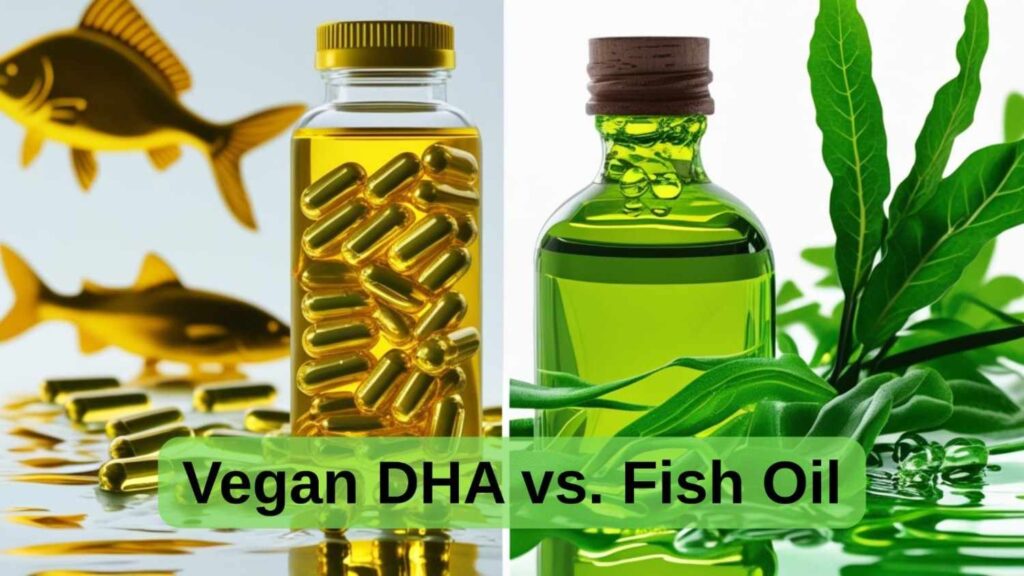
Q. Fish Oil vs Vegan DHA – Which Is Better for Diabetics?
Both deliver DHA and EPA. But algal oil has no mercury, no microplastics, and no fishy aftertaste. For vegetarian Indian diabetics, algal oil is the only real option and honestly the cleaner one regardless of diet.
Q. Which vegan omega 3 is best for diabetics in India?
For vegetarian Indian diabetics, fish oil was never really an option. Algal oil gives you the same DHA and EPA – cleaner source, no mercury, no smell. Easy decision.
Conclusion
Diabetes in India is being managed – but rarely addressed completely.
Most Indian diabetics are watching their diet, taking their medication, checking blood sugar regularly. And still, the heart complications creep in. The nerve tingling gets worse. The fatigue does not go away.
Omega 3 for diabetes in India is the missing piece that almost nobody talks about – especially for the millions of vegetarian diabetics who were told fish oil is their only option and quietly gave up.
It was never the only option.
Algal DHA gives you the same anti-inflammatory, heart-protective, nerve-supporting benefits – from a 100% plant-based source. Clean, effective, and finally available in India at a price that makes daily use practical.
This is not a cure. Your medication stays. Your doctor’s advice stays. But one algal oil capsule daily – taken consistently with your main meal for 8 to 12 weeks – gives your body a fighting chance against the damage diabetes does beyond blood sugar.
Most Indian diabetics are never told this. Now you are.
What to Do Next
Check your current supplement. Does it show DHA and EPA on the label? Is it from algal oil?
If not – it is time to switch.
Pick one of the three options recommended above. Start with one capsule daily after lunch. Stay consistent for 10 weeks.
Then get your triglycerides tested. Your next blood test will show you whether it is working. That is all the proof you need.
About the Author
Kamal Mishra is a health & nutrition writer and vegan wellness advocate. He is the founder of VeganVitaa – India’s trusted vegan DHA resource for plant-based families.
Further Reading on VeganVitaa:
For more in-depth information, explore our related guides below to better understand vegan DHA, algal oil, and choosing the right supplement. Blog
- Omega 3 for Heart Health in India
- DHA for Brain Health in India
- Best Vegan Omega 3 for Men in India
- Omega-3 & DHA Deficiency Symptoms
Disclaimer: This article is for educational purposes only. Always consult your paediatrician before starting new supplements.
Disclaimer: This post contains affiliate links. If you buy through these links, I may earn a small commission at no extra cost to you. It helps me keep sharing useful content with you.

Great content! Keep up the good work!
Pingback: Vegan Omega 3 for High Triglycerides in India — Facts
Pingback: Does Vegan Omega 3 Help With Weight Loss? Evidence